Chapter 7
Tulum
Zero Equals One
TULUM, SEPTEMBER 2001
NYC, 2002
“So you actually went to Tulum?” Akiko asks. “The ruins?”
“Yeah,” I say. “But that's not the important part. The important part was the bus ride there.”
“The bus ride?”
“I met this guy Tarquin. British, born in Goa, DJ. And we had this conversation about everything. The digital and the mystical. Zero and one. The pendulum. The whole thesis crystallized on that bus.”
The bus was already at the station, and about to leave. I gave Oliver one last hug and sadly said my final goodbye. As he pulled out of the station and I climbed onto the bus, I could not help but notice the seamlessness of the transition. I had arrived effortlessly at the beginning of the next chapter of my adventure; all I had done was give in. The more I had surrendered to each moment, the more I was surrounded by this loving invisible guide, a spirit of sorts, which was stringing these magical moments together, enchanting the journey. It felt like there was an unspoken code governing its dynamics, but the specific mechanics of how it worked still eluded me.
Almost empty, only 3 other passengers seated in deep reclining seats. One of them was Tarquin, the DJ Oliver had introduced me to at the travel agency, who immediately made eye contact, and signaled me to come sit with him toward the back of the bus. The bus pulled out.
His hair was messy as if he had rolled out of bed five minutes ago, but his eyes were alert, wide awake.
“Nice to see you, mate!” He high-fived me as I sat down. “Wasn't sure you were going to make it on this bus,” he said with a smirk.
The smoothness of my arrival had made me oblivious to the fact that I had just barely made it in time for the bus.
“Nice to see you too, Tarquin,” I grunted, trying to get comfy in my seat. “Glad I made it! I'm really looking forward to Tulum, the ruins, the beach, the jungle!” I propped up my knees on the seat in front and reclined the seat; I was finally comfortable.
“How did you end up here? What brings you to the Yucatan peninsula? The Mayan Riviera as they are starting to call it?” I asked.
He chuckled and revealed his stained teeth. He was definitely older than me, but I was unclear if he was in his mid to late twenties or early thirties. He was wearing the same fluorescent Mayan design trance T-shirt with the holes around his collar.
“I have been fascinated with the Mayans and their 2012 prophecy since I was a young boy. My parents were hippies who ended up in Goa… India in the early seventies.”
His friendly eyes stared at me to see if I knew what he was talking about.
“I know about Goa,” I replied eagerly. “I have been wanting to go there for quite some time, I have been listening to psychedelic Goa Trance since I was 16.”
“So you're a trancer too! I had the feeling you were. Not many tourists these days visiting the Mayan ruins unless you are some sort of weirdo, and us trancers, well you know, we are a funny bunch.”
I laughed knowing what he was getting at.
“How come you know so much about trance?” I asked.
Tarquin turned to me, excited, and took a deep breath and began to speak very quickly.
“I was born into the scene, my mother pushed me out in Vagator. I literally grew up on the dance floor. My parents joke that my babysitters were the Anjuna chai Mamas who served tea on their embroidered quilts spread out on the side of the dance floors.” He paused and I slipped in a question.

“So you have lived in Goa all of your life?”
“No. In my teenage years I moved back to London and lived with my aunt in a squat in Brixton, she had a shop in Camden. Then I began to DJ and travel. I rode that first wave of the trance scene in 92-98. It took me all over the world. I lived in Cape Town for a few years, then Byron Bay, Australia. I have been traveling for almost a year now, but my last base was Koh Phangan where I was DJing at the full-moon parties.”
His delivery was fast-paced, almost rhythmical. He was easy to listen to and it was funny how he divulged so much so quickly, but he also felt familiar; I knew people like him from the party scene. I had a feeling we would click.
“You've lived all over, and travel so much, I want to be like you when I grow up!” I grinned, amused with my own joke.
Tarquin paused, perplexed.
“I am not that much older than you, mate!” he said. “I was born in 1973, but I like to tell people I am from the future.”
I chuckled.
“How long have you been living this nomadic life, time traveler from the future?” I asked kiddingly.
“Without my parents? We traveled a lot as a family too, I would say about 8-9 years. I like to think of myself as a true citizen of this new global village we have created, a cyber-cultural nomad of the 21st century. Now with the internet and email, it’s incredible how long you can bounce around avoiding the ‘Beast’!” He grinned and belted out a loud ha!
“The Beast?” I asked.
“You know… the Man, the System, the Beast, the Matrix, the rat race, the soul-crushing corporate sleepwalking, zombification, that ultimately leads to an unfulfilling life… Call it what you want. I see myself as an eternal Peter Pan, a modern-day Pied Piper, skipping across this wonderful planet, leaving the smallest footprint while I am here.”
I smiled; I liked Tarquin. He was a character. He lit up when he spoke and was animated like a cartoon. There was something a little goofy and funny about him but also authentic, original, and wise. He reminded me of a funny forgetful wizard or an aloof magician who was unintentionally comedic and cartoonish in his blundery.
“So you from Greece, Nikos?” he said as he grinned.
“How did you guess?” I smiled.
“Did you grow up in Athens?”
I nodded.
“So what's with the American accent?”
“I went to university in New Orleans, I just graduated in June.”
“I tried the whole school thing, it did not really work for me. I learn better by myself,” he paused and gave me a funny look. “You know like not in a group setting.”
“I get it. I also felt like an outsider throughout school, so I can relate. This is actually the first time I am choosing my own adventure... so to speak.”

“So what brings you to the Yucatan? Are you also intrigued with the Maya?” he asked.
“I am. I studied philosophy and I have been fascinated with time and ancient cultures since I was a kid and I ended up writing my thesis on the evolution of consciousness in college. It feels like everything has been speeding up so much lately, so when I heard about the 2012 prophecy, I was curious. It seemed a kind of serendipitous coincidence that the year the Mayan calendar ended would align with a time when everything seems to be moving so much faster than any time before, and simultaneously we invented this collective mind… the internet. I wanted to come and feel the land, the temples, try to imagine how they saw the world, soak up their vibe, and make up my own mind about what the prophecy is all about.”
He laughed kind of loudly and smiled.
“Looks like we are on the same trip my little Greek compadre. You know my parents lived in Crete for a couple of seasons when they were caravaning back and forth from Europe to India in the 70s. I can't remember the name of the beach, but there was supposedly a river and palm trees and caves that they lived in for the entire summer. In September they would cross over into Turkey and follow the Silk Road through Iran, Afghanistan, Pakistan, and then finally end up in India. I think the name of the beach started with a P.”
“Preveli!” I blurted. “Must have been Preveli. It's the only beach with a river, caves, and palm trees.”
“Yeah! That's it,” he said, amazed.
I continued… “I had heard about these mythical hippies who lived in the caves, but honestly I thought it was an urban myth told by the locals to discourage people from camping on the beach. The story goes that they had been living there every summer for years, sort of like that movie from last year with Leonardo DiCaprio called ‘The Beach’. Crete had always been more traditional, and the locals did not get all the free love and nudity of the hippies; they thought they were Satanists having orgies, full moon ceremonies and other pagan, new agey stuff. Eventually they got fed up, and a bunch of ‘lads’, palikaria as they call them in Greek, came from nearby villages, and beat them up, burned down their community and basically drove them out of town. It's a sad story if it is true.”
I paused, sighed, and looked out of the window. That was before this global village, or more accurately at its earliest beginning. New values from the progressive West had yet to trickle into the remote villages of Greece. The locals had difficulty accepting the hippies as they were; they felt threatened by the new ideas they brought with them. The world had yet to become a village, and as far as the Cretans were concerned, the hippies were as different to them as the conquistadors were to the Aztecs.
“That was after my parents' time,” Tarquin responded. “I heard about the story in Goa from friends of my parents who were kicked out. I saw the film ‘The Beach’ last year in Thailand. It screened everywhere because it was filmed there. It's funny you mention that film as a reference. Throughout the screening, I kept on thinking that my parents were doing that exact thing 30 years ago. It's crazy to think about how far-out the hippies really were. How much harder it was to get around back then and how revolutionary it was to wander off into the East and abandon your cushy life in the West.” He looked out the window and stared at the green of the jungle blurring by.
“But how did your parents make a living, how could they survive in India, or on the road with no money for so long?”
The bus slowed for a checkpoint, the one this book opens on: the soldiers in the aisle, my Greek passport in an officer's hand, Tarquin asleep under his hood, the soldier nudging his foot.
“Ola… buenos dias amigo. Un momento profavor.” He pulled out his British passport and handed it to the officer.
“¿Qué eres? ¿Un turista?” the officer asked.
“Definitivamente no es un turista. I prefer the term, traveler, viajero,” Tarquin said with a smile.
The officer flipped through the pages and paused on the page with the Mexican visa stamp. He thumbed through the rest. Tarquin's passport was almost full, and the officer was visibly intrigued with the number of places Tarquin had visited.
“Why you travel so much?” the officer asked in broken English.
“Me gusta pyramidas, yo soy archelogista… Indiana Jones…” He pointed at his T-shirt with fluorescent yellow Mayan hieroglyphics. “I travel to places with pyramids.” He had captured the attention of the soldier, who was also smiling now. He put his hands above his head making a pointy triangular shape and then waved his hand as if he was cracking a whip making the sound effect with his mouth. His animated, goofy and childish persona disarmed the officer, who, grinning, gave Tarquin back the passport.
“Adios viajero!” He said goodbye and got off the bus.
“So where were we…” he said nonchalantly as the bus pulled out of the checkpoint.
“How did my parents make money? Funny you should ask just as we were being boarded by the military. The universe has a funny sense of humor… I loooove serendipitous synchronicities! Yoohoo! Makes you feel like you’re aliiiiiiiive,” he howled.
He was infectious; I could not help but get caught up in his enthusiasm and giddiness. I smiled on the inside.
When my parents first got to Goa in the early seventies, they really did not need much. They had enough saved up to last them a few seasons. The weather in Goa is perfect for about 8 months of the year, and during the monsoon season they would head to the mountains to Parvati Valley or the desert of Rajasthan. Life was pretty cheap back then. My parents actually met in Goa, they did not go to India together. They met a few seasons in, fell in love, and had me. I think that is when things started to bring my parents back into the real world.
Kids always do. I nodded.
My mother started exporting fabrics and furniture, which her sister would sell in Camden Town and my father started exporting exotic 'Indian spices', shall we say.
He looked at me and I all of a sudden got it.
'Wink wink, say no more.'
Anyway, he continued. That was a radical generation. They bridged the East and West in the modern age. While the rest of the world was scared shitless of a nuclear war, a wild group of hippie kids ran off to India seeking a simpler life, a guru, enlightenment, or whatever. A trickle of people from the western hemisphere reignited the ancient carved pathways to the East, the Silk Road, and re-joined two radically different world views. They were the explorers of their time… but without a colonial perspective. They wanted to peacefully connect with the culture of the East, not dominate it and exploit it. I often think of the earth like the brain… not sure why? The East and West are like the right and left hemisphere of our mind. It's hard to explain; the hippies were the pulses through these ancient cultural pathways, which myriad caravans had traversed for hundreds of years, connecting the East and the West… the right and left hemisphere of our collective brain… and the hippies reawakened that channel in the middle of the last century.
He paused dramatically and seemed to be lost in the image that he had just painted so effortlessly with his words. Like a fading cloud of freshly exhaled smoke, his verbal image faded… and he was back.
They were pioneers of the heart and soul. Psychonauts and time travelers, they started all of this!
“Don't you think that we are living in a very special time too?” I asked.
Sure, but they were the Titans, the first gods in this new chapter.
I think we're a very special generation too, I said. You might be at the cutoff…
What do you mean?
I have this theory. People born 1975 to 1985. First Wavers, Generation X. We grew up without cellphones or email or the internet, we played in our backyards and climbed trees, but we also played Nintendo and Atari and got our first email and onto the World Wide Web in college. We lived the pinnacle of analog technological innovation, but also lived the transition into the digital. Records to CDs, now mp3s, analog lenses and physical film to jpgs and megapixels. I have a 5-year-old brother and a cousin who is 10 years older than me. My cousin can’t understand how to use AOL no matter how many times I show him, and I seriously doubt my brother will be able to repair his bike. We, on the other hand, have one foot in each world.
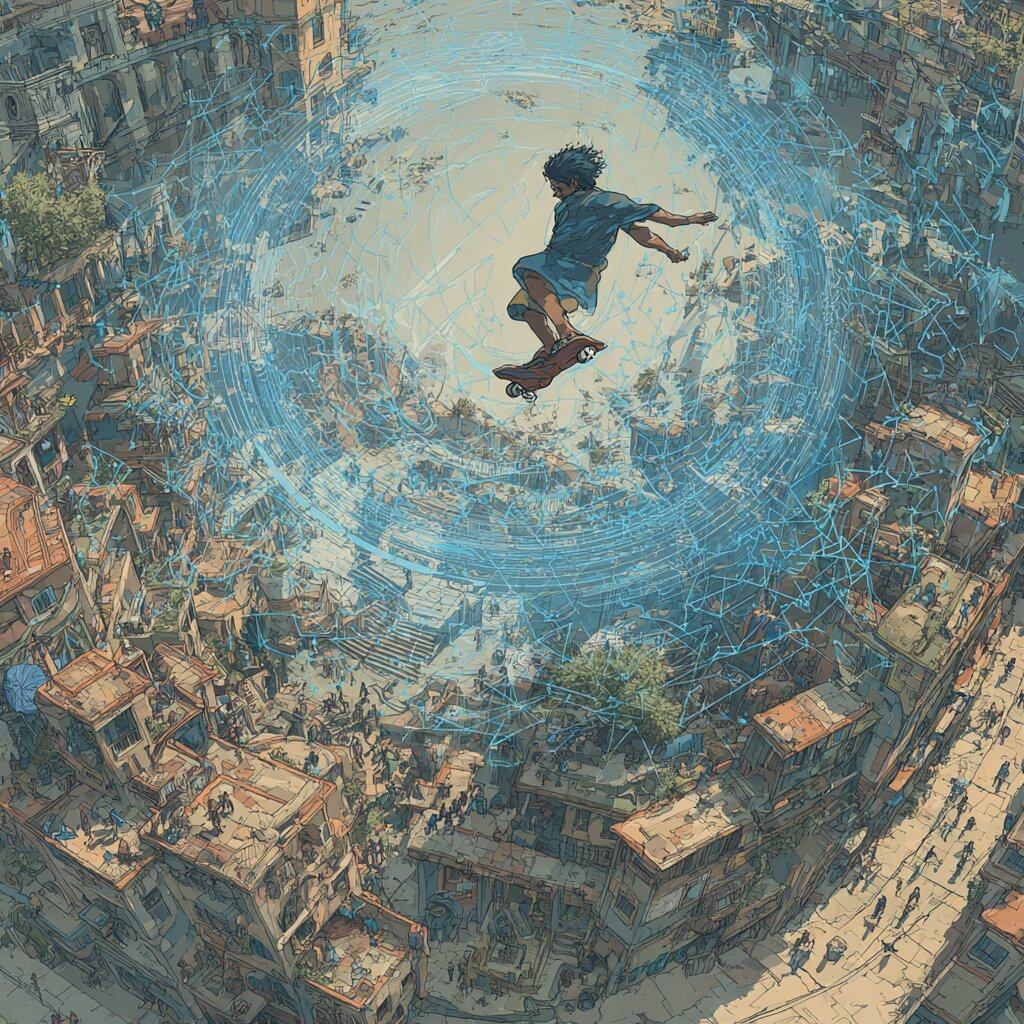
We grew up in the golden age of the analog understanding of the world, and our other foot is in the first chapter of the digital. I think that is kind of rad! … equivalent to living when the printing press was invented, or writing, but better because everything is being upgraded not just one medium, like the book. We are starting to communicate with images, video, and publishing our thoughts, feelings, music, and dreams will become so easy. We are also the first generation of the global village. Globalization has made the world so much smaller, and I feel like a new global unifying culture is emerging in all countries.
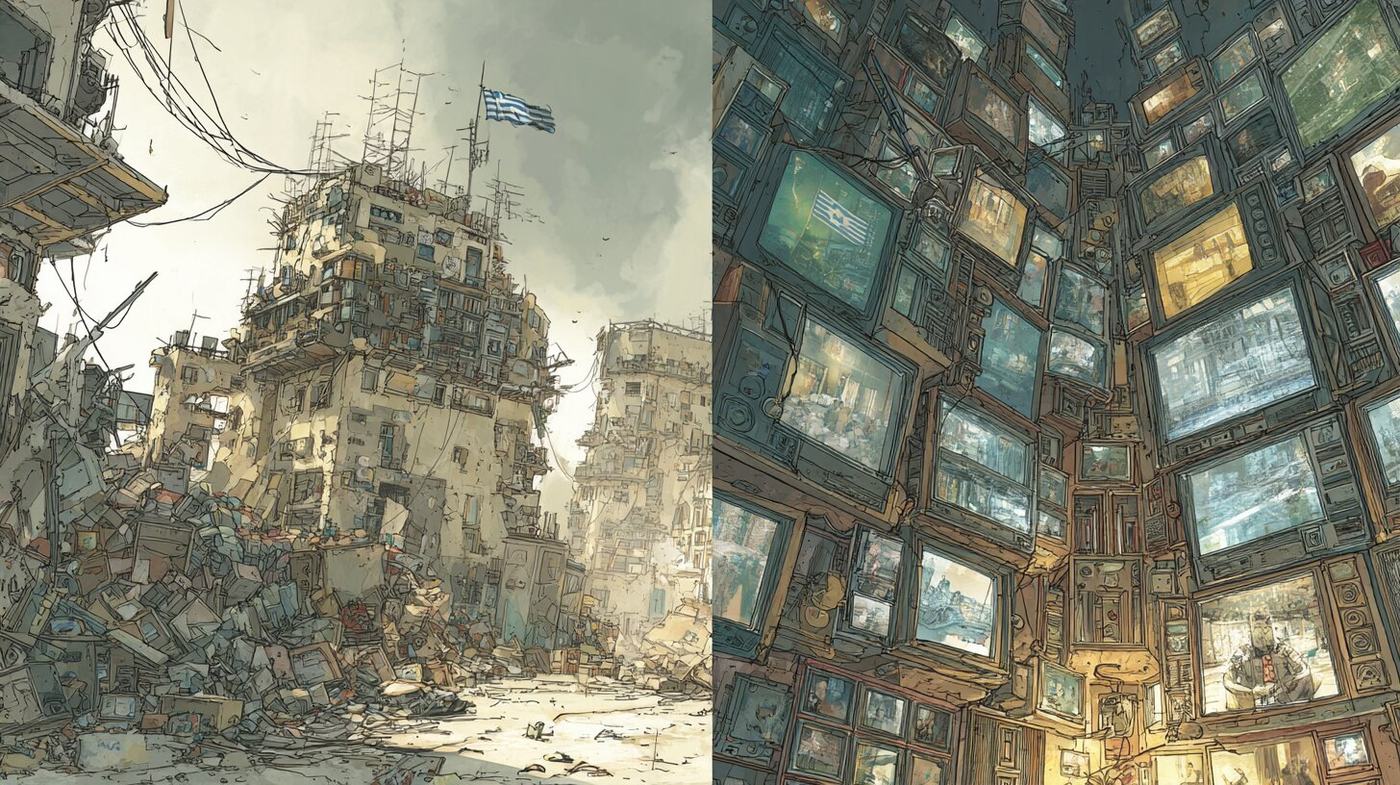
When I was 10, 11 years old, there were only 3 TV channels in Greece. All government-run, they would start with the national anthem accompanied by a shot of the Greek flag being raised at noon and at midnight it would end again with the national anthem and the lowering of the flag. The tone of the news was dry, and the image was faded, everything looked old, out of date, dusty, and stiff. A few BBC nature documentaries, a few children's shows, the news, football, that was it. Then one day, literally out of the blue as far as I was concerned as a 13-year-old kid, with no additional hardware or accessories, everyone in Greece had access to 15 more European channels on their regular 80s TV set. Channels from every country in Europe, but most importantly MTV, were being beamed into our living rooms for free.
All of these new channels felt fresh, new, stylish, cool. When compared to the colorless, faded, and muted tone of state-run public Greek TV channels, the rest of Europe's channels popped, and felt like they represented where we all wanted to be culturally.
After that, Greece transformed faster than ever, and eventually all media channels were opened up. The mustache-twirling, white-sock-wearing, worry-bead-flinging machisto playboys now wore baggy pants and baseball caps backwards. The kids now listened to hip hop, and rapped in Greek. This European Union initiative, broadcasting across borders, was redefining cool. An infusion of external cultural norms and stimulations was trickling in and transforming my generation. Skateboarders were trying to outperform each other practicing kickflip-180s and snowboarders landed rodeo flips on the weekends at the DIY snow park at Mount Parnassus. A new, fresh global culture rippled through this new network of communication.
That's why we are sitting next to each other now in Mexico, why we both like trance. I grew up in Greece, you grew up in Goa but we are from the same tribe. The internet is connecting us and we are able to travel and meet up all over the world. Why am I here interested in the Mayans? How come we like the same obscure electronic music? I bet you wanted to do this journey in Latin America because you have read The Motorcycle Diaries? Maybe you also have read The Alchemist, or The Celestine Prophecy?
He was into it! His brown eyes twinkled alertly; I had pressed some buttons that resonated with him.
I thought the Alchemist and the Celestine Prophecy were kind of cheesy even though I get where they are coming from. He responded while shaking his head.
“What about Castaneda and Terence McKenna?” I asked.
Tarquin grinned.
Now you are speaking my language!! He was energized. Food of the Gods was one of my favorite and most profound books I have ever read. I really believe that primitive humans ate some sort of mind-altering plant, mushroom, I don't know, something that chemically altered the biochemistry of their brains. That's sort of what the whole story about the Garden of Eden is about. The Tree of Knowledge, the apple… it's kind of the story of the first humans eating something that made them self-aware, and through that self-awareness, somehow separate from nature as a result of becoming self-aware through consciousness. We leave the animal kingdom after eating the apple from the Tree of Knowledge.
Ah, the stoned ape theory! I love that way of thinking about the birth of human consciousness too. I completely agree. Somehow, language, thought, self-awareness, communication, are intertwined in some sort of culturally constructed ritual. Through the ritual and the use of some mind-altering chemical, we experienced a better, deeper, form of communication.
Not sure I am following you here, mate.
Hm, let me think of an example… I paused, looked out the window at the palm trees that flew by us silhouetted by a golden orange sun. There was not much built out here, an occasional gas station or a shopping complex at the crossing of the main highway and the exit to a beach town. Jungle, palm trees, coconut trees, foliage, a sea of green for as far as you could see. It seemed so profound that hundreds of thousands of people for hundreds if not thousands of years had lived in this jungle environment oblivious to what was happening on the other side of the planet in Europe.
“I just think the trance party is really profound. The notion that you can take LSD or mushrooms, MDMA and dance all night and day, for 2-3-4-7 days, lose yourself in this zone, created by these carefully designed sounds, and feel so deeply connected to everything, it was a new mystical experience. Modern-day organized religion feels so dead. I mean who goes to church anymore?”
“No one... Go on,” he said eagerly.
“The world feels disenchanted, there is no magic, mystery, wonder any more. Going to church does not feel mystical. The priest is a mediator, someone I have to go through to get to God, the divine. I want to feel the mystery in me, I want that mystery to be the proof that will fuel my faith. I want an experience I can feel in my deepest self, and let that shape my understanding of the divine. I know there is something more, a layer beneath, beyond, I just don't think religion does that for us anymore. Their stories feel outdated, the world is moving too fast, we know so much and they can't keep up. The internet and this new global village is letting us merge our stories, and for the first time we start to see patterns emerge among the stories. I am starting to realize that it's not so much the stories with their cultural specificities, but the emerging common patterns that are important.”
“It’s time for a new story that can bring together all the stories, one that weaves together quantum physics and shamanism, reiki and biotechnology, tribal African dancing and the modern-day trance parties. By overlaying our subjective and culturally specific worldviews, a new universal and global pattern emerges. This is what I think the information revolution is all about.”
“Techno-cyber-shamanism, I dig it! I love it… I am on it!” he said emphatically snapping his wrist making his fingers smack!
“I know exactly what you are saying. You know that very few people know how to make the music, right? Most of us are just DJs, we have no idea how to make the tunes. I have always thought that each track was like a cybernetic spell that would penetrate everyone on the dancefloor and synchronize them. In the early days in Goa very few people knew how to make this kind of music, not to mention having the gear was tough. These guys were like hermits and had these hodgepodge studios in reclusive villas on the outskirts of the trance villages in Goa. They would be making these new sounds and fuse them with ancient Indian rhythms. With the amalgamation of synthesizers, sequencers and samplers, they were able to structure music mathematically mimicking the way Asian music is made and structured. I could never really understand all of it, but it has to do with sacred geometry, fractals, frequencies of our brain, ancient rhythms and structures of meditative music of India, pi, phi, spirals, frequencies, time, space, quarks, Shiva, the dance of creation and destruction…” he was going off, exhilarated and completely captivated by his own exuberance. Then he abruptly paused, took a deep breath, and continued at a much slower tempo.
“That's as far as I can explain it, but these guys are serious, they have big notebooks with equations in them, patterns and diagrams, frequencies and harmonics, numbers, math… it's not random, you know? They even go to temples and record the chants of the Brahmins. If you want the fresh new sounds, they are the ones to get them from, and in order to get them, they need to like you. If they do, they might invite you over to smoke some chillums at their house/studio. You go over, smoke some cream, and listen to tunes. Sometimes they will play a song they are working on live, it's amazing to watch, like a mad scientist over this machine with wires coming out of everywhere. Knobs, switches, and flickering lights, and above all, this raw electronic sound ripping through the air. Every tweak of a knob, flip of a switch, instantly changes a distinct yet subtle part of the sonic spell. It's like they are touching the sound waves in real time, sculpting them. If you're lucky they might let you record the session on your DAT player, and that is really special, as each pass is unique, because of all the analog switches, it's almost impossible to play a song live on the sequencer two times and have it come out identically.”
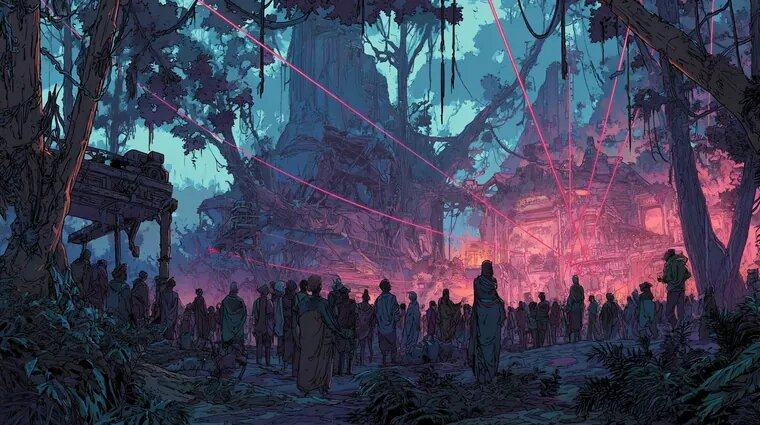
But it's not unique to Goa, it's all over the world! Every developed, switched-on country, where the youth was able to nourish this new counterculture; outside the cities, on full moons, young kids followed fluorescent ribbons tied to trees into the woods. Elsewhere they followed fuchsia spray-painted arrows, on dirt roads into fields, or abandoned industrial spaces, in order to find the party and listen to these tunes from the future. Remember the regular folks are listening to Nirvana and Ricky Martin, and this crowd is listening to psychedelic Goa trance from India, recorded on a DAT, and being played at free full moon parties, that you could find only if you were cool enough to know about it and able to find it from the trippy breadcrumbs left as clues scattered around the outskirts of all Western metropolises. It's kind of wild if you think about it: these frequencies ordered in a certain way make you feel so amazing that you go on this psychedelic treasure hunt. It really is like a new ritual. I think you are right, it’s because our life in the Matrix is so dry, with no magic, we need that magic, that wonder… the trance party really is like a new ritual that we all need.
“Amen! I could not agree with you more… I have so much to say on the subject, it's funny not many people from the scene like to talk about all of this, it's almost kind of taboo,” Tarquin said.
“I know, I think it's because I think that if you try to analyze it too much, it loses its magic; it's kind of better to not talk about it and just let it be something you understand internally, intuitively and personally. At the same time I am not sure I think that is wise… I like to talk about all of this, if we don't talk about it then we won't be able to understand it and take it to the next level; it's a conundrum, what can I say.”
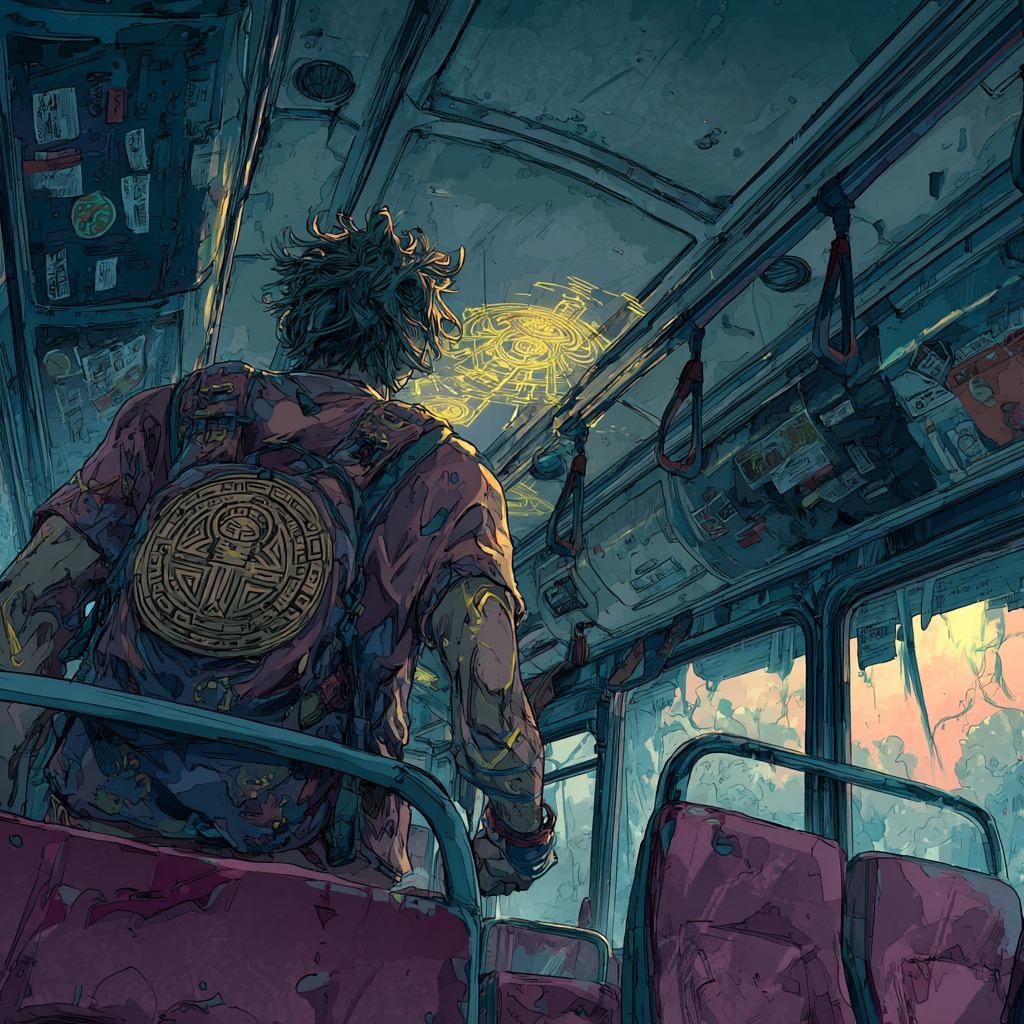
“I like you, Tarquin; I have only met a few people who I see eye to eye on all of this stuff, and it's wild that we are meeting on a bus in Mexico having this most profound conversation. I don't think I can have this conversation with some of my best friends or family, and yet at the crack of dawn on a bus in the Yucatan Peninsula I am connecting with you. It's so random and yet it also feels kind of commonsensical, as if there is this common pattern that connects us, even though you are a Brit who grew up in India and I am Greek, we come from such different worlds and yet we are from the same tribe.”
The bus slowed down. We had arrived in Tulum town.
“Remind me to tell you about the Eleusinian Mysteries. I think we are getting off here,” I said as I gathered my stuff and jumped off the bus. A few closed restaurants lined the main crossroad in the center of town. It was about 9AM; not much was going on, a few trucks rolled around scattering dust on the side streets and a couple of cab drivers were filling up at the gas station at the corner.
Stamped in oxide, on paper
Zero Equals One
Tarquin turned with his hands nested under the straps of his backpack on his shoulder.
“This is Tulum town,” he said. “A friend of mine recommended staying at the beach at the government-run camping site and renting a beach bungalow.”
“That sounds good to me! Let’s go talk to those geezers over there and catch a ride to the beach.”
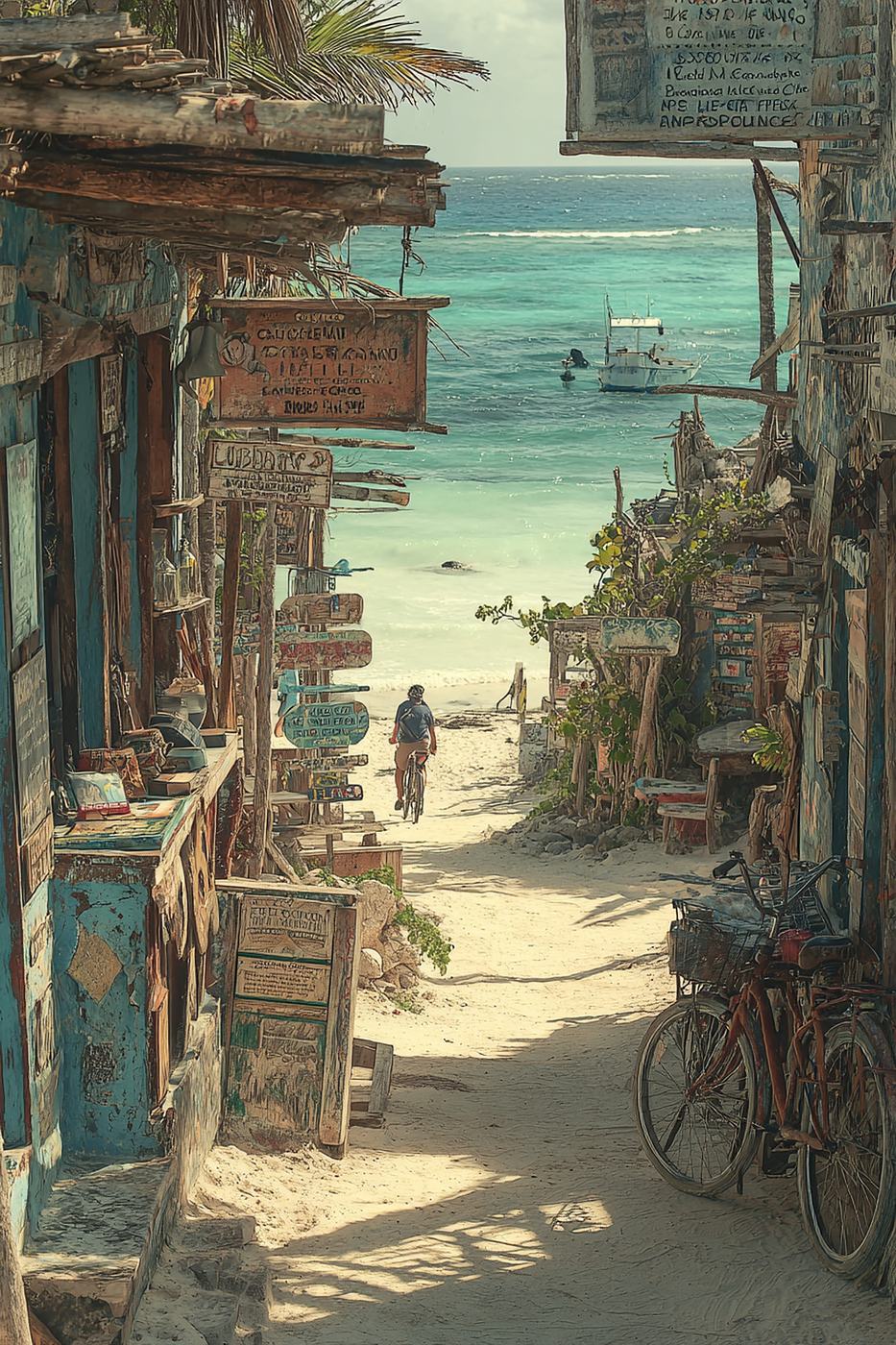
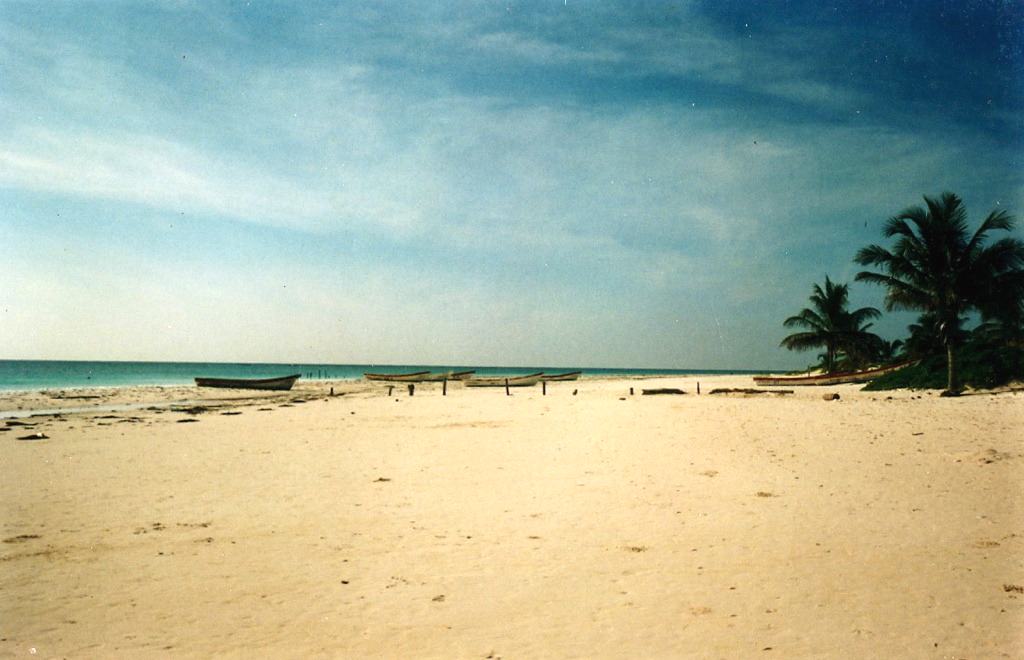
We walked to the gas station, negotiated a fare, and 10 minutes later we were strolling through the mangroves on this endless, magnificent, white sand beach. The endless strip of fine powdered coral sand was hugged by a turbulent arrangement of turquoise blue ocean waves on one side, and a vibrant green jungle protruding from the other. The coconut and palm trees cast shadows, breaking the blinding whiteness of the sun's reflection on the sand.
The only large structure on this endless pristine white beach was to our left. It was orange and had a thatched roof made of palm leaves. The walls were no more than a meter high; it was open, and the floor was soft sand. Under the roof, an open-air kitchen with a wood stove oven had some eggs and beans sizzling. Two backpackers were sitting in the corner eating breakfast as a cool ocean breeze poured into the restaurant.
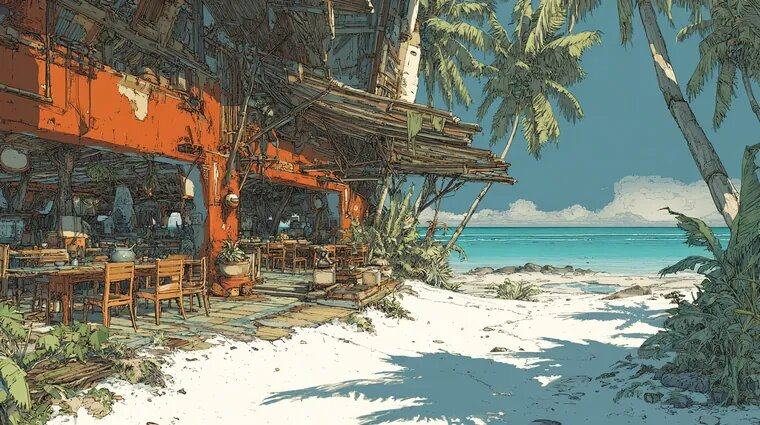
It was pleasant. In fact, it was more than pleasant; it was ideal. A young girl sat at the biggest table in front of the kitchen entrance. She was reading a book and did not notice us walking in. I dropped my backpack and stretched vivaciously.
She looked up just as I approached her desk. She was indigenous, Mayan and very beautiful. I don't think I had ever met a Mayan person before, but for some reason she embodied what I imagined one would look like if they were Mayan. She was petite, dark-skinned, had almond-shaped eyes, and long black straight hair wrapped in a bun with a stick holding it in place.
“Welcome,” she said, “I assume you are looking for a place to stay? My name is Itzel, I run this spot.” Her English was perfect grammatically and it was coated with this charming Mexican accent. “You can hook your hamaca to the post in our special area for hamacas or you can rent a little house on the beach,” she pointed to the ocean.
We walked over together to the beach to get a better look.
Scattered on the sand were about a dozen little huts. They had thatched roofs, were circular, not more than 2.5 meters in diameter, and had a wooden door with a chain and old padlock threaded through a hole in their short concrete wall. Inside was a lonely bed with a beach chair cushion mattress, centered on the sandy floor.
“I'll take it!” I said with a broad smile, “It's perfect!”
“Great, it’s 300 pesos a night, do you know how long you are going to stay?”
I dropped my bag, sat on the bed and lay back. Tarquin's silhouette stood in the door.
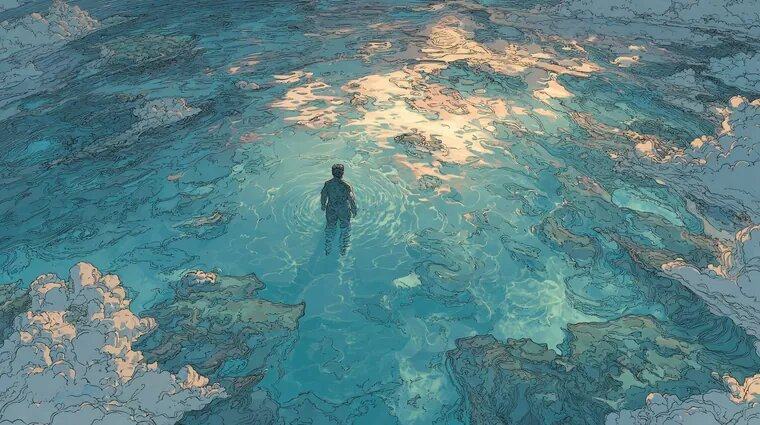
“I don’t know, forever?” I was joking, but kind of meant it. On that bed, for the first time I felt this feeling I don’t think I had ever felt before. It was this sense of freedom that made my body feel so light, as if it were transparent, ethereal and bright. I looked up at Tarquin, who was inspecting the neighboring hut, and shouted: “Pretty fucking sweet, right!? Aooooooooo” I howled and Tarquin echoed it with his own yelp.
“You guys are crazy,” Itzel said and shyly covered her smile with her hand. “I will let you settle in. Bring your passports when you do and I will check you in officially,” she said, sarcastically undermining her own formality.
I unpacked my camera, MP3 player, and other gadgets and made my hut into my new temporary home. I lay down on the bed twisting my dangling feet in the sand, I exhaled deeply and closed my eyes. That peace was new to me on this trip; it felt that I was finally where I was supposed to be on the wave. Things seemed to be falling into place; it felt like the beach cushion mattress was the warmest hug. I felt at home.
Akiko looks up. “What was it,” she asks, “that lightness?” I try to tell her. Nobody knew me. That was most of it.
I must have felt very restrained because when I got my freedom it felt so different. I felt so much lighter.
Akiko says it is because you get to know yourself better when nobody knows you. People who know you pull you into their perception of you. On the road all you can trust is your own self-perception. You are the judge of how good your thoughts are at the end of the day.
You meet people on the road, and the road shows you who they are. There would be the German guy whose clothes were always ironed. He had been out for six months and looked like he had left Hamburg yesterday: freshly shaven, all the gear, all the hi-tech stuff. Then there would be the other guy, the one with the broken toe, miserable, and you could tell he had brought it on himself. It was his attitude, the way he was traveling.
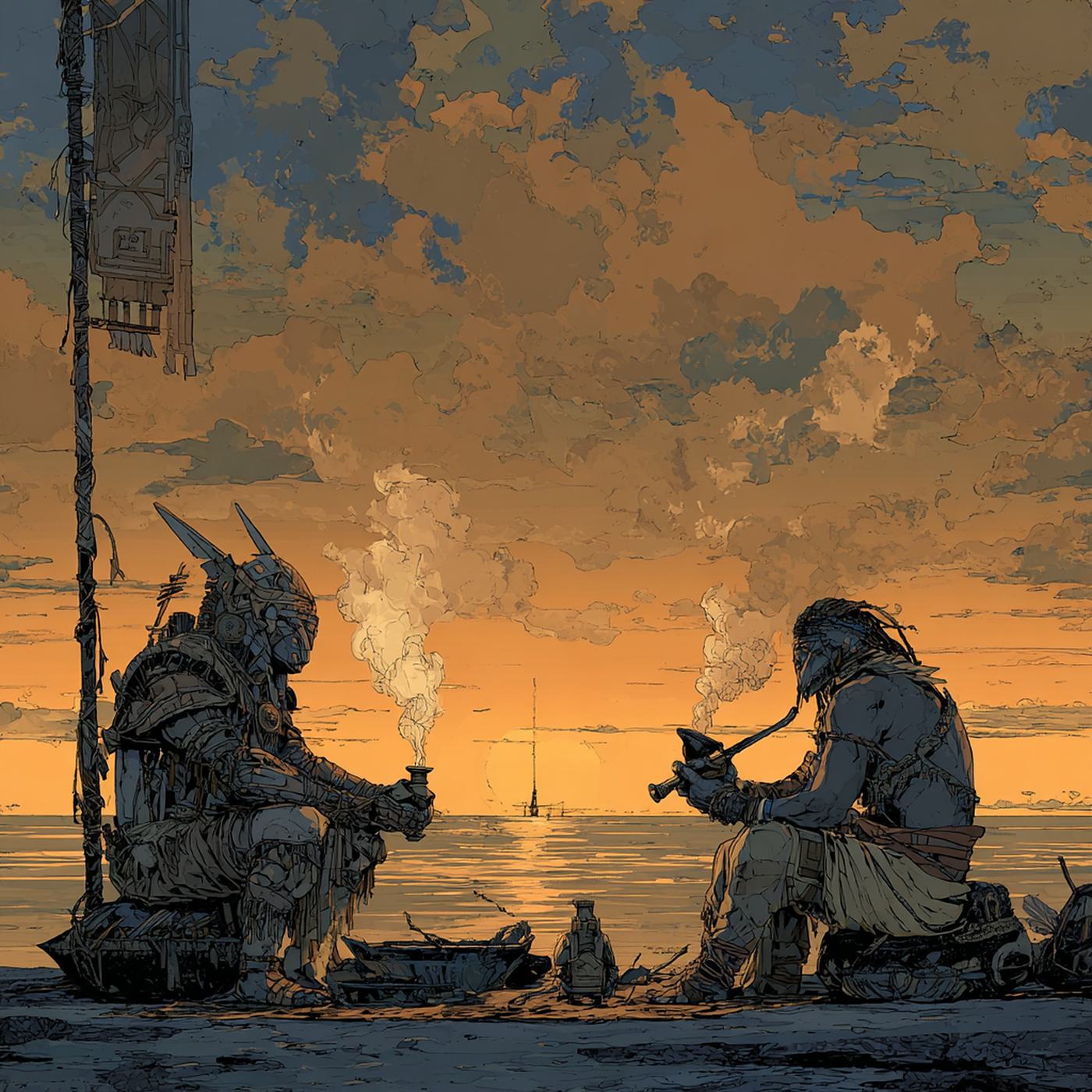
In my half-sleeping stupor I heard Tarquin beckoning from the edge of the ocean. I rolled off the bed and met him at the water. We sat where the waves break and stared out onto the Eastern horizon. A steady fresh breeze accompanied by the white noise of the turbulent ocean stirred something inside us. The energy of the wind and ocean accompanied by the fluctuating roar, rhythmically fused into a meditative symphony.
“This is the same horizon the Mayans watched the sunrise on,” he said as he began to unpack something from his carefully hidden pouch in his crotch.
“It’s also the same horizon that the conquistadors emerged from. War ships from the Old World brought a new civilization to these shores. Two worlds collided for the first time. You know there were no horses here before. The Spanish brought the first horses to this part of the world. All the indigenous populations from the Native American Indians of North America, to the Maya, Aztecs, and Incas, none of these civilizations had horses. It’s kind of wild to think that they roamed these massive continents on foot. Imagine how long and hard it was to walk from Alaska to Tierra del Fuego at the tip of Argentina.”
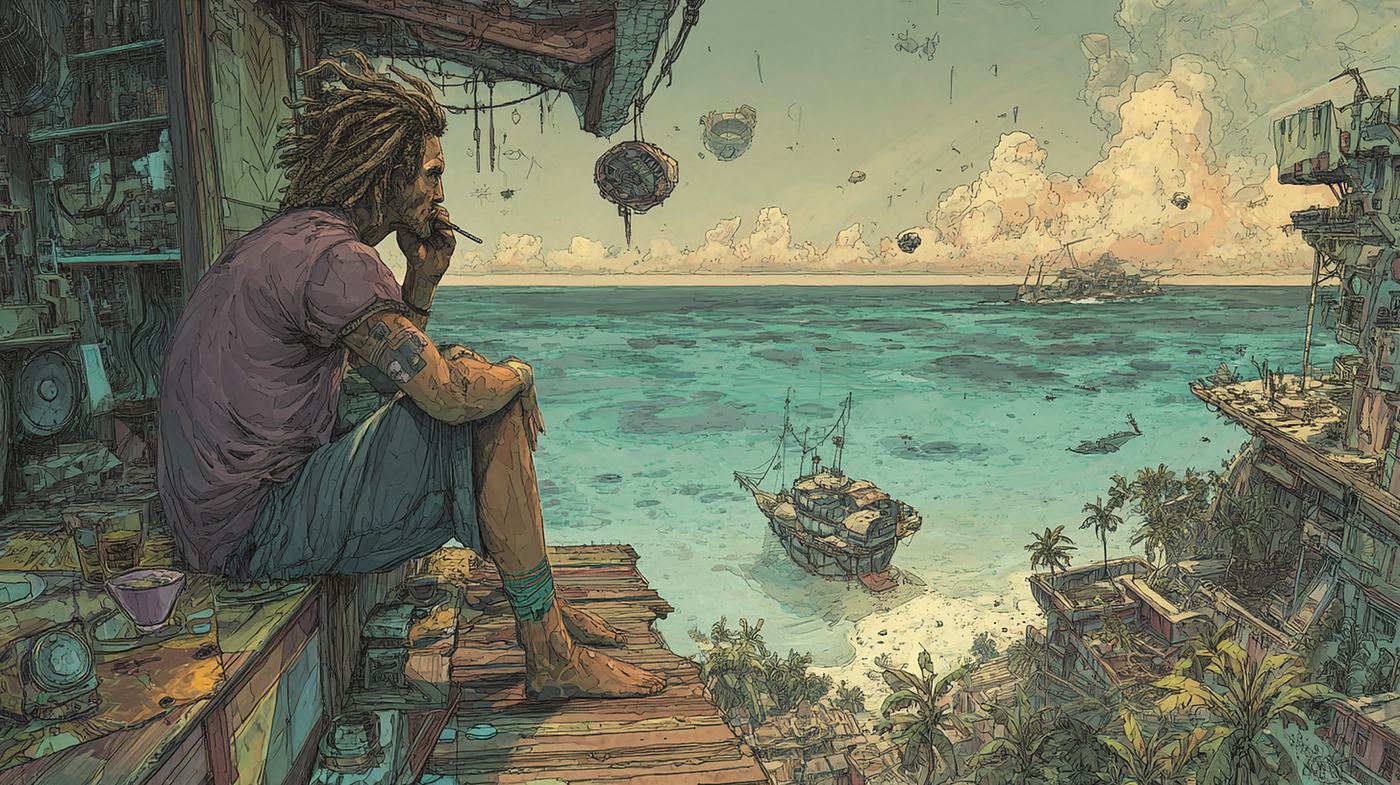
His hands were fidgeting with a plastic wrap on something small he had just removed from his pouch. In the crevice of his two crossed legs was a tiny ceramic chillum no more than the width of four fingers. He had a small ball of black charas in a polished coconut shell, and was waving a lighter under a cigarette, toasting it and drying out the tobacco.
“I have some Manali cream for us,” he said, mixing the innards of the cigarette he had just emptied with the ball of hash that he had now converted into many tiny little blobs by picking at it with his longish fingernails.
“All the way from Parvati Valley, I have been waiting so long to be able to enjoy this on the shores of the New World, especially on the same coast that the Mayans once called their home.”
He filled the chillum with the hash and tobacco mix, and ripped a small piece from the lungi he had wrapped around his waist. He passed the mixing bowl to me and walked to the ocean and wet the piece of cloth.
“We should do it right with all the elements,” he yelled as he walked back and sat down again. “I love the Indian smoking ceremony, it’s so mystical and ancient. The idea that you are combining fire, earth, wind, water… all the elements to conduct this ritual that gets you closer to ‘Shiva consciousness’. Their history and tradition have ritualized getting high and framed it as a collective prayer! Ha, what an amazing culture!”
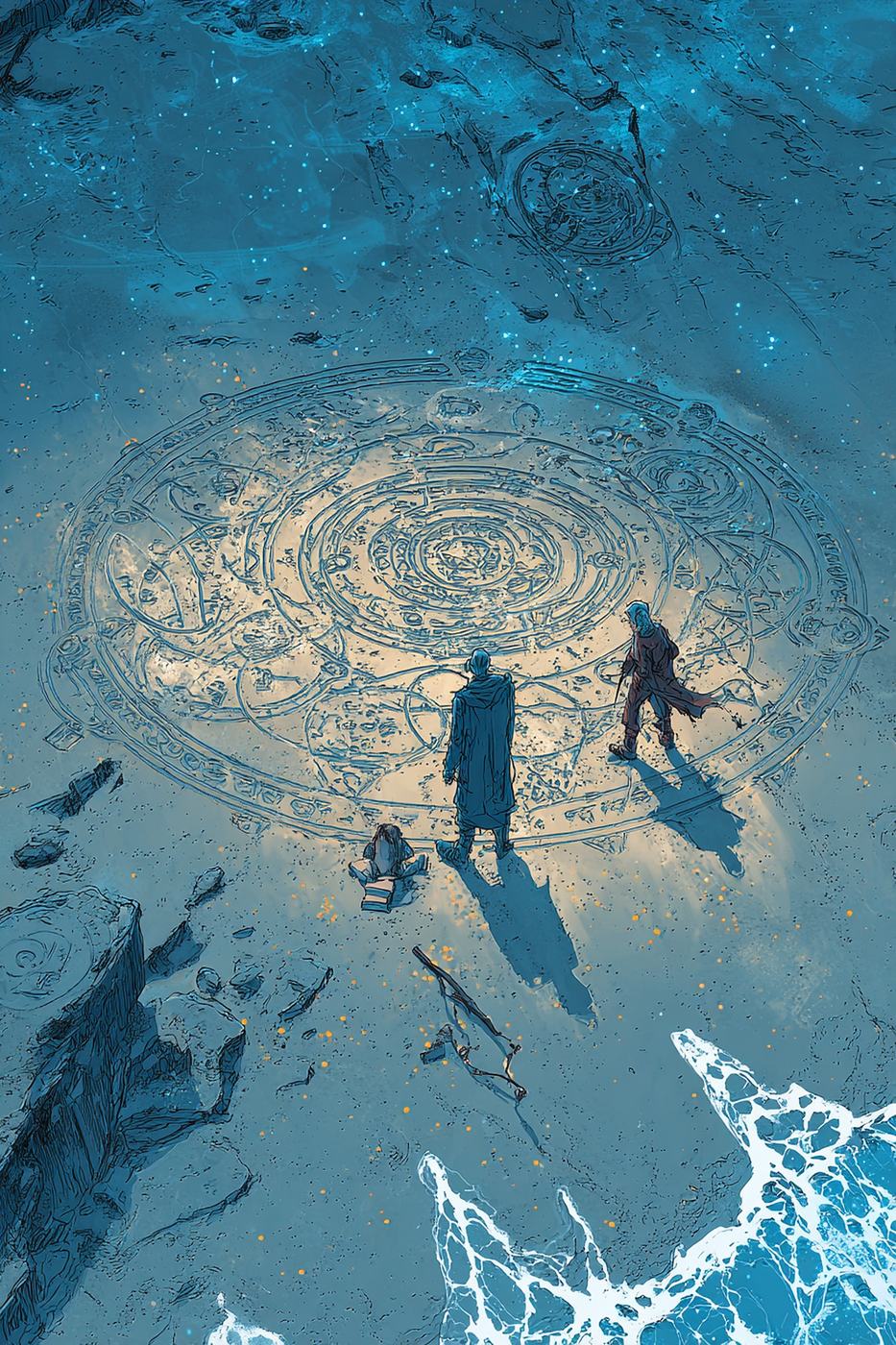
He wrapped the end of the chillum with the wet cloth in order to cool the smoke and packed the other end with the mix. He held it close to his lips and whispered incomprehensibly as if he was blessing it before he passed it to me and insisted I light it. I had not smoked in over a week and I had not smoked a chillum in many months, but I was honored and it felt like a good moment to break the fast. I nested it in my palms and wrapped my fingers around, took a breath, wrapped my lips….
“Bom Bolonat!” he hymnically sang out as he lit the top end of the chillum and I inhaled deeply. It was delicious. I had not been to India, yet I had smoked a lot of Indian charas as a result of the trance scene. This gooey dark brown nectar from the Himalayan gods was considered the best of the best, crème de la crème. The taste was infused with something distinctly earthy, a flavor so specific and rich it made the land it came from come alive in your imagination vividly.
I exhaled slowly, trying not to cough. My body began to tingle and a wave of warm calmness permeated me. I passed the chillum to Tarquin. “Bom, thank you.”
Before he inhaled he caught my eye.
So tell me about these mysteries in ancient Greece you were talking about… and what's up with all the camera gear and gadgets and what not?
He puffed on the chillum and exhaled a cartoonishly large cloud of smoke.
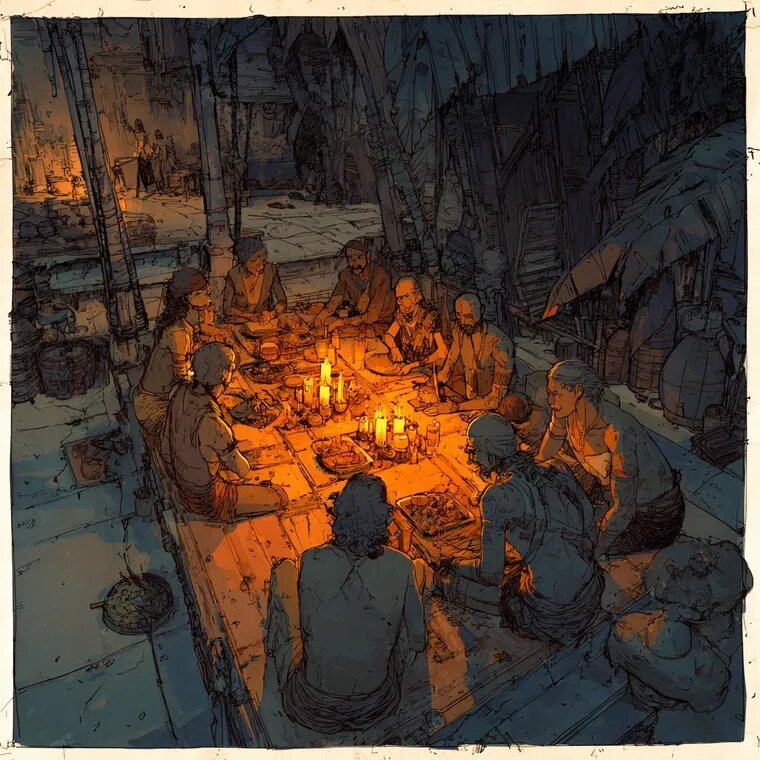
The Eleusinian mysteries were rituals that took place in Ancient Greece and lasted for over 2000 years. By the end of the Roman times and with the arrival of Christianity they were banned as spirituality shifted its ritualistic focus of virtue from the decadence of celebration, eventually giving way to virtues of discipline and abstinence. The mysteries have their roots in the matriarchal celebration of Gaia that came from the east with the early tribes that settled in Greece and scattered themselves across the landscape. What was unique about these rituals was that everyone had to participate at least one time during their lives. That meant men, women and slaves! And while the ritual definitely morphed through the ages, one of the only things we know for certain about the ritual is that speaking about what happened during the mysteries was punishable by death! That's why we know so little about them.
The reason I brought it up earlier is because it's kind of the same as what you were saying about the trance parties. When you talk about these kinds of things they are demystified and it's important for each person to experience the ritual without having been tainted by someone else's experience. It's like you don't want to ruin the magic trick by revealing what happens to someone who is uninitiated. Remember earlier when you were talking about the trance parties, how it's taboo to talk about what goes on on the dancefloor? Or how you need to spend time with the DJs in order to get DAT tapes with tunes? I mean I have tried to shoot video at some festivals and have almost been lynched; it's like the objectivity of the lens is a threat to that Dionysian, fluid world. It doesn't want to be recorded 'objectively' it wants to be left to subjective interpretation.
He passed the chillum back and I kept going. The whole thesis, the one that had crystallized on the bus, on the sand now.
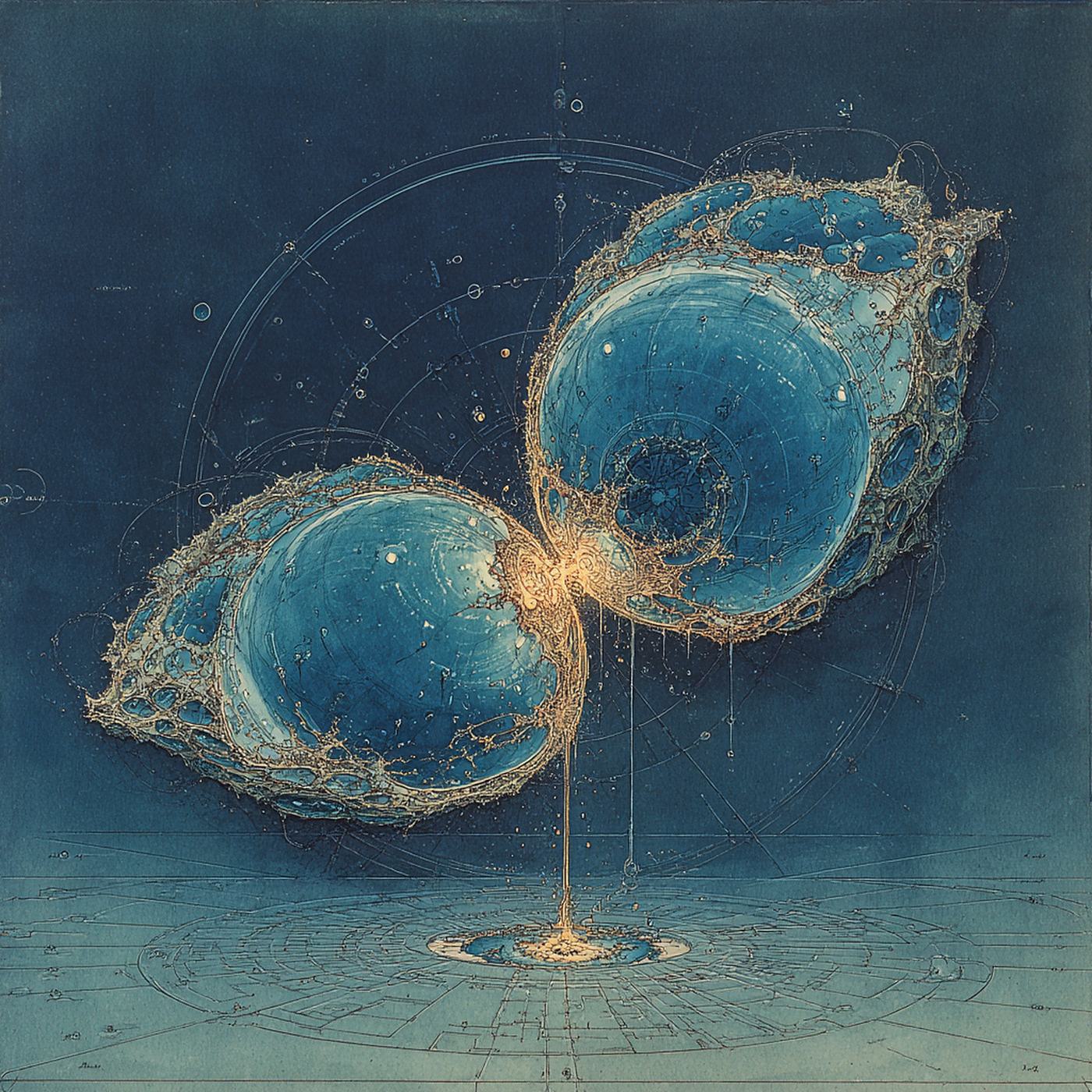
The pendulum of history swings between two poles: Dionysian and Apollonian, feminine and masculine, mystical and rational, zero and one.
We magnify matter down to the smallest thing, the atom, and then we split it. Break matter up and you release energy. Break 1 down all the way and you find 0; break 0 open and you find 1. They are the same thing at a different vibration, in a different dimension. At that moment in history we build the atomic bomb, which ends the Second World War, as opposed to ending all wars.
At this point the pendulum starts to swing back because this is almost the pinnacle of the rational, the Apollonian. We come all the way around in through the back door and we essentially enter into the realm of the non-rational, the intuitive, coming through the hallway that came from the rational. And so as a consequence of the pendulum starting to swing we have women being able to vote, women’s rights, sexual liberation, men starting to become more feminine. Generally the 60s comes as a consequence.
The moon landing gave us our first collective story, seeing Earth from space, the global village recognizing itself as one.
That night there was a fire on the beach. Beers, the first joint, and two Israelis staying at the huts, Gidi and Asaf.
They were on the last leg of a year-long trip. They were doing the exact opposite route of mine. They had started in Chile and made their way all the way up north to the Yucatan overland. They spoke with such enthusiasm and their thick Israeli accents and animated hand gestures textured their stories with such unforgettable character. You could tell they had been traveling together for a while; they finished each other’s sentences and riffed on each other’s jokes. But there was also a slight melancholic tone to their overall demeanor, an invisible permanent sigh coating everything they said. It took me a while to understand why and then looking at Gidi behind the flames of the fire I realized that it was because their journey was coming to an end. Every story they told reminded them of some point in their adventure that had passed a while ago and that their time on the road was soon coming to an end.
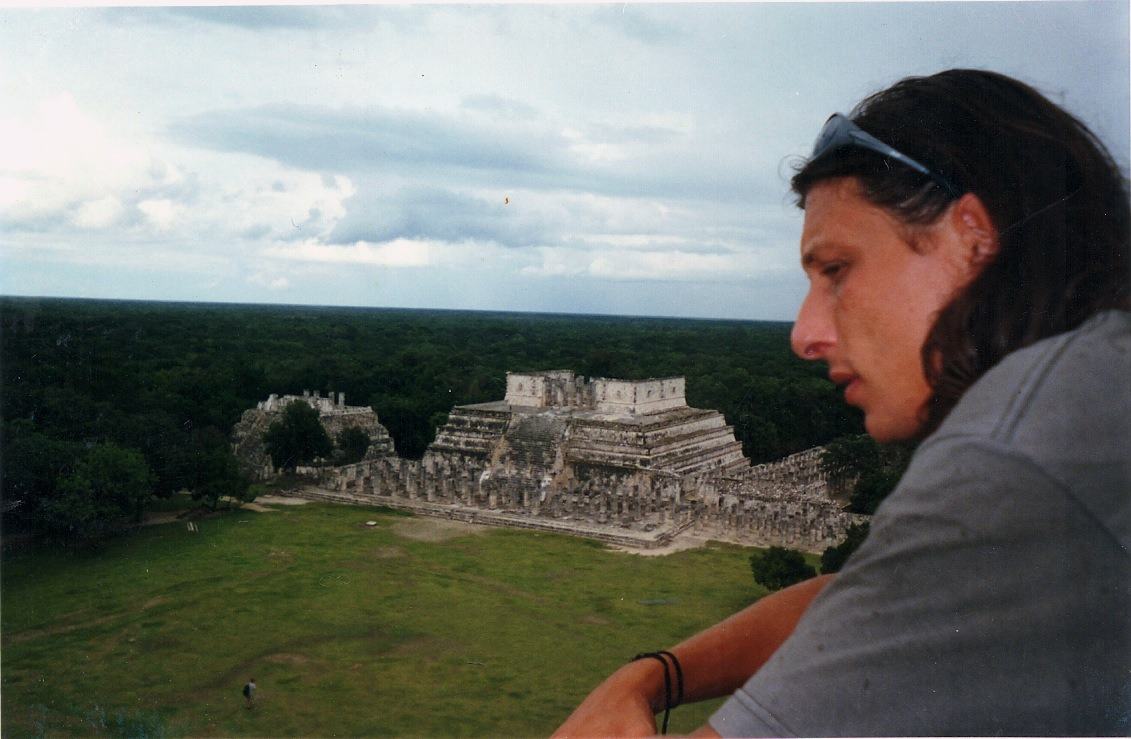
“You must go to Locombia! Santa Marta, Tayrona Park! It’s amazing, and there are almost no foreigners,” Gidi said.
“I know, I have heard it’s dangerous.”
“Baaaa… don’t listen to the guidebooks and whatever you read on the US travel website … You are not a sheep, you are the shepherd! Come on, isn’t that why you are backpacking around and not going on a package tour or a cruise on a fancy boat?!”
I laughed. His funny animated eyes darted around to Asaf and Tarquin extending the question to them as well.
“You have to make up your own mind, be an independent thinker, don’t trust the corporate media and the propaganda of the USA. Colombians are wonderful people, and what has happened to their country is a disaster, but they need to meet foreigners and also need the foreign exchange. If you avoid the areas controlled by the FARC you will be fine.”
Asaf’s eyes widened when hearing the FARC reference. “Yeah, definitely avoid the FARC-controlled areas, we were stopped on a bus to Medellin and a FARC rebel came onto the bus and checked everyone’s papers. They let us go after a while because they were looking for someone specific who was not on the bus. But I agree with Gidi, it’s a beautiful country and the people are great.”
Gidi continued, “And besides, you will have a hell of an adventure there. That’s what you are looking for, right? You want some action? Some adrenaline? Not some sort of honeymoon for yourself. Right? Or am I wrong?”
I giggled. “Yes, yes… I got it, I am going to Colombia!”
Gidi had asked the question Akiko asks now. Action, or a honeymoon for yourself. Where is the line between this kind of freedom and escapism? “A double-edged sword,” I tell her. To find your flow it cannot just be an escape. Runners and seekers, somebody once split the people who take themselves out of their lives, and nobody is only one of the two.
In bed that night my heart was pumping. The happiest moment of my life. In the morning we went to the ruins together, then rented a Beetle and drove to Chichen Itza and climbed the pyramids.
MAYANS
A primary reason for wanting to go to South America was the Incas and the Mayans. I had heard of the Mayan calendar and how the Incas built their temples according to star configurations in seemingly impossible places. Coming from a country with an ancient culture, I understood how deeply intertwined it was with their everyday living. Many of the younger generation studied the Mayan calendar and lived their lives abiding by the format dictated by their personal chart; many travelers on the road were eager to share their knowledge on the subject especially in Mexico.
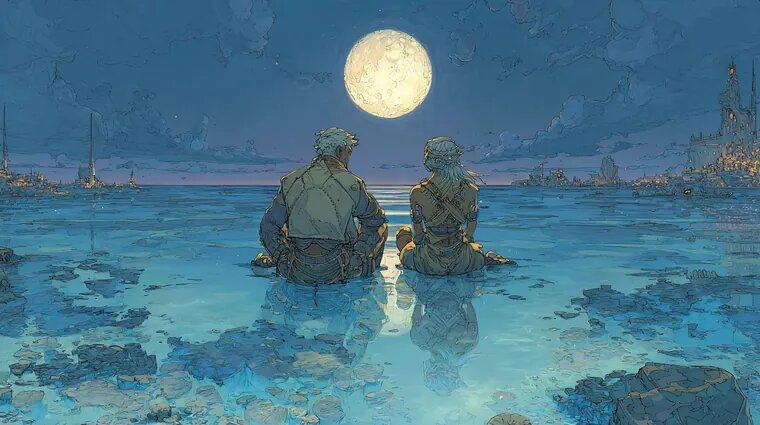
Jose Arguelles' The Mayan Factor is an analytic theory of what the Mayan calendar might be. Here are the basics.
Their core belief: the galaxy is a conscious organism. At its heart, Hunab Ku, the galactic core, pulses like a cosmic heartbeat, sending signals through the stars. Our sun mediates this transmission to Earth. They called it Kuxam Suum, the galactic lifeline.
There are two mathematical coincidences in the structure of the calendar, which I will mention, but are far too complicated to elaborate in depth right here. 1. The correlation between the mathematical patterns that govern the Mayan calendar and the Chinese divination practice of I-Ching; 2. Mathematical similarities to the structure of our DNA. The similarities between the Mayan calendar and the I-Ching extend beyond the practical formalities of the mathematical algorithms that govern their systems; they are essentially the same system on a different scale. The Mayan calendar empowers a macro collective divination schema and the I-Ching a micro and more individualistic one.
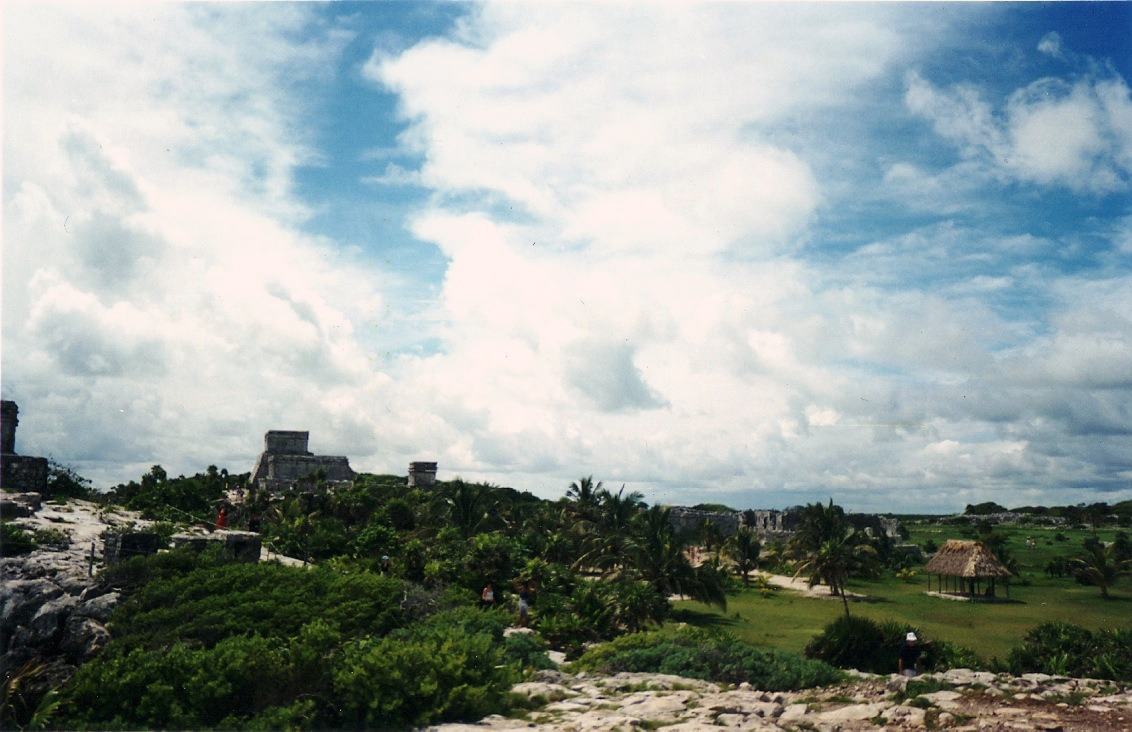
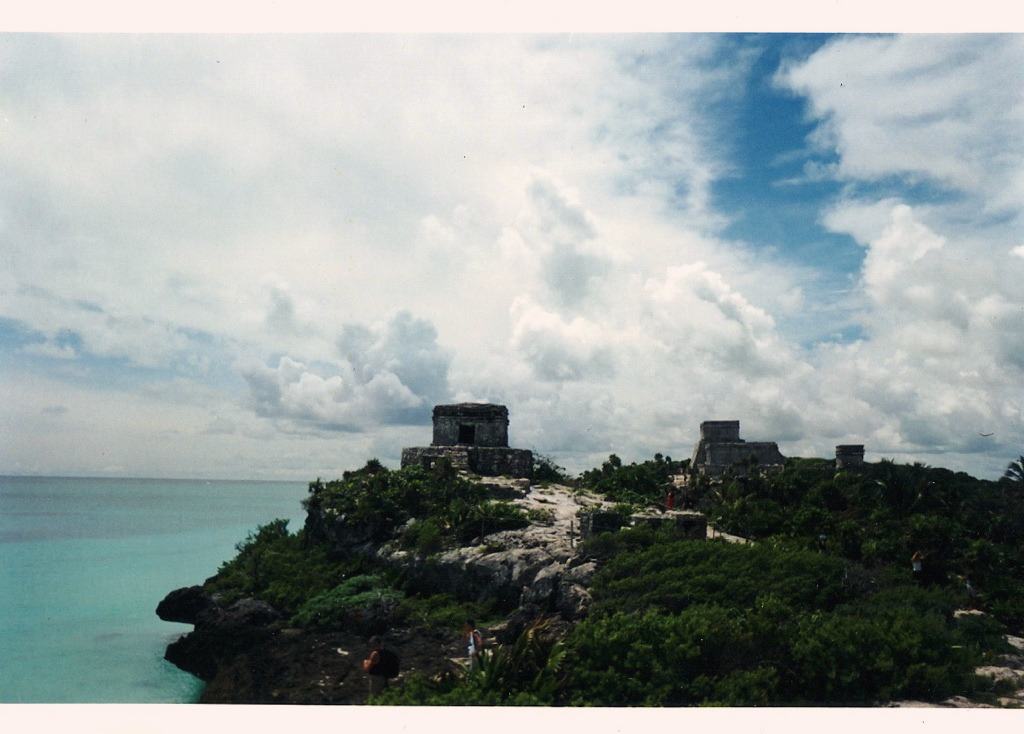
Arguelles claims that they describe the last phase of the cycle as one of excessive speed and uncontrolled mirroring of self. This increases the density and richness of a collective memory field around the globe, which the Mayans called Zuvuya. This collective memory served as an astral fingerprint of every human's life, storing all the moments that distinguished his or her uniqueness. One could argue in today's terminology that it is the earth's aura, getting stronger by the minute as the number of telephone calls increases, and the web vibrates data into our orbiting atmosphere. A similar notion is that of the net of Indra in Hindu mythology, a place where dreams and memory morph into each other and delicately maneuver interconnected, influencing each other's outcome. This is where the dream world and the real world converge on this delicate skin we call now.
Mexico, Guatemala / September, October 2001
Tulum was next with the first ruins, long white beaches and a full moon, swimming and night escapades to the local ruins, two Israelis Asaf and Gidi taught me the art of budget traveling saving every quetzal, peso, boliviano and getting to the moon on less than 1 US dollar, scuba diving in caves and Mayan calendar talks. Tarquin, an English traveler played one night and then we went off to the ruins of Chichen Itza together, almost running over a tour guide in the process and a flat tire in the middle of no where at 10 pm.
The last night in Tulum.
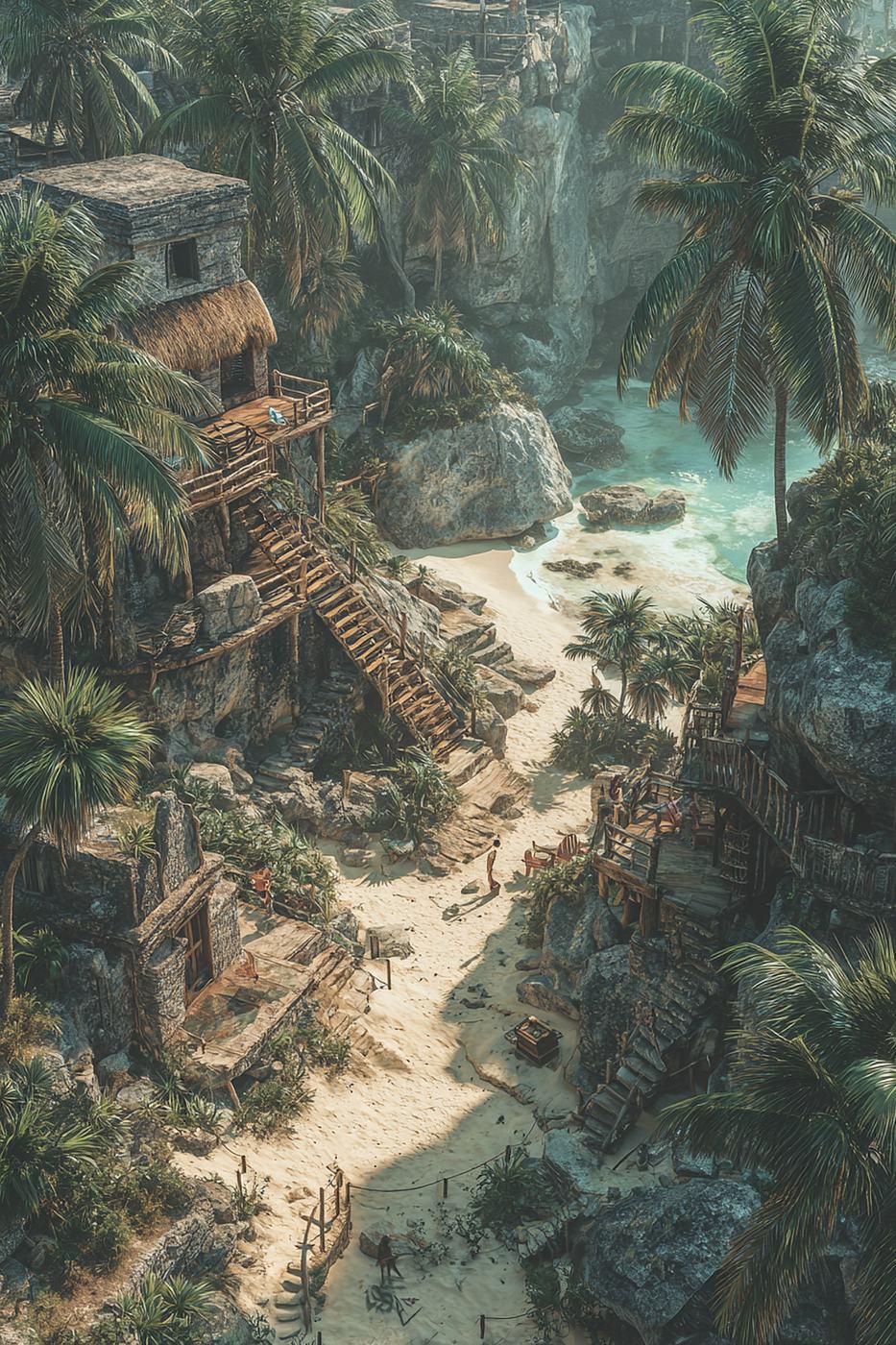
The ruins closed at sunset. We waited until dark, watching from the beach as the last tour buses pulled away, as the ticket booth lights went out, as the guards locked the main gate and drove off in their pickup truck.
Then we moved.
Over the fence. Through the jungle path, our eyes adjusting to moonlight filtering through the canopy. Iguanas rustled in the undergrowth. The ocean roared somewhere to our left.
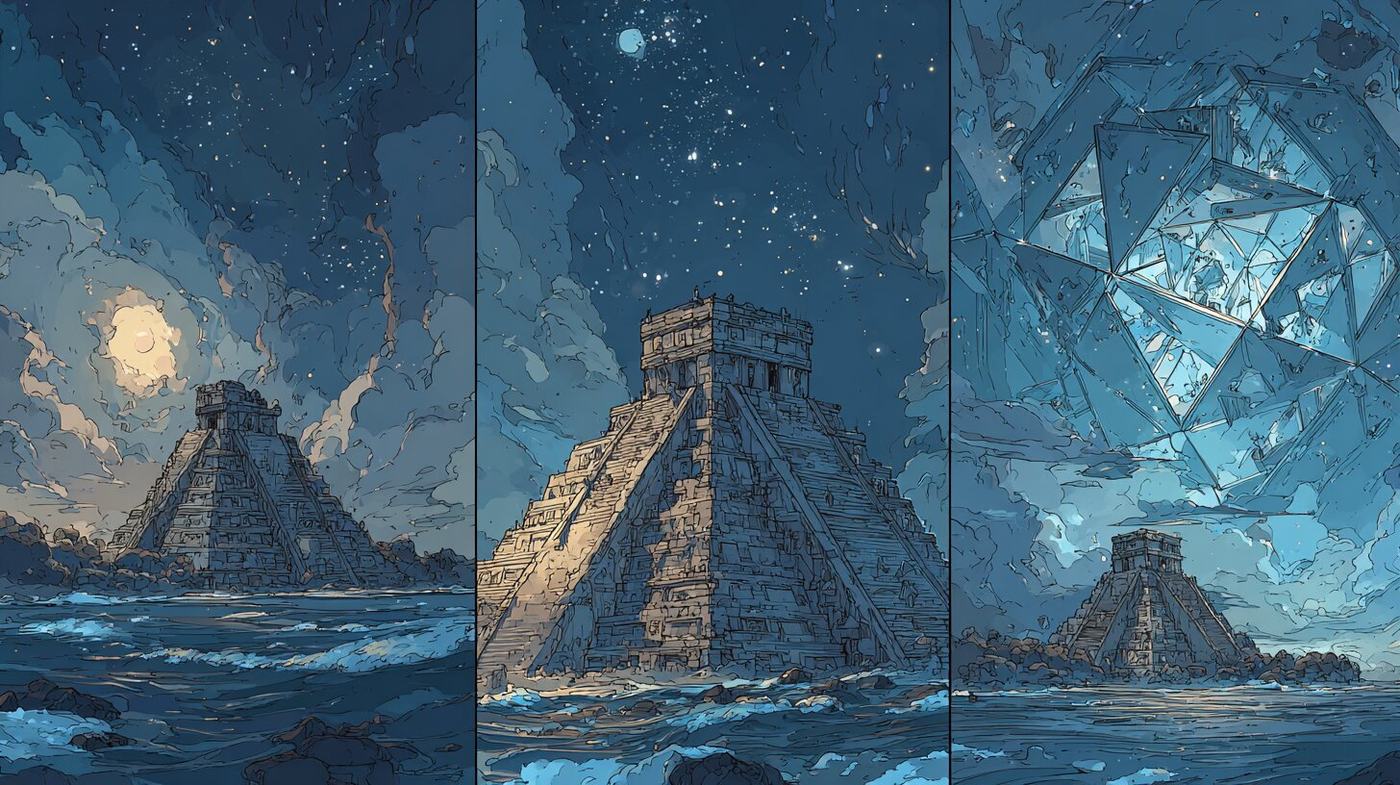
The Castle emerged from the darkness, a black pyramid silhouette against the starry sky, overlooking the cliff's edge where ocean met limestone.
We climbed.
At the top, we sat.
The ocean spread before us, endless silver under the moon.
Tarquin had DMT.
I'd tried it before, back in New Orleans after the breakup with Cassie. It had been overwhelming, terrifying, transcendent. I wasn't sure I was ready to do it again.
But sitting there, on top of a thousand-year-old pyramid, with the moon rising over the same ocean the Mayans had watched, it felt right.
We smoked.
And for the next fifteen minutes, reality dissolved.
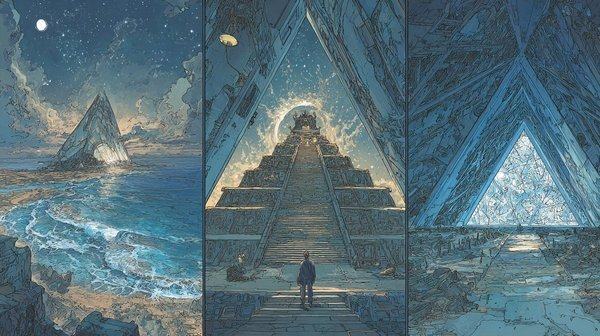
I can't describe what happened. Sitting here with Akiko, I don't have the words. It wasn't visual, exactly, though there were visuals. It wasn't auditory, though there was music, some fundamental frequency underlying everything.
What I remember most is the feeling of boundaries dissolving.
Between me and Tarquin. Between us and the pyramid. Between the pyramid and the earth. Between the earth and the ocean and the stars.
We were separate beings, and also we weren't. We were individual consciousnesses, and also we were the same consciousness experiencing itself from different angles.
Like we were all just... blobs. Blobs of water with light inside. And when the boundaries between the blobs dissolved, the lights merged, and for a moment there was just one light.
One consciousness.
Experiencing itself through all these temporary forms.
Zero and one.
Oscillating.
Creating everything.
Akiko stops typing. Looks at me.
“Zero equals one,” she says quietly. “The digital IS the mystical.”
“Exactly,” I say. “That's what I was trying to figure out the whole journey. The analog and the digital. The rational and the mythical. Matter and energy. Zero and one. They're not opposites. They're the same thing. Different vibrations of the same frequency.”
There is more. There is always more. But the window has gone dark and Akiko is looking at it, not at me. She says no. Not tonight. The ad said afternoons, and she answered an ad. She saves the file, closes the PowerBook and takes her coat off the chair. She does not explain further. “Thursday,” she says. Palenque can wait until Thursday.
The Pendulum
Interlude
The longer I stroll around this ball we call earth, the more I come to believe that there are certain universal truths we can't escape from. Duality is one of these quirky universal truths about existence. I guess you could call it an axiom, a rule that governs some of the fundamental aspects of the universe. It almost seems to be embedded into the architecture of how we perceive reality. Up and down, right and left, inside and outside, mind and matter, body and soul, waves and particles. Without trying to get too esoteric and abstract, all I am trying to say is that duality permeates everything. Duality, in the form of day and night, hot and cold, masculine and feminine, art and science, duality is a phenomenon that is integral to being alive today on planet earth.
Our consciousness is not exempt from the dichotomous nature of the dualistic divide. In the mind it is often referred to as the left and right brain, one side with the proclivity in the arts while the other in the sciences. Nietzsche wrote often about this dual nature of the mind, as the Dionysian vs. Apollonian. The intuitive, feminine, instinctual, poetic, and metaphorical way of interpreting the world vs. the rational, masculine, logical, utilitarian and literal one. We all have both, and use both sides, just as much as we have two hands and use them both, but one of which is always more dominant.
Time periods can also be dominated by one or the other principle. One could argue that the golden periods were times where there was a perfect balance between the Apollonian and the Dionysian principles. Through the lens of Western civilization, dominated by a very rational and materialistic gaze through which we evaluate history, time periods which are considered decadent, dark, or default are often associated with the excess of the Dionysian principle.
The pendulum slowly swings through history, starting deep in the dark caves when humans still used primitive forms of communication. Grunts, cave wall drawings, theatrical charades, all early seeds of what are to blossom into the spoken word, and eventually writing and reading. In that early beginning when humans were closer to their animal past, and logic had yet to dominate the mind’s operating system, metaphor, poetry, and intuition become the way we begin to make sense of the world. The stories we begin to tell to each other, that become the myths, proverbs and other primitive memes that travel through time and space, as data-sets of meaning, are all built upon a skillful exercise of this Dionysian mental muscle in the beginning. The best fables, myths, and legends, would be told by storytellers who had a better grasp of metaphor, used their intuition to discern universal properties in things, and communicated them with a poetic delivery that would make the stories survive into eternity.
Would Aesop’s fable of the tortoise and the hare have survived to today if instead of a tortoise and a hare, it was a flamingo and a koala? While the image of a race between a koala and a flamingo tickles the imagination in an exotic kind of way that the generic tortoise and hare do not, what matters is the choice of the animals in regard to the role they need to play in the story, and their universally identifiable qualities. In the case of the tortoise, slow and steady, and in the case of the hare, fast and frantic.
In the tangled and confusing world of early man, the better storytellers were those who were the better metaphor-makers. The ones who could quickly identify the essence of things. If they could convey them in entertaining symbolic narratives, by using universal qualities and cues from nature, then it became much easier for the audience to intuitively understand and remember the story. Almost all of us will answer the same when posed with the question “what is the defining characteristic that differentiates a tortoise from a hare?” But that question becomes a lot less simple to answer in the case of the flamingo and the hippopotamus, or was it a koala, I can’t seem to remember.
The Dionysian-poetic-intuitive perspective ruled the matriarchal roots of meaning in our collective ancestral history. When Gaia, the mother goddess, was worshipped around the world, she fascinated and mesmerized mankind with the ability to bring forth life into the universe, and the recycling of life on the planet in the form of the rotating seasons. Meaning was created as a result of weaving together all these metaphors about the human experience. As a result, the collectively woven tapestry of meaning is the amalgamation of these oral stories. The threads loosely connecting with one another, making their boundaries fuzzy, out of focus.
The pendulum moves further into the Apollonian, and the world starts to come into focus. Folklore and myth begin to give way to science and logic, and the story that shapes our lens through which we view the world begins to demystify and sharpen the edges to the stories of meaning. Demetra and Persephone give way to Christ’s rebirth at Easter. Later our understanding of the Earth’s tilted axis as a result of astronomy, allows us to further demystify the shifting of the seasons.
The Dionysian world in pre-classical Greece was a world that was focused on the immaterial, the ethereal, the mythical. At the dawn of Western civilization, the Greeks set the foundation for the Apollonian. The principle of order associated with the Sun god was perceived as superior to the scattered and unpredictable nature of drunken Dionysus. We had ecstatically danced our way out of the animal kingdom, and the intuitive and esoteric ways of the matriarchy gave way to the pragmatism of patriarchy. We shifted our focus from the immaterial, the mythical, the fluid, and as we became less interested in superstitions and stories, we begin to obsess about matter.
In all the millennia before, mankind had struggled to create a poetic narrative to explain the meaning of existence. We obsessively defined archetypal ideas, mapping the stars and the landscape, infusing it with song and story. Exploring the world was meant to be done through the realm of the immaterial, software, the mythical. When patriarchy and the western utilitarian worldview begin to dominate the collective consciousness of the West, we shift from software to hardware. We obsess about understanding matter, through this new language called science and reason. We begin to map the physical world, creating maps, and genealogies of species, everything had to have a name, a label, something that signified that it was separate, unique and identifiable. The fuzziness, fluidity, and the implied interconnectivity of the Dionysian worldview was being compartmentalized by reason, the scientific method, and the quantifying obsession of the young western mind.
The Dionysian worldview was a celebration of interconnectivity and saw the world through an animist’s point of view. Nature was infused with spirit, and typically these cultures subscribed to polytheistic spiritual world views. Monotheistic religions arrive when patriarchy begins to dominate the eastern Mediterranean with the birth of the Judeo-Christian faiths. The divine leaves the immaterial realm of myths, and is personified in the physical form in the body of Christ. Good metaphors and mythical stories were not good enough for the literal and materialistic times of the 0s. Mankind wanted God to reveal Himself in the form of a man, who they could touch, and who they could kill.
As we dive deeper into mapping the world and humanity by creating tools such as telescopes and microscopes, further pushing our understanding of the physical & material plane, we lose this enchanted, mystical world view, historically crystallizing the erasing of ancient knowledge through the destruction of the library in Alexandria, burning of books during the Spanish Inquisition and the destruction of Constantinople in 1453. As we move into the Enlightenment and the Scientific Revolution, eventually graduating into the Industrial Revolution, humans grasp the physical plane all the way down to its most elemental particle and split the atom, only to find that energy and matter are one and the same at a different vibration. But this pragmatic, objective, utilitarian world that had manifested in modernity was on the verge of being challenged by the essential understanding of quantum physics. This Apollonian world view that had been constructed ever since the birth of western civilization based upon the principle, essentially a hypothesis, that there is one objective truth, was now going to be turned on its head with the basic understanding that subjectivity determines whether an electron is a particle or a wave. Whether it is a physical object or a vibration of energy, therefore introducing again the importance of the observer in the ultimate, final outcome of reality. The idea of a personal narrative comes into being for it is our collective overlap of our perspectives that creates the reality that we live in.
The pendulum starts to swing slowly into the Dionysian realm again, but over this layer of science and reason. As a consequence of us understanding the quantum realm, we give birth to circuits and computer systems that allow us to start to advance our telecommunications so that our increased population can share knowledge instantly (at the speed of light) across every inch of the globe. Personal narrative and how your avatar is created both in your mind and in this new world of electronic myths will determine the fate of your hero’s journey. Masters of their own story will puppeteer their avatar to find their Shambhala, their higher self. Others, caught up in the vanity and who allow their ego to blossom will fall victim, like narcissists, and the puppet hand will no longer be their own, but the collective roaring horde of mediocrity.