Prologue
The Muse
Prologue
NYC, 2002
The sun had risen now and I could see Cancun fading behind us on the horizon. Construction of a new elevated highway was in the making, so the road we were on was single file, and every so often traffic would accumulate at the military checkpoints. Speed bumps, accompanied by several heavily armed soldiers and a checkpoint booth, would punctuate the otherwise quiet steady drive. Occasionally the soldiers would board the bus and swiftly scan the passengers. Their overall demeanor was somewhat intimidating and unsettling. Tarquin would always manage to doze off just before the checkpoint, only to awake a few minutes after we had cleared it.
The bus began to slow down. Another checkpoint was coming up. Tarquin again 'mysteriously' nodded off, and wedged his body into the corner of his seat leaning against the window. Somehow he had managed to cover his face with the hood of his sweatshirt, and a lungi was half wrapped around his waist. It looked like he had been asleep for hours, yet we were just chatting 30 seconds ago. The military boarded the bus, and this time they walked down the aisle. They asked for all the passengers' papers. I gathered mine and handed them over to the officer. He pointed to Tarquin, who was seated in the seats next to me on the other side of the aisle.
Flipping through the pages of my Greek passport and without making eye contact, he murmured in a thick Mexican accent, “Is he with you?”
Tarquin lay motionless stretched out across the two seats looking as relaxed and comfortable as someone could on a public bus.
“We just met,” I responded bashfully.
The soldier nudged Tarquin's foot, which was protruding into the passageway. He arose as if he had been hibernating. His face was covered by his messy hair which was no longer in a ponytail. After a few moments of half awake slumber, he sprang up, clumsily clearing his hair from his face. His eyes were wide open, and this endearing 'confused dog look' came across his face as he stared into the officer's eyes.
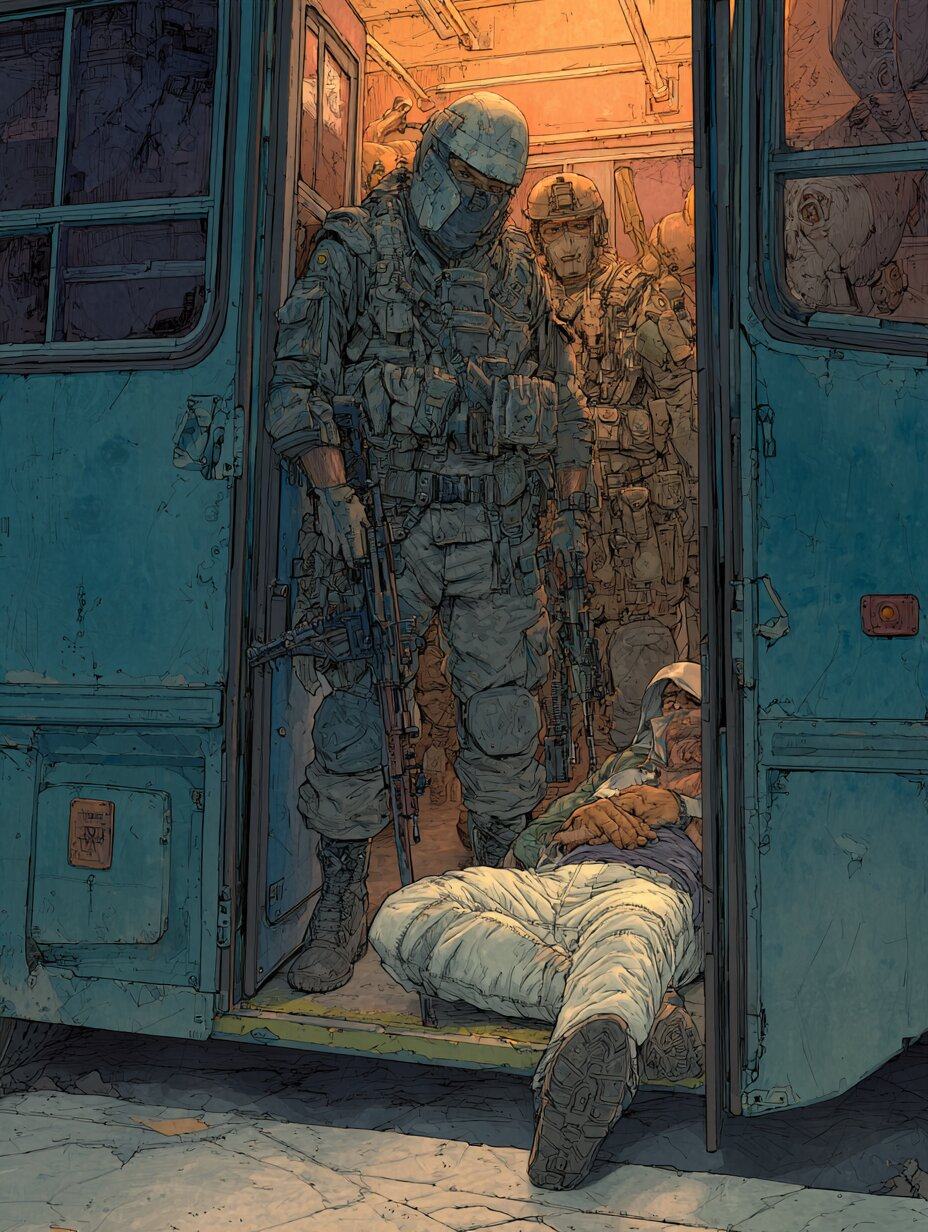
“Buenos dias señor,” the soldier said sarcastically, “pasaporte y documentos, por favor.”
NYC, 2002
It's one of those first fall days. Drizzling in the East Village. The central heating, which I have no control over, has been on for a week already, and the exposed piping hugging the red brick wall radiates unnecessarily. The windows are open, but I'm still sweating slightly.
It's partially due to the uncomfortable heat. But there's something else making cold beads trickle down the sides of my long sideburns.
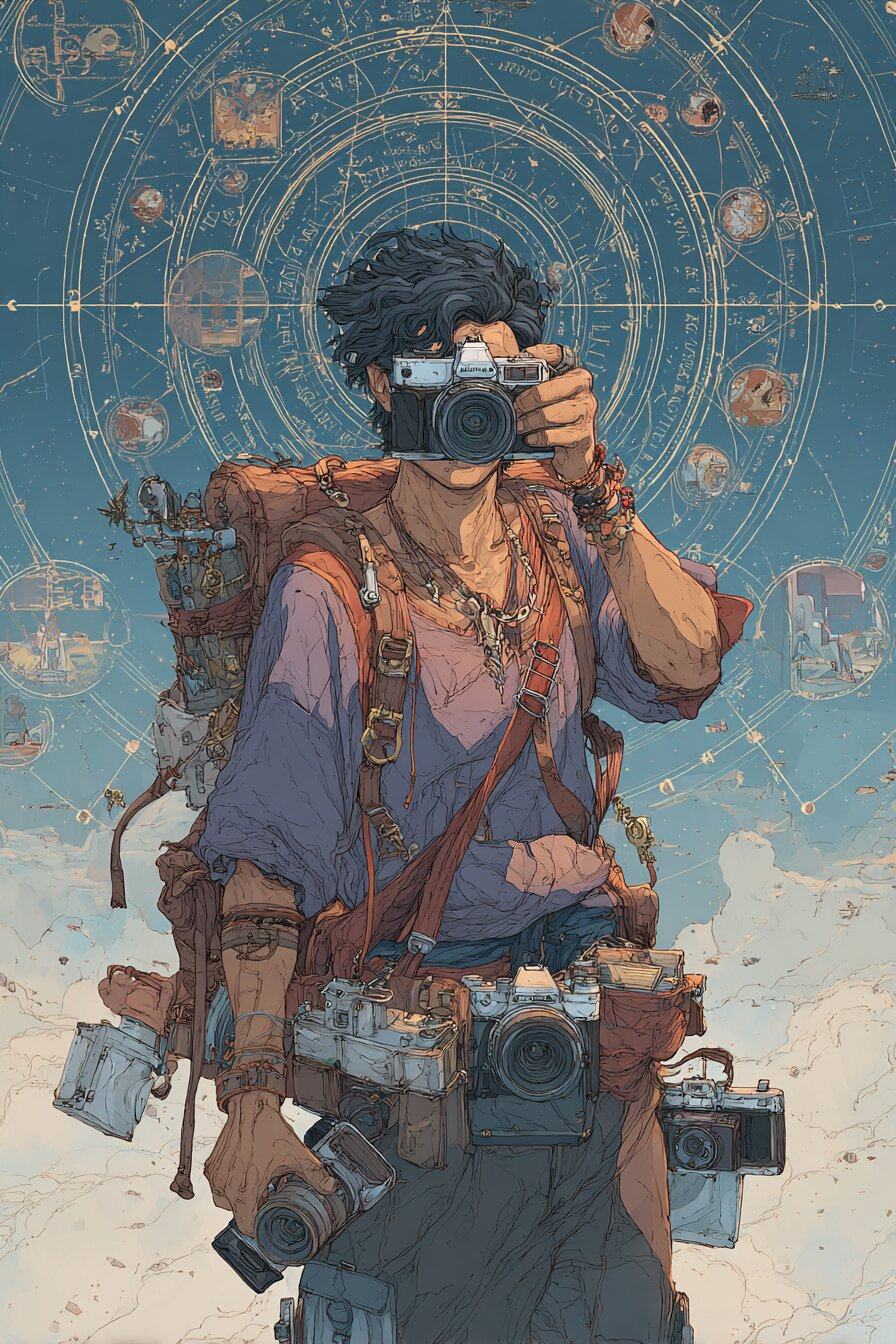
It's been three weeks since I got back from my fourteen-month adventure. My grand tour through Central and South America. And I have nothing to show for it.
Hundreds of hours of footage. Notes, photos, sketches. Trinkets from Latin American street markets. But I haven't written a single word. Haven't edited one clip.
I was certain the story would pour out of me uninterrupted.
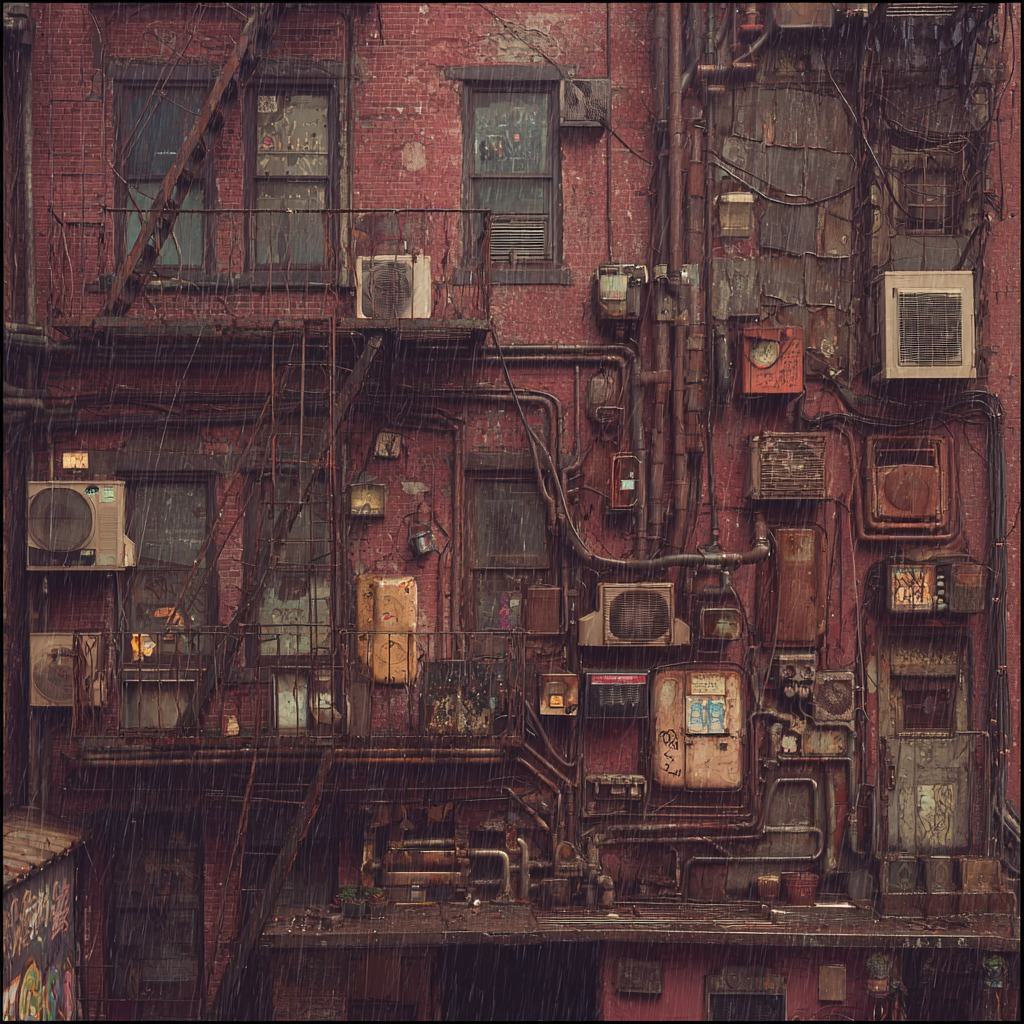
But now it's the beginning of the fourth week. My grad school classes are in full swing. And here I am, pacing up and down my living room on the fifth floor of my tiny walk-up on 9th Street and Avenue C.
The rain begins to pour. The day slips into night.
I have a Compaq laptop. It can't really handle editing video with Premiere, so I have to wait until I learn Final Cut Pro at school. But that's still weeks away.
So the only thing I can do is type.
I've been tormented by these ideas for the past year. I need to get them out of me. Begin framing the stories and philosophical threads I'm so excited about.
But I'm no typist.
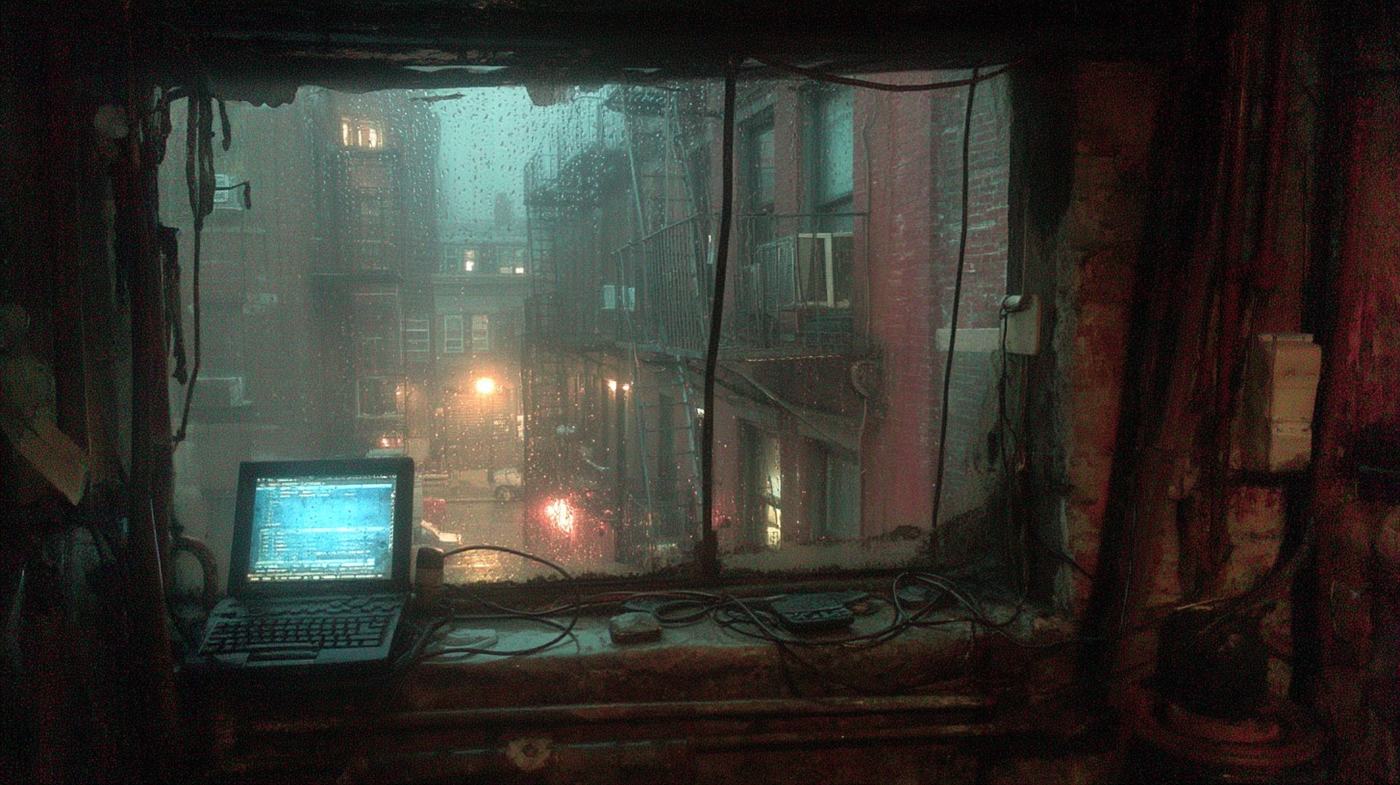
Every time I sit at the laptop and stare at the screen, proverbial crickets chirp in my brain. Rolling tumbleweeds in the desert of my mind.
But that's not the case when I'm talking to someone.
Orally, it's different.
Late at night at a bar, having drinks. At home with friends, joints. The audience comes alive. An electric communication arises and my articulation becomes effortless. As I surrender to my own expression, my story becomes a performance.
The story unravels. Sometimes I surprise myself, spontaneous improvising, finding new and more tailored ways to tell stories I've told so many times before.
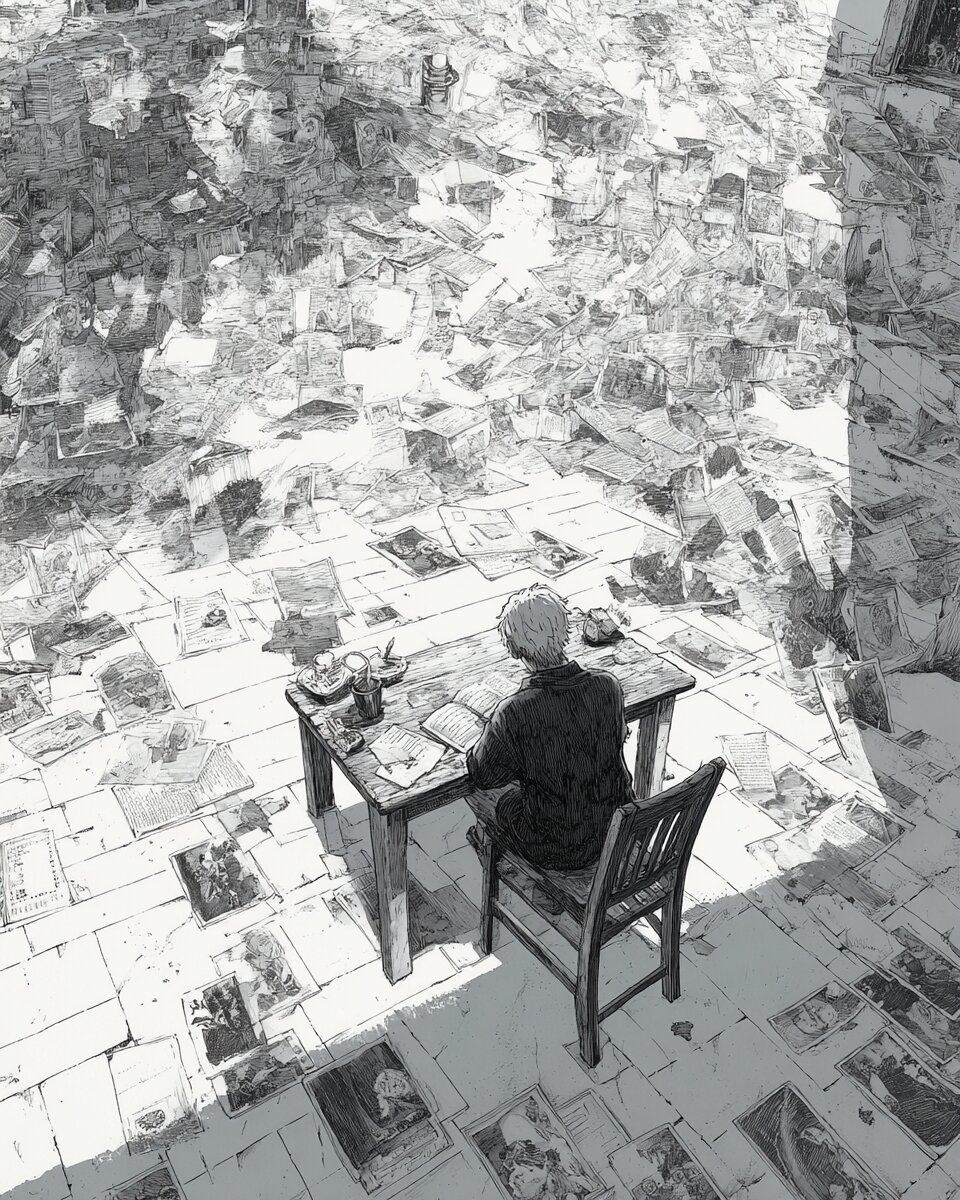
If I have visual material, a photo, a video to jog my memory, forget about it. It opens a portal. That moment captured on video or film pierces time and expands like an ink droplet in water. I'm there again, remembering the whole day from that tiny shard chipped off the block of time.
Words bounce out rhythmically, eloquently.
The apartment reverberates with my anxiety. I pace.
Then I pause.
That's it.
I'm not a writer. I'm an oral communicator. I need to be in a state of inspiration, with an audience, triggering hidden obscure memories with my own media.
I need someone to help me find my oral flow.
If I could only find someone to type as I tell them my stories while going through my videos and photos...
I start pacing faster. Biting my nails with enthusiasm.
This is good. The first good idea I've had in weeks.
I need to get this started. I only have six months left until I need to deliver my thesis for my Master's degree in Media. I'm not 100% sure what it's going to be about yet, but it'll have something to do with using media to build our personal avatars. Characters in our own personal mythologies, guiding us, helping us actualize our full potential.
Or something like that.
It's a matter of inspiration.
I need to be inspired and committed. An audience does that.
Cracking my knuckles and staring at the ceiling, my mind wanders... where would I find someone to listen to me babble on about gallivanting around Mayan and Inca ruins on solstices and full moons?
Who would care?
Was this stuff even interesting?
I can't bear the thought of beginning this process and telling these stories to someone who's not interested. That would definitely put a damper on my flow.
I stop pacing. Doubt overcomes me as I realize how personal, grandiose, and wacky this whole thing might seem to someone from the outside. Someone who doesn't know me.
All those great ideas from moments ago evaporate. Now I'm consumed with the fear of not being understood. Or not wanting to be understood, due to the banality and overly personal nature of my story.
This is at the core of why it's taken so long to get started writing.
An introduction to my mind, that might be the essence of this book. Where to start then? In the cyclical modalities of our thinking it seems almost impossible to frame the mind. Wrestling with this notion for some time now, I have realized that there is almost no point in trying to ascribe a beginning, in which case it seems appropriate to start anywhere, and more precisely start where things seemed to have clustered into some sort of meaning to me.
These are the elements that I remember most clearly, these are the memories that shaped me into who I am, these are the experiences which I am obsessed with and which swim throughout my mind effortlessly every day, these are the naïve idealistic rantings of a privileged westerner at the dawn of the new millennium. I don’t claim that this is the truth, but only memories that have surfaced after bubbling through introspection, editing, and polishing. It is an attempt to give a linear historical thread of meaning to something that is obviously chaotic in nature, if that is possible at all. For some reason I feel that this is the essence of my work, and maybe due to my self-absorbedness I feel that what I am experiencing individually is a predicament of our time that emerges in every aspect of life, nature, and metaphysics.
Finally this text is a collection of essays, notes, diary entries and other personal patches stitched together into a stream of conscious and sometimes unconscious thoughts.
There's something bittersweet about having a sounding board. In one sense there's this validation that comes with having your ideas heard, but on the other hand there's always this disconnect. Can anyone ever really understand what goes on in the crevices of your mind? Not fully. It's this struggle to have to express yourself, but to never know if you're really being understood. That goes back to the birth of language as a need to bridge that solitude. That existential solitude. I'm separate from this person and I'm curious. Do they see the world the way I do or not?
I need to snap out of it. This paralysis is killing my thoughts. There's no other way to move forward than finding an audience who I pay to care.
I look in the mirror hanging next to the front door and stare at my face.
Fuck it. Just do it.
I smack myself. Whack!
Ouch!... Just continue what you've been doing for the past year. Someone will like it and think it's meaningful. And if no one does, at least you'll have gotten it off your chest.
My cheek throbs, slowly turning pink.
It's the perfect self-pep-talk.
I can't explain it, but when I'm telling someone a story or analyzing an idea, I can feel if they're paying attention.
Like a circuit of energy closes when someone's following my thoughts.
I can sense our minds falling into a groove together. There's contact. As the audience's mind and mine touch, an enthusiasm and inexplicable delight makes my spontaneous expression more colorful and effortless.
The more attention and comprehension the person I'm speaking to exhibits, the more articulate, spontaneous, and creative my speech becomes.
A feedback loop of attention.
Paying attention is the cherry on top of consciousness, the ultimate precious resource in the universe. For every conscious being can only pay attention to one thing at any given time.
I need to figure out how to incorporate this into my creative process.
I need a muse.
That's it!
But where would I find a muse?
I'd heard of this new website from one of my peers in the grad school program: craigslist.org.
It was classified ads online, but also... more? I wasn't clear. But some of my classmates had found actors for their projects by posting ads in the jobs section.
Could I post an ad for a muse?
Would anyone even respond?
What section would I place the ad in?
It's 2002, let's not forget. Craigslist is still pretty young and new. Quite PG.
The naivete of the postings led one to find all kinds of strange things. The constant cascade of new listings was a meter of sorts, a window into the needs of the people in your community. A cardiogram of your town or city, monitoring and documenting the desires, hopes, and needs, post by post.
Craigslist was strangely beautiful, honest, and vulnerable.
I couldn't clearly define it, but its naked, raw, almost desperate authenticity exposed our humanity with all of its loneliness, angst, and ambition, while simultaneously coating it with that sterile disengagement that all digitized and mediated human data has online.
The rigidly formatted monochromatic lists and grids served as semiotic scaffolding, engineered to prioritize utility over self-expression, leaving no room for any embellishment, character, or color.
I stared at the blue lists on my screen and puffed on a cigarette.
Why not? There was nothing to lose.
I just had to figure out where to make the posting and what it was going to say.
I dove right in.
LOOKING FOR A FEMALE MUSE/TYPIST, $15 per hour
I wrote it in a blank Word doc. I'd figure out where to place the ad later. I needed to get this out of me before another spell of doubt overcame me.
I continued:
Hi, young 22-year-old aspiring documentary filmmaker, just back from 14-month journey in South America, with 100s of photos, 10s of hours of DV video, and even more stories to tell. Looking for someone to type as I dictate and help me organize my thoughts while I recount stories from the journey while watching the videos and fumbling through my photos. If you are a good typist and are curious to hear stories about Mayan prophecies, magic psychedelic potions from the heart of the Amazon, full moon San Pedro solstice ceremonies at Machu Picchu, and how rave culture, DJs, and electronic music are a new form of cyber-shamanism, reach out with a short bio, photo, and note about why you think you would be great for the job. This is a paid position for 2-3 times a week, preferably afternoons.
I thought it looked good.
I felt a little weird about asking for a photo, but I knew it would be hard for me to get into the mood if I wasn't somewhat physically attracted to her.
It was intriguing enough to entice someone creative, but short and to the point enough not to put off someone who relishes organization and promptness.
I couldn't decide where to place the ad, though. This issue had ballooned into a bigger dilemma than I'd anticipated.
I was afraid that placing it in the personals section, either under M4W or Strictly Platonic, would insinuate something other than what I was mentioning in the ad.
I know what you're thinking... I must have wanted to leave the door slightly open, just in case something sexual might arise.
But I assure you, quite the contrary.
I'd had plenty of sex in South America with Brazilian goddesses and been in a long-ish relationship of nine weeks with an Argentinian model while living with her in a minuscule apartment in Sao Paulo.
Sex was not what I was looking for.
I honestly just wanted someone who was a good typist and would laugh at my jokes. You know what I mean, be interested in what I had to say.
Here is the actual dilemma. The muse inspires by taking on the role of the lover. That is the old arrangement, and in the real world she gets compensated for it, with gifts if she is the lover, with wages if she is not. Marry your muse and you never pay her again. I was hiring mine at fifteen dollars an hour, and the drama was whether I could keep it professional. Every other time I had tried, I could not. If I made that sacrifice, the sacrifice would have to go somewhere. Into the work. That was the bet.
There were sections for Secretarial and Paralegal work, but that felt too dry. I was pretty sure that someone looking for work in those sections wasn't envisioning themselves typing away for $15 an hour while a 24-year-old ranted and raved in a smoky fifth-floor walk-up in Alphabet City.
With half a heart, I settled on the TV/Film/Video section and the Art/Media/Design section.
Pressed Enter.
Quickly made my way to bed, wanting to flip the page on this chapter and day.
I launched the digital message in a bottle into the chaotic mesh of pulses and data, that ever-in-flux sea of information, with its currents, its whirlpools, its tides and swells, its storms.
I was eager to wake up and see if I'd get a response.
I woke up extra early the next day.
7 AM.
I almost hit my head on the ceiling as I jumped out of my loft bed, forgetting that my bed was elevated four and a half feet from the ceiling in what was essentially a medium-to-large walk-in closet and my dressing room.
I'd gone to bed relatively early at 10 PM.
There were already twelve responses.
I was shocked.
As I brewed my espresso on my little aluminum Italian espresso maker and pulled my t-shirt over my face, I began reading through the responses.
Surprisingly, most of the answers were thoughtful and had the tone of someone who was genuinely interested in the task at hand. The young ladies ranged in age, but the majority were in their early to mid-twenties and were in the arts, media, or filmmaking world.
As I skimmed through the emails, more started coming in.
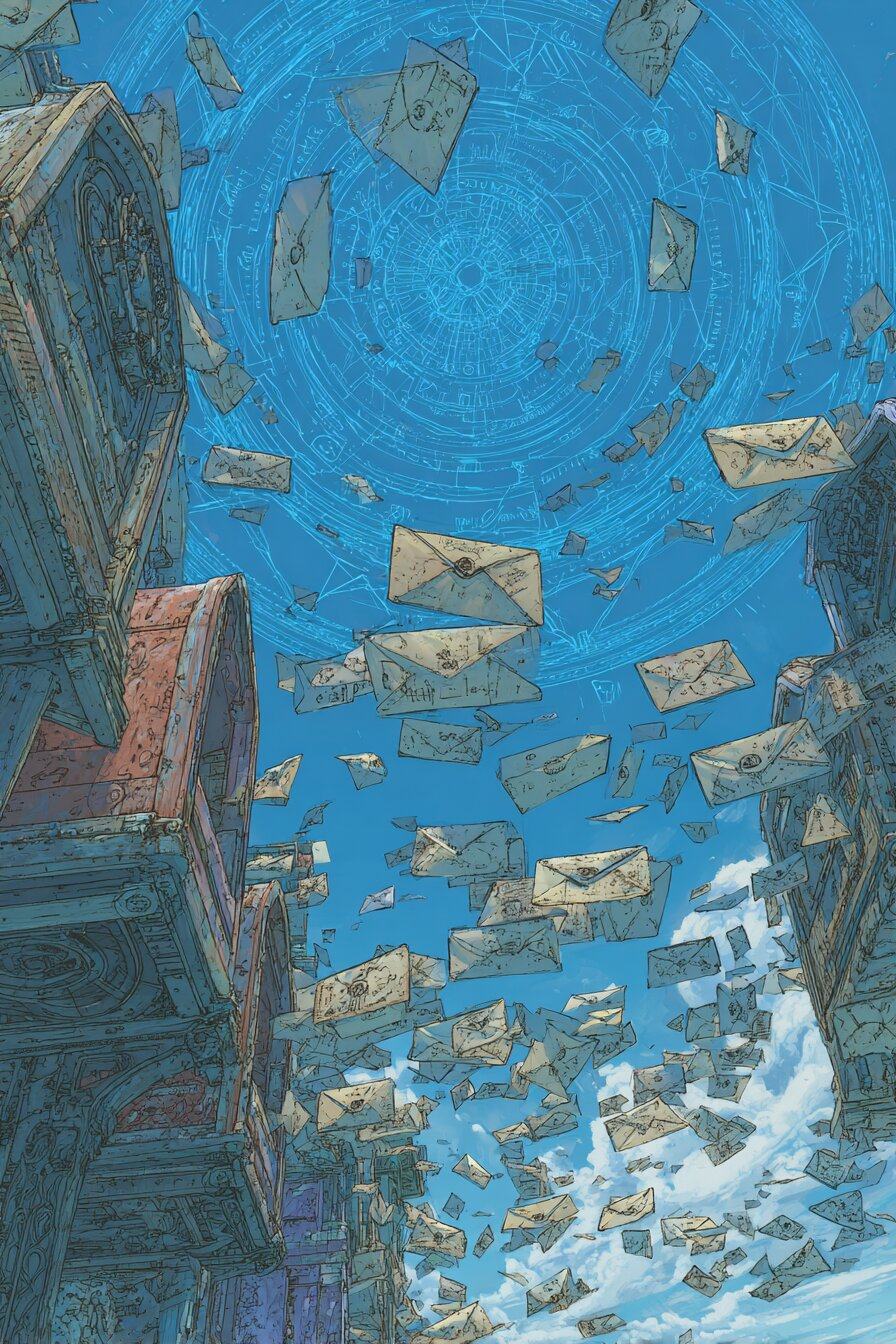
Bing. Bing. Bing.
My Hotmail account was going nuts and it wasn't even noon yet.
After receiving thirty-three applications, I decided to take down the ads.
Now I had to go through the daunting process of making a choice.
Choices always were tricky for me.
Maybe it was my subconscious knowing that an overabundance of choice might have been at the root of my ambivalence and uncertainty in life so far. Or maybe it was due to my active imagination, which would spend countless hours thinking about the alternative.
Either way, it was something I dreaded and tried to minimize in my life.
And now I had to choose who to give such an important responsibility to.
The thought of having to make such an important choice quickly made me dry-heave. But I collected myself and printed out the applications along with their photos.
Oh, and yes, most of them had attached photos.
I say that because you have to remember this is 2002. Sending a photo via email was not as simple as snapping something with your smartphone and a few seconds later, ta-da!, email plus attachments sent.
Attaching a photo in the early 2000s, when cell phones had yet to integrate cameras, involved scanning a real analog paper glossy photo and then sending it via an email service provider on a browser, with a very high probability that those were Hotmail and Internet Explorer.
I was thus surprised that the vast majority of the applications had one or two photos of the prospective muses.
A few hours later, I'd whittled the list down to nine muses.
I figured, why not organize back-to-back interviews with them in some location close to The New School? I could schedule fifteen-minute meetings in the food court section of the deli on 14th Street and 8th Avenue.
It was settled.
I responded to the nine prospective applicants and set up the interviews for a day toward the end of the week.
I was excited. Things were falling into place. It seemed like wind had finally hit my sails, and sooner or later I'd have a detailed transcription of all the wild stories I'd lived and theories I'd come up with over the past fourteen months.
I couldn't wait for Thursday to come around and get this show on the road.
Thursday came faster than expected.
I'd been flipping obsessively through the photos attached to the applications, trying to imagine what they'd be like. What their voices would sound like. How interested they'd be in my stories.
The whole thing felt weird, but I was excited and curious about who I'd ultimately end up choosing.
I was halfway through my cheese slice when Amy shyly asked if I was the one with the Craigslist ad.
Wiping my greasy fingers on a napkin, nervously I slid out of the chair and greeted her with an awkward hug.
Within two hours or so, they'd all passed by.
I'd been afraid that the whole process would feel slimy or creepy, but I'd made an extra effort to make it feel very much like a grad school art project to downplay any weirdness. Besides, the food court section of a deli mid-afternoon was as bland as it could get.
I was conscious of how it could have been perceived, so I made an extra effort to emphasize the inspirational and artistic intent behind the request.
Every one of the lovely young muse applicants was inspiring in their own way.
It was hard to decide who to go with.
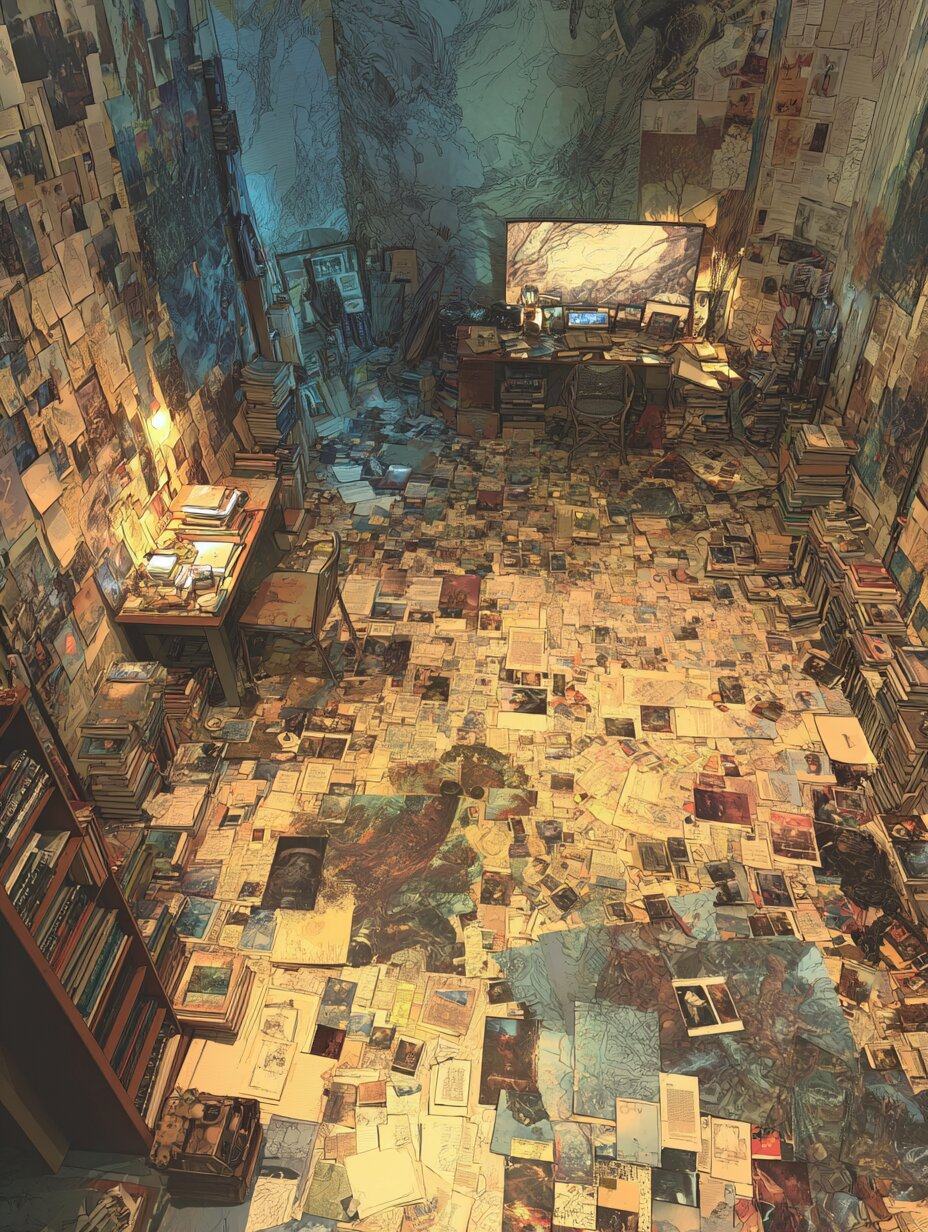
Some had restrictions on when they'd be available, so I spent the rest of the afternoon making a matrix with their available times, words-per-minute typing speed, and how likely each was to enjoy the stories I was going to tell, based on reading into the photos they provided.
The process was more complicated than I expected. It ended up taking up most of the day.
I ended up choosing two.
I thought it would be best to have two options in case one didn't work out.
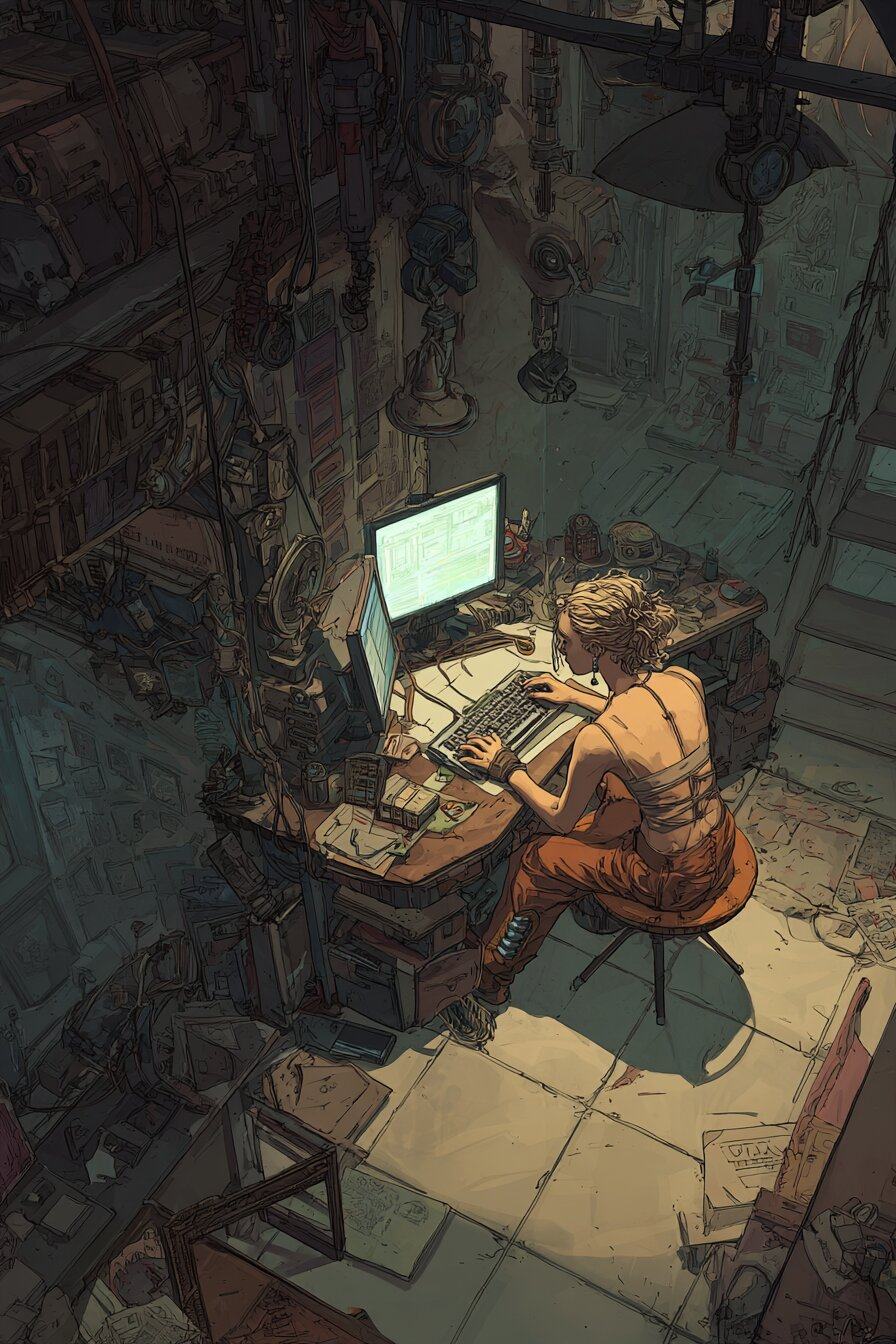
All I was looking for was the transcriptions of my oral accounts of my adventures as I watched the videos on playback in my apartment.
I'd test out my two muses and either keep both of them and plow through my thesis, or eventually choose the best of the two and just work with her.
The first one was named Jennifer. Sweet, organized, a little too eager to please. She came over that Saturday afternoon.
We sat in my living room. I cued up a video from Tulum, the beach at sunset, pyramids in the distance.
And I started talking.
She typed for maybe twenty minutes before I realized it wasn't working. She kept interrupting with questions that broke my flow. Wait, where is Tulum? What's ayahuasca? Why were you there?
Valid questions. But they pulled me out of the trance.
I thanked her, paid her for her time, and she left.
The second one came the following Tuesday.
Her name was Akiko.
Akiko was different.
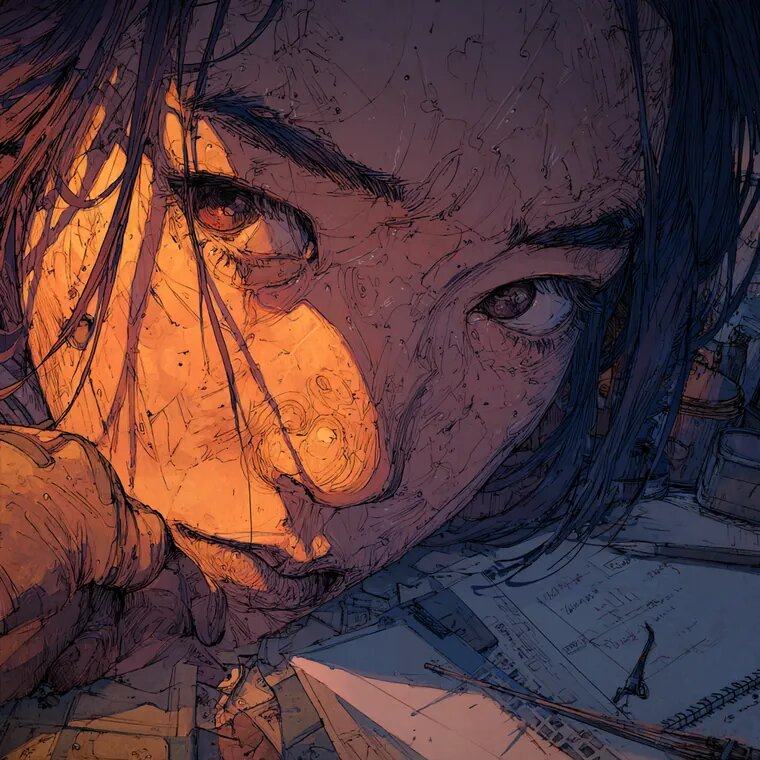
Half-Asian, mid-twenties, short black hair, intense dark eyes that seemed to cut through bullshit instantly.
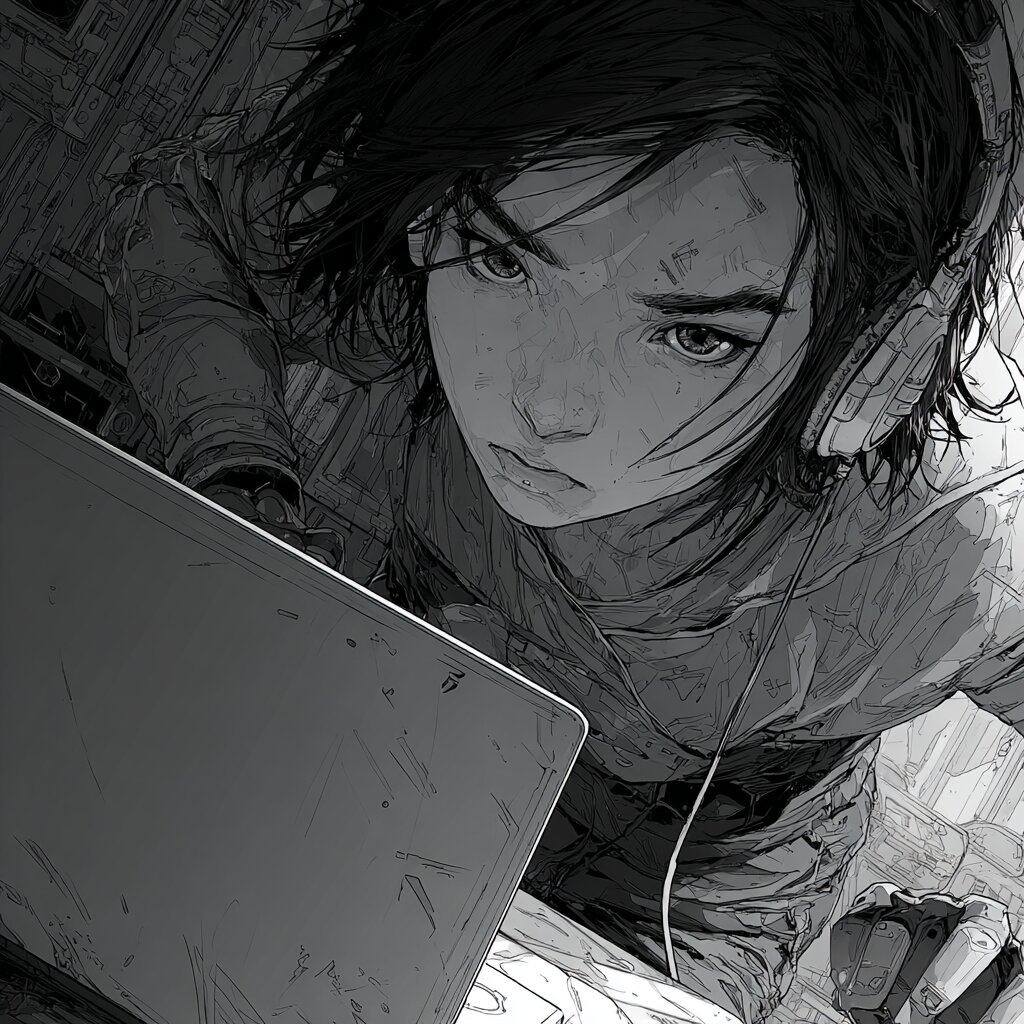
She set up her laptop, a silver PowerBook, sat at my desk, and looked at me.
“Just start,” she said. “Wherever feels right.”
I took a breath.
The bus was already at the station when I arrived...
And the story poured out.
She didn't interrupt. Not with the kind of questions that break the flow. Just typed, occasionally nodding, sometimes smiling, her fingers flying across the keyboard.
When I finally stopped, two hours later, hoarse, exhausted, she looked up.
“That was amazing,” she said. “When do we do this again?”
We met three times a week after that.
Sometimes four.
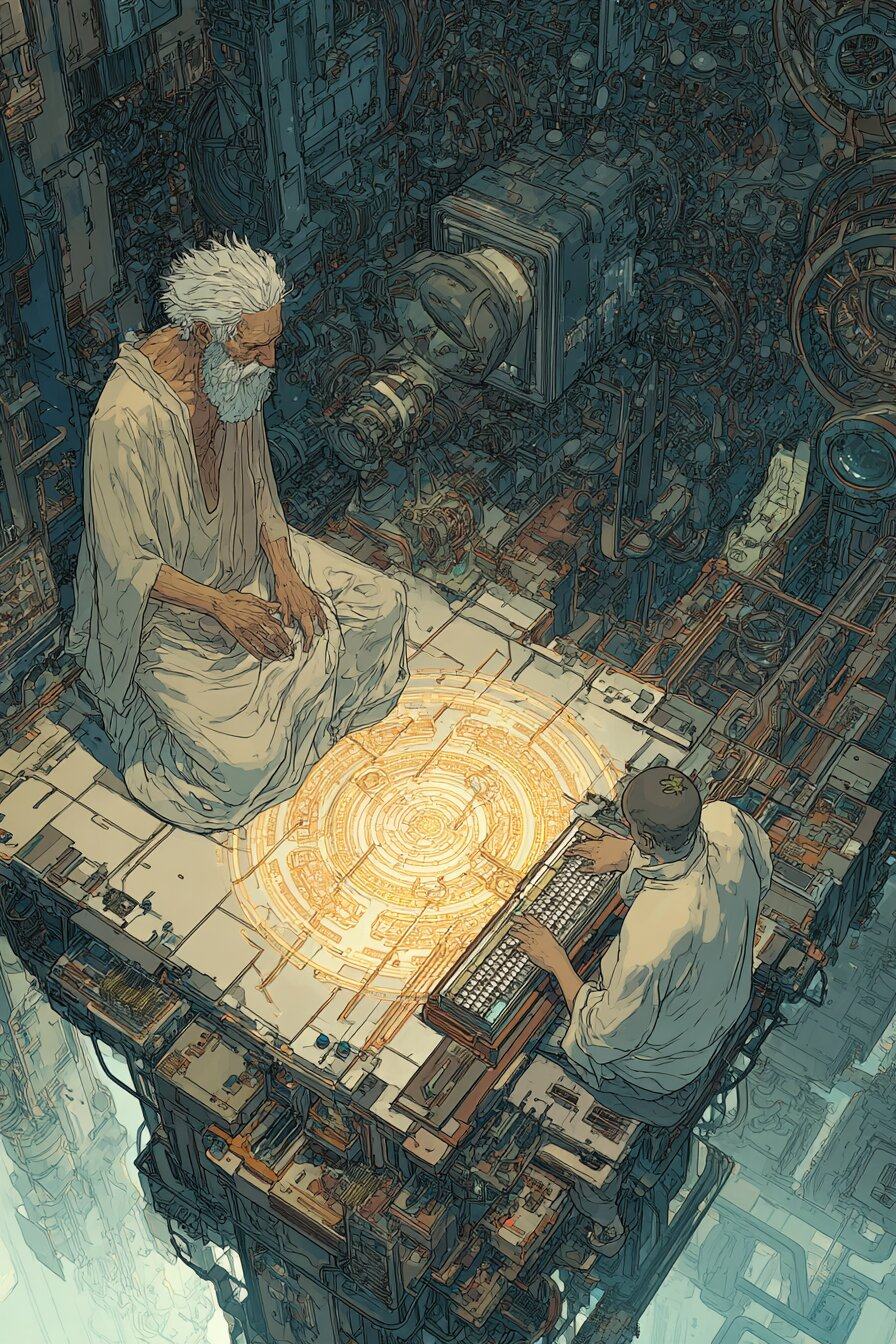
I'd talk, she'd type. I'd watch videos, flip through photos, and the memories would flood back. The stories would evolve, deepen, sharpen.
And slowly, over those weeks and months, the journey started to make sense.
Not logical sense. Not the kind of sense you can put in a spreadsheet or a thesis.
But narrative sense. Mythological sense.
The kind of sense that comes when you realize your story is actually a much older story, one that's been told a thousand times before but that you're telling again in your own way.
Akiko became more than a typist. She became my witness. My anchor. The person who could hear the story and reflect it back to me, helping me see the shape of it.
She became the muse I needed.
And together, in that tiny fifth-floor walk-up in Alphabet City, we started building something.
Outside, New York hummed with its relentless energy.
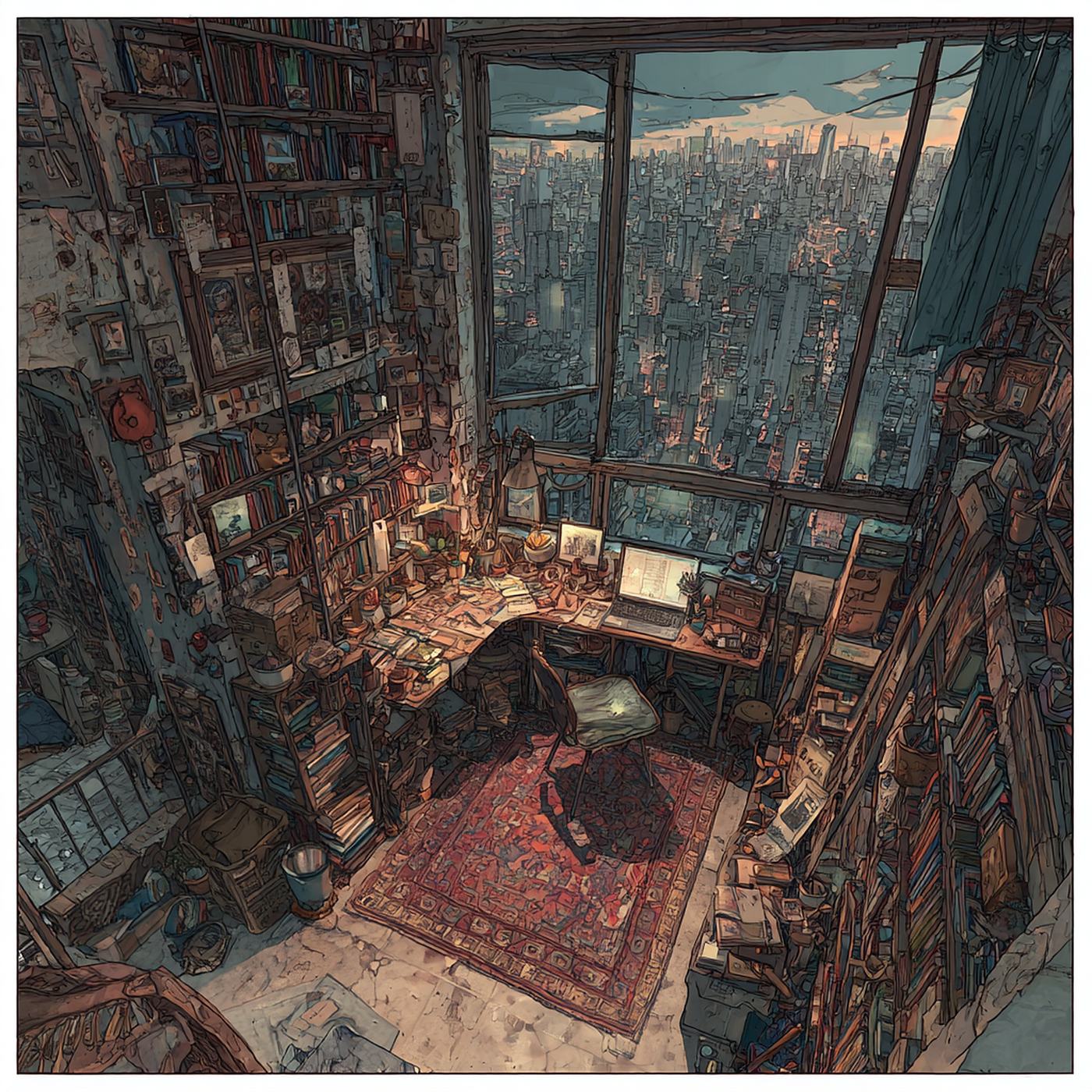
But in here, we were excavating meaning. Finding the pattern. Making sense of chaos.
Why do it at all. Not for the degree. Not for the footage.
I write instinctively, out of the pure desire to externalize my thoughts and cleanse myself of the unresolved issues that haunt me. I write to be able to forget, to let go of the memories I fear will dissipate in my mind if I do not externalize them. Love is imperative to this process. It is what makes work passionate, and the desire to create ever more meaningful.
And the story, my Odyssey, was finally being told.
The Oral Tradition
Interlude
A muse. Just like the very first verse in The Odyssey, where Homer asked the muse to inspire him to tell his story.
He asked Calliope to give him the inspiration to tell the tale of an inventive, mischievous man who would embark on a long adventurous journey after the battle of Troy, only to return home after many years of absence, transformed forever by the adventure.
The parallels with what I'm attempting to do are too obvious to ignore.
Homer's prelude to the muse was a prayer of sorts. A way of setting an intention. Putting the storyteller in the right state of mind. Giving thanks to the mysterious, esoteric mechanics behind the creative process.
Did Ulysses sail on deadly seas for ten years only to be guided by the muse that inspired the words of the poet who sang his story?
Was Homer asking for the flow in his first verses of The Odyssey? So he doesn’t trip, his rapping doesn’t cut the rap-sody in half, and his hero doesn’t drown.
A prayer is one way to open the channel. There is an older one, and I had used it without knowing. Every time I had written anything worth keeping I had been in love. The words came out already shaped, already rhythmic, straight from the chest with nothing in the way. I had put that down to luck. It is not luck. It is mechanics.
There is a moment in the relationship between two people when the realization of being in love creates openness so vast within the individual that words flow directly out of the heart. This constant uninhibited exposing of one’s interior allows for the surfacing of auto-poetic lyrics unified through the eroticism of the moment. These declarations of honest unification paint images of the soul’s desire to reconnect with the infinite and have a witness to share that moment with. The path of love often paves the realm of lyricism; it seems that love greases the gears of poetry.
Nowadays this state has been marginalized; its frequency and potency have almost been replaced through mediated communication; space among people in the west has become greater, while technology artificially replaces that distance with the illusion of closeness.
Marginalized is the polite word for it. That is not a mood. It is a job description, and I posted it on the internet for fifteen dollars an hour.
You see, in the beginning there was only the oral tradition. Humans could only exchange information through words. That meant that when someone passed away everything that they had learned had to have been verbally communicated to someone else while they were alive. Being able to tell long stories of meaning was important. So rhythm and rhyme as well as song and music were incorporated so that stories were easier to remember and flowed in ways that could be stored in the collective consciousness of the people. Accessing those stories was a divine pursuit, an act that made the poet a vessel, a channel that was connecting the two worlds, the collective unconscious and the physical space and time. Being in a state of flow and being able to channel these stories with perfect rhythm was in fact proof of the existence of the Divine creative spirit. Conveying stories of meaning and importance from one generation to the other was a spiritual act. It was the ultimate form of expressing the divine spirit.
Myths, epic poems become the way that humans pass knowledge from one generation to the other. When humans develop writing, the ability to convey information on a medium (an early papyrus, a wall, a clay tablet, or carved in marble), the ability to convey the information over time and space unlocked another infinity of possibilities for humans. No longer would someone have to convey everything that they learned in a lifetime to someone else before they passed away. They could actually write down their thoughts and, as a result, their thoughts would be immortalized and could travel through eternity. If the thoughts were valuable, people would copy them and ensure that they were not lost. That's why we have the Iliad and the Odyssey or the Bible, but something was lost.
Written language roots humans into the world both physically and mentally. Words on paper can carry wishes or laws far into the future. The fluidity of oral language and the enchantment of a performance were lost, sacrificed in the name of a permanence that transcends time. The impermanence of the performance, the flexibility of the emotion, and the fluidity of the temporal experience: the magic of that communication is lost. It's a different kind of magic now. One which allowed lines and grids and maps to define this nebulous world, the legacy of the oral tradition.
There is an opportunity to reignite an ancient narrative that has always been part of our understanding of our place in the world, but, for a variety of reasons, over the past few centuries it has stopped playing that role.
Yet we are permeated with stories. The question is who makes those stories, and what is their intention.
Having studied philosophy, sociology, and anthropology in college, I find it makes so much sense all of a sudden.
My college thesis had been about the disenchantment of the Western world and the subsequent loss of rites of passage in Western society. I'd argued that we were moving into a new era. This new global village we'd woven together with our digitized stories would be permeated by a new form of global neo-tribalism.
I felt it was our generation's responsibility to fill in the Western world's blind spots.
We needed to learn about ancient wisdom before it went extinct forever, lost in the unfathomable amount of nonsense content that would inevitably come as we marched excitedly and naively into the dawn of the Information Age.
My generation needed to reinvent ritual and ceremony. Explore the worlds that Western science deemed taboo. Or else they might be lost forever, substituted with some plastic and soulless alternative made in a sterile test tube.
Organized religion didn't seem to be providing enough existential solace to any of my peers. And yet all of them seemed to have deep spiritual yearnings.
It was still only year two of a brand new millennium. With this new internet thing, the future seemed closer than ever before, fueling our millennium fever and letting our imaginations run wild with the endless possibilities of an interconnected world.
My journey through South America had been mystical. An odyssey of self-discovery. A leap of faith that rewarded me with an amazing set of experiences, often hard to believe or explain to others due to their odd and synchronistic significance.
That's why I'd brought my cameras. I needed to document the wild twists and turns of the journey so people would believe me. So they could see how the universe meets us halfway, as long as we're willing to take that leap.
Once upon a time, all young men and some women went on adventurous journeys.
The journey often signified the child's adulthood, a rite of passage that initiated them into adult life.
Shepherds gave their sons some sheep. Fishermen let them captain their boats. Merchants sent them off on the Silk Road with a bag of silver, knowing that upon their child's return, a transformed man or woman would return.
The disenchanted modern world we'd created needed some magic.
I was convinced that the West, in its own arrogance and hubris, had thrown the baby out with the bathwater. All-so-mighty Cartesian utilitarianism had stripped our world of meaning and magic.
We lived in boxes, pressing buttons from dawn to dusk, moving around in this ever-expanding grid that was consuming the world.
The looter, the haunter, the therapist,
A schizophrenic fight between polar selves,
Self hating and confused
Apollonian, Dionysian
Reflections of the bitter fights
Father, mother
Late at night … lemon moons
Extinguish in a fuse
Where are you, when I need you most?
I searched for you and found you not,
Oh delicate, delicate muse…
You do not get caught between the two,
You dance and juggle them back and forth
Like droplets of morning dew
Trickling down the leaf of a wrinkled life
Ironed with starch at its veins,
Creases of a fatalistic path
Going through the motions of transformation and pain
Amongst the infinitude of options
Balancing the agony of free will
Turning dunes into pyramids
And then you tripped my dear, and fell out of the ecstatic dance
You landed heavy on your feet
And was told to walk in a line
No more wobbling, or diddle daddling,
No daydreaming, no slouching, no elbows on the table
Make a tool, pick it up, and carve!
Chip away from the brick of your light innocence
Becoming square, rigid the muse danced no longer
Her manic ways too radical for the grid.
And so the grid grew
Cause Mother was too messy
But this new layer on top of the machines we were building felt different. This encoding of data into the machines in the form of software and their collective extension on the web, at the end of the 20th century, felt like we were breathing a spirit into the machines. All those electrons pulsing through carefully architected circuits, moving around data, human intention, and ultimately things in the real world. This new interconnected mesh brings back the mystery and wonder. We have plateaued, a new era has dawned and a brave new world awaits us.
That’s how I felt as the summer was coming to a close, at the end of August 2001, before my journey through South America.
The sheep, the boat, the bag of silver. We could revive these ancient old traditions, reinterpret them, and inspire a sense of adventure. By using the internet as a kind of collective conscious oracle and consulting it along this mystical journey of awakening, we could reboot and live life deeper, in a more profound way.
I was certain that this was what the internet was all about.
I felt it in my bones in a way I couldn't articulate.
This ancient rite of passage has been commemorated in one of the great memes of the oral tradition, The Odyssey, the myth that made a man a legend and granted humanity its first semiotic mechanism to beat death. This myth, this story defined the individualism that is at the core of western civilization. This is now within everyone's reach; we had finally democratized the ability for anyone to have a global adventure. The quest of self-discovery by roaming the globe was no longer only accessible to the privileged few and those who served them. Now anyone could be a Ulysses, anyone could have an adventure as long as they were willing to take a leap of faith.
I'd gone on mine and seen the world. Now I wanted to share the joys of our differences and our similarities.
If we took the leap into the unknown, we'd create new mythologies, new gods, new heroes, new rituals, new avatars to guide us through this brave new world.
The plain page of An Oddyssey. Behind the book.