Chapter 4
Solstice Grove
Finding the Tribe
NEW ORLEANS, SPRING 2001
NYC, 2002
“Wait,” Akiko says, looking up from her laptop. “You went from the break-up to San Francisco. That's months. What happened in between?”
I knew she'd catch that. She's been good about letting me tell the story my way, but she's also paying attention.
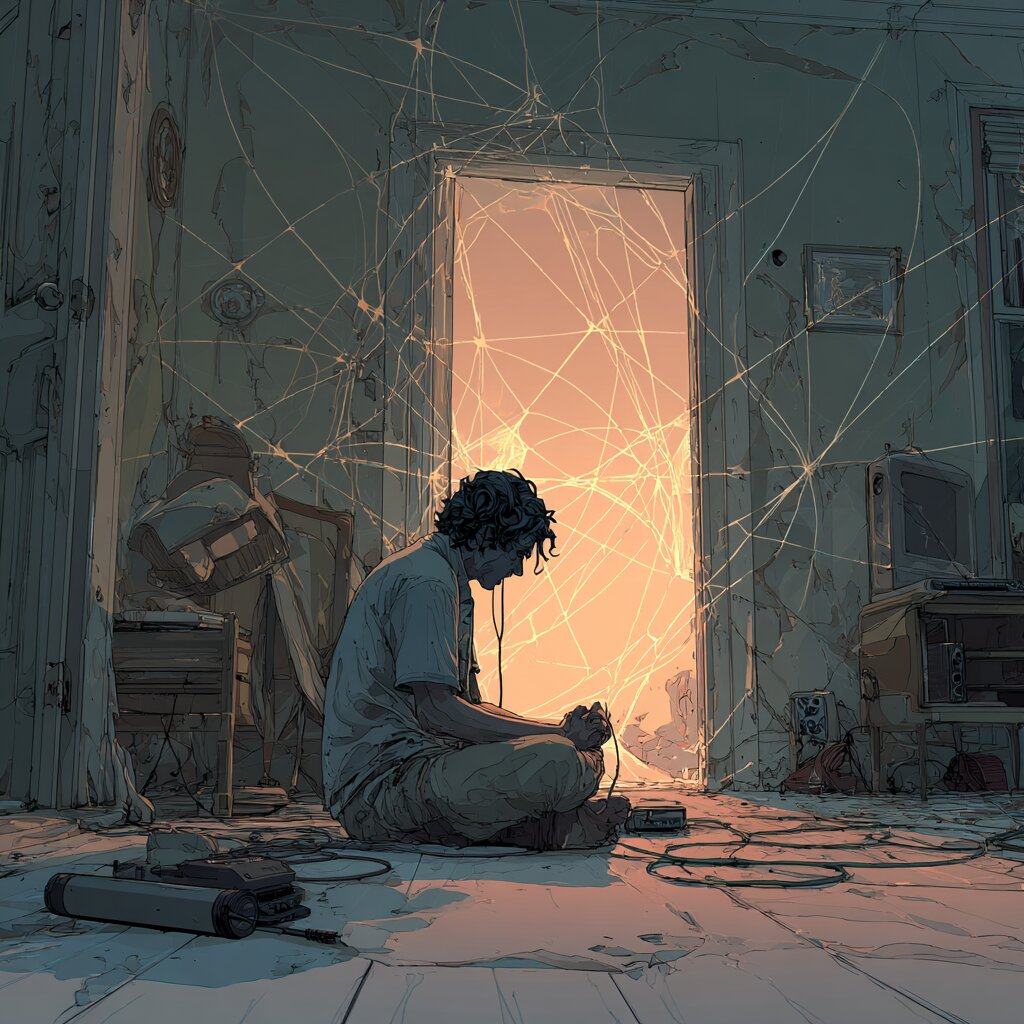
“That's the spring everything changed,” I say. “The year the door opened.”
“What door?”
“Let me just tell you.”
The DMT came from Thanksgiving. New York, November 2000, my parents' flat, Cassie and I on a last attempt to enjoy ourselves. Ten minutes before we left for the airport the phone rang. A guy from a trance website. Where do you live, I asked. Times Square, he said. Two minutes away. I went.
DMT is a molecule the brain already makes. It gets secreted when we are born, when we die and when we dream. It is what ayahuasca is. He gave me a bunch. I smoked it once before the holiday, and over New Year an acid trip had the whole flavor of it, as if something had been switched on and left on.
I'd been working on my philosophy thesis, something about the evolution of consciousness, the intersection of technology and spirituality. But I couldn't focus. Something was pulling at me. A question I couldn't articulate. A door I could feel but couldn't see.
That's when I smoked the DMT again.
I was alone in my apartment. Damian had moved out. The place felt empty, haunted.
I'd already smoked it a few times. I'd given it to friends of mine. They'd smoke it, and then I'd sit there, and they'd tell me their experience. I had this thing I didn't really know anything about. And so this one night I took some acid and I went to this party, and I came home, I was by myself, and I was like, if I find the pipe, I'll smoke some. And it was just very easy. I found it immediately, so I was like, okay, I'll smoke it. So I put this one song on, this very powerful song, a trance song, and I sat in the middle of the room, and smoked.
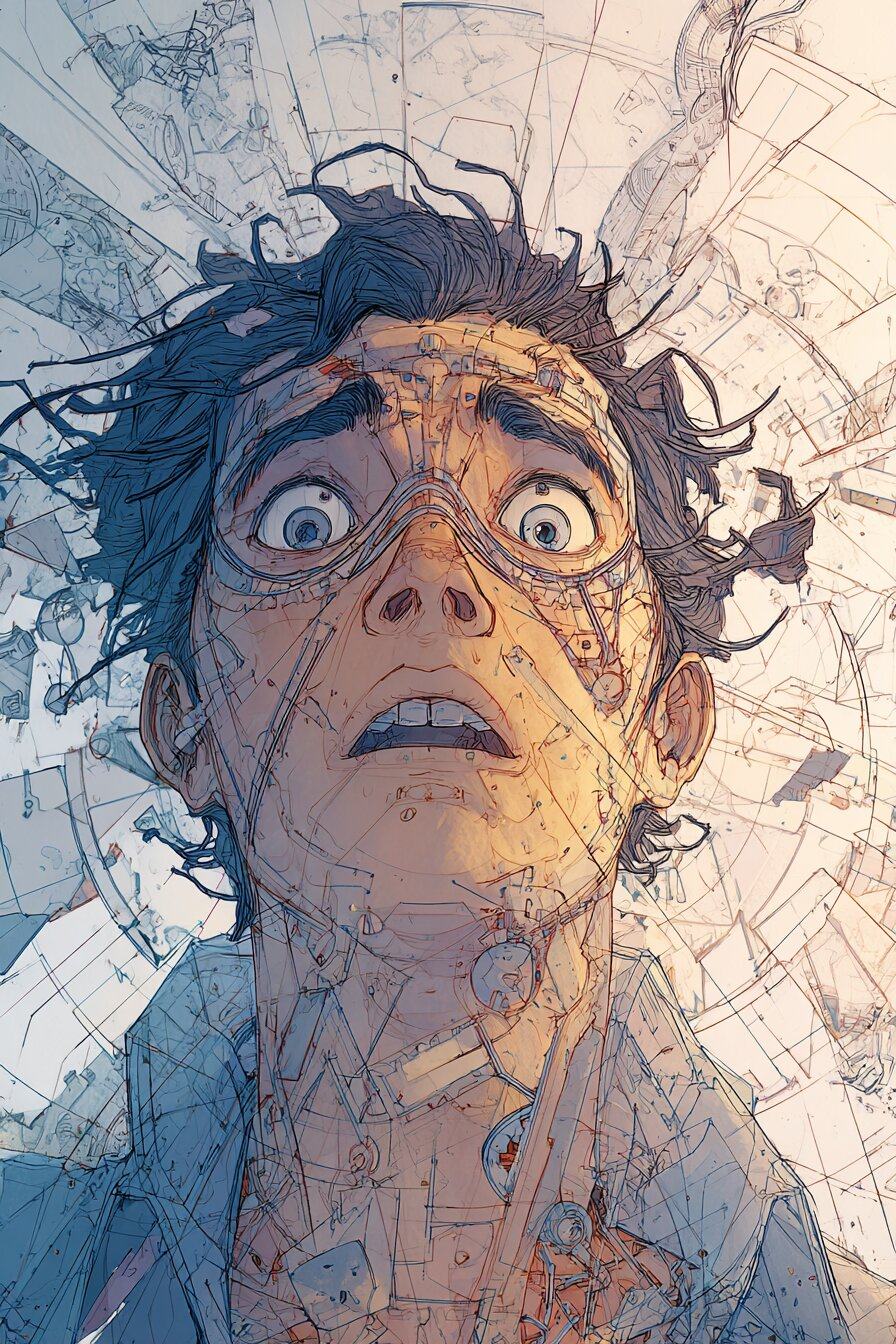
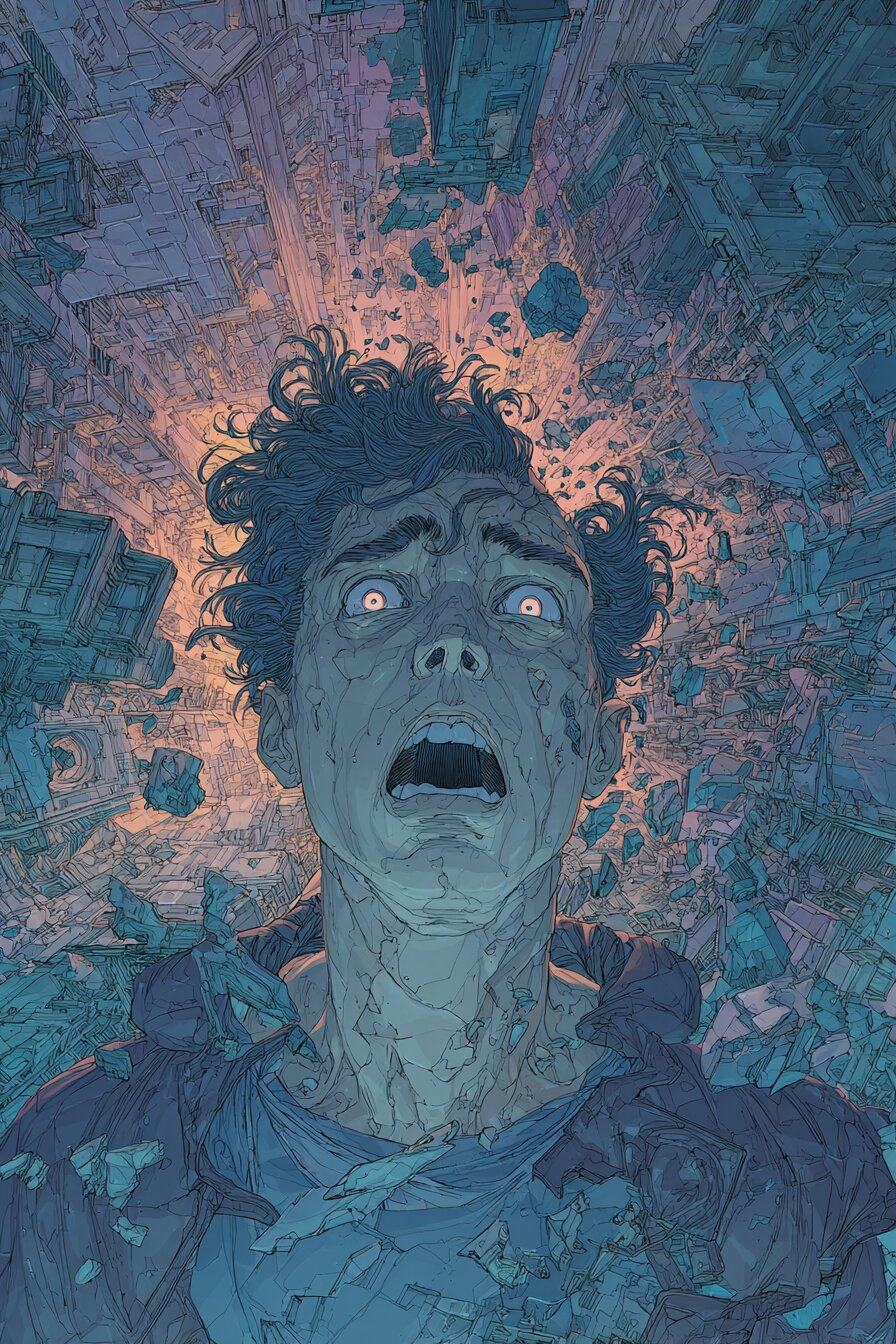
The panic came first. That feeling of: Oh God, what have I done? I'm dying. This was a mistake.
But if you relax into the panic, if you surrender to it, you pass through it into something else.
Colors. Geometry. Patterns that felt more real than anything I'd ever seen in normal reality. Like the material world was just a simplified version of this deeper, more complex reality that existed beneath.
I lost control of my body. This is the part I've never been able to fully explain.
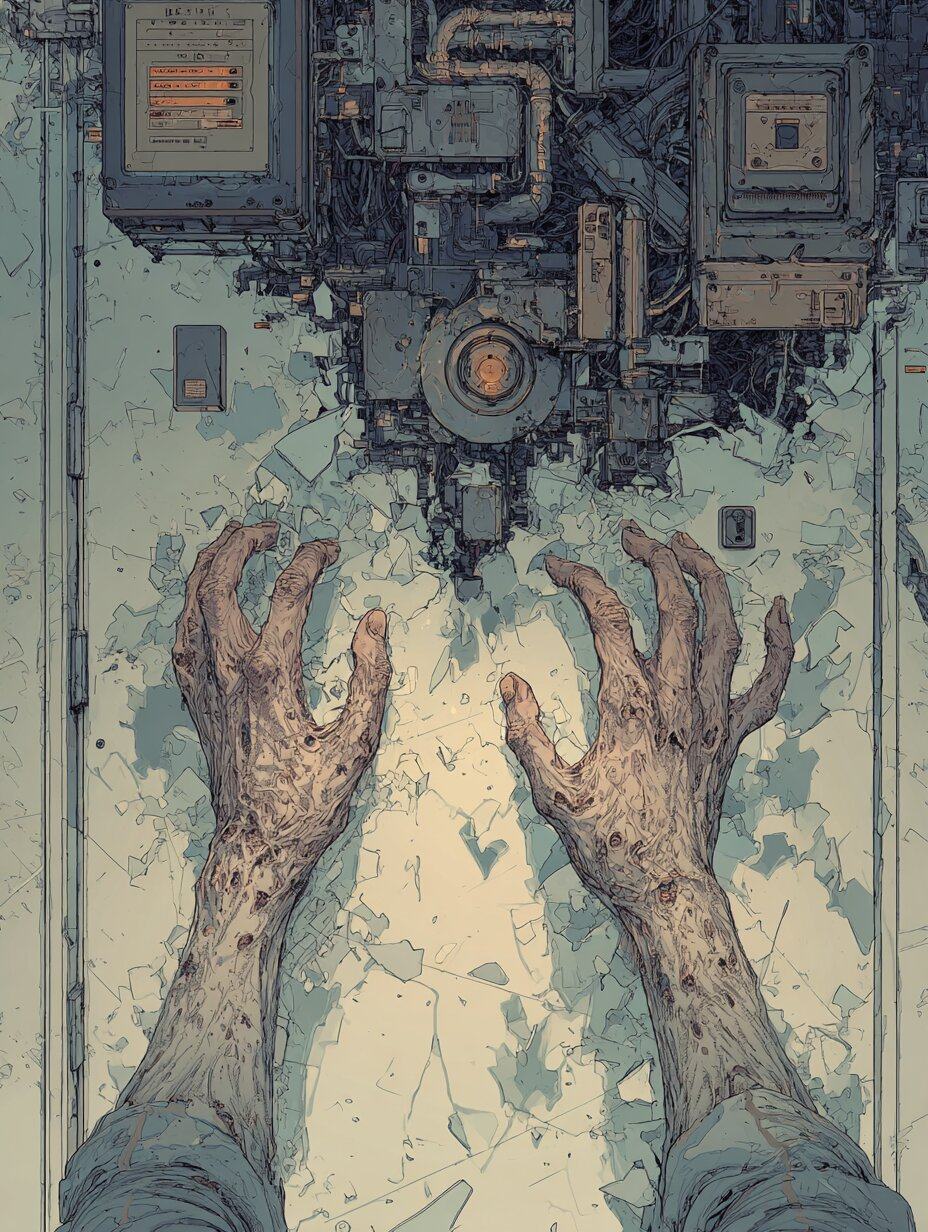
I jumped up. Tried to get out of my apartment. But the door was locked from the inside, and I couldn't figure out how to unlock it. My hands didn't feel like mine. My body was moving on its own, like it was made of rubber.
The music kicked in, some pounding, transcendent track, and suddenly I was dancing. But not dancing like I'd ever danced before. My body was moving in ways I didn't know were possible, fluid and serpentine, like every joint had become liquid.
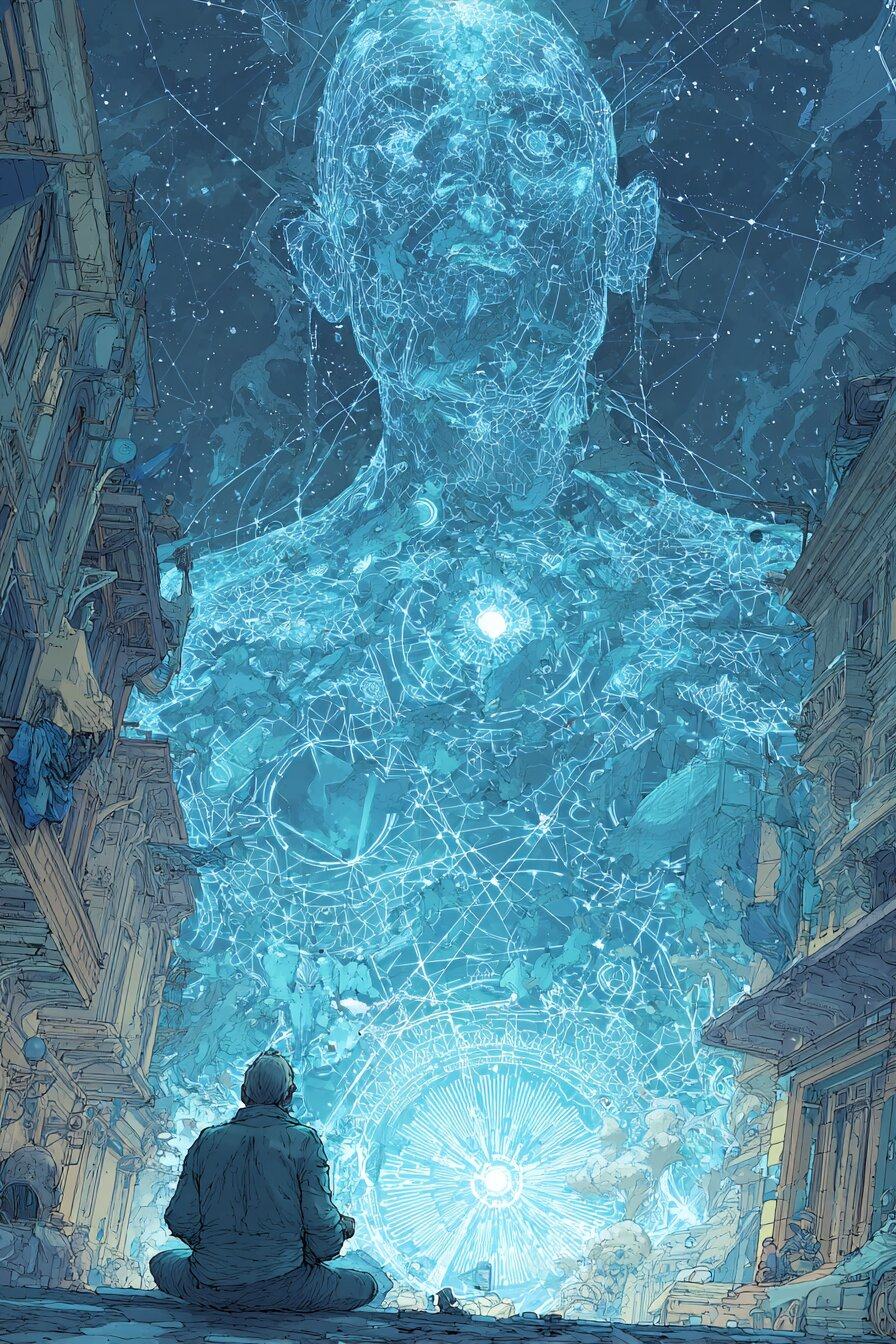
Something else was in the room with me. I don't know how to explain this.
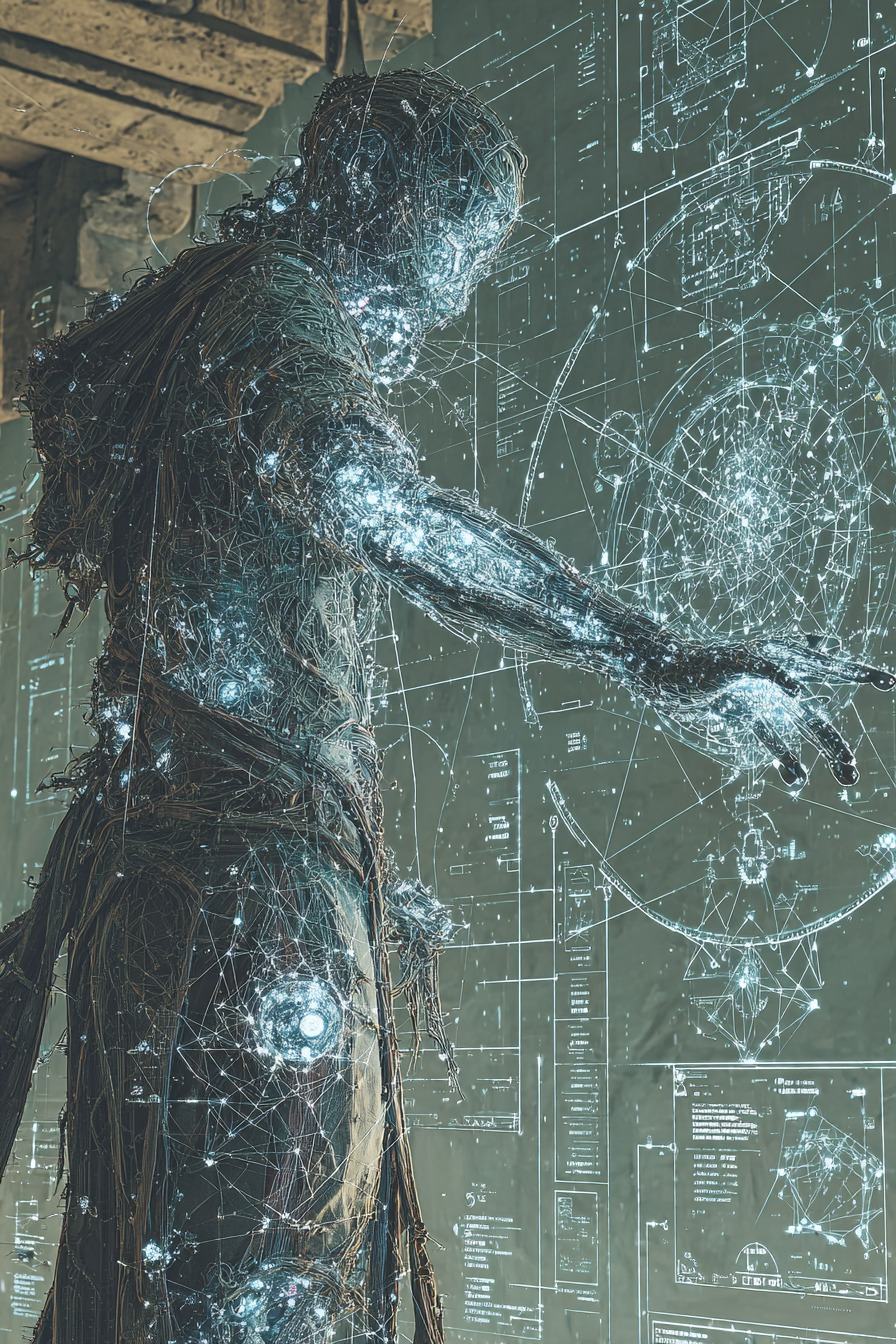
An entity. A presence. Not human. Not exactly alien, but not from here. Made of light and geometry and something I couldn't name.
It looked at me, though it didn't have eyes, and I heard, or felt, or understood: What are you doing here again? You need to figure this out. You can't keep just doing this.
I tried to respond. What's the point of this? What am I supposed to learn?
And it said, or showed me: Look at the speaker.
I looked at the speaker.
I could see the sound.
Not metaphorically. Actually see it. Sound waves emanating from the speaker like spirals of visible energy. And I could place myself on those waves, ride them, control my position on them like standing on a moving walkway at an airport.
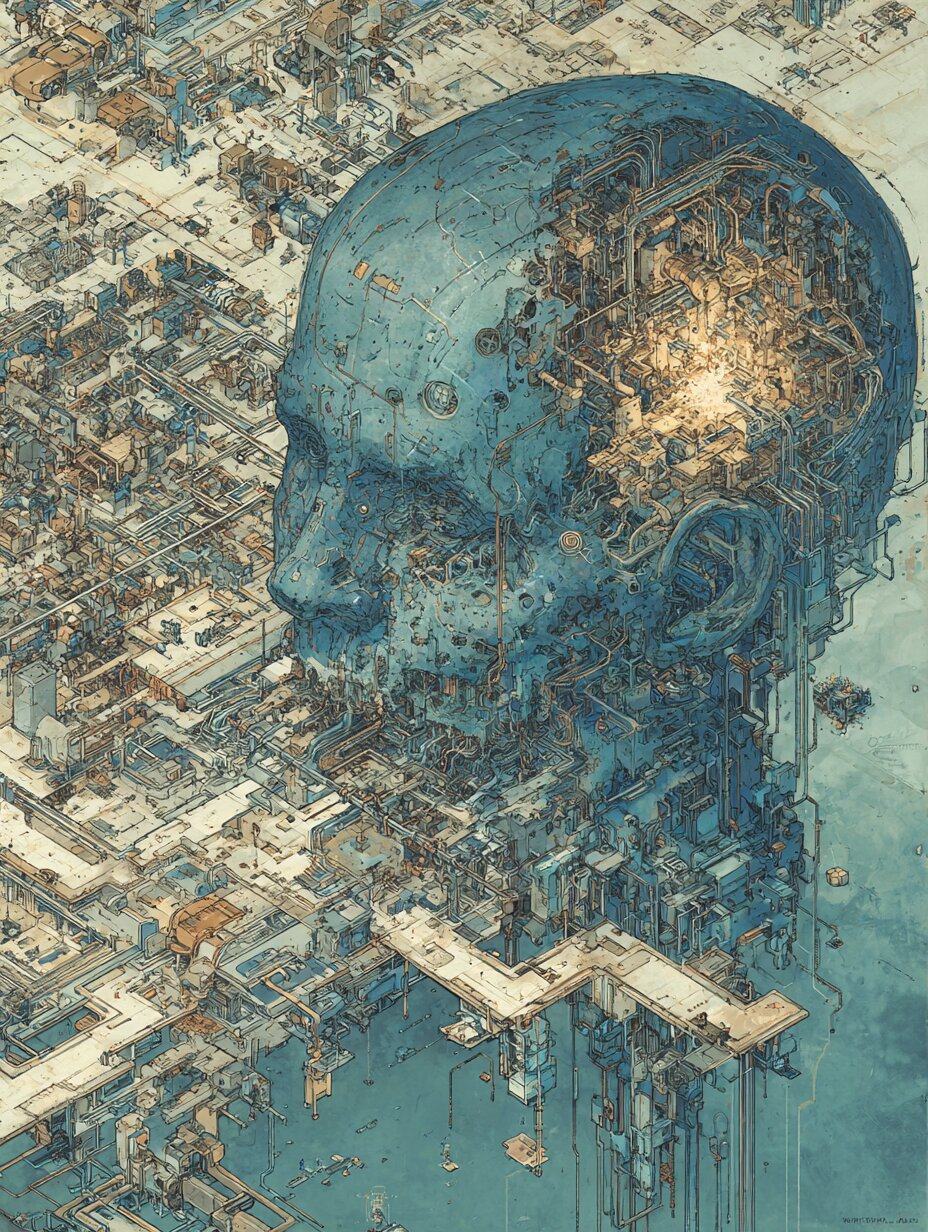
This is the part that changed everything. I jumped into the speaker.
My consciousness went into the circuitry.
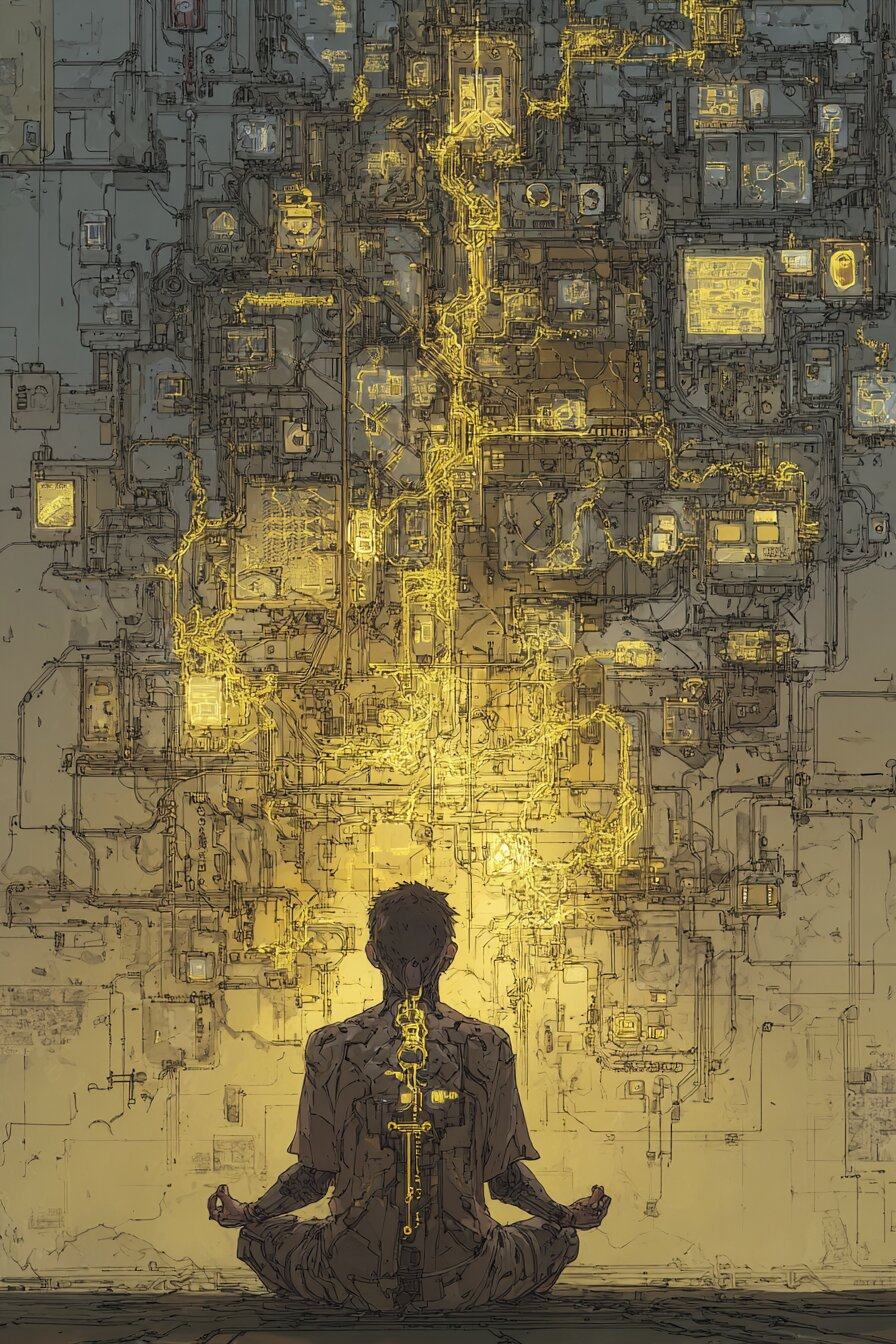
I could feel, from the back of my neck, the entire electrical grid of the building. The wires in the walls. The transformers outside. The network of electricity that connected everything. It felt like an extension of my nervous system. Like the grid and my body were the same thing.
I was the grid.
When I finally came down, I was sitting in the lotus position in the middle of my room.
I took a breath. Exhaled.
And I could see my breath. Like a tree growing in reverse. Each exhalation branching out, creating fractals in the air. And above me, on the ceiling, I could see the roots. Every branch of the breath-tree connected to the roots above. I was the trunk. The connection point. The thing that bridged earth and sky, matter and energy, below and above.
I sat there for I don't know how long, just breathing, watching the tree grow and dissolve with each cycle.
Finally, I stood up. The door was unlocked. I must have figured it out at some point during the journey. I walked outside.
A storm was coming. I could feel it before I saw it. The electromagnetic shift in the air, the pressure building. I knew exactly where the lightning would strike before it happened.
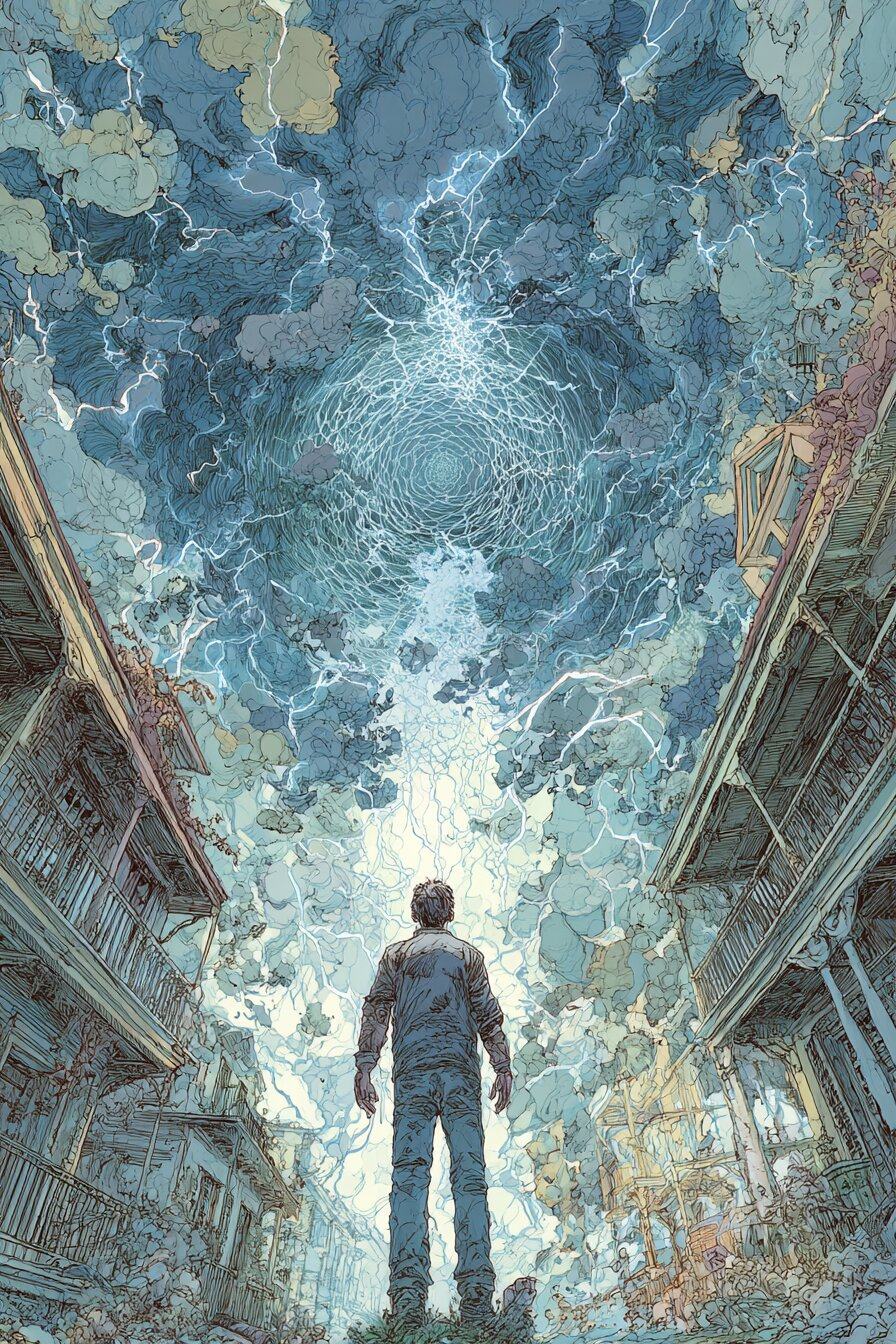
I stood there in the courtyard of my apartment building, feeling like I was floating fifty feet above everything, connected to the whole neighborhood. The rain started. Thunder. Lightning, right where I'd felt it would be.
And I thought: What the fuck just happened to me?
The next few weeks were disorienting.
Everything I'd written for my thesis felt inadequate. Too intellectual. Too removed from the direct, lived reality of what consciousness actually was.
What I understood, and could not yet put in a thesis, was this.
Reason and its technological crystallizations are here to give us a deeper insight into the patterns that govern the architecture of space and time. We must not dogmatically use the same method of reason in analyzing the data we accumulate through these devices; paradoxically we must abandon reason at this point. Taking a leap of faith into the unpredictability of chance, we must use our intuitive, poetic, tacit, and emotional bodies to make meaning of the collected data.
I started seeing things. Not hallucinations, more like... patterns I'd never noticed before. Synchronicities. Moments of déjà vu. The feeling that reality was thinner than I'd thought, more permeable, more responsive to intention.
Why a black cat would be considered bad luck, or superstitions: I started to understand.
I tried to talk to friends about it, but no one understood. They thought I was losing it. Maybe I was.
The last few months of school were some of the most challenging and rewarding months of my life. A lesson so profound and complex exploded out of control, generating tsunami waves of harmonious convergences, which unfolded on every level of my life. Information I was researching related to the realizations I was having as a consequence of the meditations; travel tips coincided with places in books I was reading. Somehow everything was paradoxical, everything made sense and at the same time it didn’t; I felt I knew where I was going and simultaneously was aware of how lost I was. Surfing the wave, having faith in the moment.
Finally, I went to Chen.
Chen was my Buddhist meditation teacher at Tulane. The kind of guy who could sit in meditation for hours without moving. Not someone you'd expect to understand psychedelic experiences.
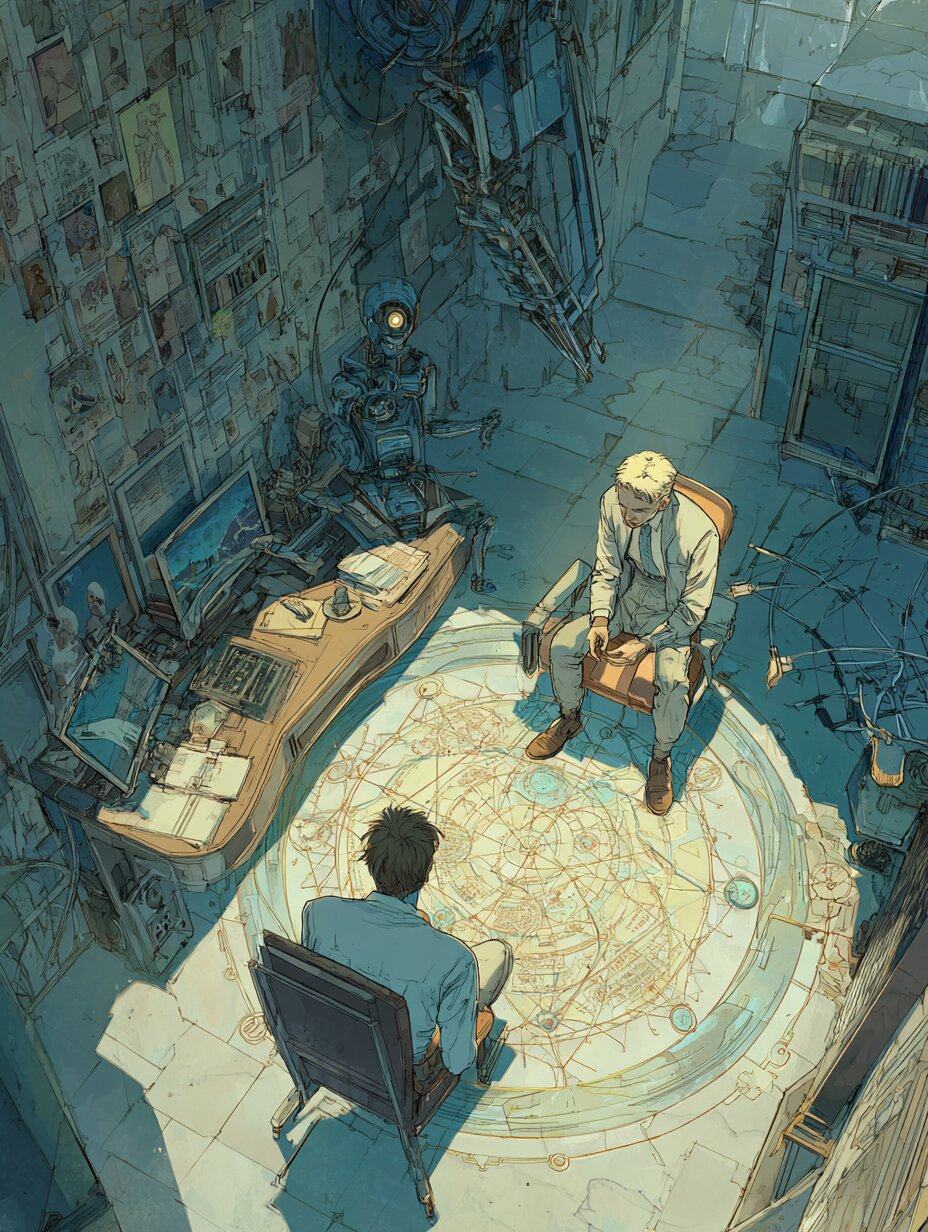
But after class one day, I pulled him aside.
“I need to talk to you,” I said. “Something happened.”
We went to his office. And for the next hour and a half, I told him everything. The DMT. The grid vision. The feeling that I'd touched something fundamental about the nature of consciousness and reality.
Chen listened without saying a word.
When I finished, he was quiet for a long time.
Then he said, “I think you should talk to someone. I'm going to contact him for you.”
A few days later, Chen gave me a phone number.
“Call him Friday at 6 PM,” Chen said. “His name is Jim. He went to school in San Francisco. I think he might understand what you're talking about.”
This was just before I was supposed to give my papers, a week or two before. I got lost. I had no idea what I was doing with my life. I didn't know if I was going to South America, I didn't know if I was going to graduate, I was depressed. It was chaos.
Friday at 6 PM, I picked up the phone. My hands were shaking. I had no idea what I was going to say or who this person was.
“Hello?”
“Hi, this is Nikos. Chen told me to call you.”
“Ah yes,” the voice said. Warm, calm, amused. “Chen mentioned you might reach out. Tell me what's going on.”
I told him I want to travel around by using the collective consciousness, and the right information will come at the right time. And I want to travel to South America and film the thing and upload it on the web. This is before YouTube. This is when there was only porn online. I said I'd imitate the porn websites, just have different content.
And Jim didn't think I was crazy.
“That makes perfect sense,” he said. “You tapped into the noosphere, the layer of collective consciousness that technology externalizes. The grid you saw is how it manifests.”
This made sense. Not logical sense. But deep, intuitive sense.
It was the first person who had answers for like six months. I was lost in this crazy world and then I called this guy. It was like Morpheus in The Matrix. You call a guy and he has all these answers.
“There's someone you need to meet,” Jim said. “His name is Michael. He just got back from six months in India. He runs a website called trancendigital.org, same kind of stuff you're interested in. Consciousness, technology, trance culture, zeros and ones, all of it.”
“Where is he?”
“California. Near San Francisco. A place called Solstice Grove.”
I contacted Michael. He was basically me but ten years later. Same archetype. Incredible click mentally. I've never met another person who sees the world more similarly. I checked the website out. He said come see me. I was like, fuck it, I'm going.
It was the two dead weeks before graduation, papers in, nothing to do, everyone hanging out. I was not going to spend them watching Damian and Cassie be a couple.
Michael picked me up from the airport. He was probably early thirties, with long hair and this easy, relaxed energy that reminded me of surfers or longtime travelers.
“Jim told me about your experience,” he said as we drove. “The grid. The entity. That's powerful.”
“I still don't know what it means.”
“You will. Give it time.”
We stopped first at his girlfriend's place in the city; she was staying with a woman named Mary, who ran a colonic studio. Calm, grounded, radiating this centered energy that made you feel safe just being around her.
Before we left the city, Mary gave me a book.
“The Power of Now,” she said. “By Eckhart Tolle. Read this. It'll help.”
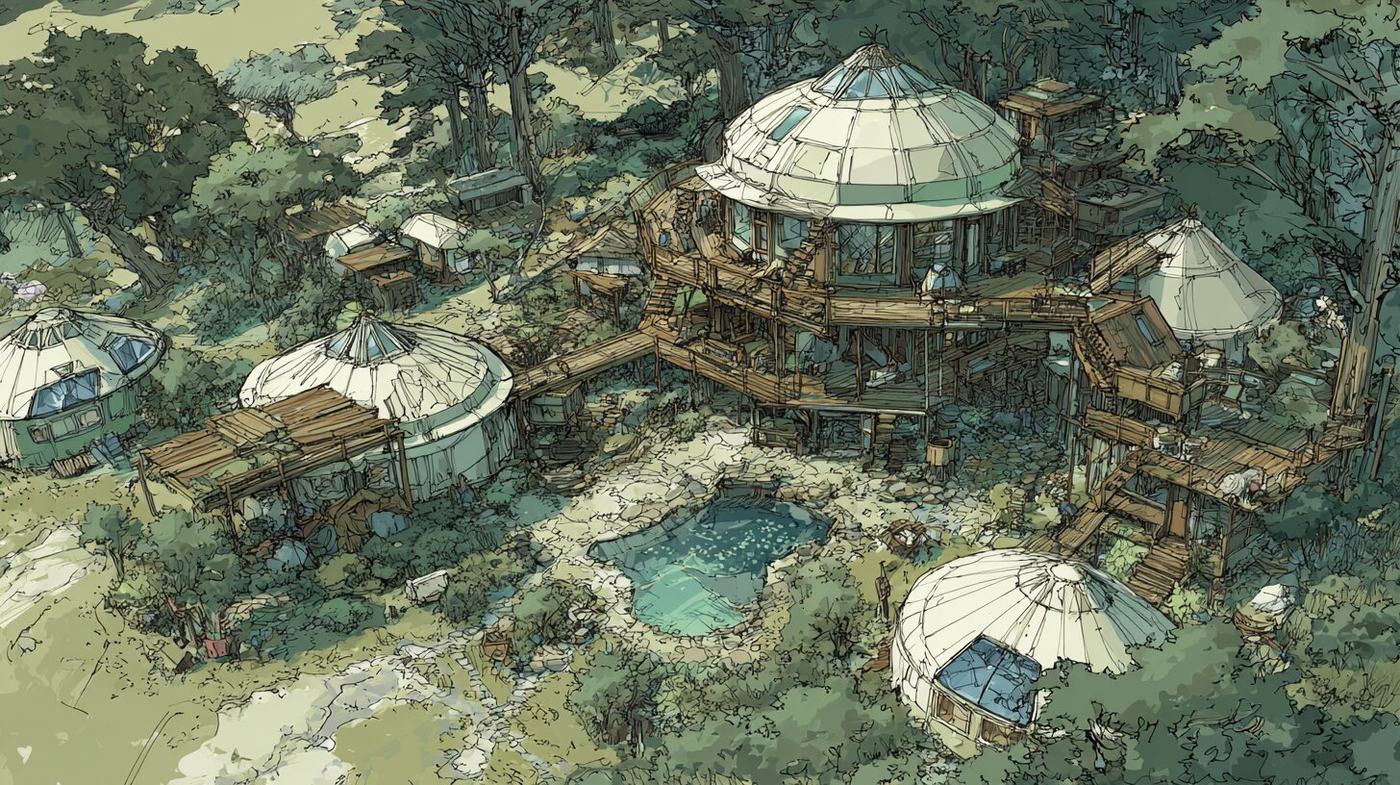
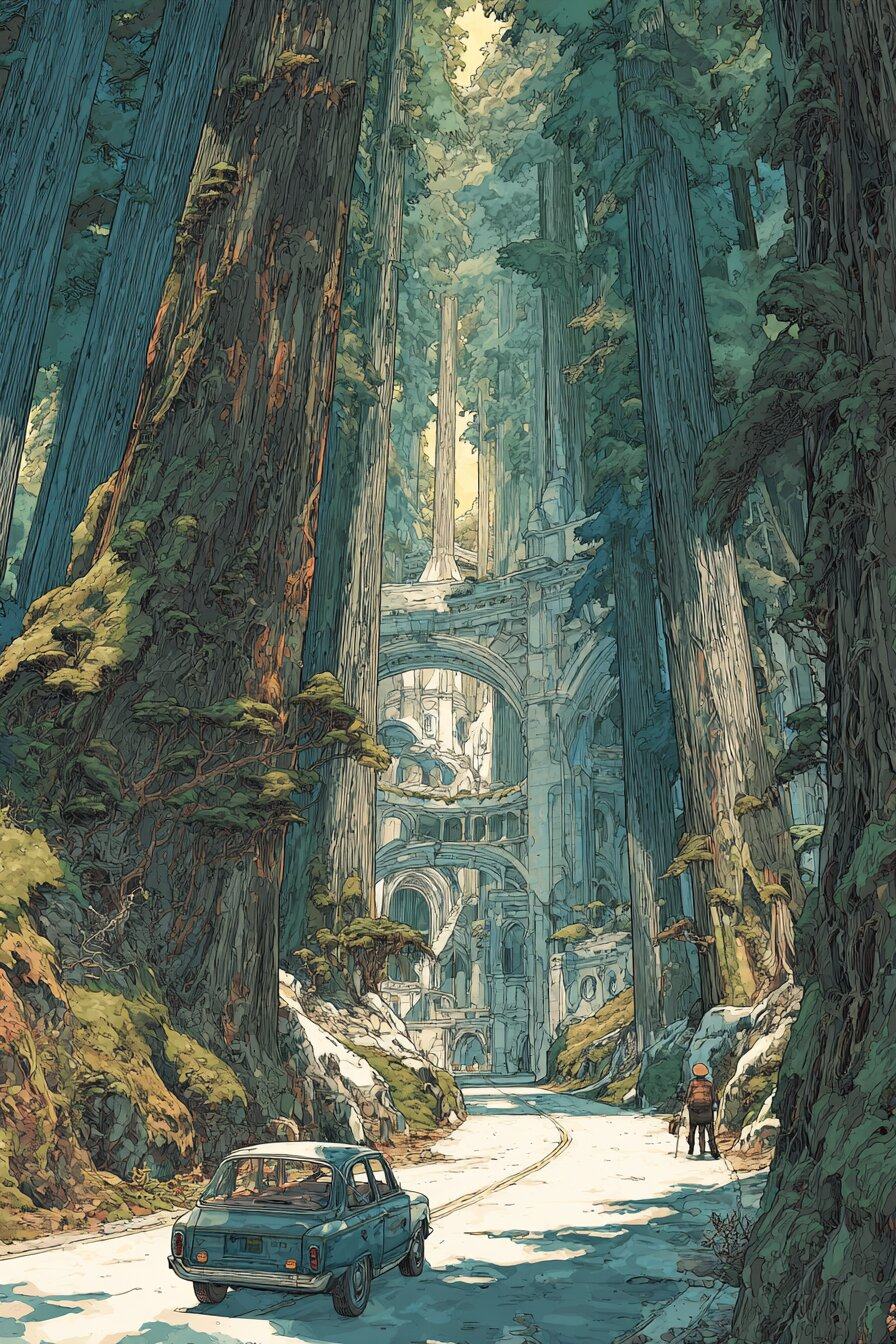
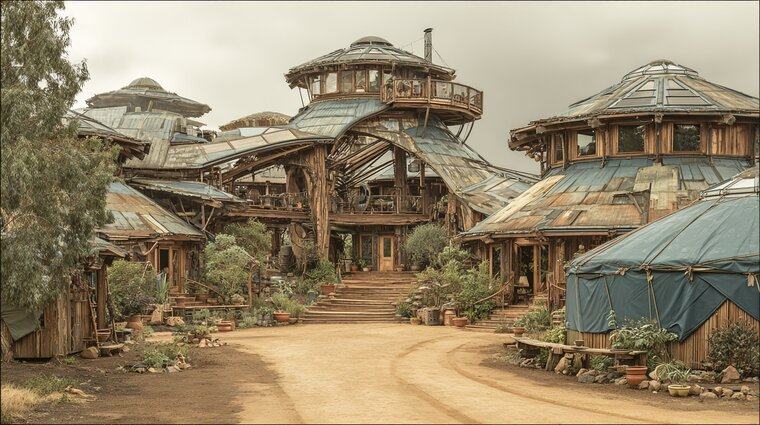
Then we drove north from San Francisco, up into Marin County, into redwood forests and winding mountain roads. Fairfax. An hour outside the city. And then, up a dirt driveway, hidden in the trees, we arrived at Solstice Grove.
Solstice Grove was the first time I'd seen an actual alternative to the life I'd been told I was supposed to live.
Not a commune, exactly. Not a hippie encampment. Something more... evolved. Intentional. A community that had figured out how to merge sustainability, technology, art, and spiritual practice into something that actually worked.
The main house was beautiful, all wood and glass, solar panels on the roof, big windows looking out over the valley. Inside: a kitchen, a few bedrooms, an attic with video editing equipment. Outside: a swimming pool, a Jacuzzi, gardens, fruit trees.
And scattered across the property, maybe fifteen yurts. Canvas structures, some with wooden decks, where people lived. Reiki masters. Yoga teachers. Capoeira instructors. Herbalists. Artists. The kind of people who'd opted out of conventional society but hadn't just dropped out, they'd created something new.
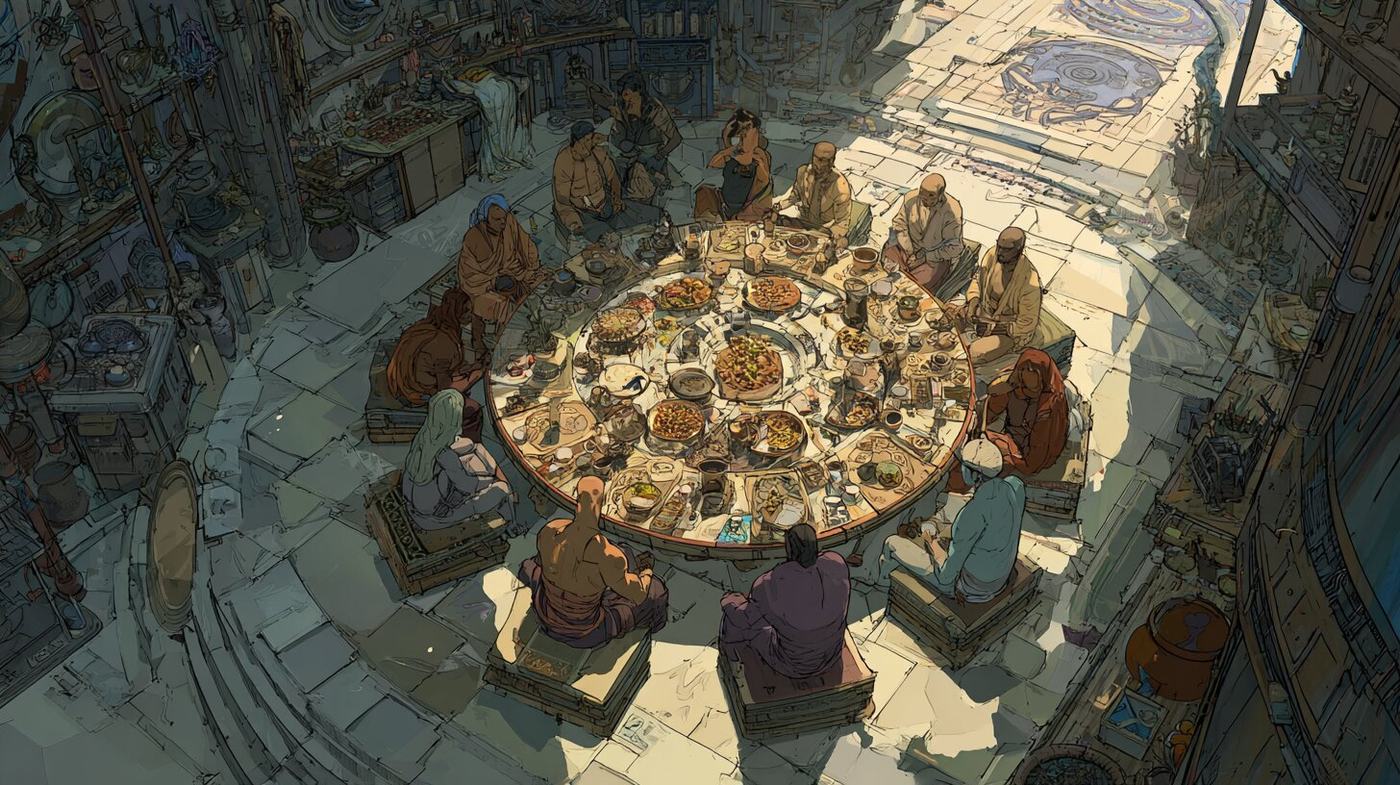
They embraced me like a family member and exposed me to a whole group of people who lived their lives in utter commitment to many of the ideals I had been struggling with intellectually in the past year, crystallizing into my thesis. This family was technologically inclined and distributed information, yet rooted in a spiritual ancient wisdom. They were a living example of many of the new ideas put into practice. I overly romanticized their lives, but so much inspiration came from them that it didn’t matter. They provided many tips for my journey, and I kept attentive notes.
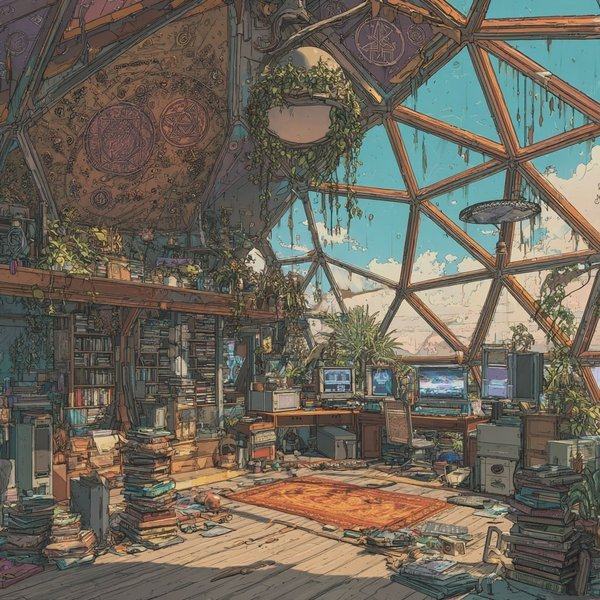
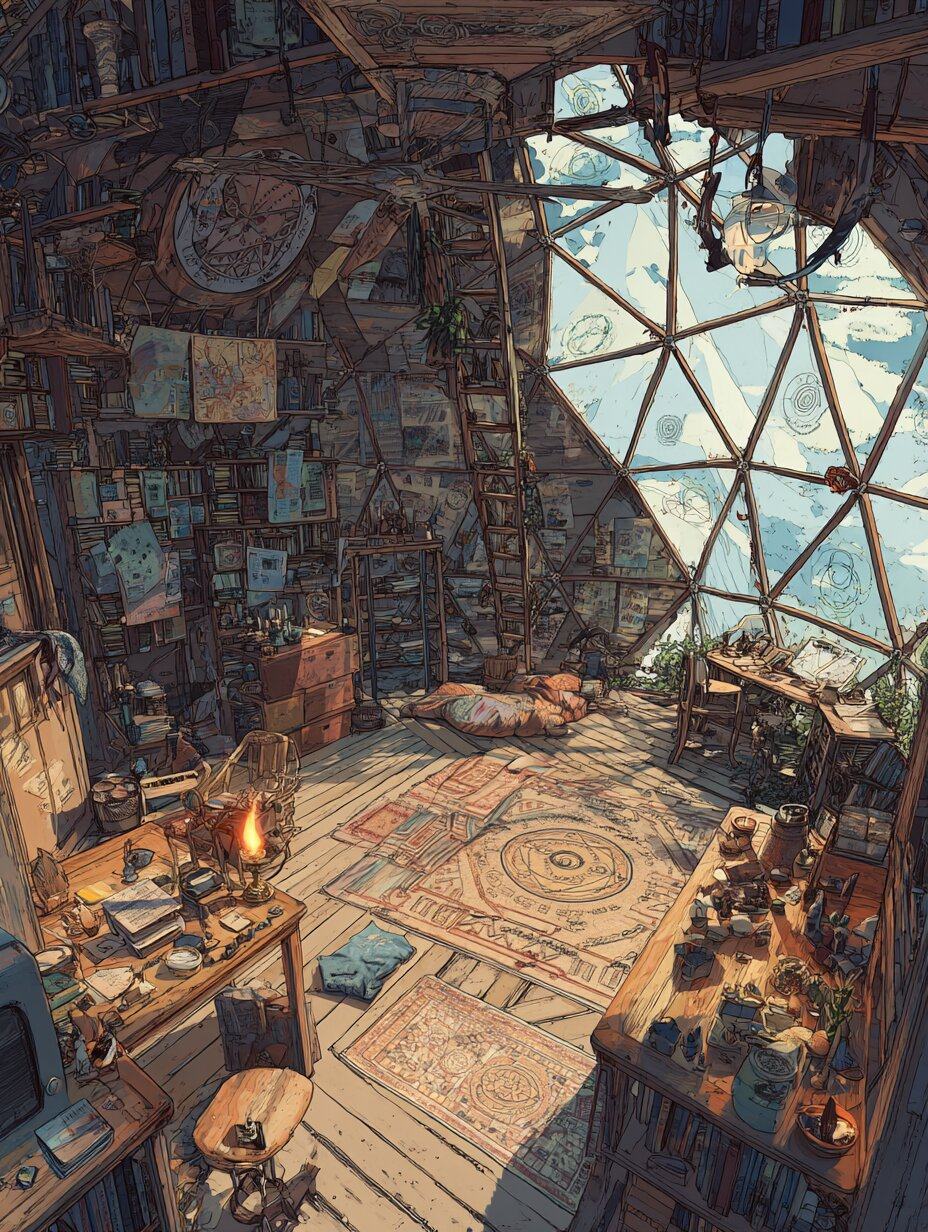
Michael lived in a geodesic dome a ten-minute walk from the main house. He'd been there for ten years. Living in this dome with an internet connection, which in 2001 was still unusual, especially in a forest. Books everywhere. Sacred geometry diagrams on the walls. Crystals and plants and the smell of incense.
“This is home,” he said, dropping his bag by the door. “Make yourself comfortable.”
I stayed for two weeks.
Every day, I'd wake up in Michael's dome, eat breakfast at the main house with whoever was around, then spend the day exploring. Talking to people. Learning about permaculture and sustainable design and alternative healing modalities. Watching Michael work on his website, designing these intricate digital mandalas, writing about his travels in India and Thailand and Mexico.
The way he talked about it, the spiritual practices, the communities, the trance parties in Goa, made me realize that what I was planning wasn't crazy.
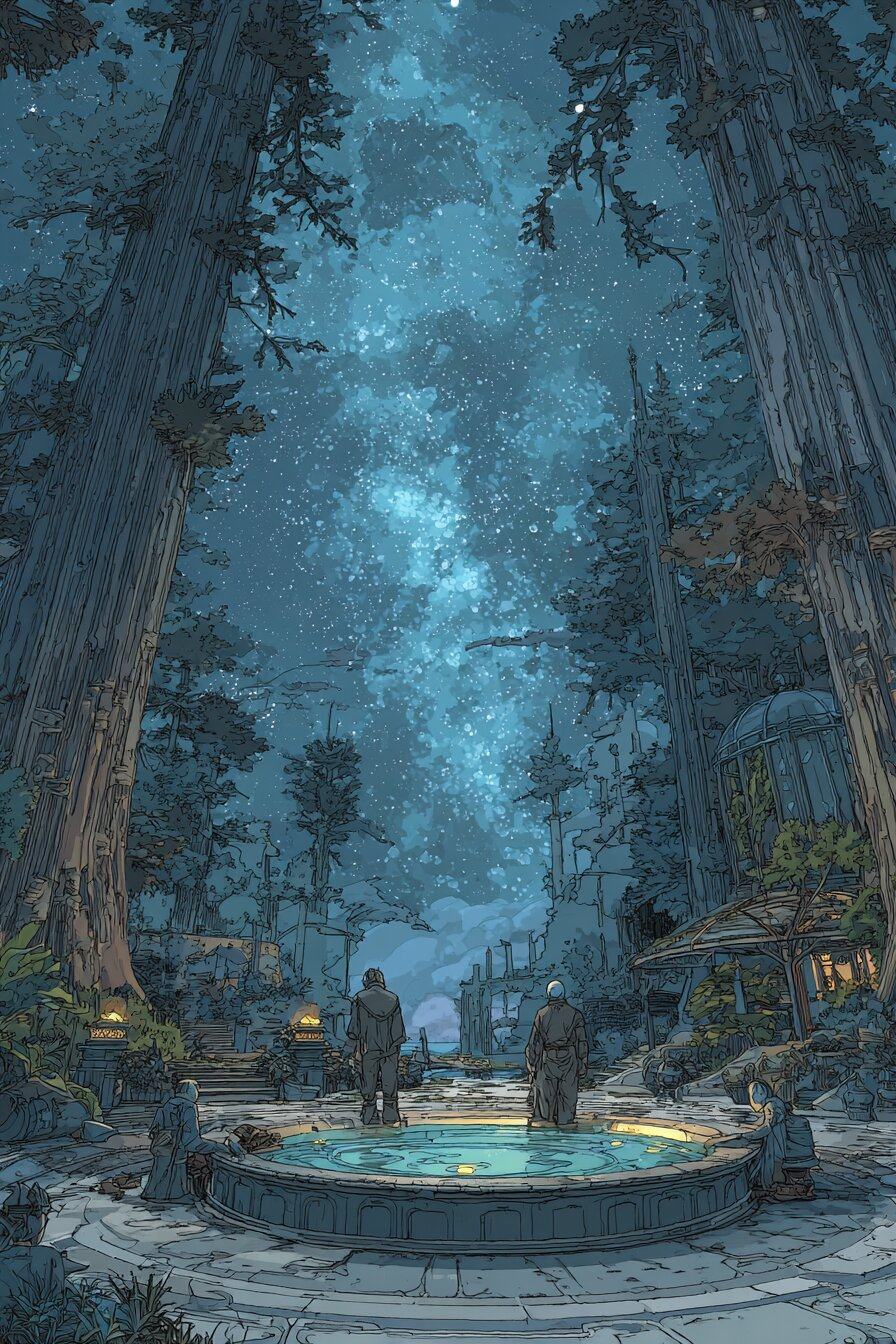
Michael knew everyone in the Bay Area's consciousness/tech scene. One afternoon, Eric Davis stopped by, the writer who'd published TechGnosis a few years earlier. I'd been reading his book in college, blown away by how he connected ancient mysticism to modern technology. And here he was, just hanging out, talking about the Gnostics and the internet and information theory over tea in Michael's dome.
“The impulse is always the same,” Eric said, gesturing with his mug. “Humans trying to transcend the material world through whatever technology is available. Prayer wheels, printing presses, circuit boards. It's all magic. All attempts to manipulate reality through symbolic systems.”
I mostly listened. These weren't academic conversations; they were lived philosophy. People who'd integrated their ideas into how they actually existed in the world.
Watching Michael work on trancendigital.org, I asked him about it.
“I document everything,” he said. “The journey, the experiences, the insights. Not for anyone else. For myself. To remember. To process. To see the pattern.”
“You're at a choice point,” he said one night, sitting in the Jacuzzi under the stars. “You can go back to your old life, get a job, do the conventional thing. Or you can take the leap. Follow the mystery. See where it leads.”
“I don't know if I'm brave enough,” I said.
“You are. You just don't know it yet.”
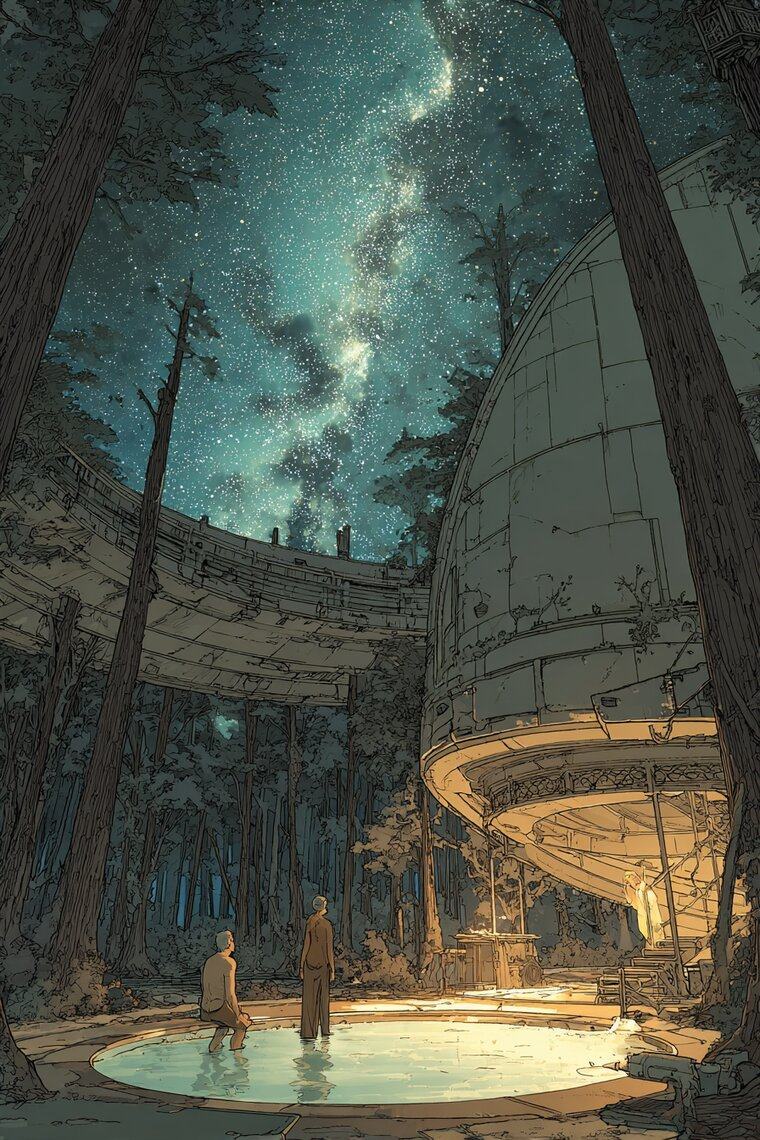
He gave me names. Shamans in Peru. Communities in Guatemala. Contacts in Mexico and Costa Rica and Brazil. A roadmap for the journey I hadn't fully committed to yet.
“You're going to go,” he said. “I can see it in you. You're already gone. You just haven't bought the plane ticket yet.”
Don't make me your guru. I'm just someone who found the door before you did. Soon you'll need to walk through it alone.
“Mexico's good,” he said. “But remember, geography is just permission to change. The real journey is internal.”
“When are you leaving?” Michael asked on the last night.
“Maybe October.”
“You scared?”
“Terrified.”
“Good. If you weren't scared, it wouldn't be real.”
He handed me a small piece of paper with an email address written on it. “Friend of mine. Tell him I sent you. He knows people.”
“What kind of people?”
“The kind who are asking the same questions you are.”
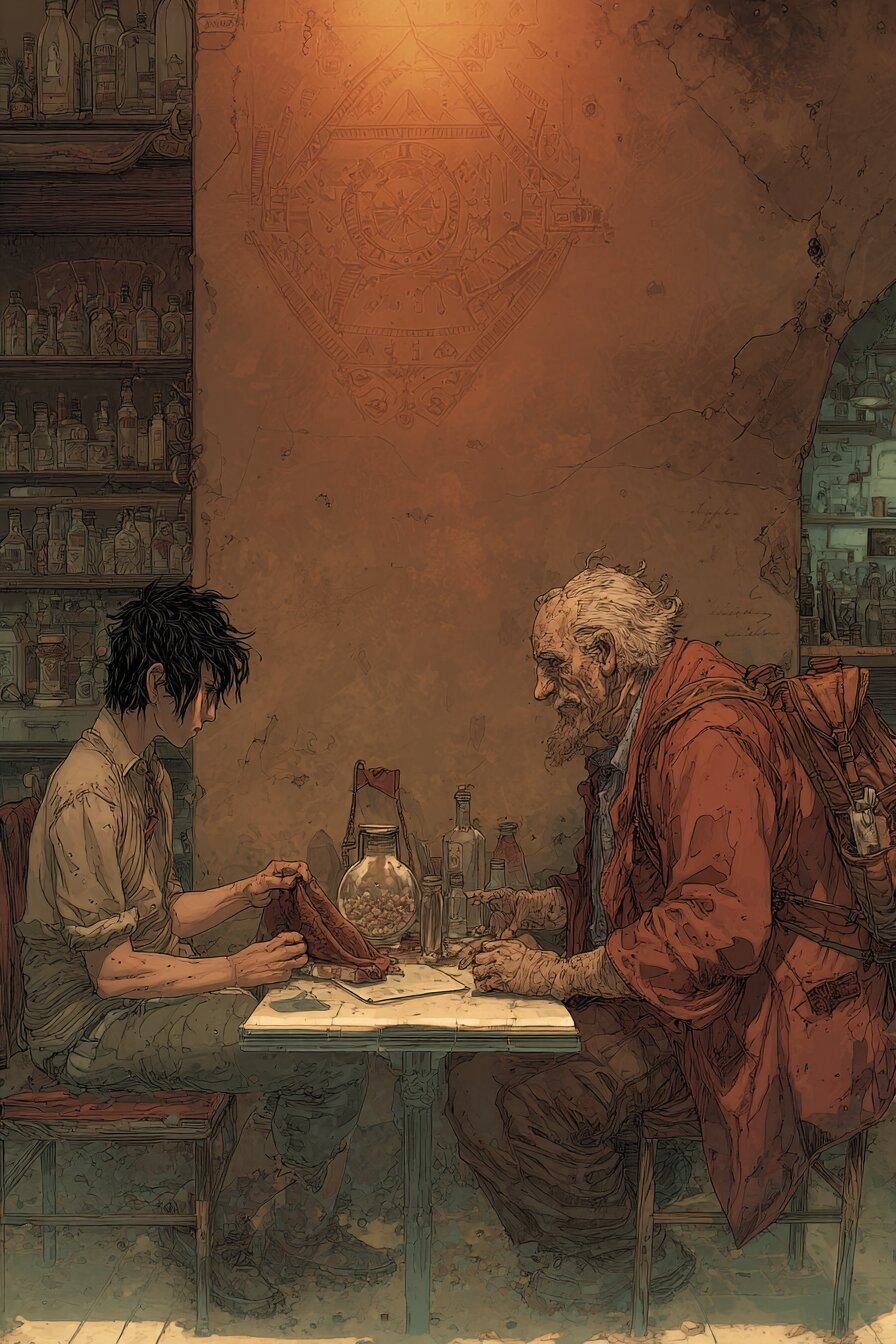
I pocketed the paper. “Michael, I, thank you. For everything.”
“Don't thank me. You did this. I just showed you the door. You walked through it.”
“What if I don't come back the same?”
“You won't. That's the point.”
“The teacher must die before they can teach,” I said.
“Exactly. You're the seeker now. But if you complete the circuit, you'll come back as something else.”
“What?”
“You'll find out.”
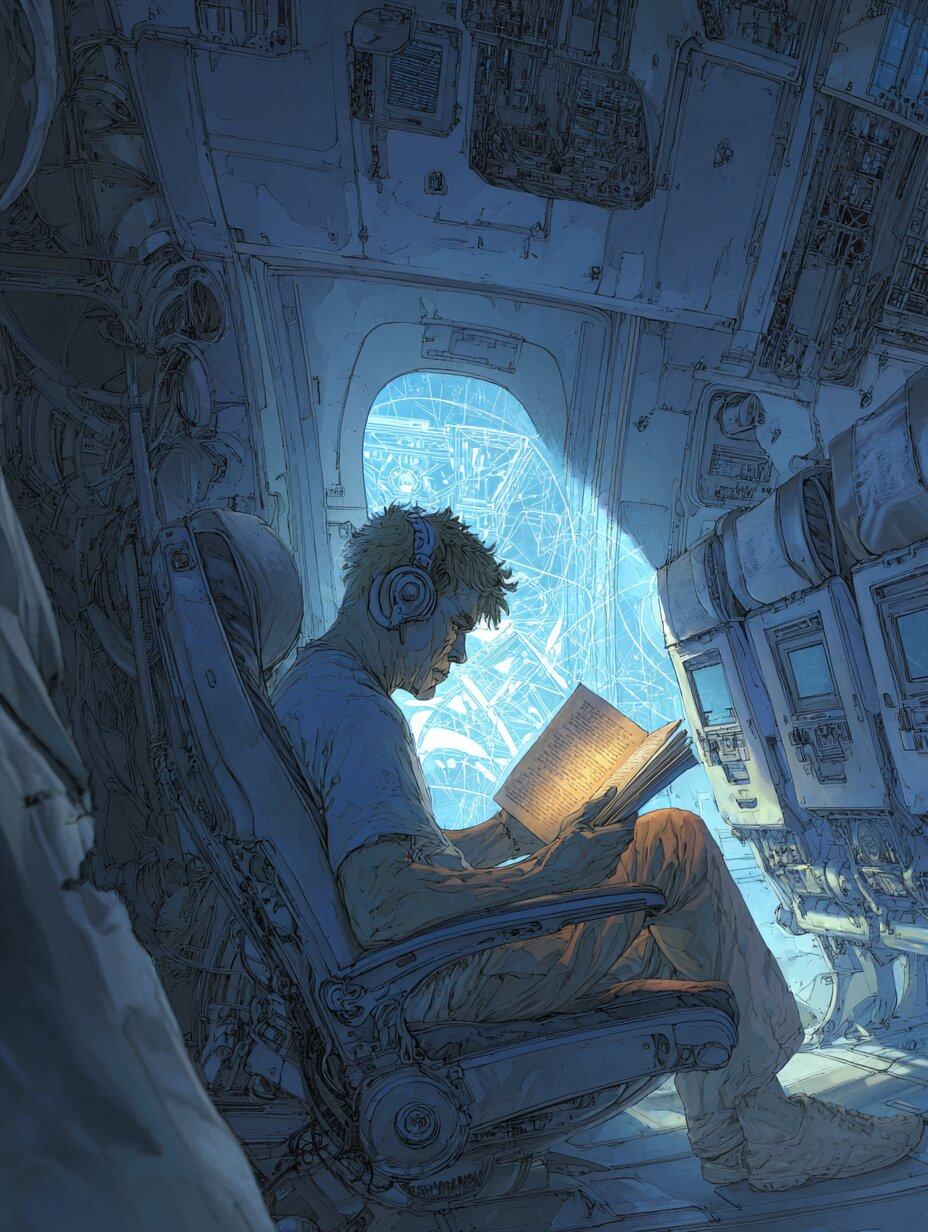
I read the book on the plane back to New Orleans.
And something clicked.
The idea that the present moment is all we have. That past and future are mental constructs. That most human suffering comes from our inability to stay present.
It sounds simple now. Almost cliché. But sitting on that plane, reading those words, it felt like permission.
Permission to stop worrying about the future. Permission to let go of the past. Permission to just... be here, now, fully present to whatever was unfolding.
I barely saw Cassie or Damian after that. Graduation was tough since their families had dinner together.
My parents flew down for the ceremony, proud and confused about my plans.
“What are you going to do now?” my dad asked.
“I'm going to travel.”
“Travel where?”
“Mexico. Central America. Maybe South America. I'm not sure yet.”
He stared at me like I was speaking another language. Which, I guess, I was.
I left shortly after that, and started my quest.
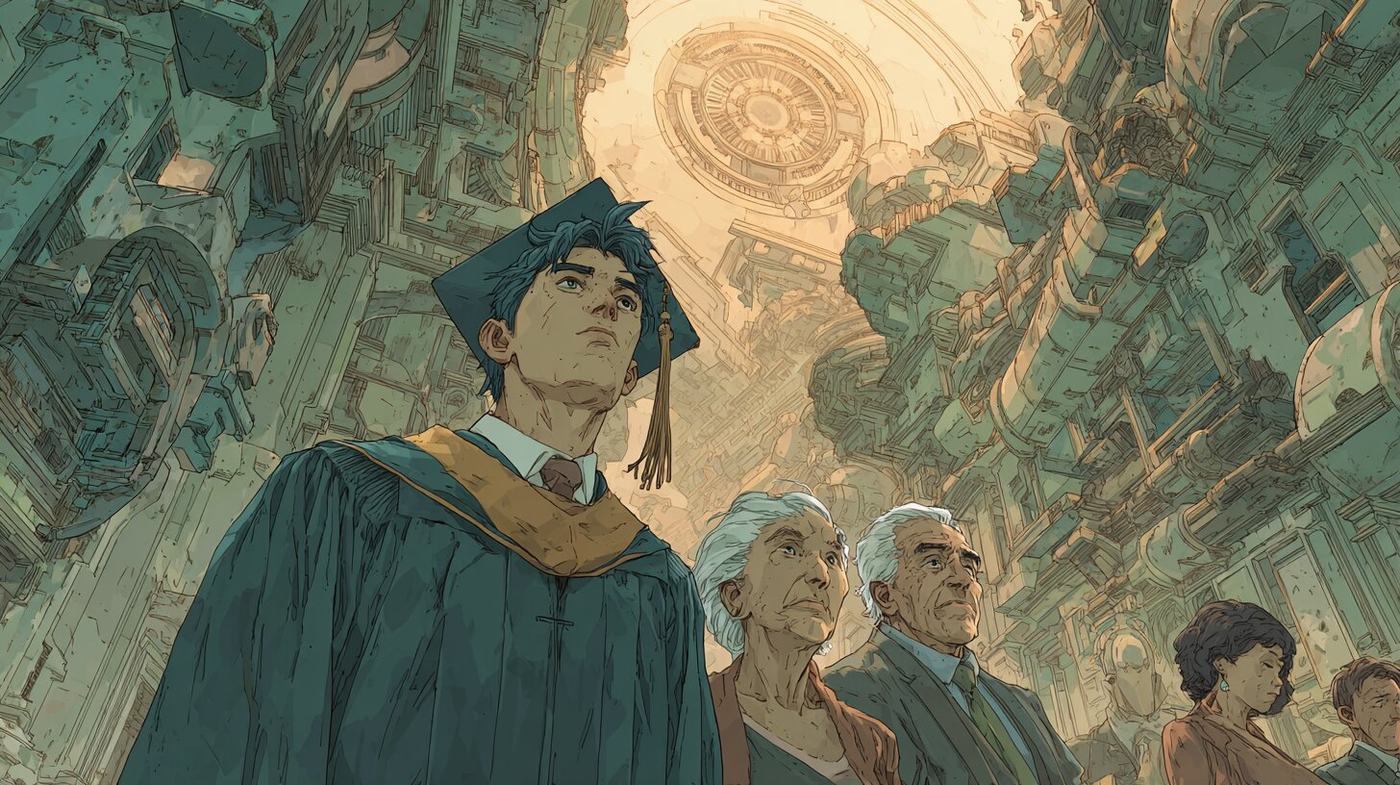
That was the end of four years. There was another word for the thing I had been circling all year without saying it, a rite of passage, and it is not a party but a door you go through once, in front of witnesses, and come back from as somebody else. The Greeks had one.
Our ancestors, too, practiced the art of altering the collective consciousness. They understood that inducing a so-called altered state would dissolve men’s barriers and consequently allow them to experience one another in an unfiltered way. Some of the longest traditions in existence were the Kabeirian and Eleusinian mysteries that took place all the way into the time of Alexander the Great, 300 BC. Plato described the ritual as a “way to lead us back to the principles from which we descended, in a perfect enjoyment of intellectual good.” They drank a potion made of alcohol, herbs, honey and hallucinogenic plants like ergot. This induced state of consciousness dissolved the ego, allowing the initiates to embrace their true, higher selves through rituals like dance, song and sex. During these once-a-year mysteries, Greeks were able to take off their masks and reveal their true selves. The initiates were held accountable for the true selves that they revealed.
Participants of the Mysteries also experienced a direct connection with the mystical and divine. These encounters were so profound and revelatory that not even modern science has discredited them as mere illusions and hallucinations. However, with the rise of the Church, the direct relationship between the individual and the divine was interrupted by the implementation of a mediator: priests and clergy. A further form of alienation for the believers was the use of Latin, an antiquated language studied by academics and religious scholars, in sermons. God was now inaccessible to the parishioner. This newfound religious hierarchy led to men being afraid and ashamed of their Dionysian and animalistic urges, for they constantly sought the approval and forgiveness of God through the Church.
I returned to Greece and spent the summer with my friends and family.
I spent the summer researching. I read about ayahuasca ceremonies in Peru, about the Zapatista movement in Chiapas, about Burning Man in the Nevada desert, about the full moon parties in Goa.
There was a circuit. A network. People traveling, connecting, sharing practices and ideas and experiences. The global tribe.
I needed to see it myself.
The Gaia hypothesis, Mayan calendar, shamanism, eco-communities, sacred spots; all cataloged and noted down, email addresses and websites. My network began to expand and the adventure officially started.
“So that's when you knew you were leaving,” Akiko says. “Before September 11.”
“Yeah. I was already planning it. September 11 just... confirmed it. Made it urgent.”
“Did you love her?”
“Yeah. I did.”
The plain page of An Oddyssey. Behind the book.