Chapter 13
Iquitos, Peru
The Vine Speaks
IQUITOS, PERU, JANUARY 2002
NYC, 2002
“And then?” Akiko asks.
“Peru. The jungle. Iquitos.”
“What happened there?”
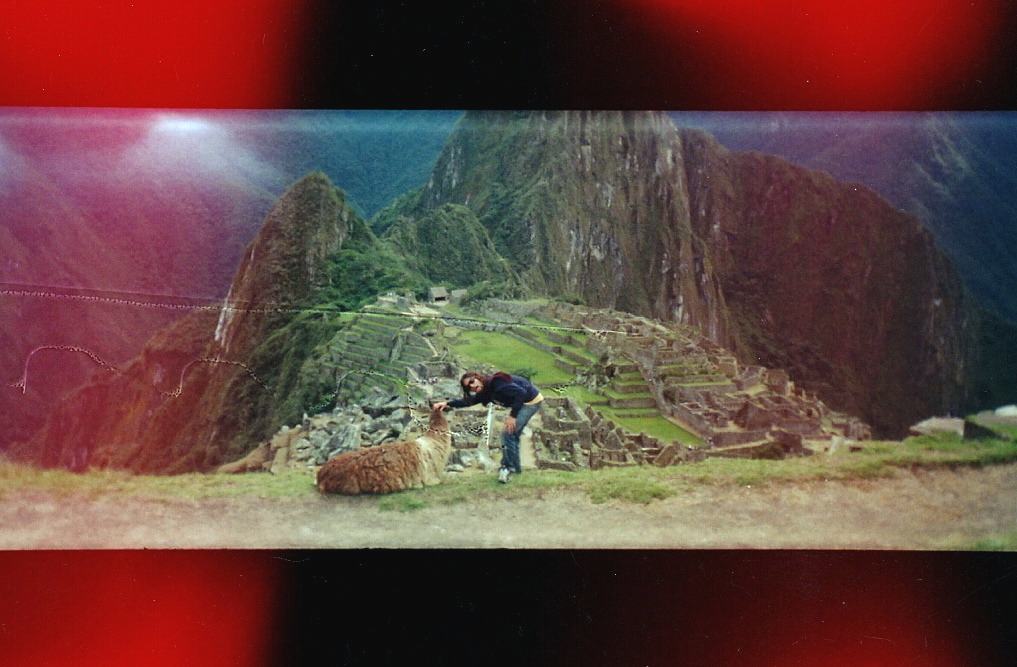
“I went to drink ayahuasca. With shamans. In the Amazon.”
I'd told Cassie why, at the end of the Dark December letter.
Sun, 23 Dec 2001
And so I leave you with a question of faith... in me. Why I am addicted to you? Maybe that was the heroin I was invited to confide to you at your parent’s dinner table? Like a bird that flies away from danger I will now leave you with my thoughts... of honesty and devotion and pain, and grab the vine that will swing me back into the jungle where I will find the magic juice of the magic vine that will hopefully un-addict me from the magic juice of your loins. With all the love that has crushed our souls, and has liberated me from the box of conventionality. I bid good-bye and am curious to see what you have to say ... if anything at all.
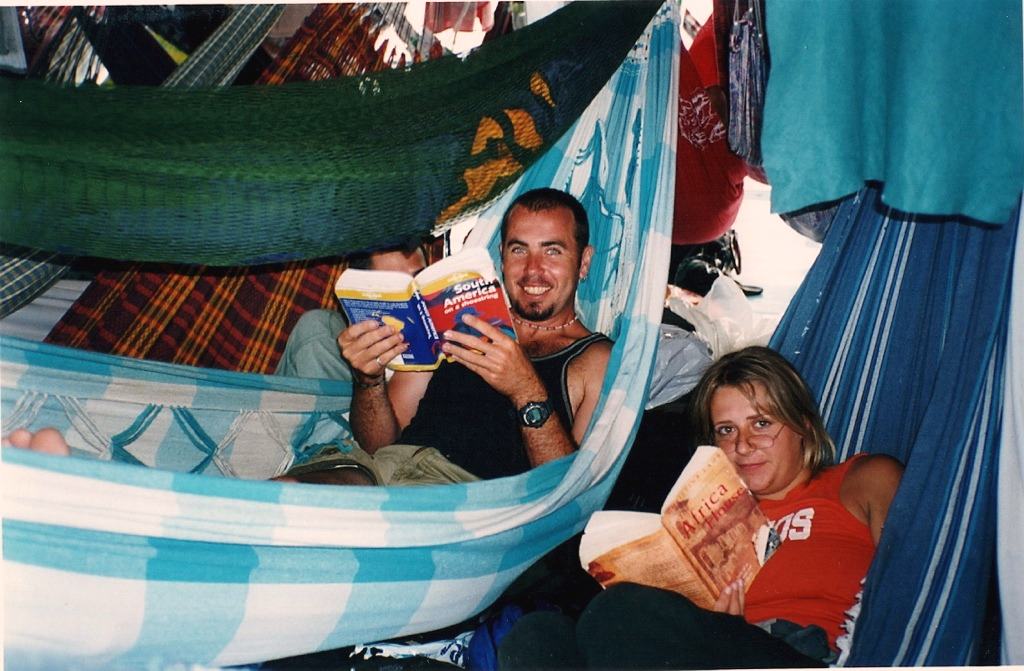
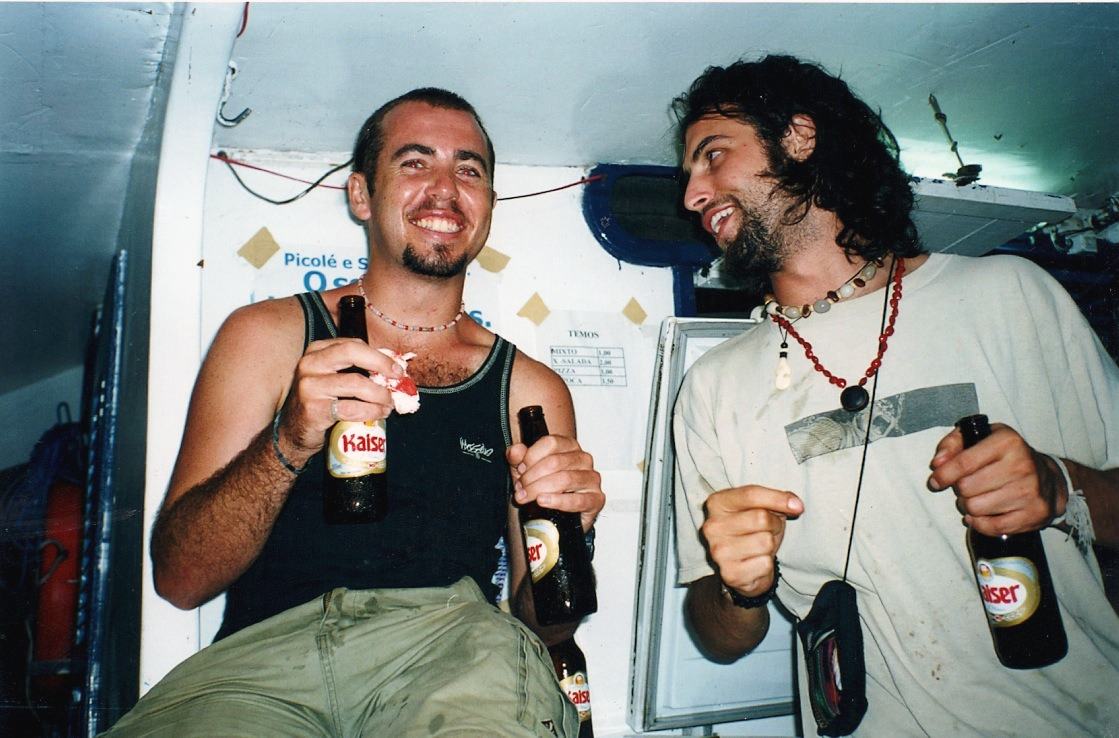
nikos
On the river with Peter, the friend from breakfast in Puerto Viejo. Then Iquitos.
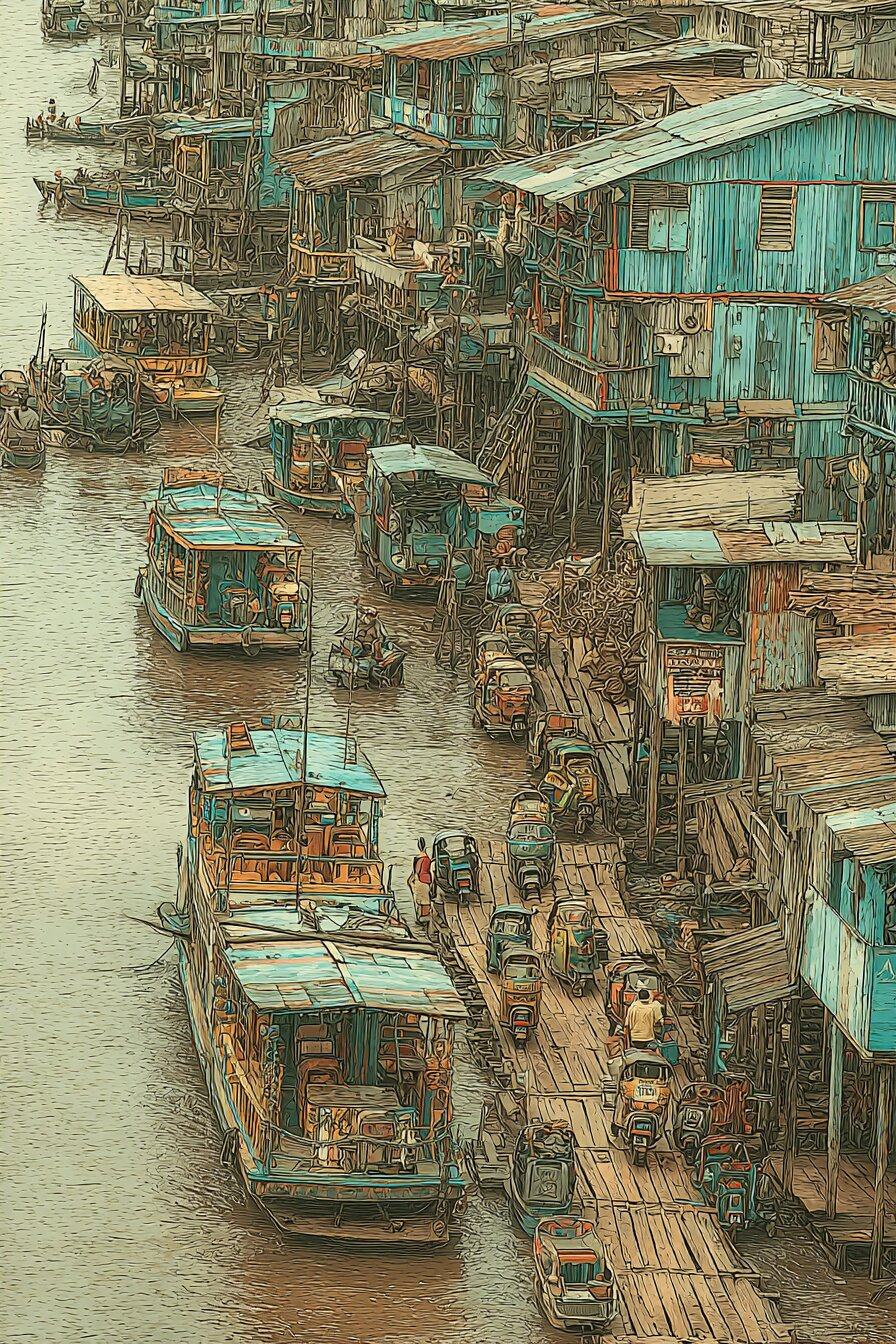
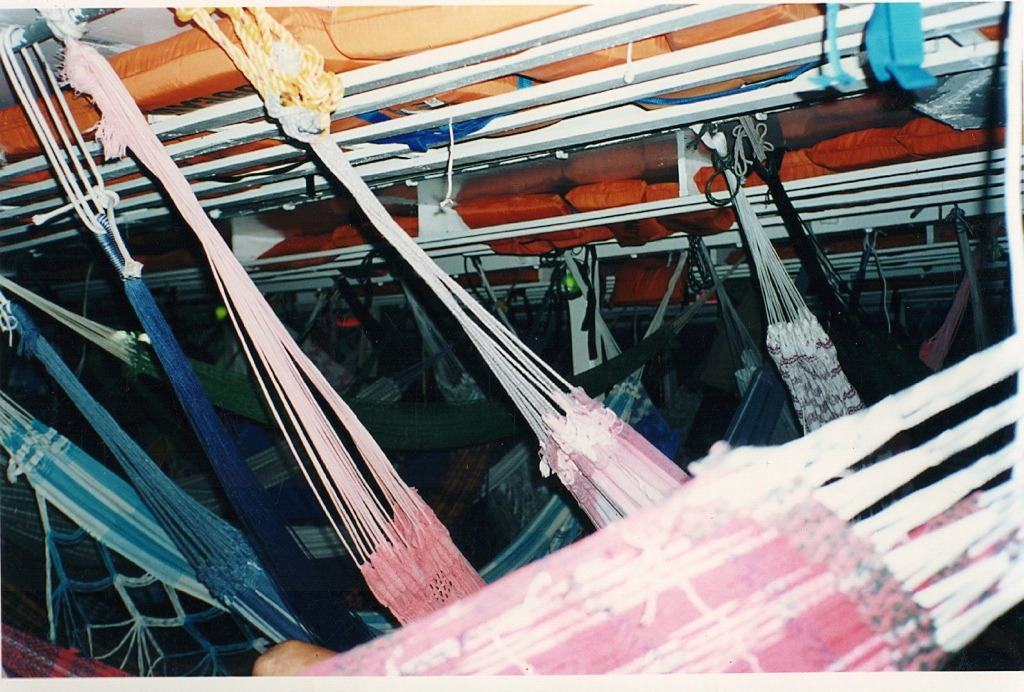
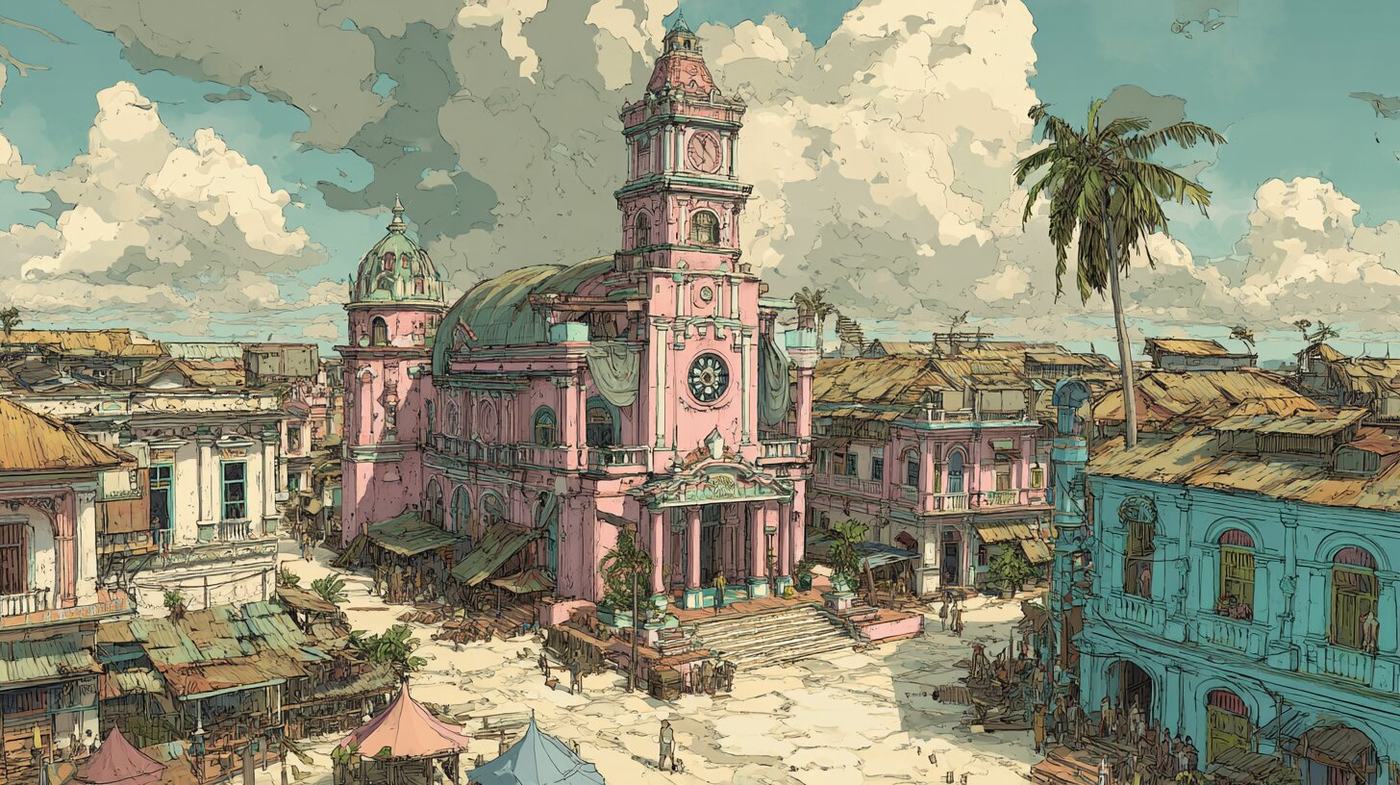
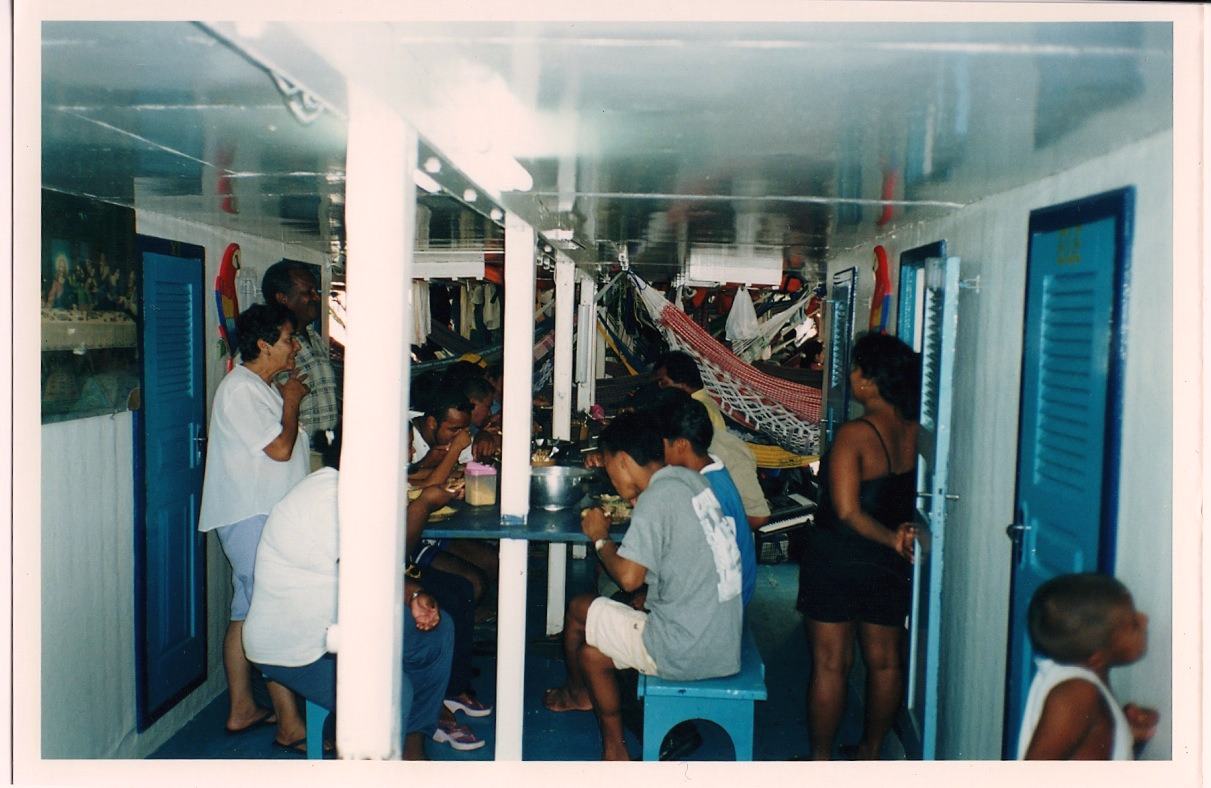
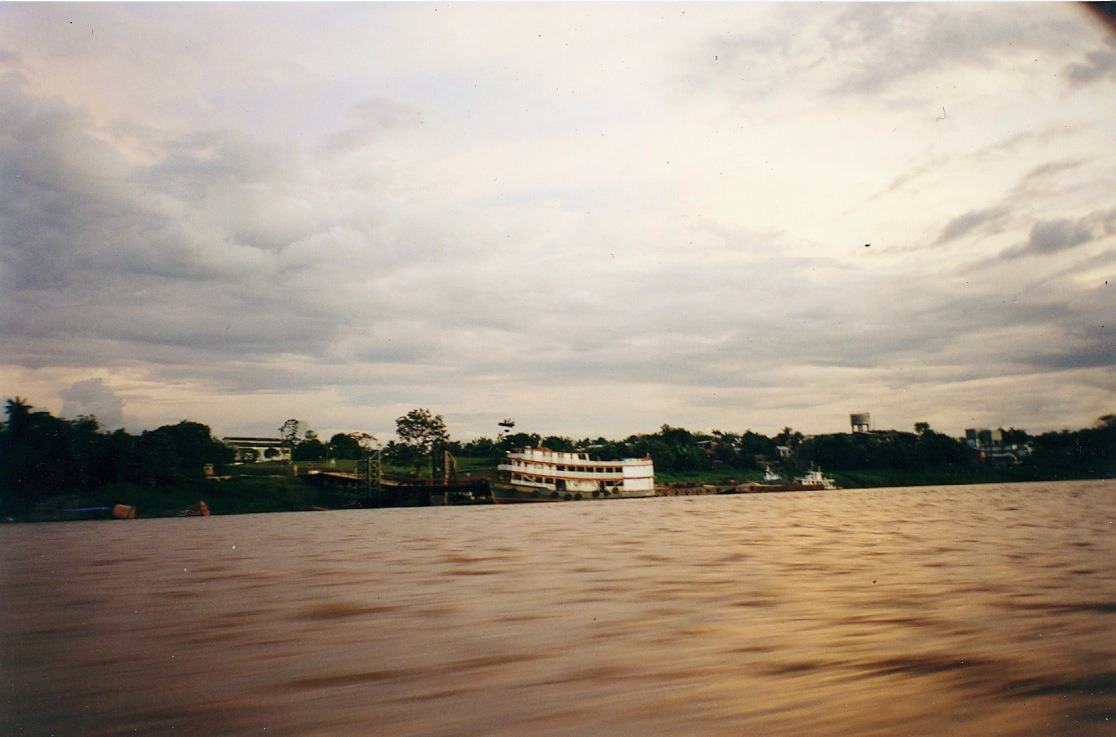
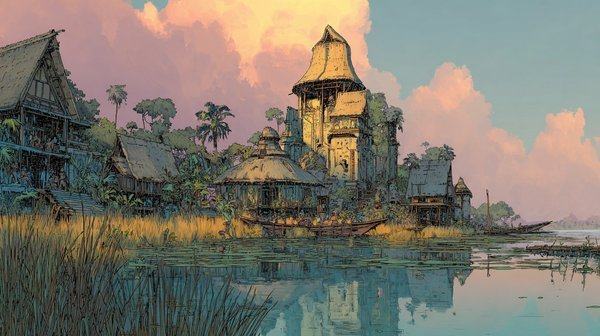
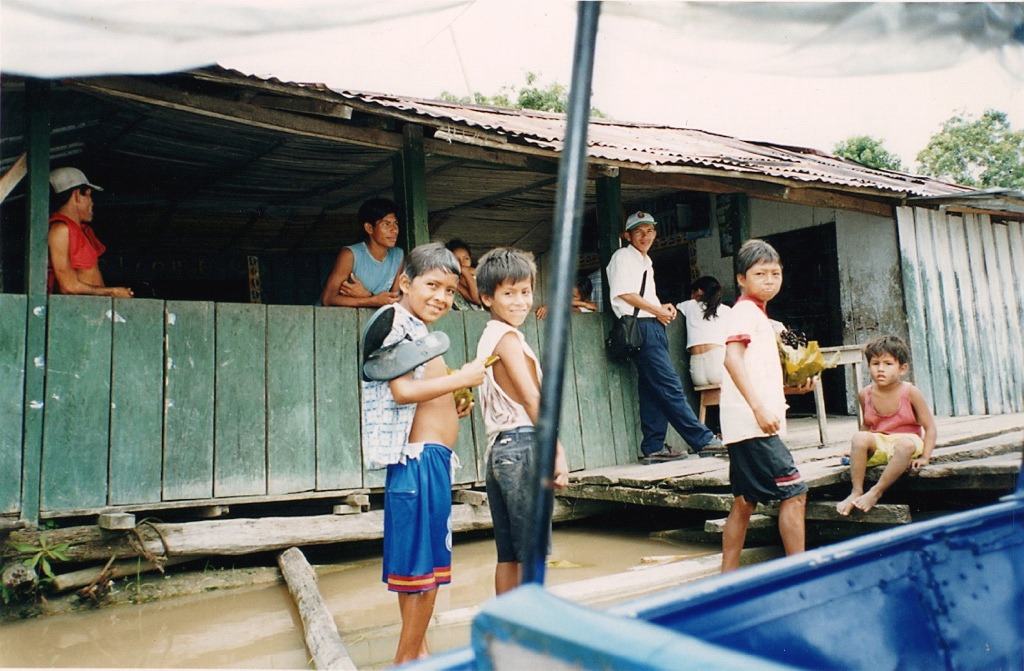
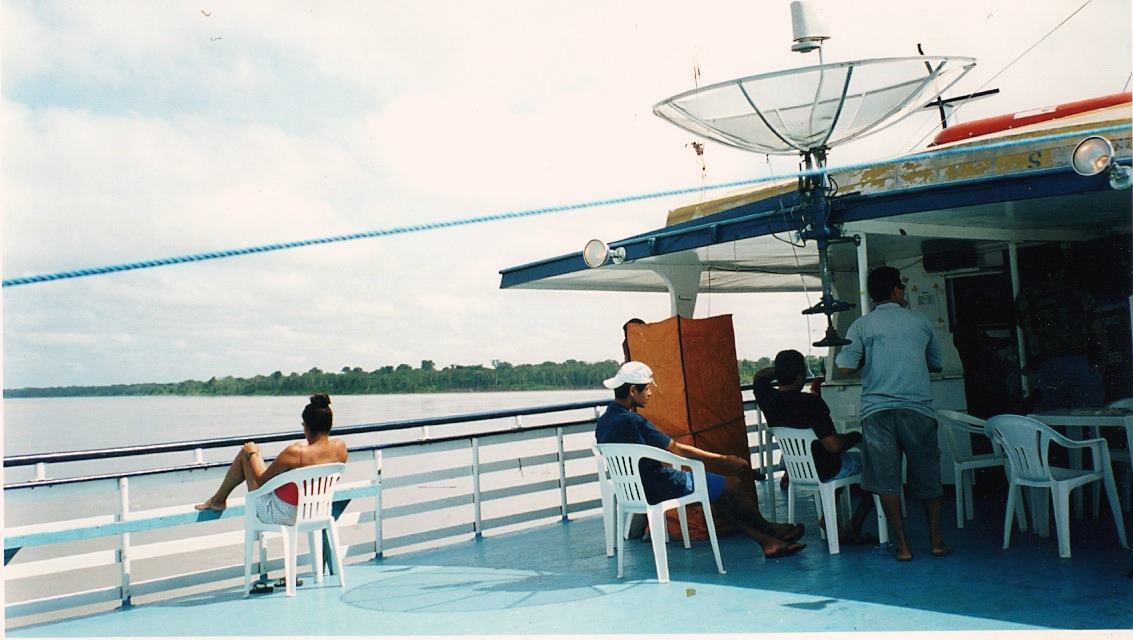
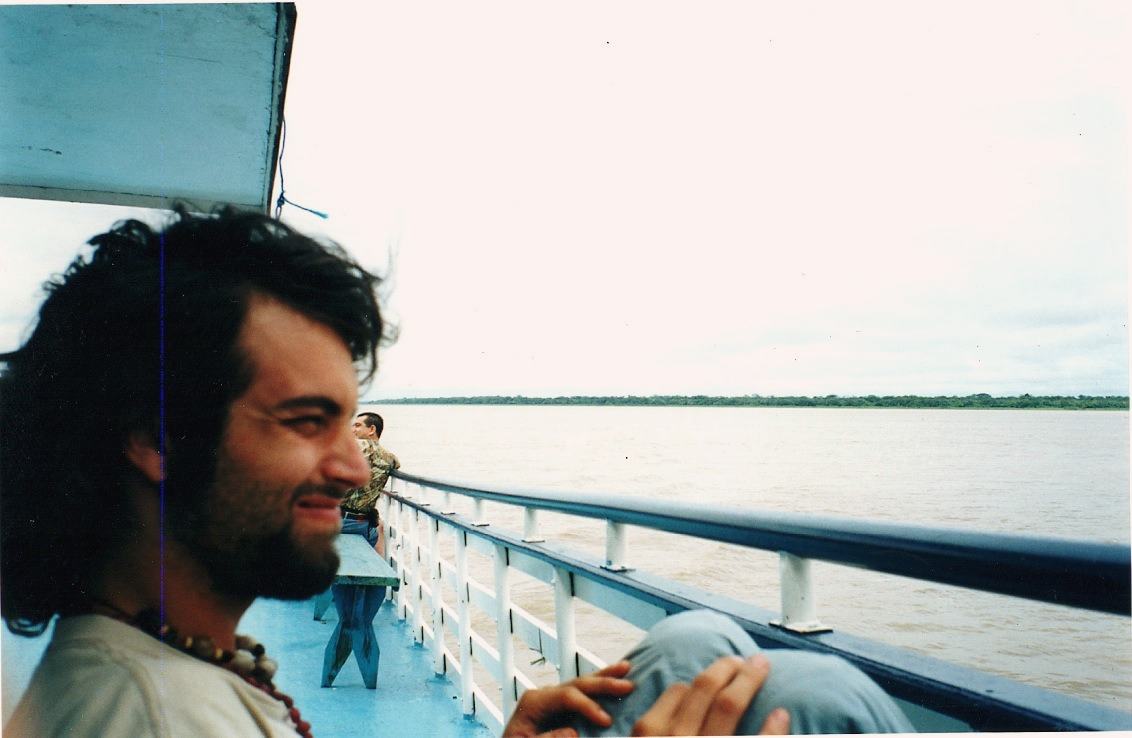
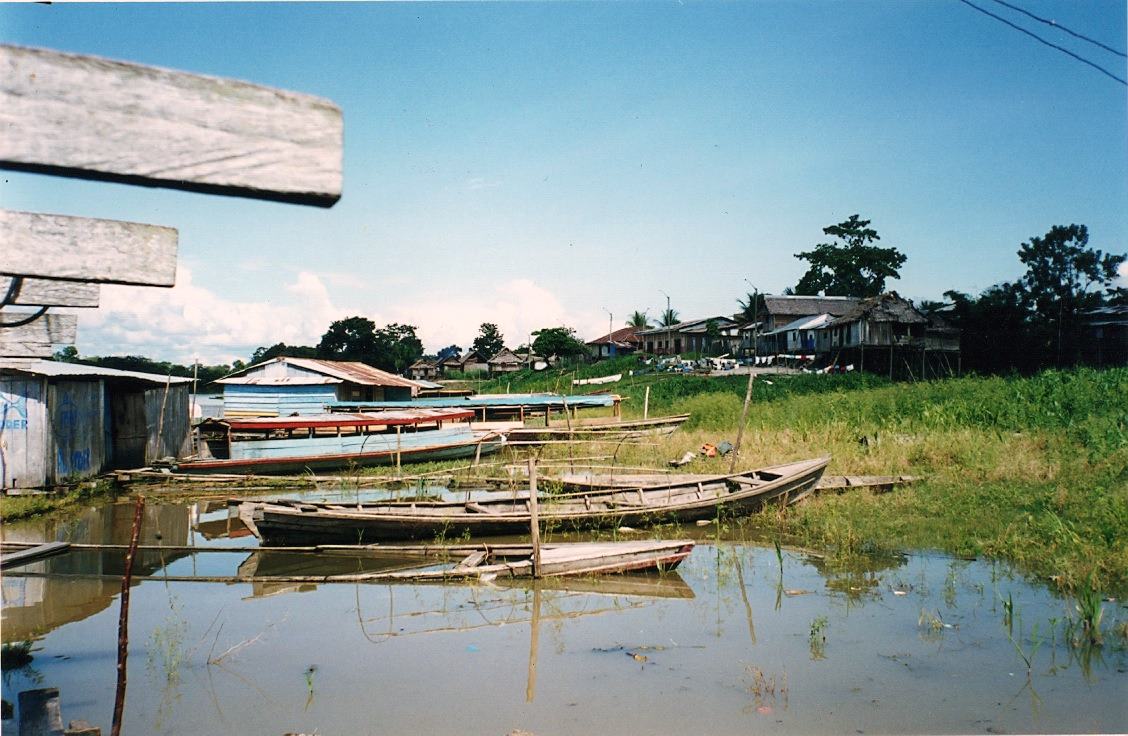
The time has finally come; I have been waiting for this for a while now. The buzz of the three wheel moto-taxis was refreshing after the low frequency hum of the riverboat. Peter and I had been on the boat for 8 days now and the slightest breeze was refreshing to the tickle of a wind that had been teasing us for the past week or so. I had been hearing a lot about Iquitos lately, though I had first heard of it almost a year ago when I was in San Francisco. A bizarre sequence of events, triggered by a DreaM-Time experience in a vulnerable turning point of my life, had landed me in the heart of the Redwood forest, at Solstice Grove. Michael and the others there spoke to me with reverence about Iquitos, a small town in the middle of Peru's thickest jungle. A town of half a million more or less, connected only by the Amazon and a small airstrip. The moto-taxi driver was young, topless, and indigenous. I guess he looked like most taxi drivers around the world, his eyes comforting and familiar with most of the nooks and crannies of his hometown. Iquitos is one of the most accessible gateways to the northwest Amazon and notorious for a culture interwoven with shamanism, superstition and magic. A few poorly paved roads connected the outskirts of the town while the vast majority of our moto-taxi driver's route was on a bumpy dirt street. The rainy season must really screw these roads up; lucky for us it was the dry season. A friend had mentioned a cheap and friendly place to stay on the bank of the Amazon; it was close to the center, and had a colonial style of architecture blending it in with the buildings of the main plaza. Some of the buildings were painted pink, light blue and other pastel colors, a great contrast to the grass roofed huts that composed the majority of the surrounding suburbia. I settled in and consulted Peter about the line of strategy. The information we had was scattered, and different leads seemed all to lead only about 75% down their respective tracks. There was one man, a western anthropologist who had opened a jungle lodge several hours by boat outside Iquitos. This seemed to be our most promising lead, yet I was reluctant to jump into this experience with the first available shaman, so after settling in and taking a most necessary shower, we wandered around the center looking for information.
The weight of the heat was sticky, our chests and upper backs clung to our shirts making it even harder to breathe; a nice iced Inca Kola seemed to be in order.
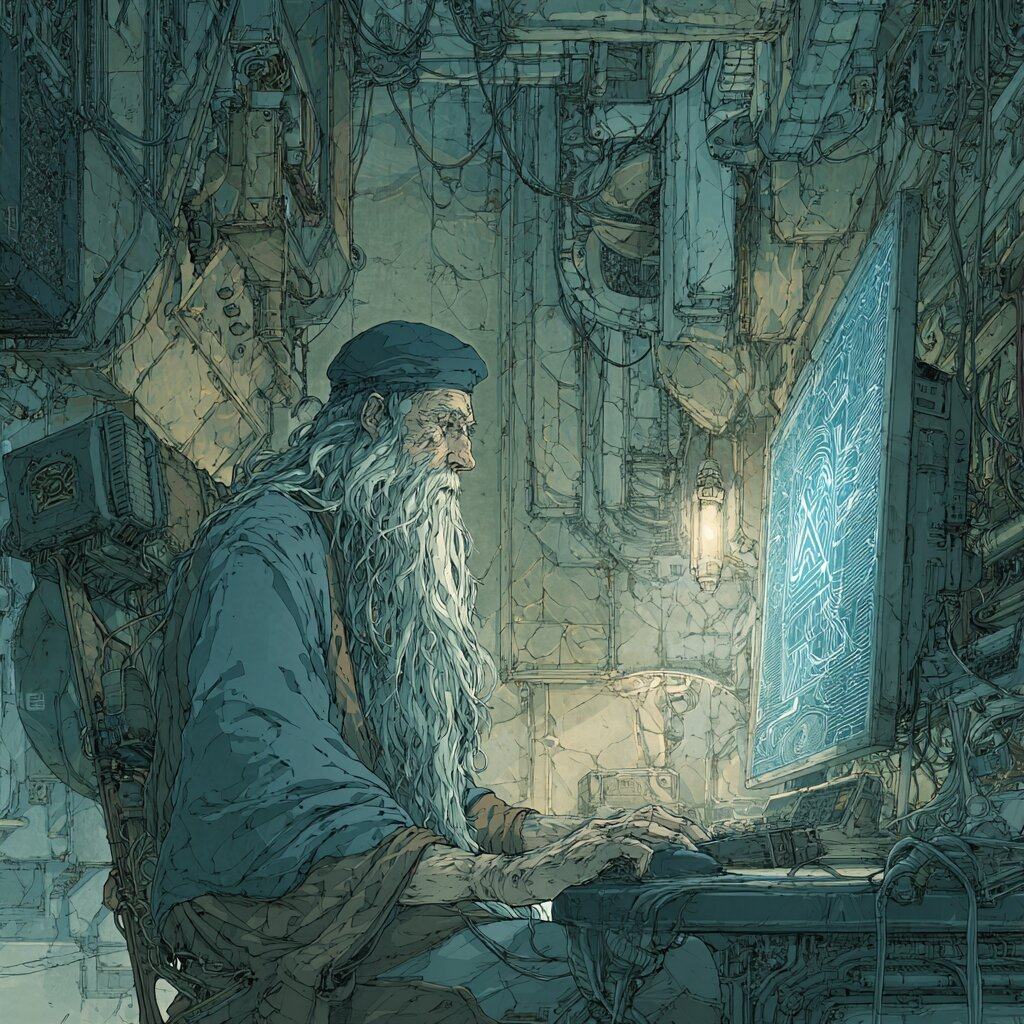
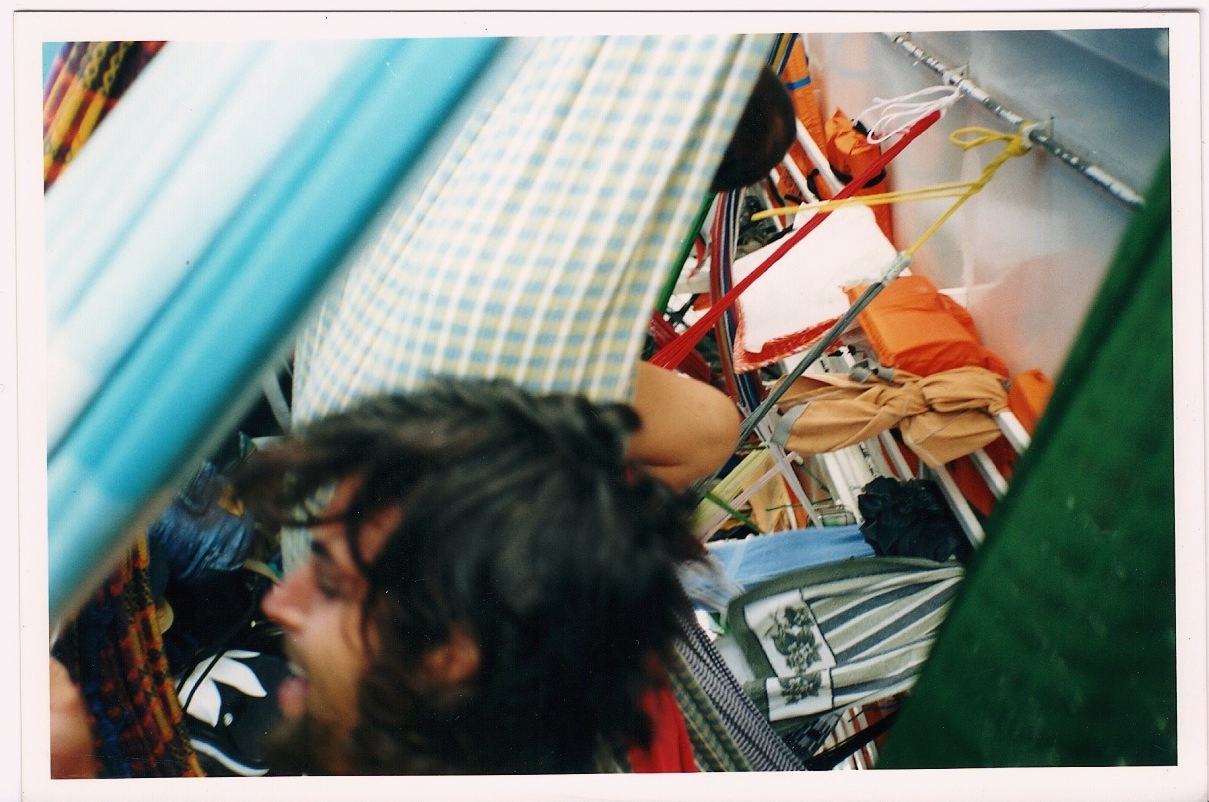
Inca Kola is similar to a cream soda, yet is fluorescent yellow, actually not much our style, yet our retro urges couldn't seem to resist it. We sat down and started surfing the web, looking up our collection of information, emails we had either received or posted to ourselves. In the corner of the Amazon cyber cafe was this guy I had noticed earlier when we were arriving by moto-taxi; he was thin and tall, lanky but with a gentle feel, kind of like he was in slow motion. The most distinguishing thing about him was that he had a long gray beard; it hung lightly from his entire face and reached a little above his belly. His deep blue eyes had a presence in the room but they were so small and could barely be seen through the forest of his face. He was European, about 40, wore a French beret and was minding his own business. I could not resist the look of this character and due to the mission at hand it seemed utterly foolish not to sit next to him and start a chat. Peter was the first to get up; he maneuvered through the scattered chairs and introduced himself to the guy. He sat down and ordered some beers, but the guy declined the offer settling for a guarana juice. I checked my web notes and joined them.
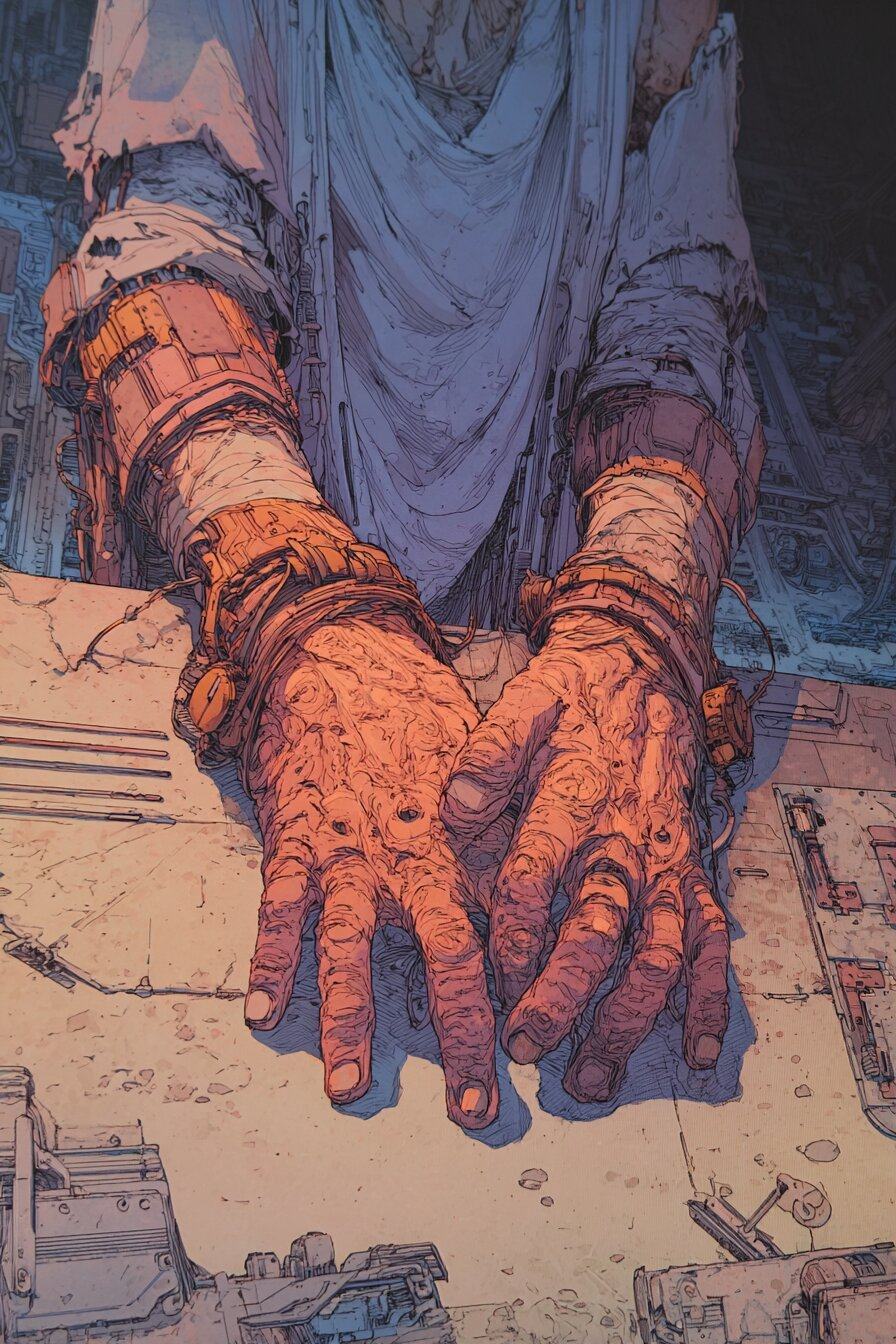
His name was Jerome; he was French and had been in Peru for 8 months now, 5 of which had been in the Peruvian Amazon with natives in secluded small villages. He was a carpenter by trade and his hands gave it away. They had more detail somehow; the wrinkles on them were more defined while having many shades. Craftsmanship radiated through them. He had been helping the indigenous and locals build huts while he also painted and wrote. He had just returned from his third ayahuasca journey and was really eager to share his experience.
He was like a little child and his enthusiasm colored his words selectively and poetically. We enjoyed his company; we sat there for some time and listened. Jerome had not seen any Europeans in quite some time and his French was mingled with his Spanish; his tone was smooth and his voice a little husky yet colorful. The afternoon crept away and the sun was coming through the windows with a light orange color; Jerome told us about a guide who could take us into the jungle for 5 nights and we could drink with a variety of different shamans in different villages and simultaneously see a lot of jungle. Sounded pretty good. We said good-bye.
We walked down the road to talk about our options. The stickiness of the Inca Kola had blended with the beer and the cigarette smoke to make a tropical mouth disaster; at least it wasn’t as hot as earlier in the day. The sun had just set and the moon had already risen and was completely full. A mixed baby pink and blue sky was dabbed with small almost transparent clouds; there was no wind.
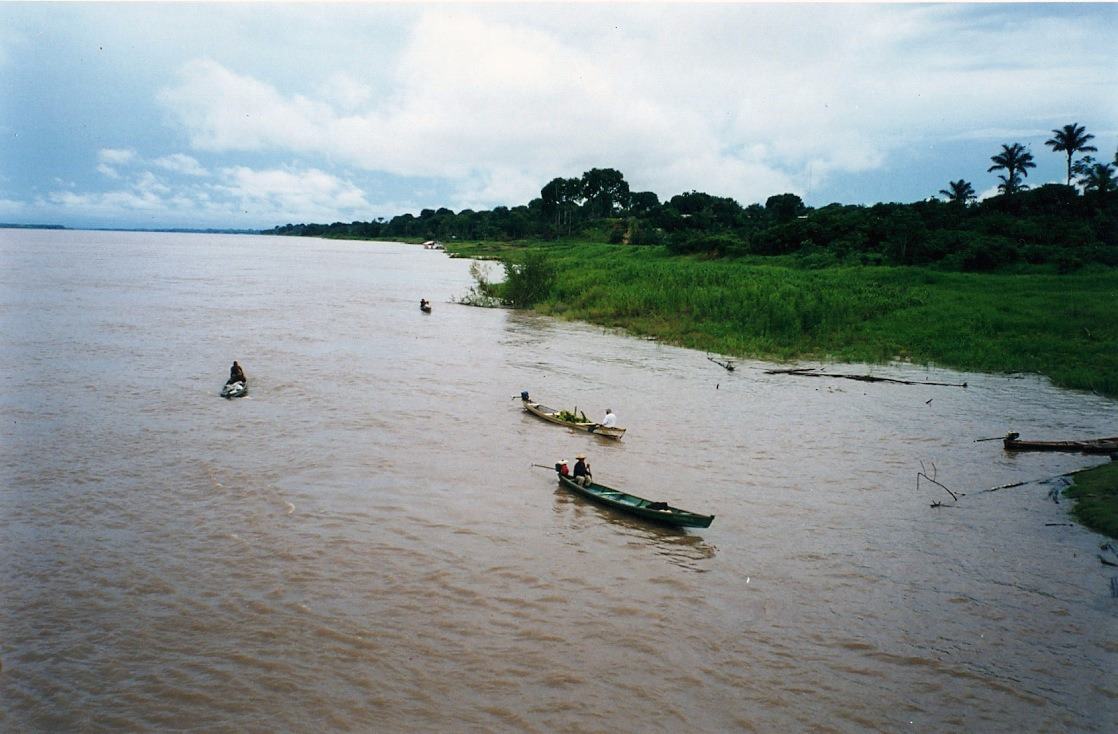
A sense of tranquility covered the 'great snake'; its rhythm was slow and its momentum powerful. The locals had learned to respect this formidable natural wonder, the source of all life in this part of the world. It moved the land and life. The Amazon is a spooky place; one feels small here, swallowed up by the overwhelming presence of nature. For someone who has been removed from this tangled mix of life, the experience can be quite humbling. We have built our cement boxes to provide a sense of security and stature, man organizing the natural environment, dominating the flow of natural evolution, we are not related to nature, nature is dirty, smelly, sticky, dangerous. I wonder what our perfumed bodies would smell like if we sliced them in half and all of our juices splattered on the floor? How nice would we smell then? Nature doesn't have skin to wrap all the mess up in and then polish it from the outside, we see her from the inside out, but we are so obsessed with the superficial, the surface, the skin that it is almost impossible for us to forgive Her for her messy ways and see her inner beauty. Our sky could possibly be her skin but we have given it cancer, so She is more threatening to us than ever before. Build more boxes, make protective odorous creams for us to protect our skins from the malady we have given our mother.
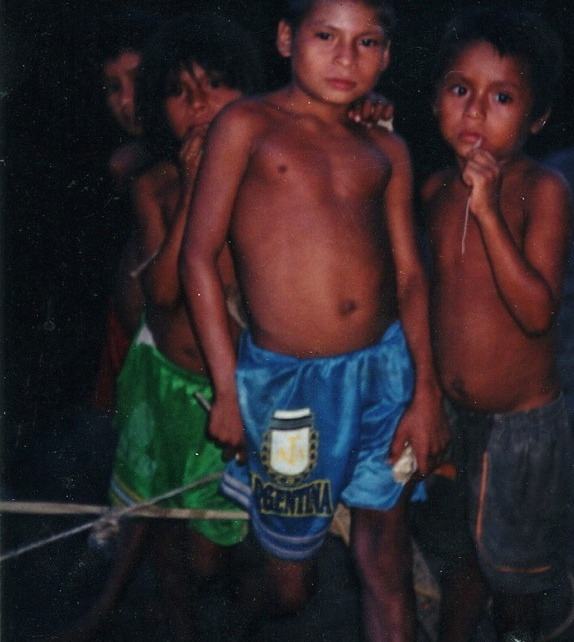
The view of children chasing each other naively brought a bittersweet emotion that was hard to define. A nostalgia for a perception of the world which naively let us play, and now these children do the same not knowing that their 'great snake' was sick cause their elders had been feeding it garbage for the past twenty years. I wondered if their kids would be able to play by the 'great snake'; unfortunately, I am afraid to say, I don't think so.
The turbulence of mixed emotions made it hard to sleep again; my eyes for so many reasons did not want to shut; they could not believe what they had seen. So I lay there staring at the peeling paint on the ceiling. The hum from the river was not from the boats but from the zillions of insects that buzzed like a gigantic swarm over the entire jungle, birds lay another pattern that pierced the blanket of a bumble with a sprinkled splatter of diversified color, finally the few cries of the bigger mammals tied the composition into a full-blown ambient masterpiece. I picked out a sound that appeared every 15 seconds or so, letting it drag me deeper into my sleep. Tweet oooo tweet. Tweet ooooo. tweet.
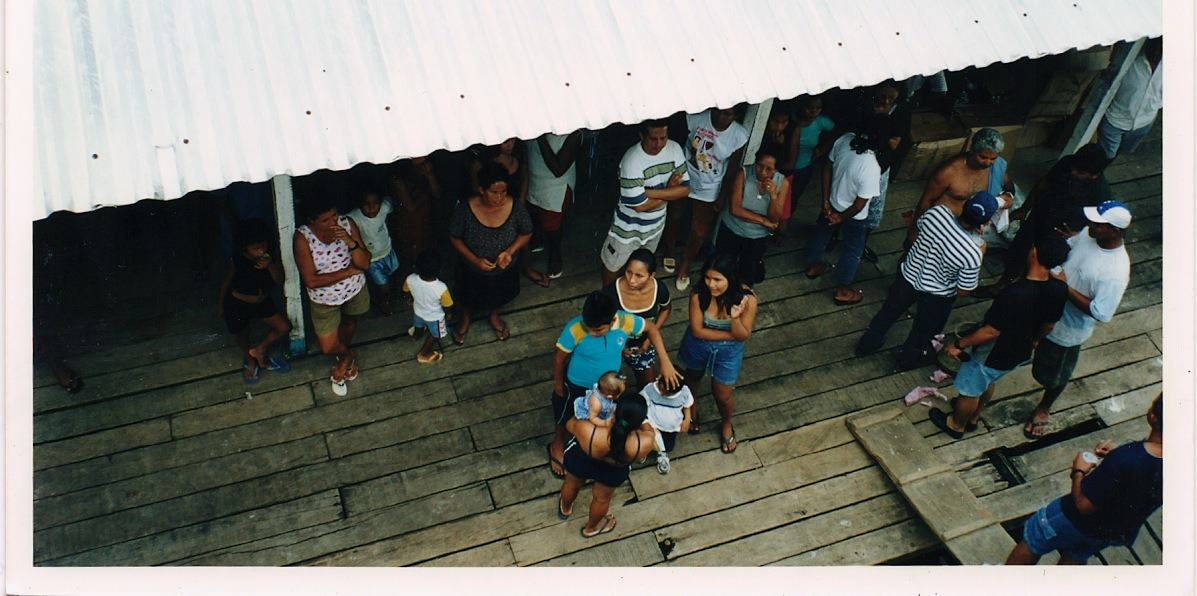
The morning was refreshing. The anticipation of a jungle trip had woken me up at the crack of dawn. Peter was still asleep so I ventured out to get some breakfast. Dimitri was coming today, a good friend of mine I had been eagerly waiting for; we had been talking about shamanism for many years now and he wanted to come and join the adventure. So I decided to look for the American anthropologist named Scott. I asked a few locals about the blond gringo, but to my disappointment a negative response was all I got. This made me wonder about his credibility; there was some sort of envy and competitive atmosphere that dominated the air, something I wasn't too fond of.
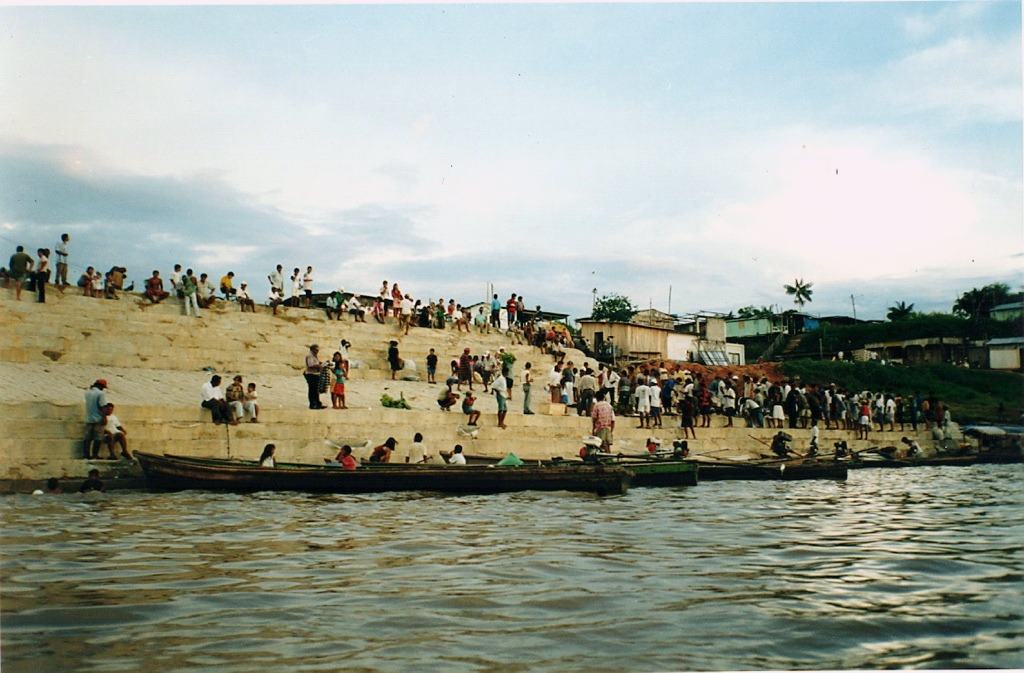
At the corner of the main street a kid was signaling me to go to him, it was our moto-taxi driver from the day before. We chatted for a bit and spoke about the originality of Iquitos, the jungle town, and I finally got the nerve to ask him about Scott. Much to my surprise the young man knew him very well and also spoke of him with admiration and respect; he told me he had a small office down by the river and that he came in from his jungle lodge once or twice a week to get supplies. We went there and found him.
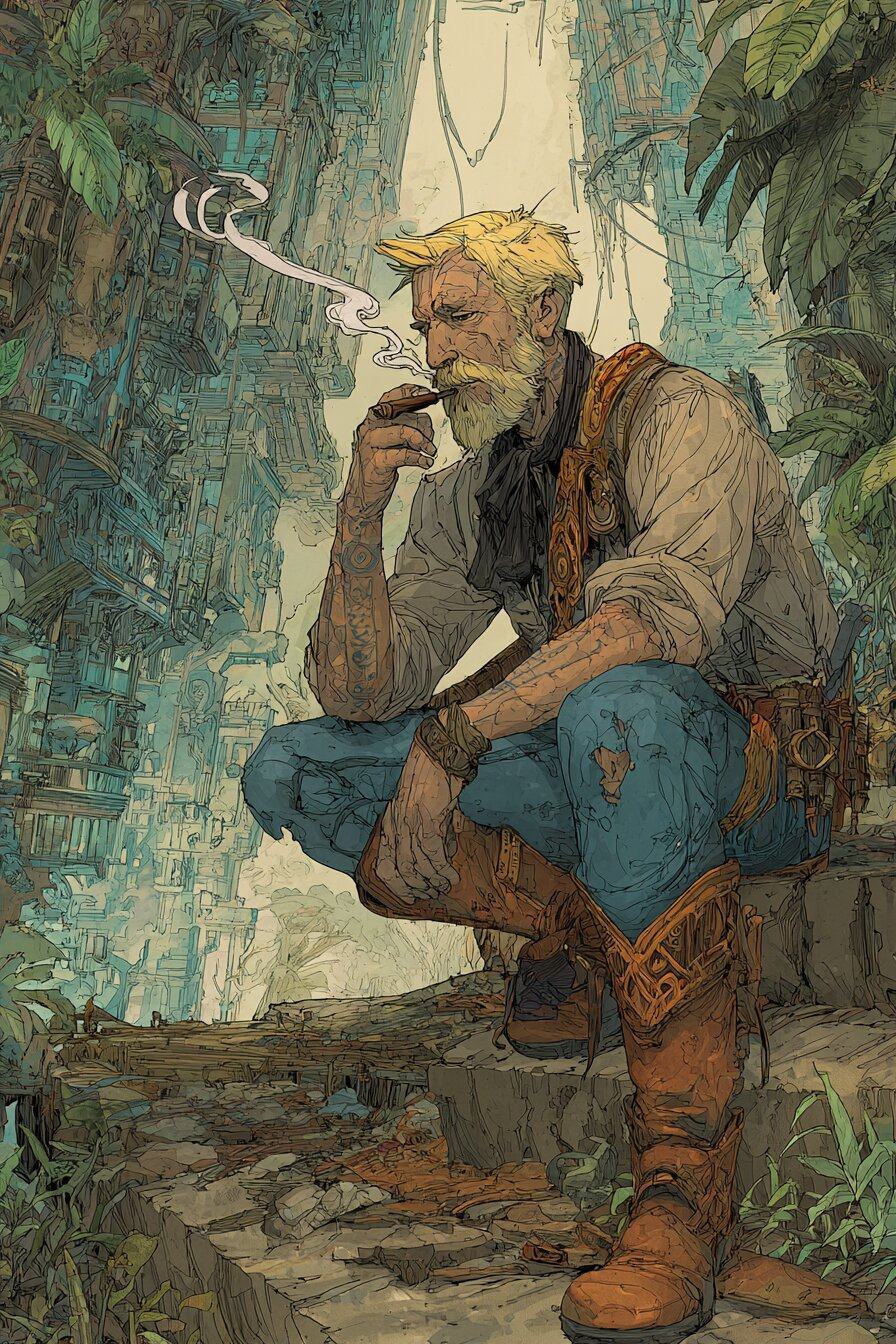
Scott is a special man. He comes from a rural area of the Midwest and has been in Peru for over ten years. An anthropologist and psychologist, he spends the vast majority of his time here in the jungle of Peru, learning alternate forms of healing from the curanderos and shamans of the Northern Amazon. He also brings New Age seekers and young travelers from the West to his lodge in hopes of getting a deeper understanding of the ritual. He also wishes to bridge a growing gap between the Western scientific method of medicine and the ancient art of Amazonian healing. His presence was intense, his voice deep and with an American twang in it. He had short blond hair and a pointy face covered in a gold short beard; he wore a pair of cowboy boots and smoked hand-rolled cigarettes of black Amazonian tobacco; they smelled pretty strong. I felt comfortable with him; he made me feel safe, this was the main reason I decided to go to his lodge.
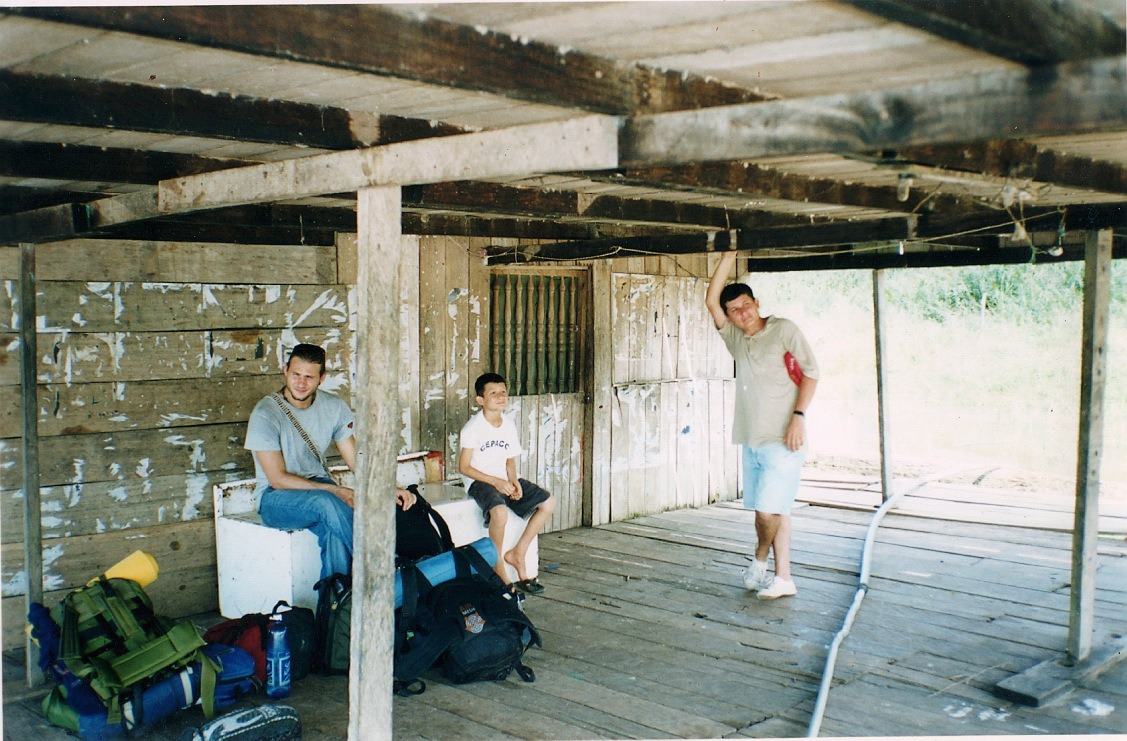
We packed our bags and bought supplies to take out to the lodge. Peter suggested going with Moses, the guide recommended by our French friend, but I pointed out the importance of getting a safe trip first and then the option of going deeper into the jungle. He agreed and also felt safe in Scott's hands so there wasn't much of a dispute. The boat left only a few hours after our third compadre showed up in town. Dimitri, jet-lagged and somewhat disoriented, followed us around with a somewhat blank look on his face.
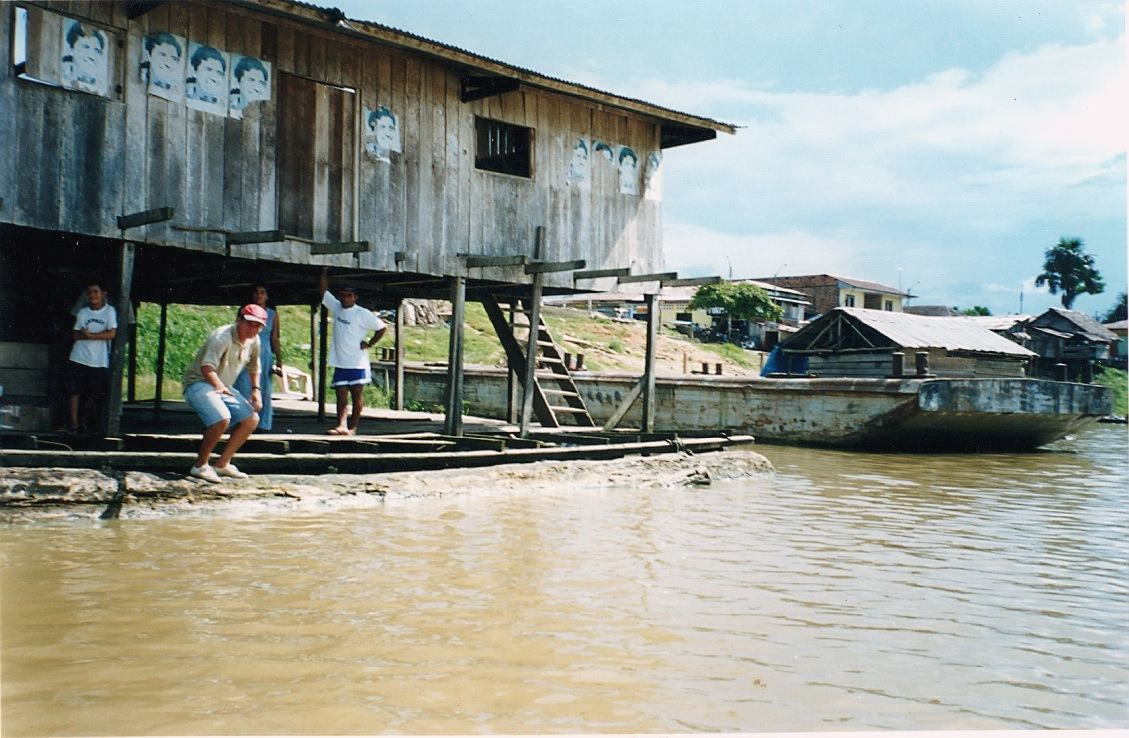
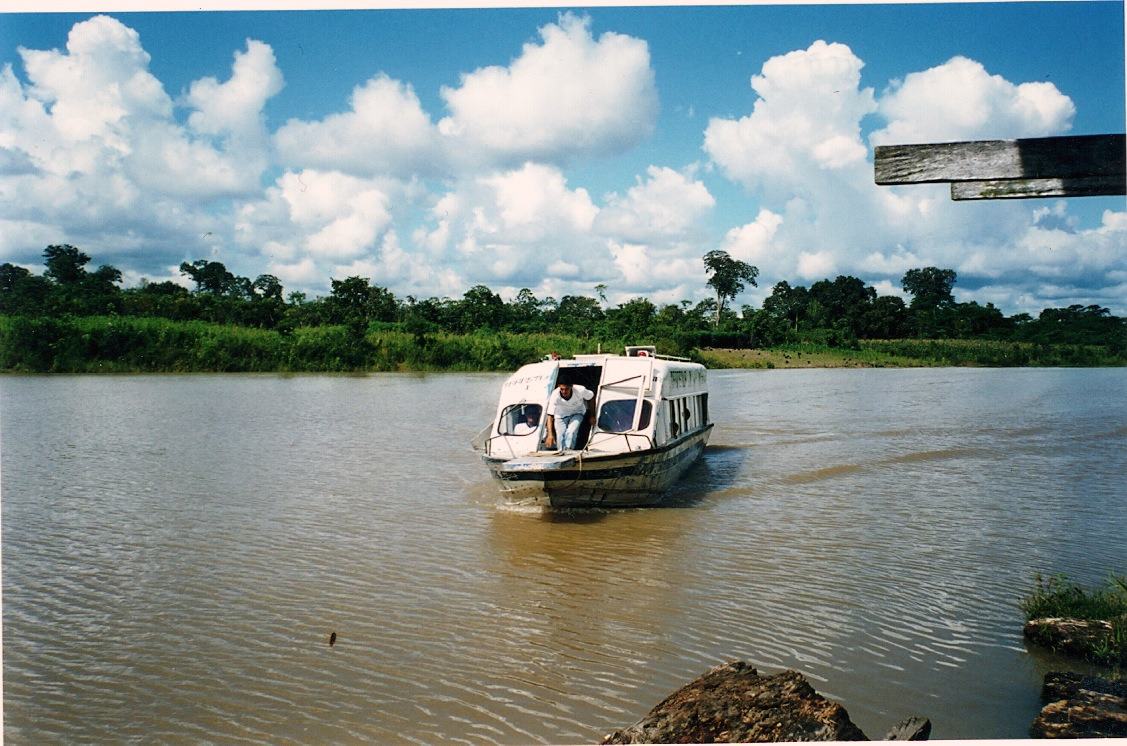
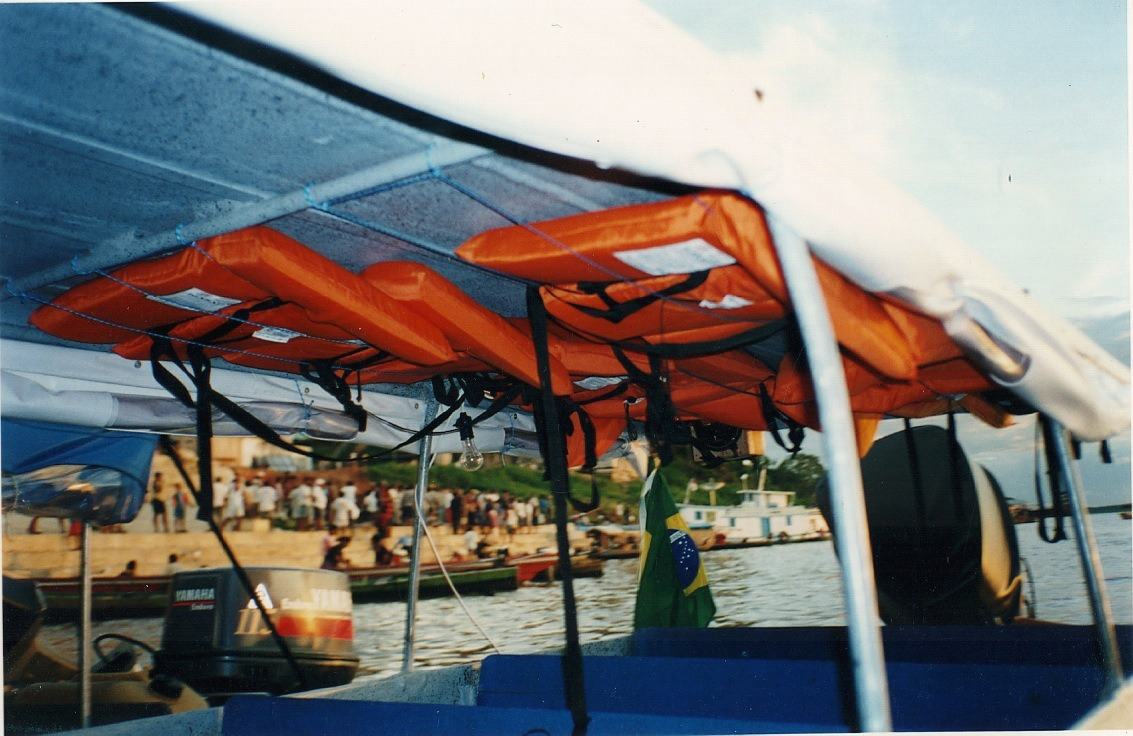
We did our jungle shopping, which included mosquito netting and other insect-repelling accessories, and headed for the boat dock by the river. An old Coca-Cola advertisement was painted on the wall and was slightly bubbling off by the humidity. The half-destroyed mural reminded me of the incompatibility of the two worlds, and how relentlessly we wish to spread our ingenious inventions and vices to people who have nothing to do with our consumerist culture. We boarded the speedboat with Scott, his girlfriend, two helpers, an American girl named Stacy, and the 2 shamans (Arturo and Benjamin). The mood was intense yet it had been suppressed by our macho attitude and no one really spoke too much. The ride was very pleasant and about halfway there we stopped on a floating gasoline platform to get some fuel. Children played and screamed, jumping into the river and floating down it until the next platform. The motor was off and after almost an hour of silence I felt like talking to someone. One of Scott's handymen told us about the pink dolphins with the long snout that were frequent in the upper parts of the river. This sounded preposterous because I had never heard of freshwater dolphins, not to mention pink, and several thousand miles from the sea all the way in Peru. Nonetheless I remember seeing a big statue of 2 pink dolphins in the central plaza in town, and while I didn't make much of it at the time it had seemed pretty weird.
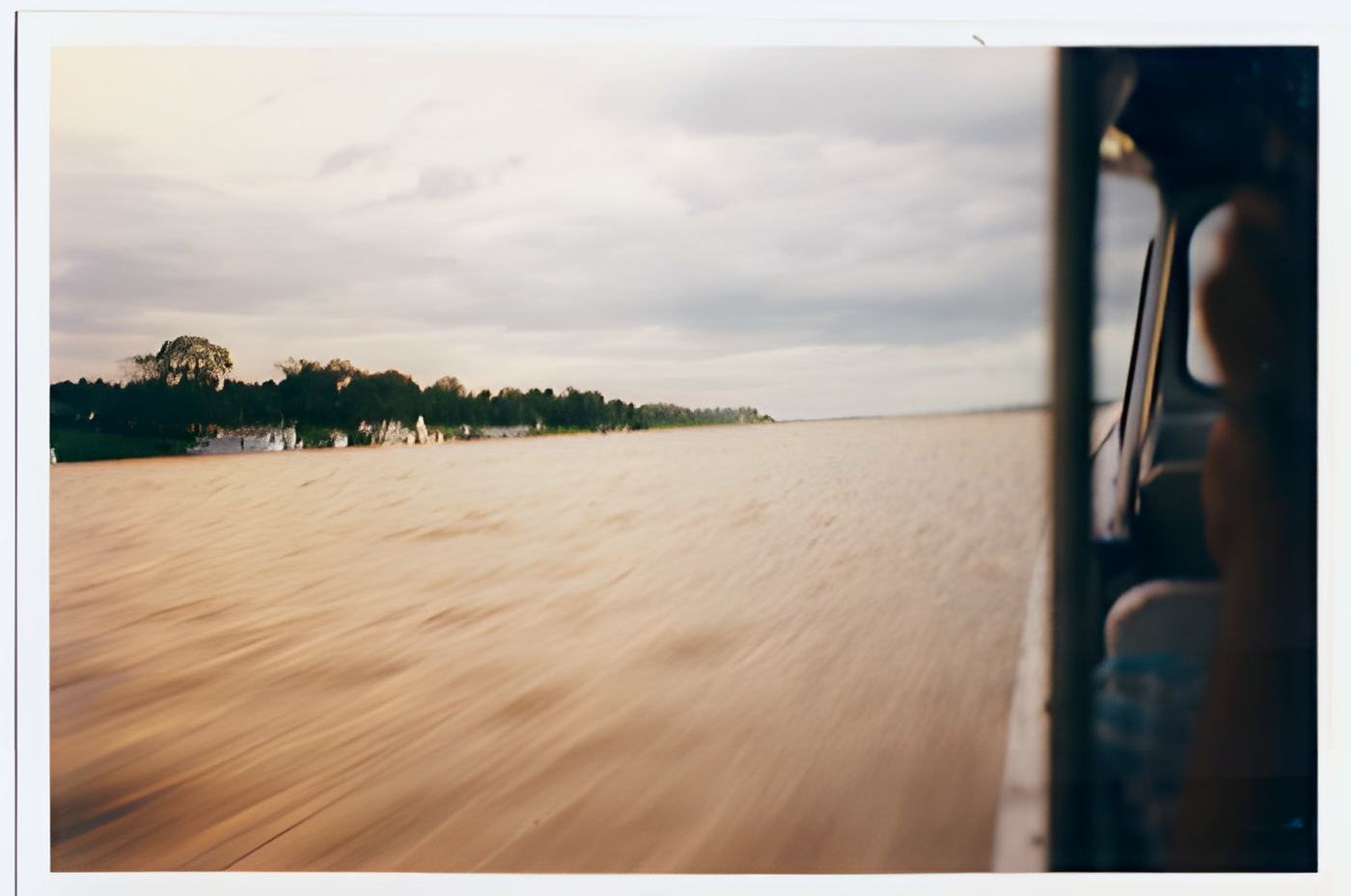
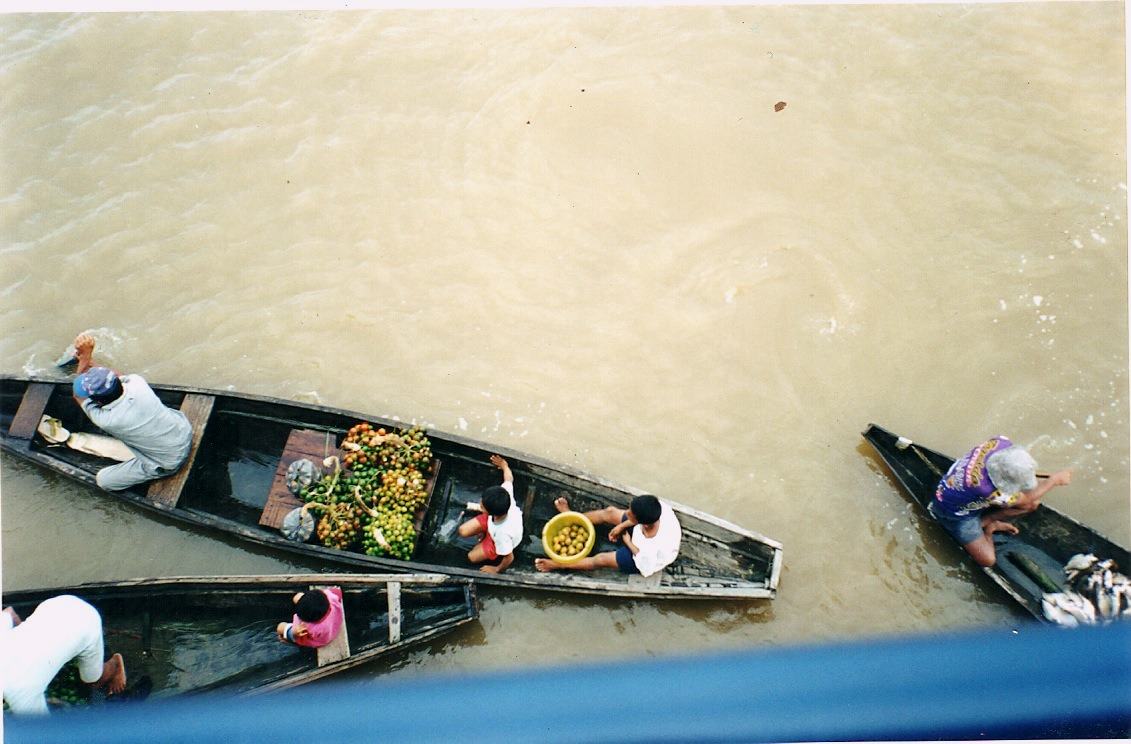
I turned around to Dimitri, who wasn't following our friend's conversation, and asked him how he felt. He was squashed among the bags and supplies, a couple of chickens still alive but tied at the feet were uncomfortably close to his face and I could see he was tired. “What do you think of these pink dolphins?” I asked him. The look on his face answered the question; he wasn't amused nor did he seem to really care at this point; I kind of seconded his reply with a bashful nod and looked out at the running water.
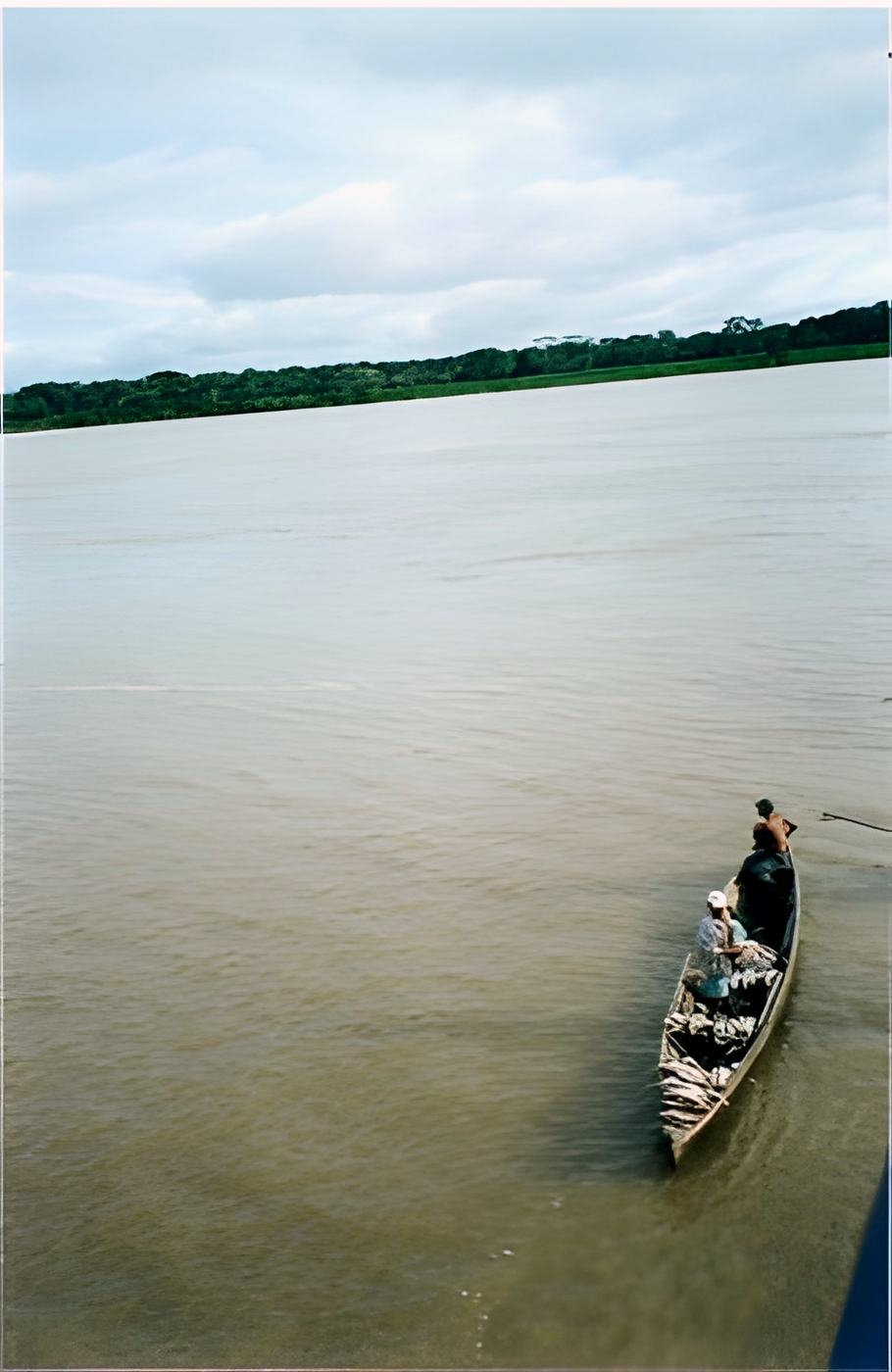
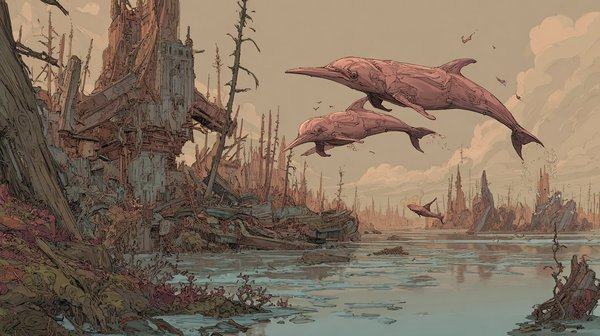
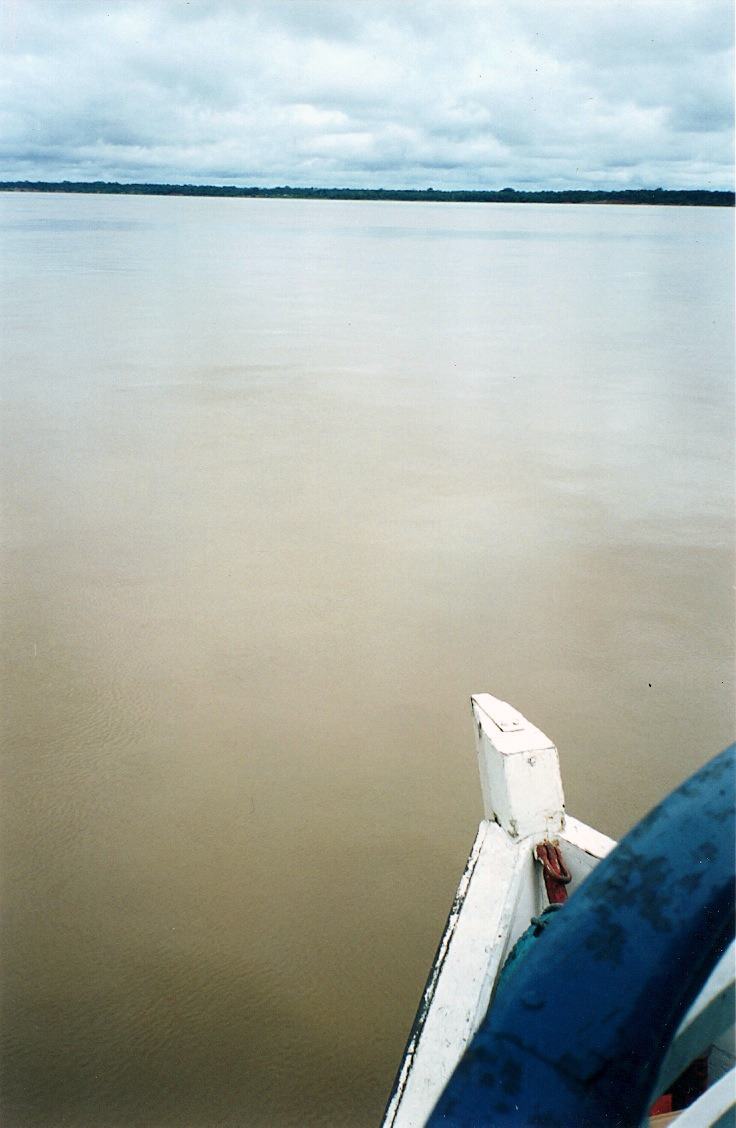
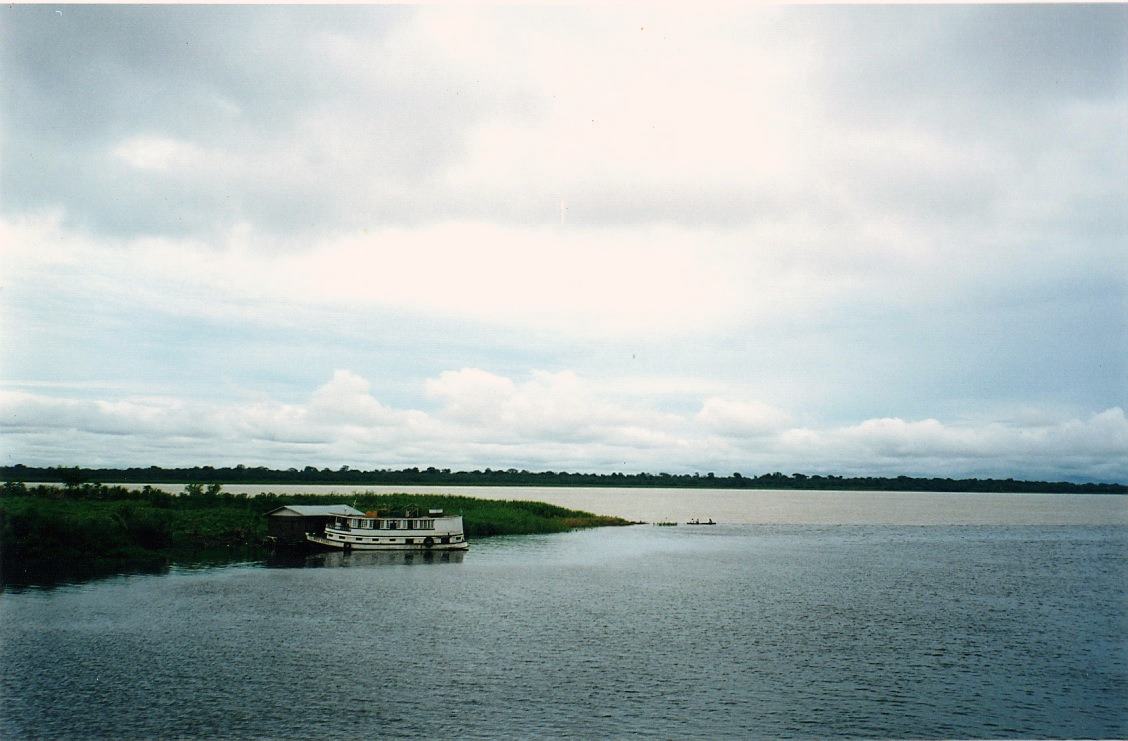
The Amazon is so wide at some points you can't see the shore when you float down the middle; it really is incredible to think how much water runs in this thing, when you know that a bucket of water is hard to carry up a flight of stairs, and yet since the beginning, this 'great snake' was moving to the ocean. All of a sudden in the midst of my daydream I thought I saw a shark fin. I rubbed my eyes and there were two!!! What? I closely stared in the direction of the fins to notice again that there were really two pink dolphins we had just been talking about. The indigenous people believe them to be water spirits or reincarnations of children who die before their time. I gazed at them in awe and I couldn't believe my eyes, none of us could. They floated downstream jumping and playing from time to time. We just sat there and watched.
We were abruptly sucked out of our infatuated state by Scott's eagerness to move on, the motor roared and we were off. He mentioned that it was rather unusual to see the dolphins this close to Iquitos and they had come up to welcome us to the jungle. He winked at us and we looked at one another with a question mark above our heads.
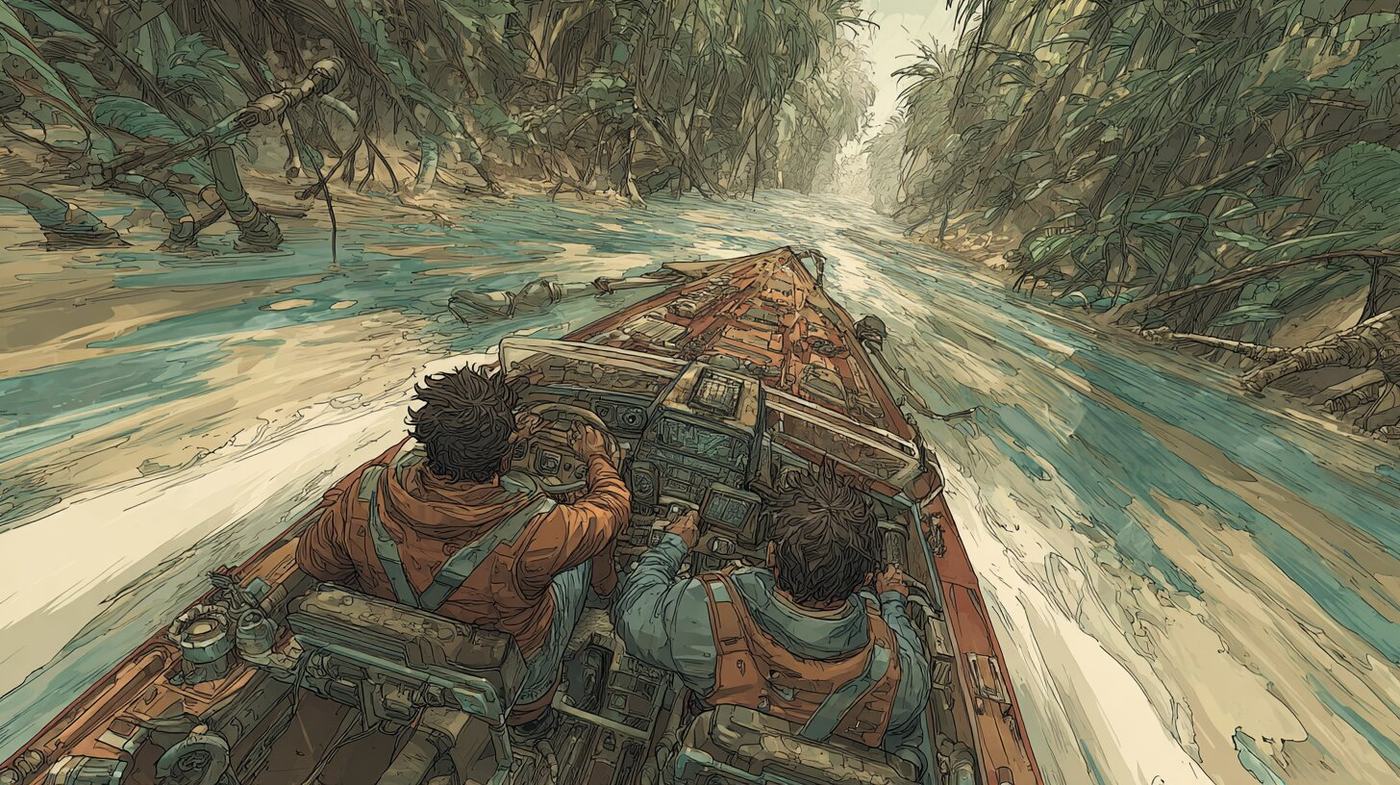
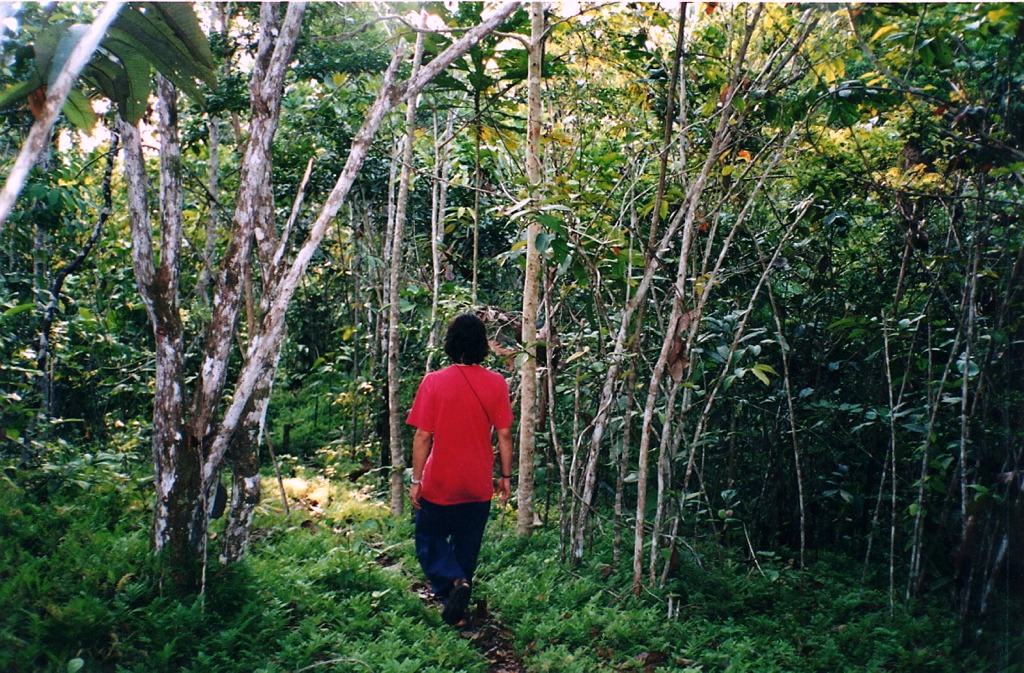
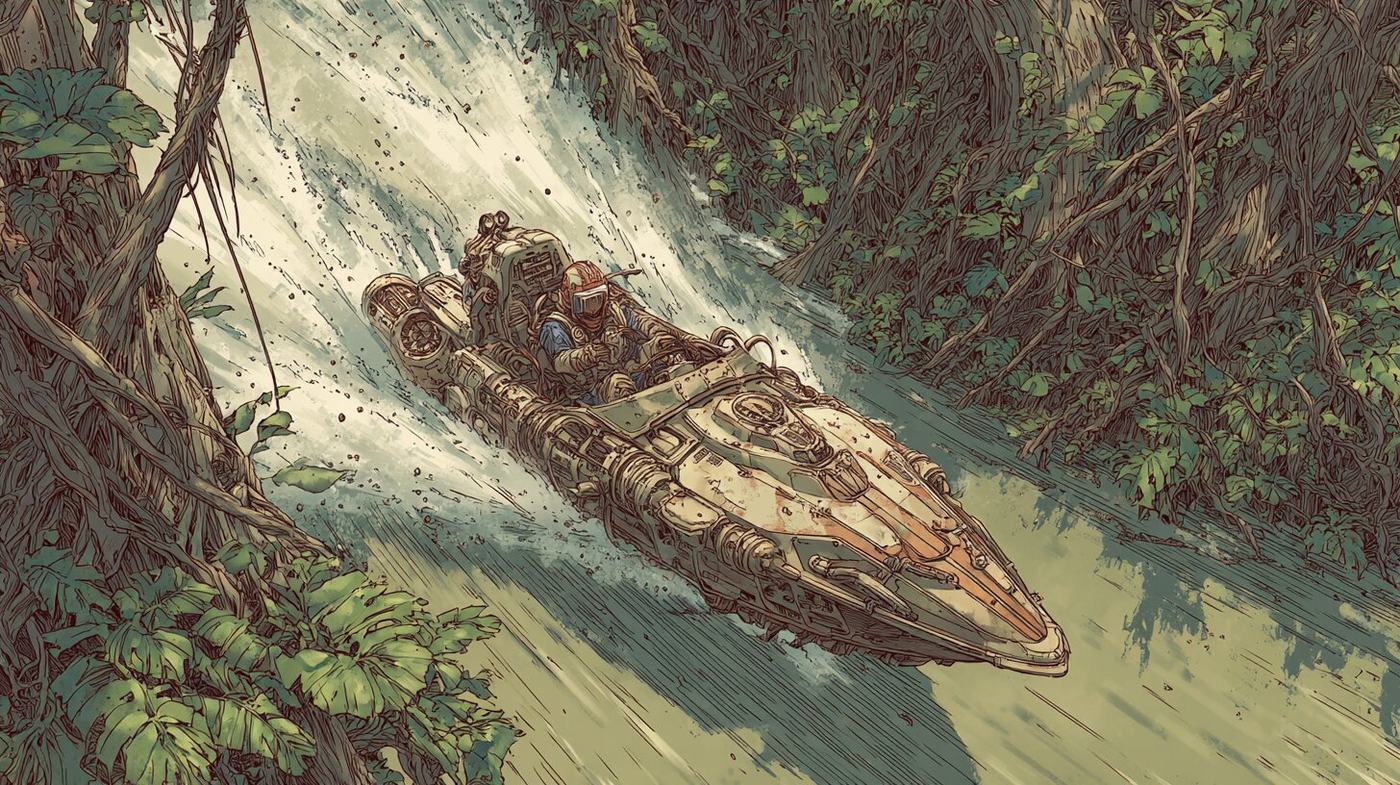
The other half of the boat ride was a little more exciting because our renegade Amazonian cowboy, that would be Scott, was racing down the river at 50 miles an hour, and the river was not as wide as before and neither was it straight. The river bent like intestines and Scott didn't seem to mind the branches that often whipped upon our faces as he barreled down his personal water drive. Fully refreshed and with our hair on end we finally reached the lodge in the jungle. We hadn't seen another human in the past half an hour, that meaning at least 25 miles away, and the sounds I was lullabied by the night before were almost deafening; we were in the heart of it.
We quickly took our things to the hut. We then were given a brief tour of the land and met up with Scott in the main lodge. He welcomed us to his home and introduced us to his Peruvian family. Dimitri was slowly realizing what he was about to experience. He had just gotten there from the other side of the planet and was about to follow some shamans in the Amazon jungle, participate in a ritual that has been practiced for thousands of years, and which the locals described as: television of the forest, or a gateway to the world of spirit. A process that takes at least three to four hours and can last up to days when particular events dictate the role of the ritual (such as divination, healing, rites of passage, etc.). The first time is usually one of the hardest since the body goes through a process of cleansing. The process of vomiting can be quite unpleasant yet incredibly effective in untying a variety of both physical and metaphysical knots. This process is called purging.
In Chinese medicine and among many of the traditions of indigenous people, the body and its organs are physical metaphors of an abstract reality. A certain degree of animism is required to be able to transcend a rational mindset and accept the interpretations of the metaphors. Physical illness is viewed almost exclusively as the manifestation of some psychological or spiritual imbalance. A diagnosis was made by reading the body and relating the symptoms to the metaphorical meanings of the organs. The healer was within the two, the physical and the abstract; his role was to heal and his methods diverse. Our terminology would label him a psychologist, a doctor, a priest; the healer or the shaman is all three.
We have traded in and undermined the legitimacy and value of a metaphorical viewpoint considering it a primitive and unsophisticated mode of perceiving the world. This enslaves us to the scientific prism of perception, giving us an all too pragmatic and soulless perspective. This is the essence of the shaman’s teachings. Regaining and re-cultivating this archaic mode of thinking without neglecting the knowledge accumulated through the scientific/materialistic mode can achieve a fused and superior mode. Therefore by understanding that the physical plane is nothing more than the crystallization of the world of ideas and that there is a close interrelatedness between the physical realm and the non-physical, changes in each realm have fundamental effects in the other. This is essentially the premise on which all alchemy, shamanism, and magic were based, not to mention most of the pre-Aristotelian ancient Greek philosophy, Hinduism, and Buddhism. It is Aristotle in the West who shifts the paradigm into the materialistic side of the spectrum and is followed and driven home by Jesus Christ, the embodiment of God in a physical human body. This begins humans’ focus on the real, the physical, and in 1800 years we manage to master our understanding of the physical universe to such a degree that we can build tools that give an even deeper understanding, telescopes, microscopes, books, boats, planes, etc.
I argue that these seemingly contradictory viewpoints are actually complementary, just like the yin-yang symbol; they make sense individually, but actually make more intuitive sense when viewed together. So if all disease has both a metaphysical and a physical mechanism, which governs it, the shamans of the Amazon who have been entering the realm of the spirit world for the past 4-5 millennia are sure to know some of the tricks of the trade.
Akiko asks what the tricks of the trade actually were. “Two plants and a caldron,” I tell her, “and ten hours.”
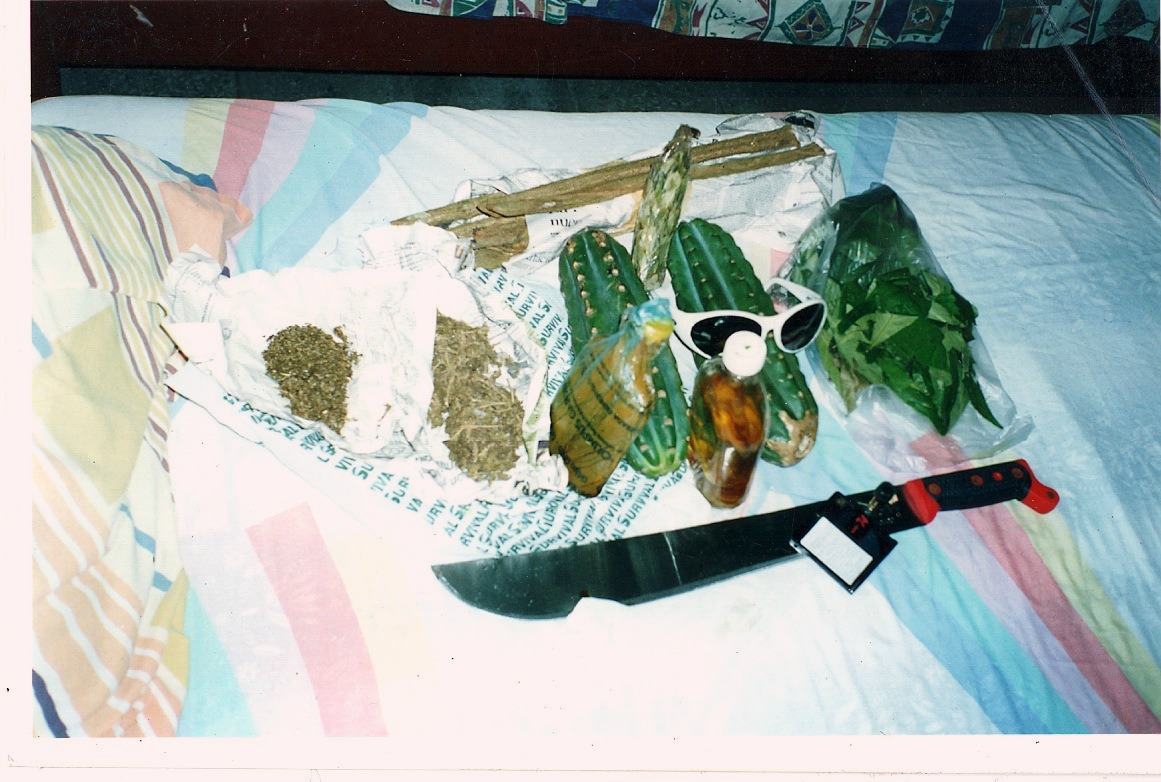
We spent the rest of the afternoon brewing the potion. There are two components in the mix. Either chacruna or Mimosa hostilis is the first component, containing N,N-dimethyltryptamine, while the second component is the Banisteriopsis caapi vine, which contains an MAO inhibitor allowing for the absorption of the N,N-dimethyltryptamine through the stomach. The two plants are mixed in layers in a large caldron and brewed for 8 to 10 hours with water. There is a process of distilling the brew in order to intensify the potency of the drink. The shamans' giggles and good humor made our afternoon pleasant and time flew, as did the steam from the brew. It brushed across Benjamin's face. Before I knew it, the sun was setting and the butterflies both inside and outside of my stomach were fluttering. Dimitri had by now fully awakened; he was alert and very inquisitive, he had been observing the brewing process with utmost dedication and focus, and during this time he had befriended Arturo the younger shaman. Peter also was slowly getting excited, in less than a few hours he too was about to do something he had been waiting to do for some time, he had been reading up on it and was curious, to say the least. Scott had gone to his room to rest with his 6-foot-tall Peruvian girlfriend; we decided to calm ourselves so we went back to our hut and tried to take an evening nap.
A long conversation began which humbly tried to calm our wiggling anxiety. Surprisingly, we all fell asleep, including the shamans and Scott; it had been a long day. I woke up in a panic as if I was going to miss the bus to school, “What happened? Where are we? What are we doing? Did we drink the brew? Is this real?” I realized we had all fallen asleep and secretly I was kind of pleased, we now still had one whole day till we had to face the Holy Snake. Procrastination was a welcomed factor at this point, yet that childish urge that keeps an 8-year-old lighting a lighter wanted me to drink tonight. So I gently woke my companions and after they went through the same process of relief and then the urge to provoke their fate, we all went to wake up the shamans.
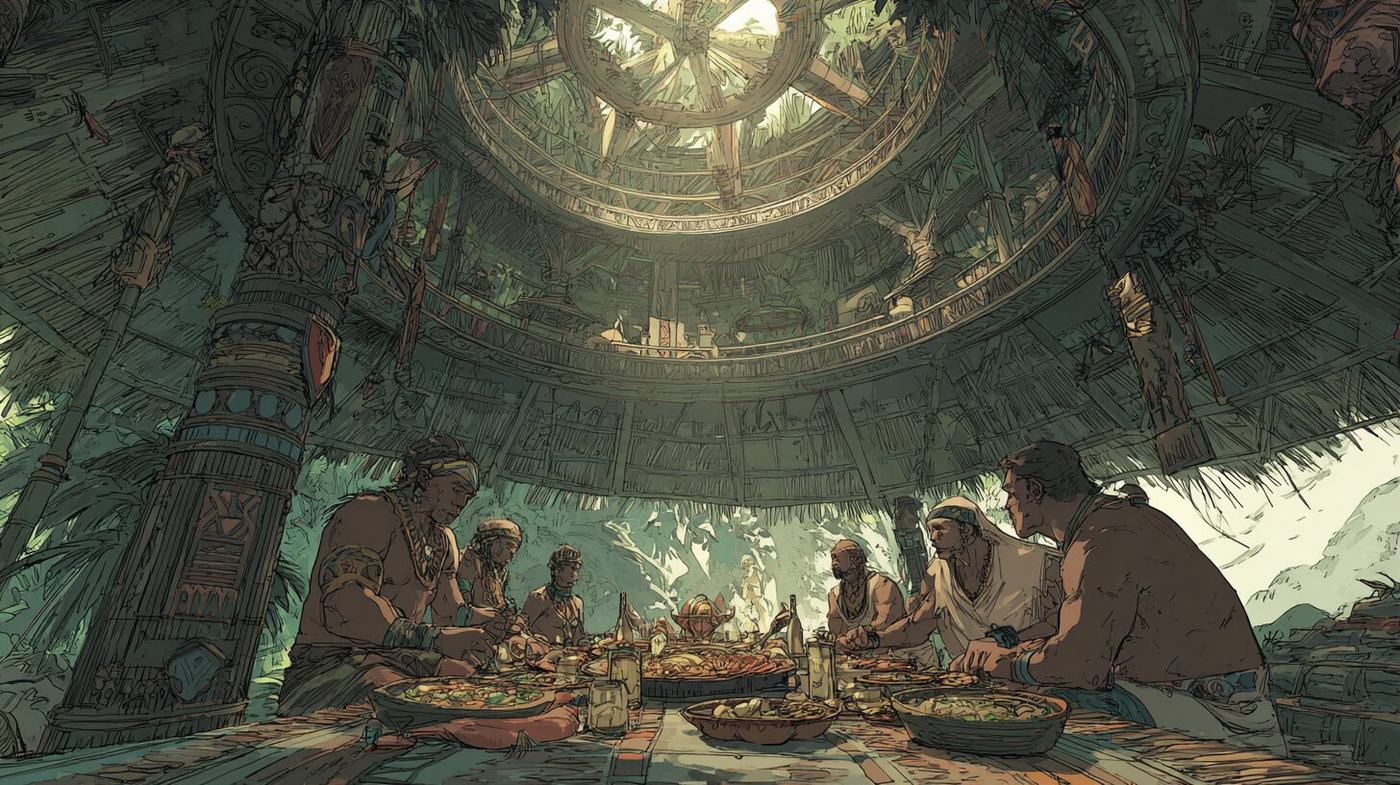
The ceremony hut was particularly big; the classic Amazonian roof leaf covered the entire cone-shaped hut. It had two floors and could easily sit 50 people on its floor. As most of the huts, besides the sleeping quarters, it had no walls besides a bench that wrapped around the entire room and wasn't higher than my chest. The air was thick and the humidity had a stench that was hard to dismiss and frankly harder to forget. Three candles quivered in the otherwise quiet room and their orange glow gave a sense of security and motherly reassurance that at this point was desperately needed. The sounds from the jungle were having an orgy with one another, while the hum of the previous night had mutated into squeaks, quirks, blips, moans, groans, flaps, and paps and lingering clicks, all intermingled and eloquently meshed into a green felt blanket that buzzed with life. We are definitely not alone! The blanket soon became background noise only to be pierced by the clunk of the boots; the Amazonian cowboy was here.
There were about 9 or 10 of us drinking, while 3 or four more sat in and helped if need be. We sat like numbers on the face of a watch, equidistant from one another, all facing the center; a small plastic tub was given to us without further explanation as the shamans prepared themselves. Benjamin was the older of the two, fully indigenous and almost 75 in age. He was short and stout, with a swollen bottom lip, droopy dreamy eyes and thin slim grin. His hair was short and fell lightly like a bowl across his face, amplifying the juvenile innocence engraved in the few, deep wrinkles of his face. His way was so enchanting that it magnetized you like the blank look of a baby, drawing you into him and simultaneously into your self. You felt childish and yet wise, free but with incredible discipline, old and at the same time incredibly young. His feet dangled gently, not touching the floor, as if they were being blown by an invisible breeze; he sat on the bench patiently waiting for everything to be prepared.
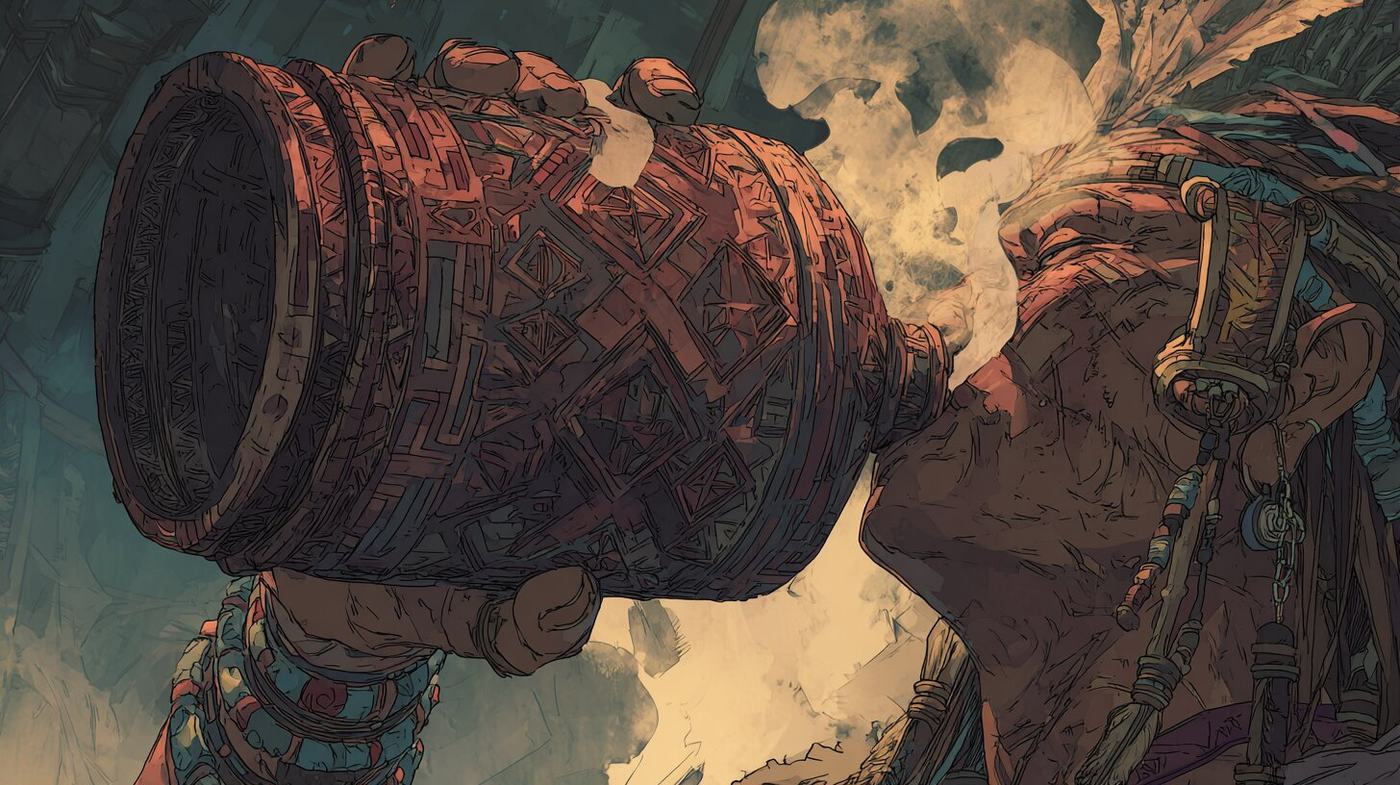
Arturo, the younger shaman (mid-40s), walked by me as I was staring at Benjamin in the dimly lit hut; he was wearing a robe of some sort; it was white and had some stripes that went across the shoulders and the back. Arturo was much more energetic than Benjamin, his abrupt definitive moves and swoops conveyed a certain degree of confidence and mastery of a craft, he reminded me of Greek fishermen his age who have almost mastered their art and execute it with grace and confidence yet still hold on to a macho attitude. He also was very inviting and gentle. A bottle of the day's brew passed among each of them (Scott, Arturo, Benjamin), they whispered into the top of it and the air slowly slipped on the curves of their lips. It whistled lightly on the rim of the bottle. Each said their prayer and asked permission to awaken the ayahuasca spirit. A shot, not more than three fingers tall, was passed to everyone participating and each of us chugged it. A taste quite overwhelming and not too pleasant. The texture of the mix was that of thick orange juice while the taste was similar to burnt grapefruit.
I had written the intention down before I ever saw the cup. Dark December, the last letter to Cassie. Cut the umbilical cord. That was what I carried into the dark. Not enlightenment. A cut cord.
Scott walked over to the candles and blew them out. The darkness was interrupted only by the humming moonlit stripe that circled the hut at window level. We all sat and waited…. Fifteen minutes into the ceremony a whisper to my left broke the silence. Almost simultaneously I felt a buzz and tingle in my hands. The buzz slowly and steadily began to spread up my arms, a similar sensation to ‘pins and needles’ but milder and more electric, crept up into my chest and my heart started to beat much faster. The buzz was clearly louder and I was sure there was some large insect hovering around my head since the sound didn’t seem to be coming from one particular point.
This reminded me of a myth I had heard earlier in the afternoon about the holy bee that swooped down in the beginning of the ayahuasca ceremony to carry one off to the dream world, the land of spirit.
Adrenaline was now pumping through my veins and Benjamin's whisper had slowly morphed into a gentle chant, his voice was twirling around his dangling feet as if they were leading it. A dance similar to that of playful fingers of a maestro. People were moving around and Scott's boots provided a bass line that was crackled by something, but I couldn't say from what. Fear was dominant now, an extremely unfamiliar sense of abandonment overcame me, and I was alone. As soon as I let go of the fear and self-pity, I could hear the beautiful song again. It was more alive now; it had more strength. I could see Benjamin in my mind, he was like a little child and the words dribbled from his mouth so effortlessly.
It reminded me of an extremely low tuned free-styling, rapping, or some other form of oral lyrical poetry. I wonder if this was similar to the dactylic hexameter, the stylistic format of the classical Greek epics. Is it possible that the reason these songs were never written down for such a long time is because they were flexible and yet always the same? Could it be that the storyteller, or maybe I should say the epic singer, entered this dream state similar to the hip hop artist or the shaman, or the guitar player in which their spontaneity allows for some sort of channeling, or divine inspiration? Hmmmm. If we wander off on these questions and entertain them for the sake of exercising our imagination, dance must also accompany this dreamy lyrical state of being. As one of the most ancient rituals known to man, 'spontaneous grooving' has been part of our mystical world ever since man tamed fire and made drums. I wonder if skateboarding, snowboarding or surfing are related to this?
All of that went through me in the dark. Benjamin was still singing.
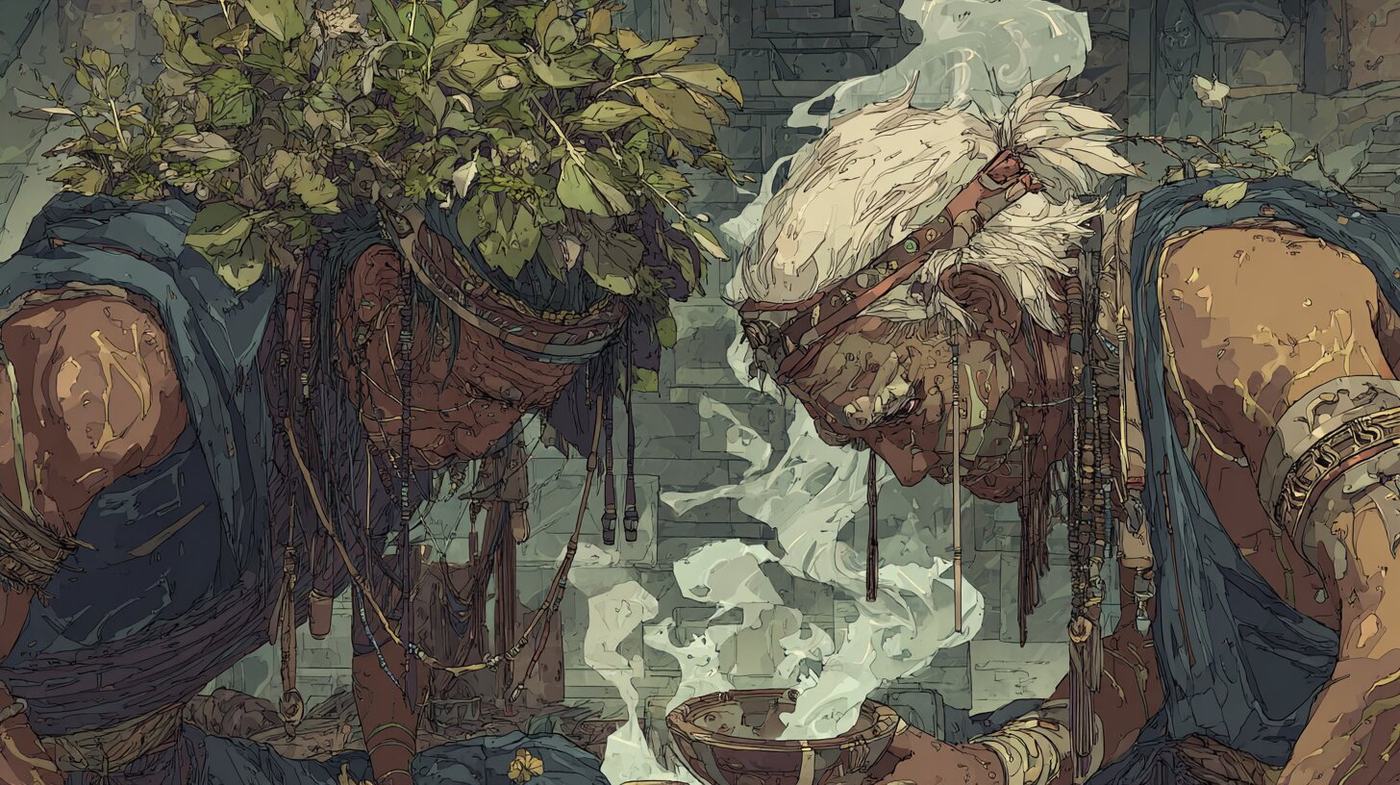
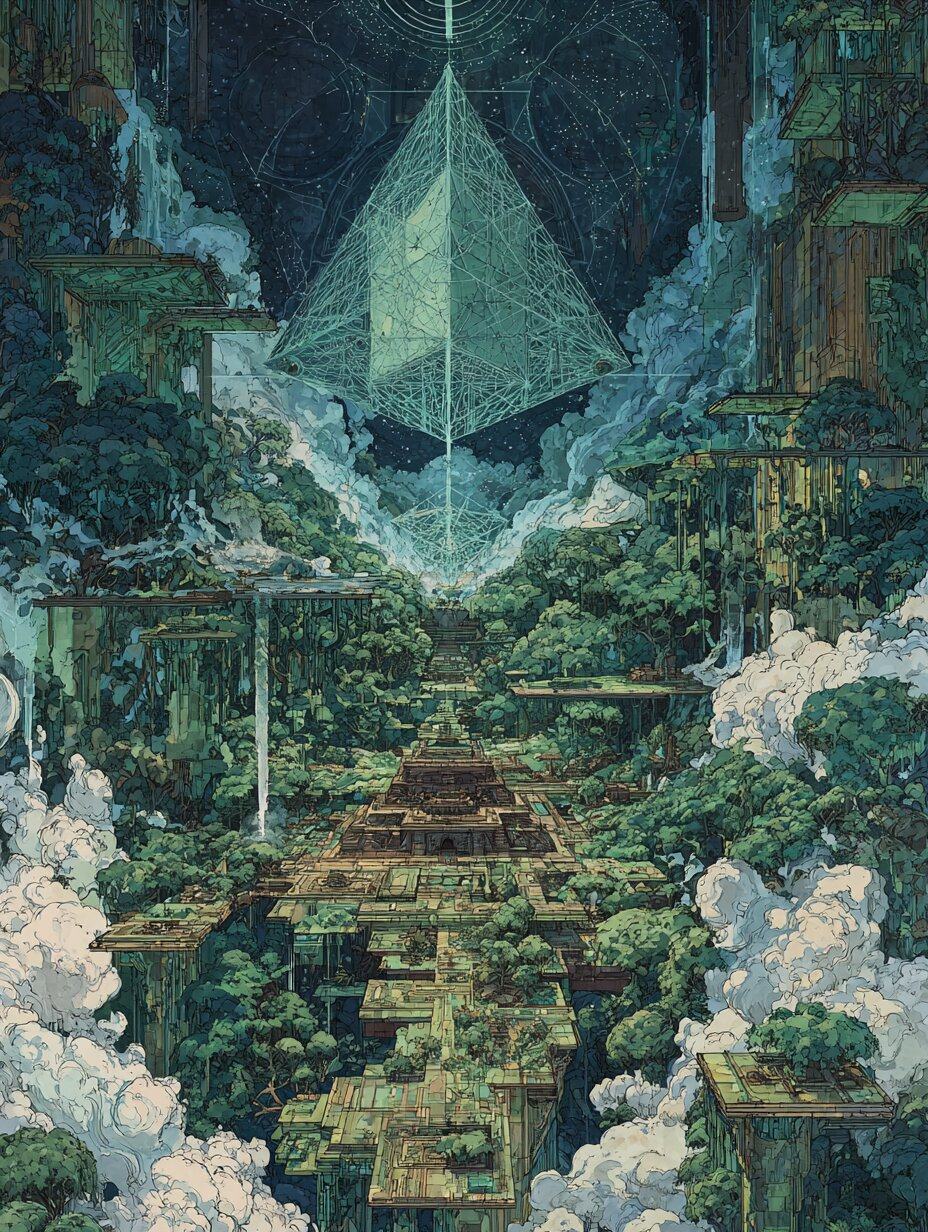
His words tumbled then bounced and popped into organic geometrical shapes that unraveled as his voice guided them through the darkness. Each word and tone had a particular color and emotion associated with it, they penetrated your body and through the still present buzz….. cleaned me? The words grabbed things from the inside of me and excited them, churned them in my gut. It felt like light wind was hovering around me but inside I had a growing storm. His voice flew around as if it was on surround speakers, and I could almost feel his breath on my face while I could hear his feet and sense him on the other side of the room. His song was like a lullaby, as you drifted off your mind made everything much more real. The storm slowly was growing into a hurricane and a sharp twist of the abdomen and…. BLAAAGHH!! Now I know why we were given the plastic tubs. Vomit and a lot of it poured out of me and I felt calm again, I relaxed, the song was beautiful again. Time vanished while cyclical thought patterns confused me. I couldn’t tell if the thought I was having was a new thought or if I had just had it, a perpetual déjà vu if you like. I was hot and sweaty, and as I sat straight up a voice slowly started to break the loop of recurring thoughts. It was like nothing I have ever heard before, the rattles, the jungle, the shamans singing all fused into a homogenous background, while up front and very personal, a voice started to speak. It was female in nature and it spoke in poetry and thoughts, it criticized me but with a constructive strict yet non-threatening tone. It told me a secret about myself, and while this process is occurring the shaman’s songs colored our conversation. I continued to vomit for several hours, and the night pulled on. The deeper I went the more I cleansed. I was having a rough time. The shamans came over at a most needed moment and tried to soothe me by whispering prayers and hitting me lightly with their bushels of leaves. They blew smoke on my head from their black tobacco cigarettes and the smell made me even more nauseous, they then rubbed jasmine water on various parts of my head, everything changed. The colors changed from dark hues to light ones and there was tranquility at that moment and a deep meditative state overcame me and I felt connected to the entire universe. I could see it too.
Akiko asks what it was I saw.
I started rising. I don't know how else to describe this.
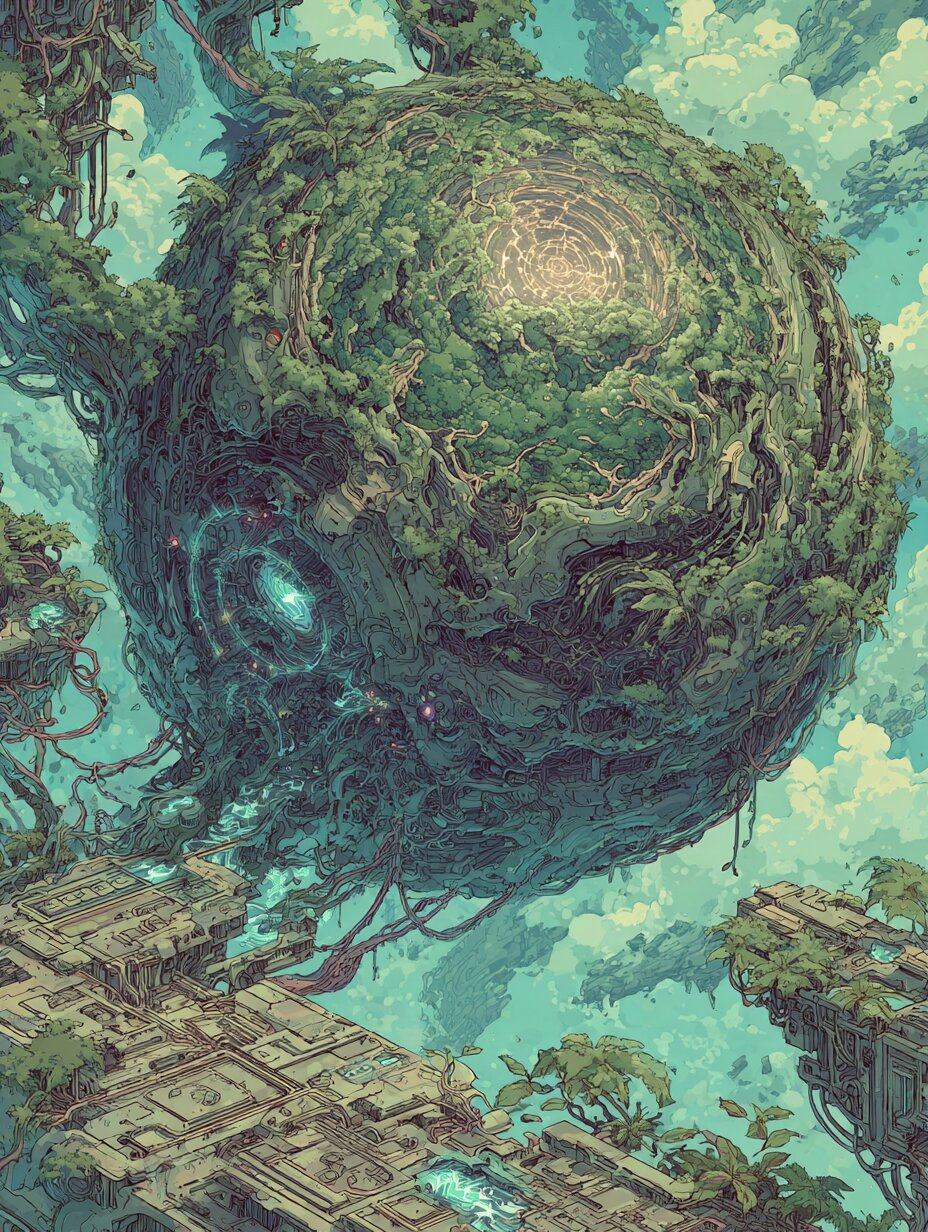
Not physically. My body was still there in the ceremony hut, but my consciousness was lifting. Up through the roof, through the canopy, through the clouds.
Higher.
Until I was hovering above the Earth.
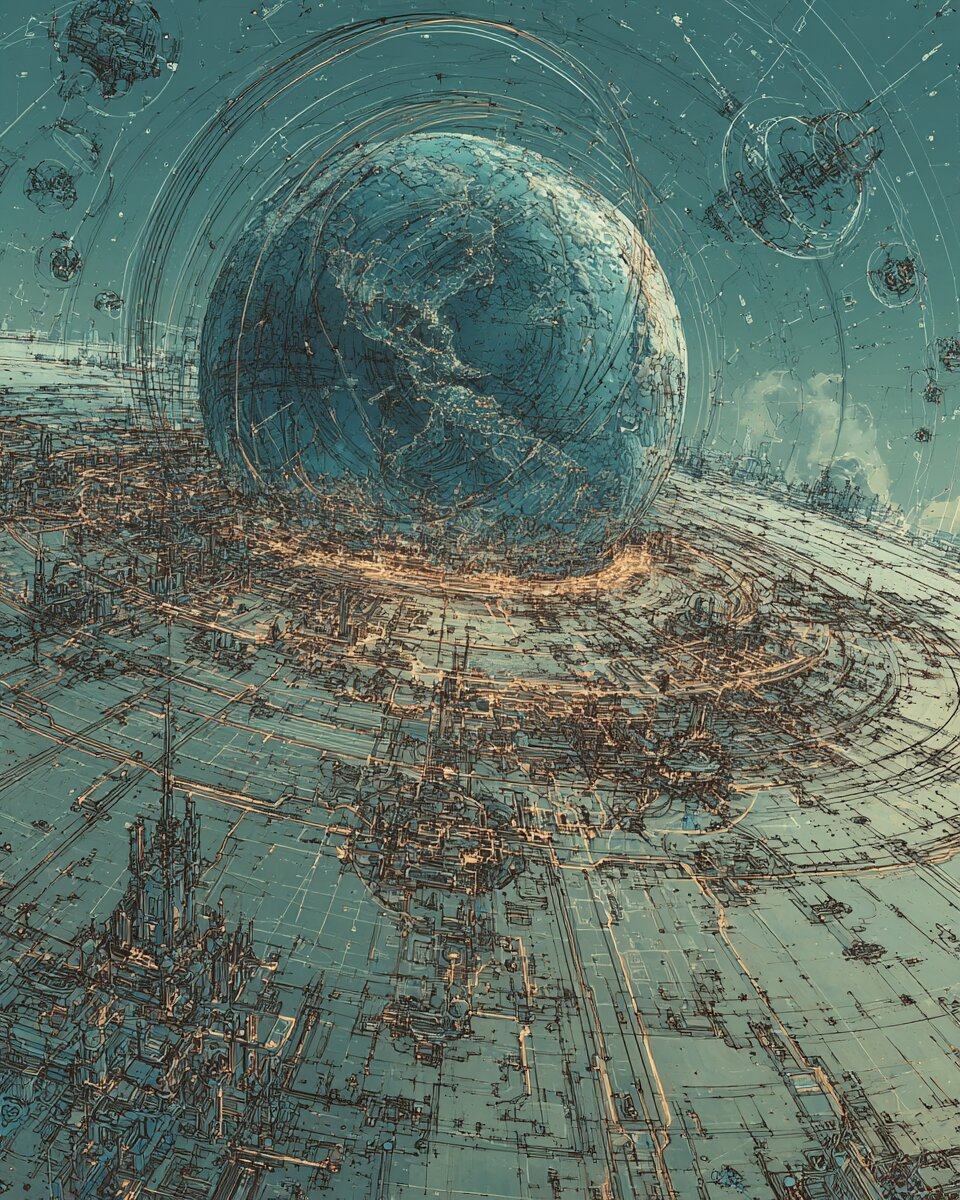
The planet was below me, small enough to hold in my hands. Blue and green and white, spinning slowly in the darkness. Beautiful. Fragile. Alive.
And I could see, actually see, everything humanity had ever created.
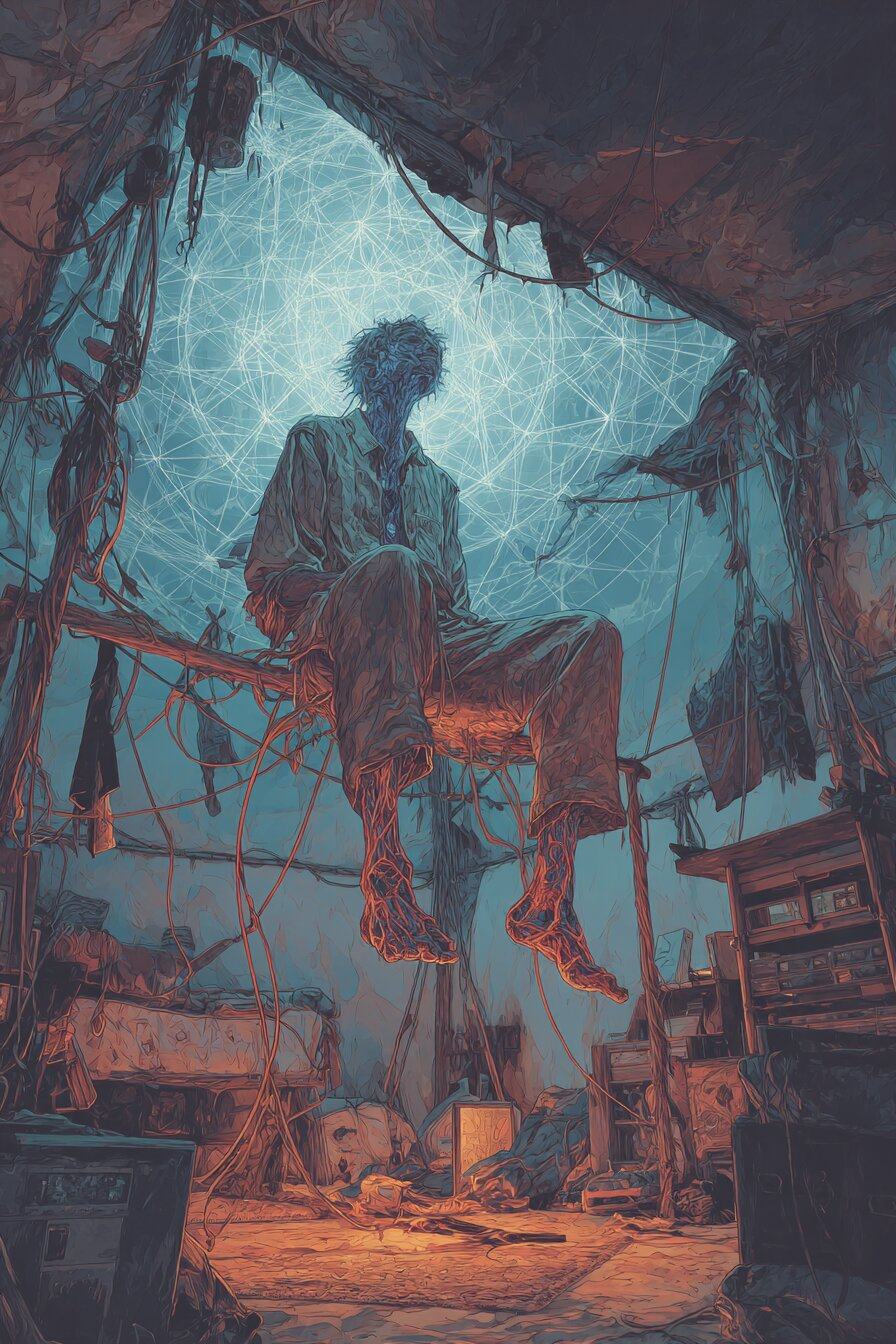
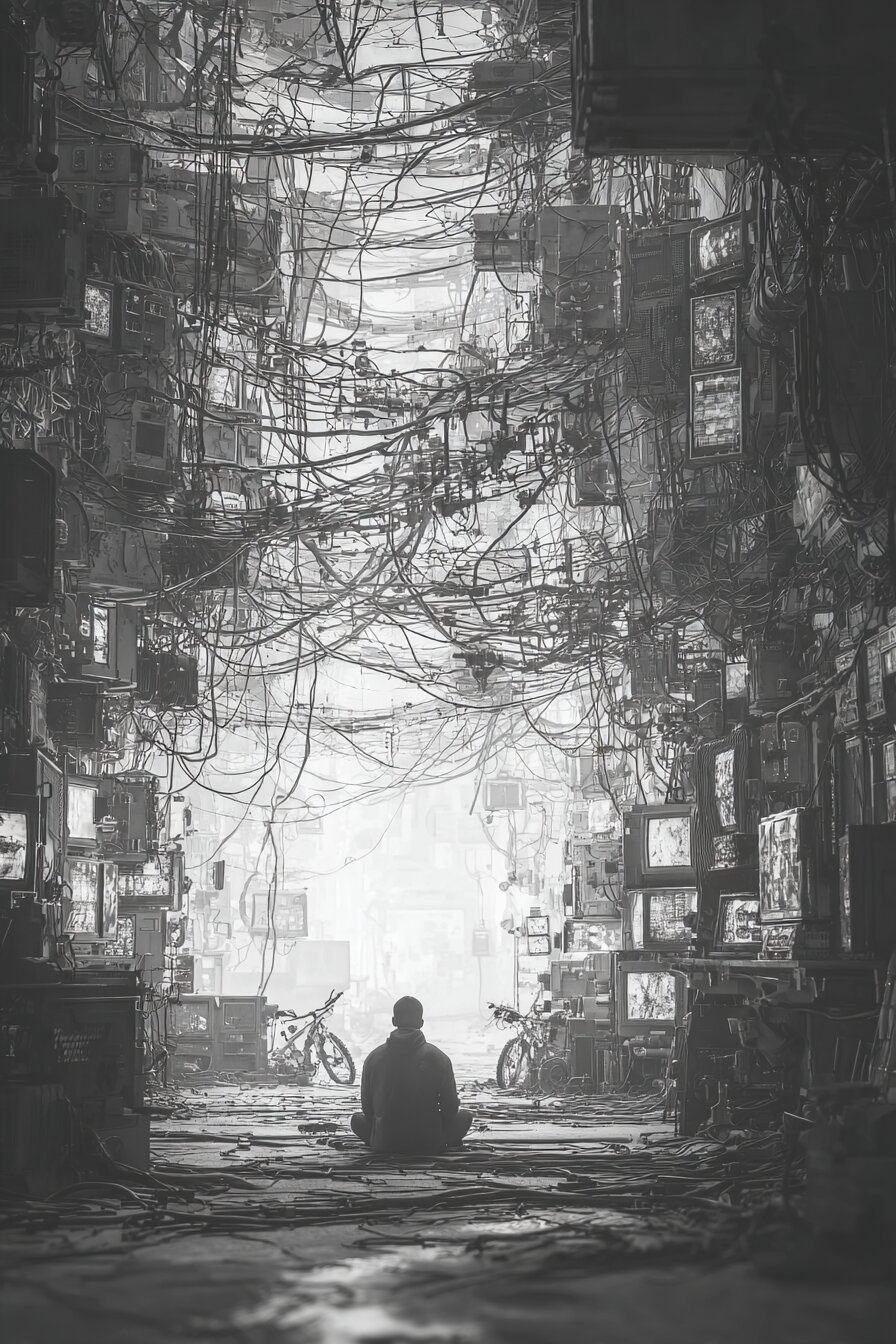
Not the physical objects. But the aggregate. The totality. Every road we'd paved, every wire we'd strung, every signal we'd sent. The entire matrix of human technology, glowing like a nervous system wrapped around the planet.
Cities pulsed with light. Highways traced geometric patterns across continents. Satellites orbited in perfect circles. Radio waves and television signals and now, just beginning, internet data, all radiating outward from Earth like spores.
The aggregate of our technology, a voice said. Or maybe I said it. Or maybe the planet said it. Everything man has created with the mind. Everything we've left on the planet that wasn't here when we arrived.
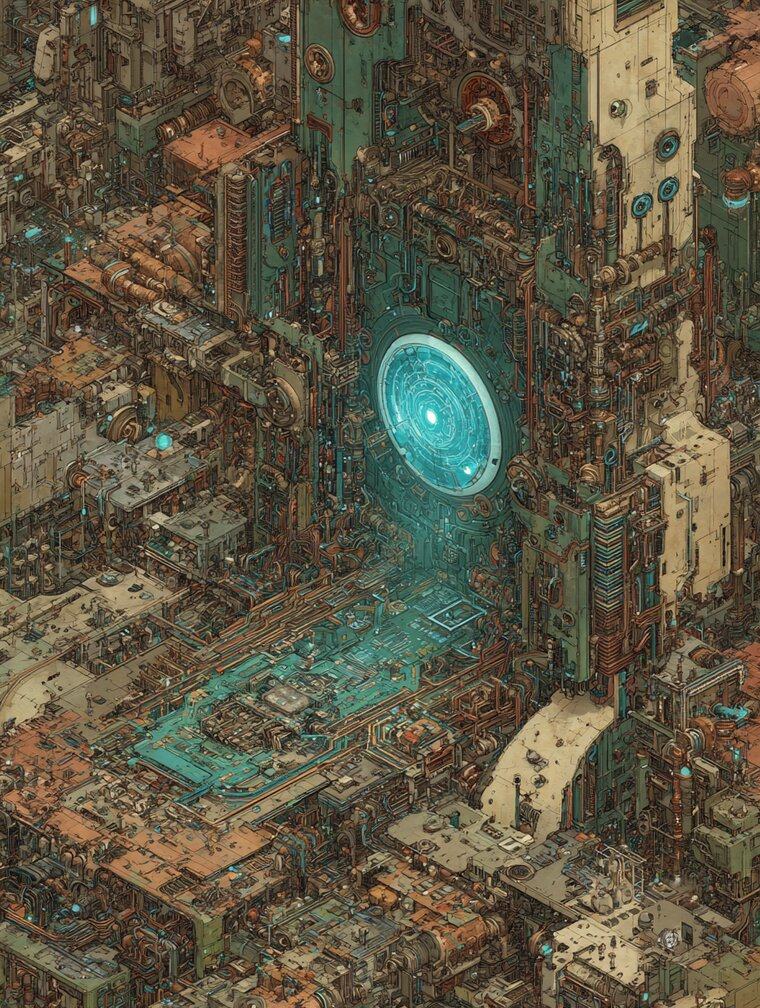
I understood something in that moment.
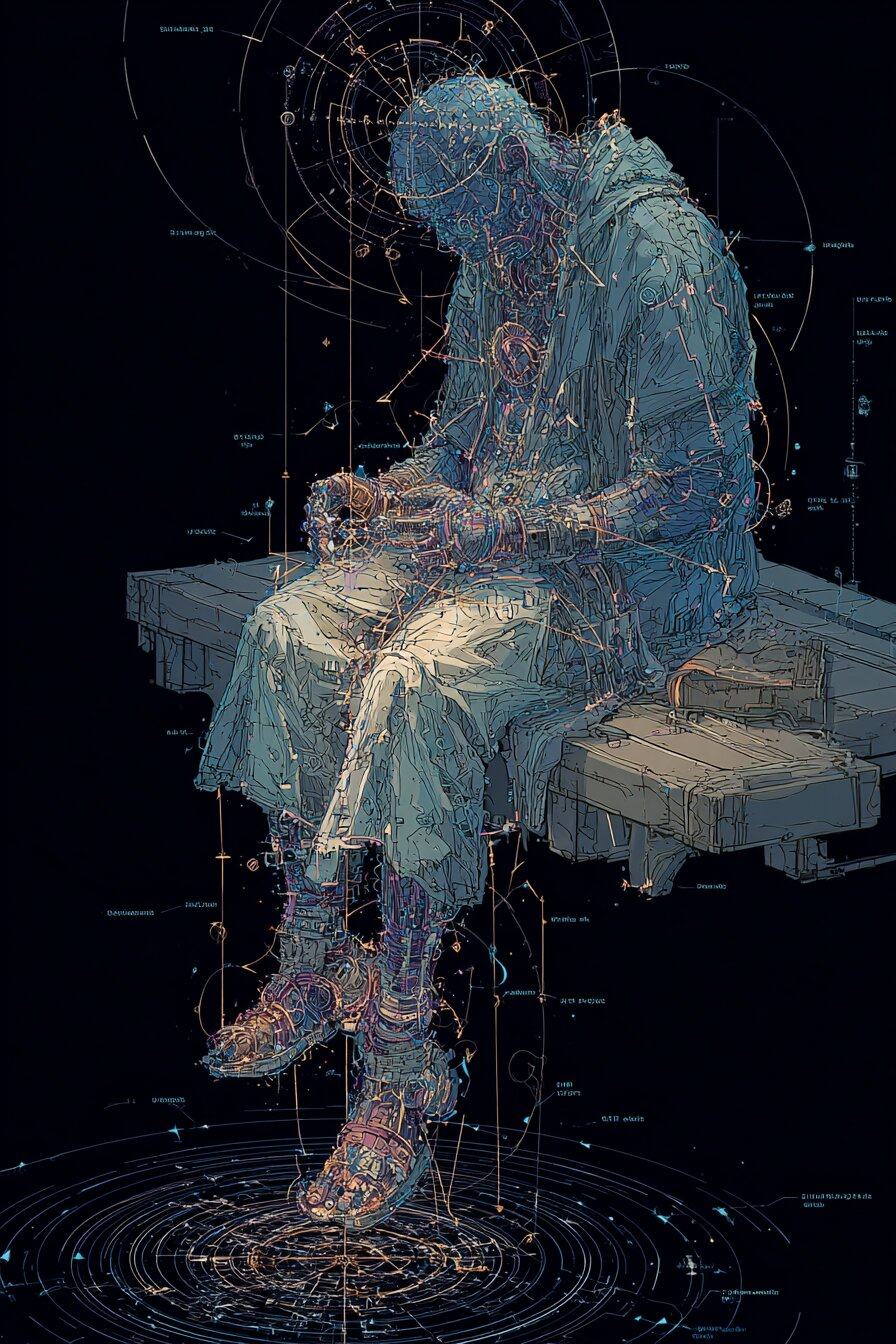
We weren't separate from Earth. We were Earth becoming conscious of itself.
The roads were like neurons. The electrical grid was like synapses firing. The internet, this new thing just beginning to spread, was the first coherent thought the planet was having about itself.
Gaia. The hypothesis I'd read about. Earth as a living organism. But not just alive, becoming aware.
And the signals we were sending into space, radio, television, now digital data, those weren't just us trying to communicate with other life. Those were Earth's mating call. The planet announcing to the cosmos: I'm here. I'm alive. I'm waking up.
We were the mechanism by which Earth was externalizing its interior.
I saw humanity differently in that vision. From one angle, we looked like a disease on the planet, paving and poisoning everything in sight. From another, we were its nervous system coming online. Both felt true. The same roads that carried oil also carried ideas. Zero and one, destruction and awakening, flickering in the same circuitry. A voice. A means to reflect on itself and communicate with the universe.
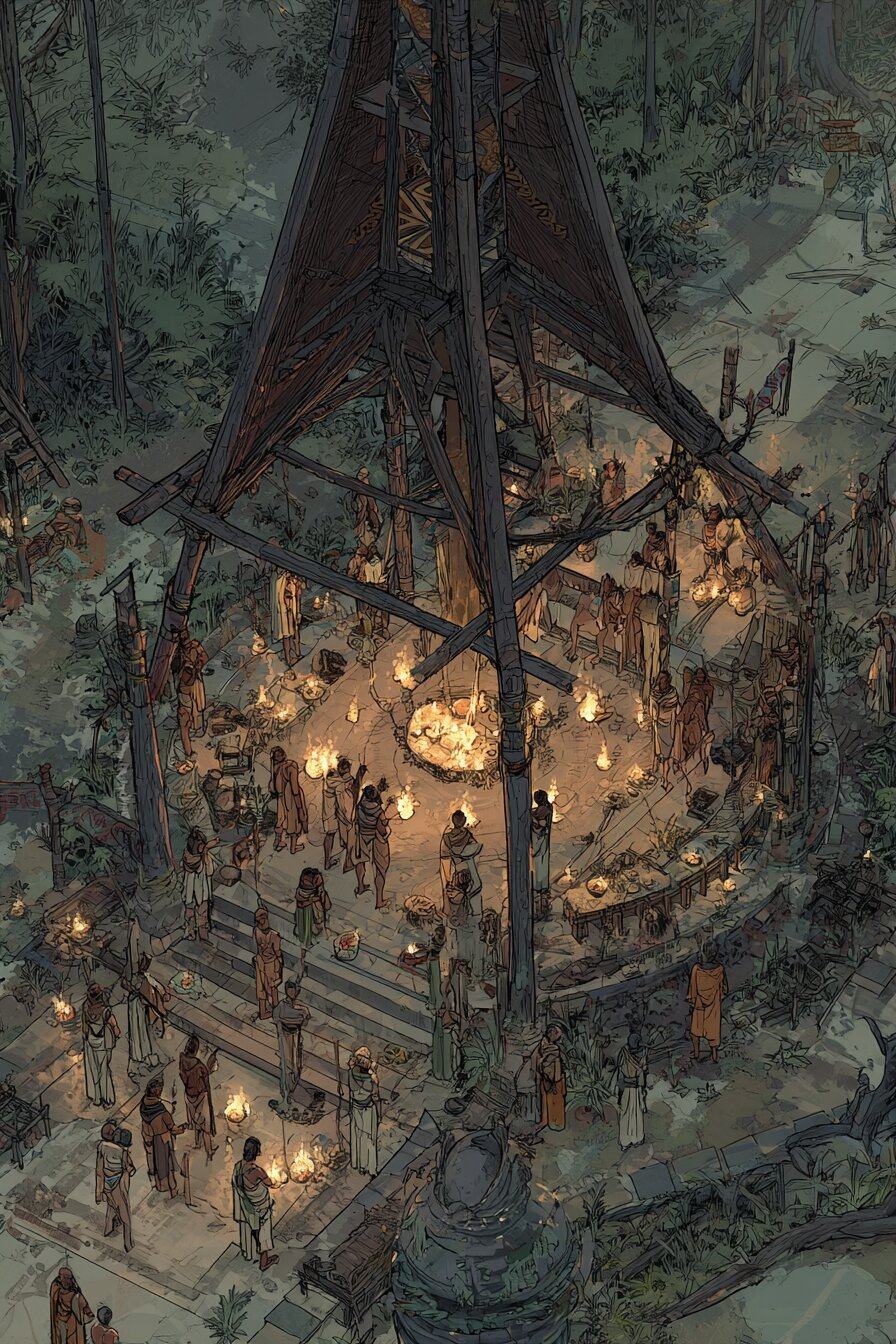
The shamans' song wove through all of this, guiding it, shaping it. I understood why they called ayahuasca the television of the forest. Because it showed you the truth. Not the surface truth we live with day to day, but the deep truth. The pattern underneath.
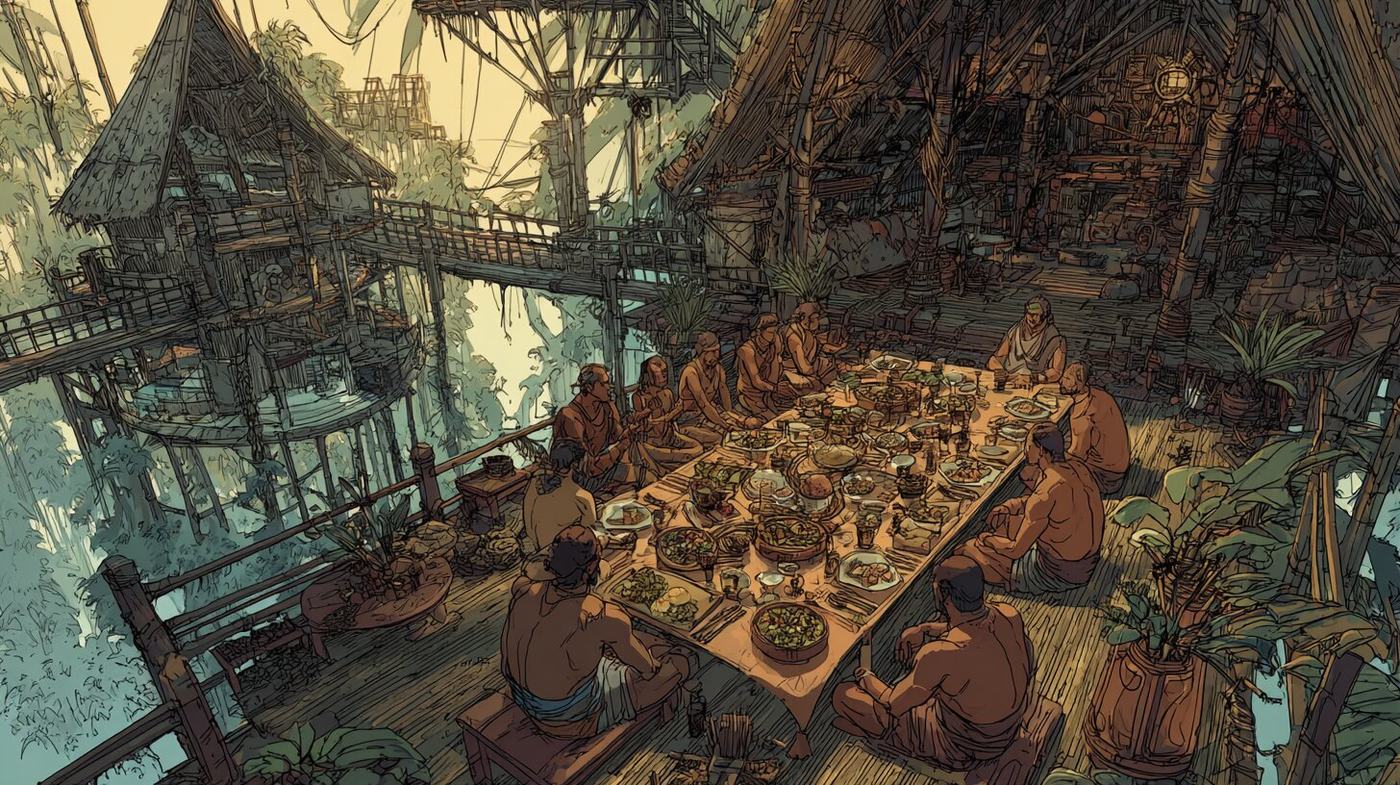
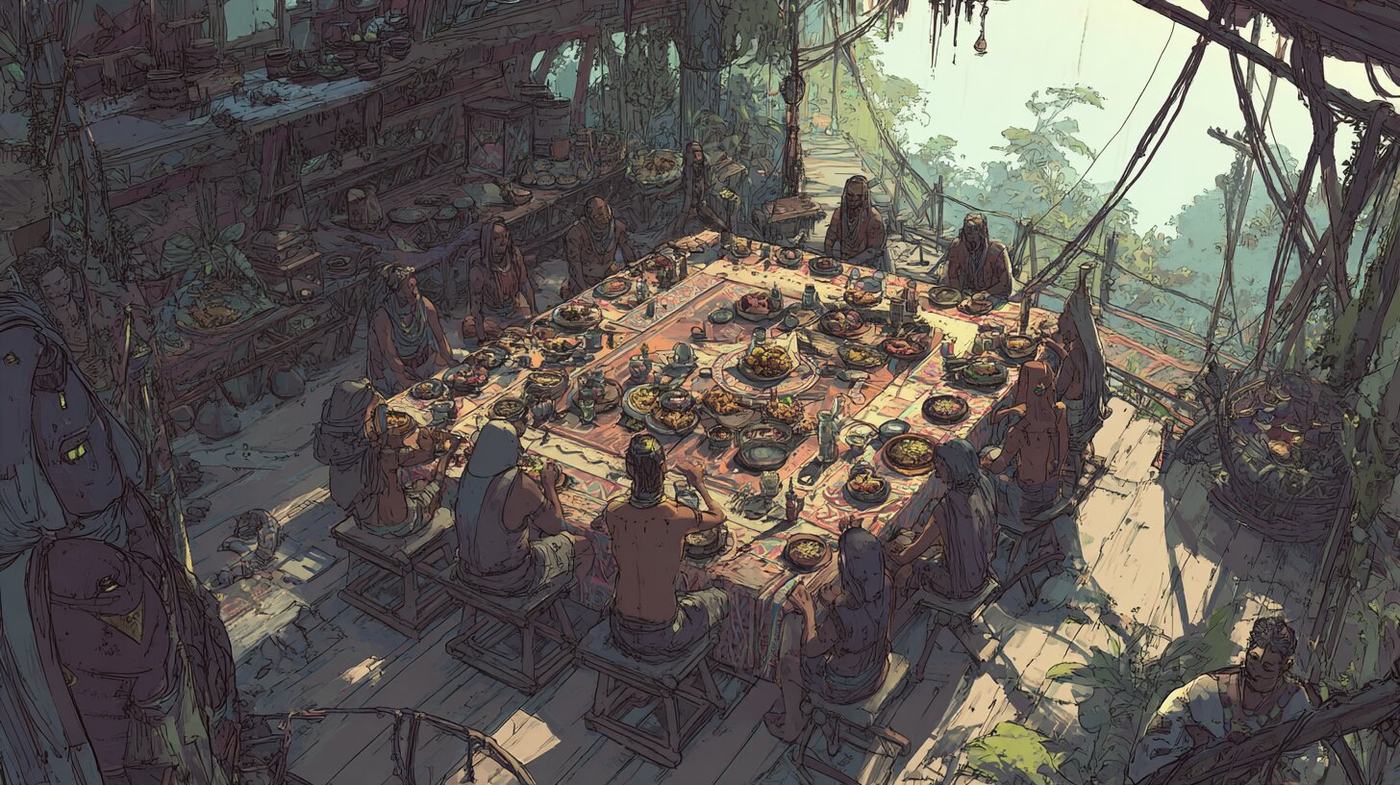
And the pattern was: Everything is alive. Everything is waking up. Everything is becoming conscious.
The longer I stayed there, the more my mind played tricks and got distracted making the precious balance of 'just being' very challenging. I never felt like that again.
It felt like a lifetime had gone by and all of a sudden with no warning whatsoever I was sober. The ceremony had finished; people were walking around thanking the shaman; it was as if a high school play had finished and the parents were mixing with the cast. I went over to Dimitri immediately and we hugged and he asked me if I was ok. Why did it seem like I wasn't ok? I answered. You were making a lot of noise, as if you weren't having such a good time, he said. I admitted there were some scary parts. I asked him how his journey was; he said it was amazing but mellow throughout most of the ceremony. Peter had been blown away too. We spoke to the shamans and to Scott, thanked them, and we all went to bed.
The following morning we all had breakfast; we spoke about our experiences and Scott elaborated on the types of magic that exist in traditional Amazonian shamanism. The shaman or curandero is initiated at a very young age through the collective rituals that take place in most of the villages, as part of their tradition and sacred heritage. During these ceremonies most of the community participates, young and old, men and women. The curandero observes the children and when they are in early adolescence chooses one to be his apprentice. After several years of training, which entails learning about most of the animal and the plant kingdom indigenous to their area, they are set out to learn their song, their unique signature song that is a reflection of their individuality and a fingerprint of their archetype. During this period they consume large amounts of the brew, which in turn teaches them to survive in the wild and how to hunt and what plants can be used for what purposes, it is like the Marine Corps 'Hell Week' in the Amazon jungle on ancient hallucinogenic potions. The jungle comes alive to initiate its new ambassador to the human species; it plays with him and teaches him to be a man. At the pinnacle of each shaman's jungle outing he learns his song. It comes in a variety of forms but essentially at some point, the now-initiated shaman opens his mouth and words fall out. Depending on the archetype of the character, his mentor, and his individual choices, his song and its variations will have a range of properties. Black magic to do harm, red magic to protect from other black magic, yellow and white magic are for healing, while blue magic is for telepathy and divination. His song is his soul; the notes that compose his song are different colors, and all together have a desired effect.
All of this was a little too much for me; it baffles me to this day, but I think there is a truth in all of this that is worth exploring. The power of this wisdom is the cure to the sickness we have brought upon our planet; our over-rational paradigm has disenchanted the world to the point where gods are dead. It is in our hands to bring the magic back, to resurrect ourselves, and the gods that we have killed. The superman is the hero of every time, the one who questions and pushes the envelope and is turned into a mythology or a legend. Our only living mythology in the west is our corrupted television and entertainment industry; our heroes are mixed up and confused. We have a lot to learn from these ancient ways and people, but unfortunately it is our mythology that is corrupting theirs. Fewer and fewer people want to learn the sacred ways of the shamans, the younger generations want to go into the town and play PlayStation 2 in the Iquitos arcades. Medical companies have exploited and profited from the knowledge of the indigenous people here, and now market their products in direct competition with the traditional methods of healing. Since we have lost our myths, we must learn them from people who have had them for thousands of years; we must view them as guidelines, as Aboriginal songlines.
IN SEARCH OF THE CONTEMPORARY RITUAL
I wrote this in my journal, trying to capture thoughts that kept slipping away.
I slowly drifted down the Amazon. I had completed a task I had set forth at the beginning of my trip, I felt satisfied but while I thought I would have an answer, I only had more questions. I could not understand why we were so reluctant to accept this worldview; it contained so much wisdom and was incredibly accessible. What I mean is that anybody can have this experience, under good guidance truth revealed itself. My dreams had become much more vivid since the rituals, everything was more vibrant and alive; I was confident now that there was some purpose to this journey. But we had moved so far from these sensibilities; they were so ancient and distant.
How did they know what to do? Where does luck, chance, destiny come into play in the grand scheme? Do accidents really exist? How did the first shaman know how to mix the plants, and after he did, why did he continue to ingest the potion if the potion made him sick?
Stepping back from the hut in Iquitos, I started seeing a pattern. They say the plants told them. We say that's impossible.
The poetic metaphorical way of seeing the world is the way that the indigenous people see the world and the shamans see the world. Their way of attaining their knowledge is through a metaphorical absorption and creating stories about how patterns in nature repeat themselves. And anthropomorphizing those in certain ways. And by doing that, they give meaning to the world and to existence. They save the best stories that have value and pass them on to future generations so as to facilitate their evolution so that they don’t have to reinvent the wheel.
Sometimes certain resonance occurs due to the synchronization of many different systems. In the most superficial and cynical way of explaining this, an economic analogy might be useful. When certain sectors of the economy start to perform really well, then their overlapping interests create an overall tendency that facilitates accidents in that direction. It has to do with momentum and how momentum produces unpredictability which serves as correcting feedback to the overall system.
Some of the most dramatic stories that encompassed this type of unpredictability can be found in the history of science. For example, most people involved in the Manhattan Project, and scientists like Einstein, have stated that their most profound ideas never came as planned, but rather in the state of dream, or after some particularly bizarre sequence that had a fatalistic character due to how the details fell together. Men of the rational coalition stated that at the crucial moments it was not reason that governed the outcome of the dilemma, but a process which had to do with mechanisms to which the scientific paradigm was blind, often referred to as divine intervention. Newton, the founder of a method of analysis dominated by reason, uses the tale of the apple falling on his head while he was sleeping under a tree, to disguise his fatalistic and mystical sensibilities into a more pragmatically driven story. Even if his story is based in fact and serves more than just a fable, why was Newton sleeping under a tree? What would have happened if the apple had landed next to him? Would we still not know the laws of gravity?
These are the moments in which our collective fate is determined, moments whose consequences alter the rest of history so dramatically that these moments are defining turning points. Technological inventions embody all of the accumulated knowledge of many generations, so a first occurrence ruptures the previous system. For example the first time humans flew, or spoke on the phone, or mastered electricity, or split the atom, or broke the sound barrier, or invented LSD, all of these phenomena, while only moments in people's lives, had the potential to steer the collective path we are all on. Somehow we are nothing more than pawns in this development, it is our ego that makes us think that we are special.
On April 19, 1943, a day before Hitler’s birthday, more than two years before the Manhattan Project’s first atomic test, Albert Hofmann was the first human to ingest LSD. In Basel, Switzerland, a few hours from CERN, the birthplace of the World Wide Web, the collective assimilated knowledge in multiple disciplines crystallized into an equally important achievement, the chemical expansion of consciousness. The seed was sown and the cultural fruit of that accident was harvested in the Sixties.
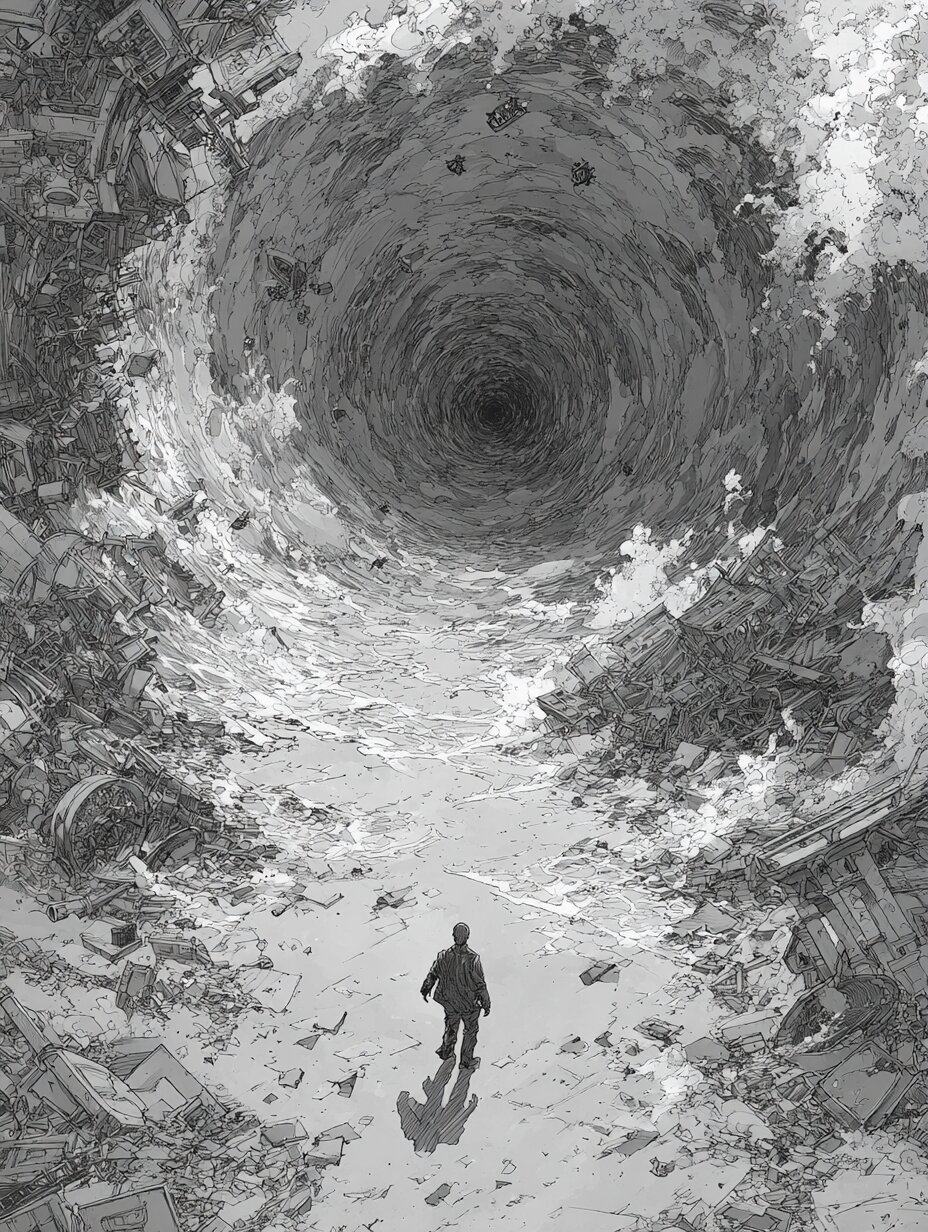
A post-constructivist worldview formed and subjectivity was explored. The tools for archiving and categorizing data exponentially improved, giving birth to cameras and audio recording devices, allowing for the cross-reference of cultural norms. Within this cross-reference and aided by the achievements of media and communication technologies, certain archetypal patterns emerged cross-culturally. Rock and roll embodied many pagan characteristics, and the youth explored newly available boundaries mimicking rituals and processes that have long lasted through the ages.
Disenchanted with the depressive realism of pragmatism and structuralism, an idealistic and simplistic projection for the future was inevitable. The accident was not an accident; it was the only option for future evolution to occur. Modern urban humanity had removed themselves so far from the direct experience of nature that only such a chemical accident could bring us back.
The Eleusinian Mysteries. For centuries before 500 BC, the entire population of Athens would gather once a year for a collective ceremony. Plato wrote about it, though the details were secret. They drank wine mixed with ergot, the same fungus Hofmann would use 2,500 years later to synthesize LSD. Together, they faced the infinite. Together, they remembered what it meant to be human.
Due to the increasing popularity of Christianity and the slow demise of Greek civilization, the mysteries lost their integrated role in the social fabric of their culture. Adopted and debased by the Romans, the mysteries morphed into ceremonies of indulgence and excess, lasting long into the Middle Ages as parts of the practice of pagan worship, and even some Christian sects. It is during the first power struggles of the church with new claims of science that ironically led to the esoteric knowledge’s extinction. As the authority of the church was undermined through the new speculations of science, the accumulated esoteric knowledge of the west was destroyed during the Spanish Inquisition in order to preserve the little clout the church still had. Since the new epistemology of science was attempting to differentiate its method from the realms of magic, poetry, alchemy, and faith, the church struggled to weed out practices that embodied characteristics associated with the esoteric traditions of Europe’s and the East’s middle ages.
The ritual of the ecstatic dance continued to prevail and evolve in the Middle East, out of Christianity’s long reaching arms of influence. Sufism, through the ascetic tradition of the whirling dervishes, further refined a process going into extinction in Europe. Some of the most profound and beautifully articulated pieces of poetry are written in Persia at this time. Rumi is a prime example of how poetry was intimately connected and considered the only appropriate way to utter the paradoxical realizations one experienced in the twirling dance. The Tibetan Book of the Dead is a much older text that uses a similar method in articulating the sacred truths related to the paradoxical states of ecstatic union with the infinite. This association of poetry and the ecstatic state is crucial, for it legitimizes metaphorical interpretation, transforming it into a valid path in exploring truth. Rationalism had slowly gained momentum in the West as a primary method of inquiry to the same questions, casting shadows of doubt over the validity of the metaphorical interpretation of reality.
These sacred rituals had as their main focus collective meditation on change. As time fluctuated the participants let themselves go to the instinctual impulse governed by their archetypal position. They externalized their interiors, creatively manifesting them in song, music, theater, dance, sexual acts, utterances of truth, and many things different from ordinary behavior. The eroticism emphasized the sacredness of union; the spontaneity emphasized the importance of temporality. By witnessing this collective externalization, the group is bonded in a sacred union with each other and the divine; it served as inspiration throughout the year, and kept them humble as they all witnessed that which cannot be spoken.
This served as a cleansing, and due to its expected periodicity, its externalization redeemed the culture as if it had participated in some collective confession; a confession which needed honesty and courage and was rewarded with a temporal experience of the infinite. Through this perpetuating externalization of the interior, faith, hope, and beauty are affirmed, imprinting them in the collective heritage of western civilization, adding another possibility to the paths that humans have plowed open in order to make meaning in the world.
This forgotten knowledge, long suppressed and expunged from our Western traditions, has almost miraculously reemerged. The begging question is why, since the modalities of thinking in the past century have been primarily those of the rational mind? The answer might be because it is necessary that this information be integrated into our culture in order for us to be able to transcend the conscious shift we are experiencing.
With the invention of analog synthesizers combined with the exodus of young westerners to the East in the late Sixties and Seventies, a new cultural landscape emerged. The mass exposure of the West to Eastern philosophy surfaced in popular culture in bands as popular as the Beatles. This overlap and cross-examination of ideas facilitated through technologies such as photography, audio recording, and film allowed for certain patterns to be observed and collected. Certain archetypal designs governed these patterns, for example in music, or in dance movement, or in the format of how ceremonies are situated, eastern meaning layered over the philosophical implications of western science allowed humanity to step back and look at itself aided by our accumulation of scientifically generated data. This is a turning point in human evolution, for it is this mediated data (film, photography, audio, etc.) that paradoxically has the power to expose the importance and power of the direct experience.
The counterintuitive philosophical byproducts of experimental physics, subjectivity, and relativism, could finally be layered over the meditative ancient archetypal understandings of the East. The accidental chemical catalyst, LSD, replaced the ancient psychotropic elements in a celebratory manifestation of technological sound waves and primal dance. This new electronic sound had a particular quality: its abstracted nature was what made it a signifier with no particular signified other than its electronic origin. Subjective interpretation of sound that was arranged along the archetypal design accumulated through the overlap of cultures allowed for something very magical to occur. In McLuhan’s terms one could say this entire process was the manifestation of the contemporary ritual of the global village.
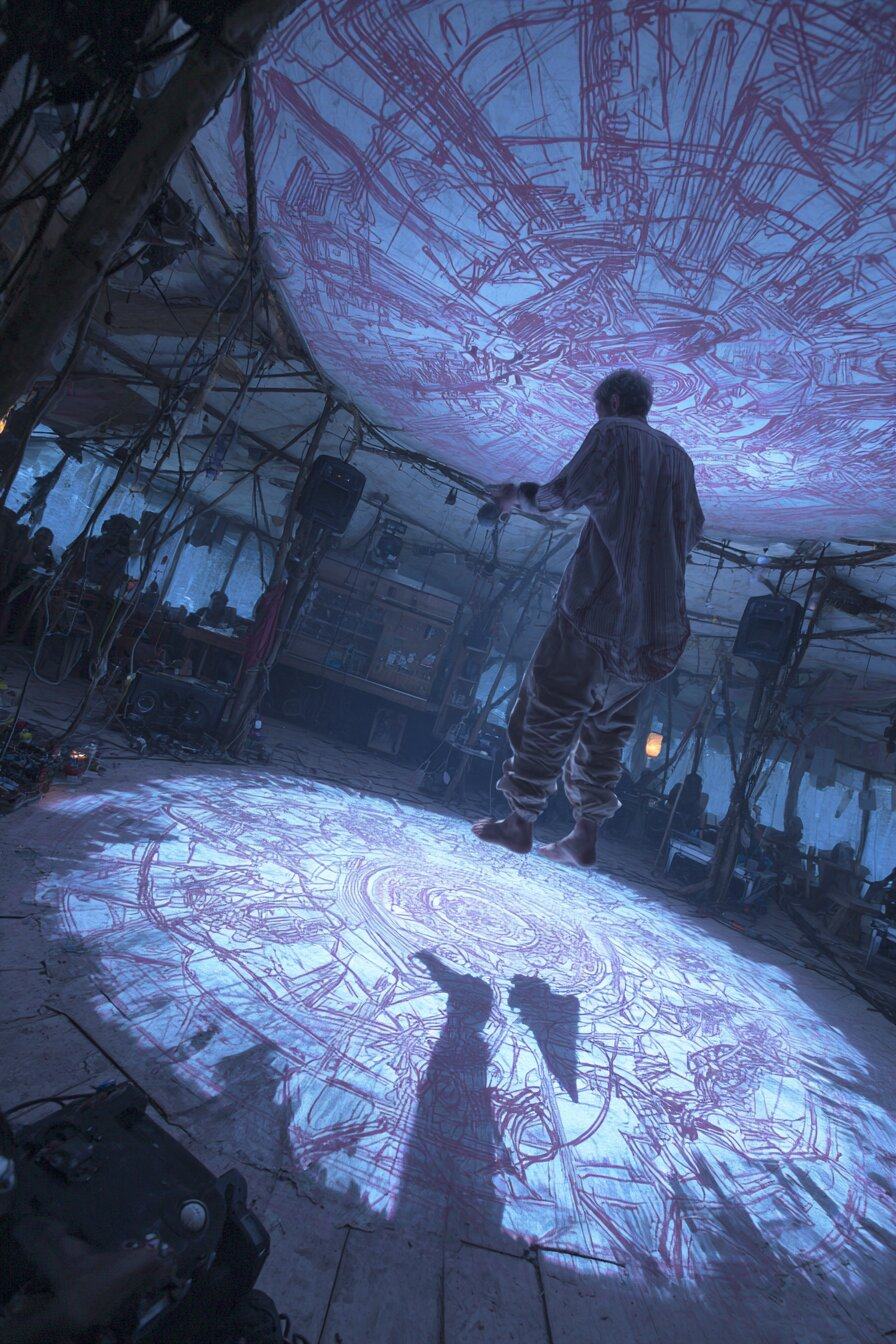
The dancefloor as the new Eleusis. That was the theory I carried out of the jungle, and I still hold it.
But rituals without rules become empty parties. The ancients knew this, break the silence about the Mysteries and die. Without that container, without respect for the sacred, the trance party risks becoming just another disco. The contemporary ritual needs its own rules, its own mythology, or it will consume itself.
Sitting here in New York, six months later, dictating this to Akiko, I'm trying to make sense of what happened in that jungle hut.
I'd gone to Peru looking for answers. Hoping ayahuasca would reveal some profound truth about myself or the universe or the nature of reality.
But I didn't get answers. I got more questions.
The voice that spoke to me, that female presence that told me secrets about myself, didn't give me a roadmap. It gave me a mirror.
It showed me my ego. My fear. My attachments. My patterns. All the ways I'd been lying to myself.
And it showed me something else: that underneath all of that, underneath the stories I tell myself, underneath the identity I've built, underneath the performance I've been running, there's something else. Something quieter. Something that doesn't need anything because it already is everything.
The shamans call it spirit.
The Buddhists call it Buddha nature.
Michael at Solstice Grove called it the witness.
I don't know what to call it. But I felt it. For those few moments of deep meditative connection, when the colors shifted from dark to light and I felt connected to the entire universe, that was it.
That was what I'd been searching for.
But here's the thing: you can't live there.
You have to come back.
And when you come back, you're still you. You still have your patterns, your fears, your ego. But maybe, if you're lucky, you come back with a little more perspective. A little more compassion. A little more understanding that the ego is just a tool, not the whole toolbox.
After that first night, I spent three more nights at Scott's lodge. We did two more ceremonies.
By the time I left, I wasn't enlightened. I wasn't cured. I wasn't suddenly free from all my neuroses and hang-ups.
But I was different.
Lighter, somehow. Like I'd been carrying a backpack full of rocks and someone had taken a few of them out.
On the boat ride back to Iquitos, I watched the jungle slide past. The pink dolphins appeared again, just for a moment, jumping and playing.
Peter leaned over. “You think they're really water spirits?” he asked.
“I don't know,” I said. “But I also don't know that they're not.”
He nodded. That seemed like the right answer.
Akiko stops typing. Looks at me.
“The Flow,” she says. “Like Homer.”
“Yeah. The shamans were in the Flow. And the ayahuasca showed me what that looked like. What it felt like. The same state Homer must have entered when he sang The Odyssey. The muse he invoked in the opening lines, that was him asking not to trip. Not to lose the thread. To stay in the Flow so the story could come through him.”
“And you found it.”
“I found something. Whether it was what I was looking for...” I pause. “I'm still not sure.”

In Iquitos, I said goodbye to Scott and the shamans. Thanked them. Hugged them.
Dimitri flew back. Peter and I planned our next move.
But something had shifted. Some circuit had completed.
The vine had spoken.
And I'd listened.
Flow
Interlude
Flow is the ultimate form of human grace, an expression of mastery at its highest form. It can be expressed in infinite ways: dancing, athletics, music, art, conversation. But essentially, it's the ability to bend the laws of the matrix, to make the impossible look effortless.
Big wave surfers. Martial artists. Acrobats and gymnasts. Parkour athletes flying through urban landscapes. Virtuosos playing their instruments. Breakdancers defying gravity.
When you witness someone in true flow, you're watching magic. The body becomes an antenna for something larger. Time shifts. Limitation dissolves.
This is the definition of cool.
THE PRECARIOUS EDGE
What creates flow? It's not relaxation. It's not safety.
Flow emerges at the edge of danger and mastery.
The big wave surfer paddling into a sixty-foot wall of water has only one thing to rely on: absolute faith in their own ability. They've put themselves in a precarious position where hesitation means death. Where thinking means failure.
The only way out is through. And the only way through is to trust the thousands of hours of practice that live in muscle memory, in cellular knowledge, in the body's own intelligence.
This is why flow requires mastery. You can't fake your way into the zone. You earn it through discipline, through repetition, through pushing past comfort again and again until the difficult becomes natural.
DIGITAL VERSUS ANALOG FLOW
Here's where it connects to the zero = one philosophy.
In the analog world, vinyl records, live performance, in-person connection, flow was immediate. Present. Embodied. You danced at the concert. You surfed the wave. You played the instrument.
Direct feedback loop. Real-time adjustment. Physical consequence.
But in the digital world? Flow gets mediated.
You watch the surfer on YouTube. You stream the concert. You scroll through videos of dancers. The flow is there, but you're not in it. You're consuming rather than creating.
This is the First Waver predicament: we're the last generation that learned flow in analog space before the digital world offered infinite flow-states on demand, pre-recorded, perfectly edited, endlessly replayable.
We know what it feels like to generate flow ourselves. And we know what it feels like to watch others do it.
The question becomes: which do we choose?
THE DANGER OF MANUFACTURED FLOW
But here's the shadow side.
Flow can be manufactured. Simulated. Faked.
The right drugs can give you the sensation of flow without the mastery. The right music can trigger the neurochemistry without the discipline. The right environment can create temporary transcendence without transformation.
This is the trap: mistaking the state for the stage.
Real flow comes from mastery. From years of practice. From understanding your position on the wave. You earn it.
Manufactured flow is borrowed. Rented. Chemical. It feels real in the moment, but it doesn't build anything. It doesn't change who you are when you return to baseline.
The wise ones know the difference. They use the festivals, the substances, the music as tools to access flow, but they do the work to make it their own.
The plain page of An Oddyssey. Behind the book.