Chapter 15
India
The Geography of Faith
BOMBAY, INDIA, 2002
NYC
“How did India happen?” Akiko asks.
Through a girl on a beach in Brazil, I say. Puja. This is how it all weaves together.
She waits.
Start with the smell, I say.
The first thing that hits you about India is the smell.
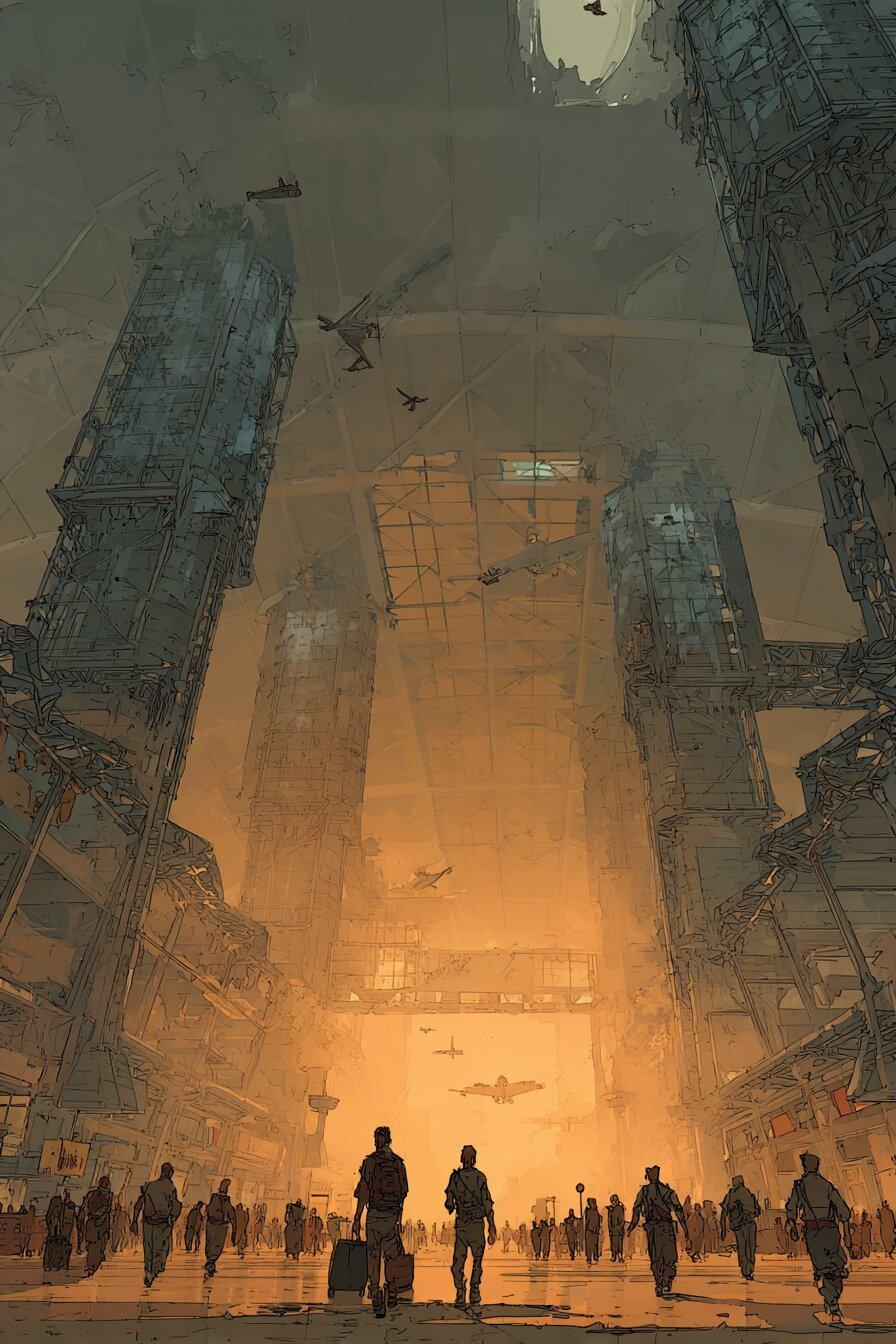
Not spices, like you'd expect. Not incense or curry or flowers. It's smoke. Burning. The Greeks have a word for it, kafsimon, the smell of anything on fire. Wood smoke, trash smoke, dung smoke, all layered together into a thick atmospheric presence that seems to rise from the very ground.
I landed in Bombay at one in the morning. The airport was chaos, porters shouting, families reuniting, heat and humidity pressing down despite the late hour. A driver was waiting for me, holding a handwritten sign with my name misspelled.
Puja had arranged it.
I'd met Puja in Brazil, on a beach in Florianopolis, both of us drunk and sunburned, dancing to bossa nova at some beach party. She was Indian-American, studying design at Parsons in New York. When I told her I was going to India, she'd immediately started making calls. Her brother was a Bollywood actor. Her friends were connected. Within a week, she'd arranged for me to stay at her brother's place in Bombay.
India had been the plan since Dark December. Cassie had asked, in a Hotmail message that reached me before I went back into the jungle.
Are you still going to India? I think I’ll be in Mexico by May, probably for two or three months. Write me when you get a chance, or have something to say.
The driver loaded my bag into an old Ambassador sedan and we pulled onto the highway.
The road was nearly empty at this hour. Just the occasional truck rumbling past, headlights cutting through the darkness. And then I saw him.
A man standing by a tree in the median. Right in the middle of the highway. Hands pressed together in prayer, facing the tree.
It was one in the morning.
“What's he doing?” I asked the driver.
The driver glanced over, shrugged. “Praying.”
“At one in the morning? In the highway median?”
Another shrug. “This is India.”
The party at Puja's brother's house was still going when we arrived. Twenty-somethings sprawled across couches, smoking, drinking, music pulsing from expensive speakers. It could have been a loft party in Williamsburg. The only difference was the accents.
I was exhausted. Jet-lagged. I'd been traveling for nearly thirty hours. I made small talk for twenty minutes, then excused myself and crashed on a guest room bed.
The next morning, I woke up to silence. Everyone else was still asleep. I had a ticket to buy, heading north to Rajasthan, and I needed to get it today.
I slipped out the front door.
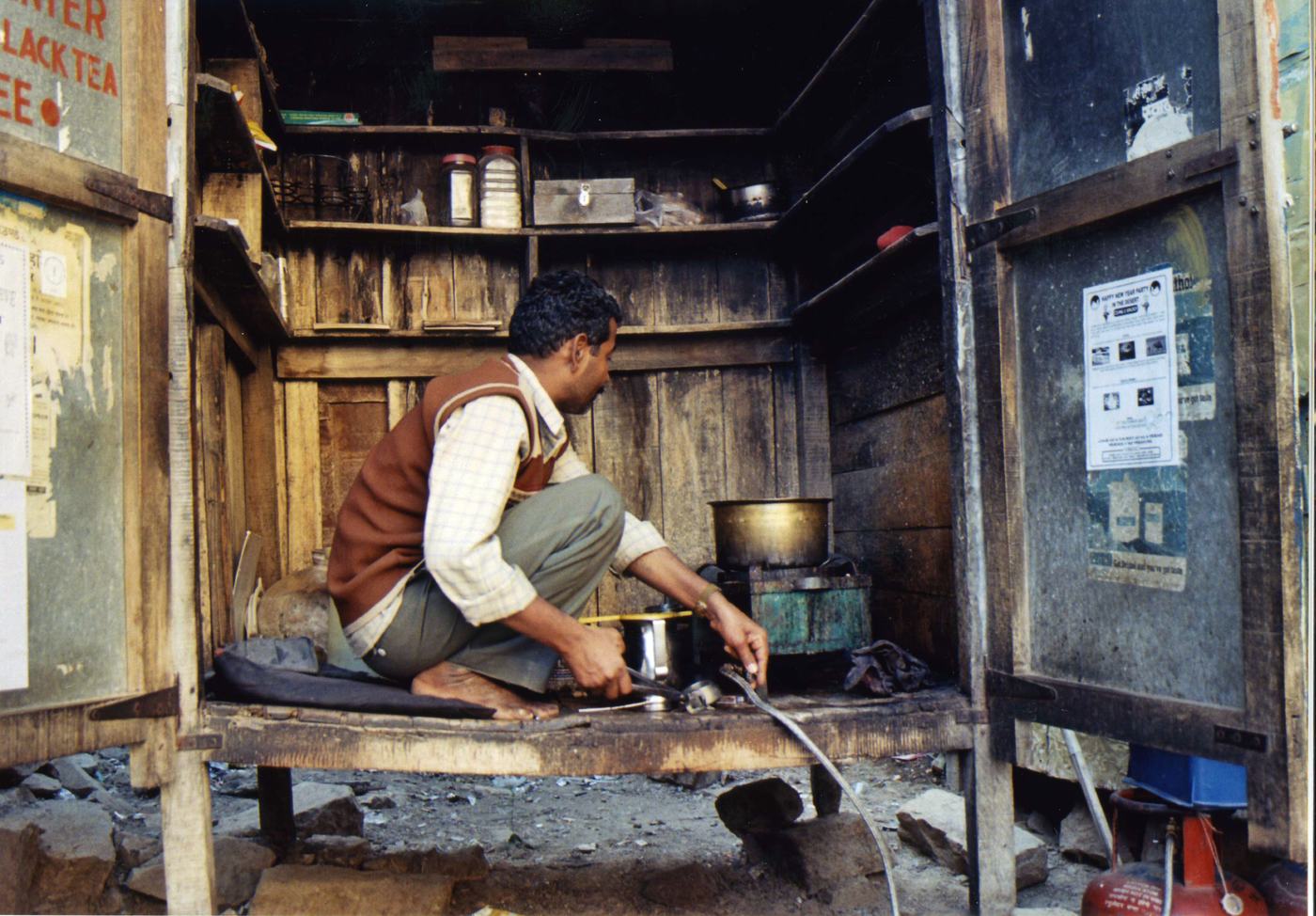
The driver had picked me up in the dark and brought me here. I didn't know the address. Didn't know the neighborhood. Didn't even know which direction the city center was.
Left or right? I'll go right.
Within two minutes, the paved road turned to dirt. Corrugated metal shacks appeared on both sides. Children stared at me from doorways. A goat wandered past.
I'd stumbled into a shantytown.
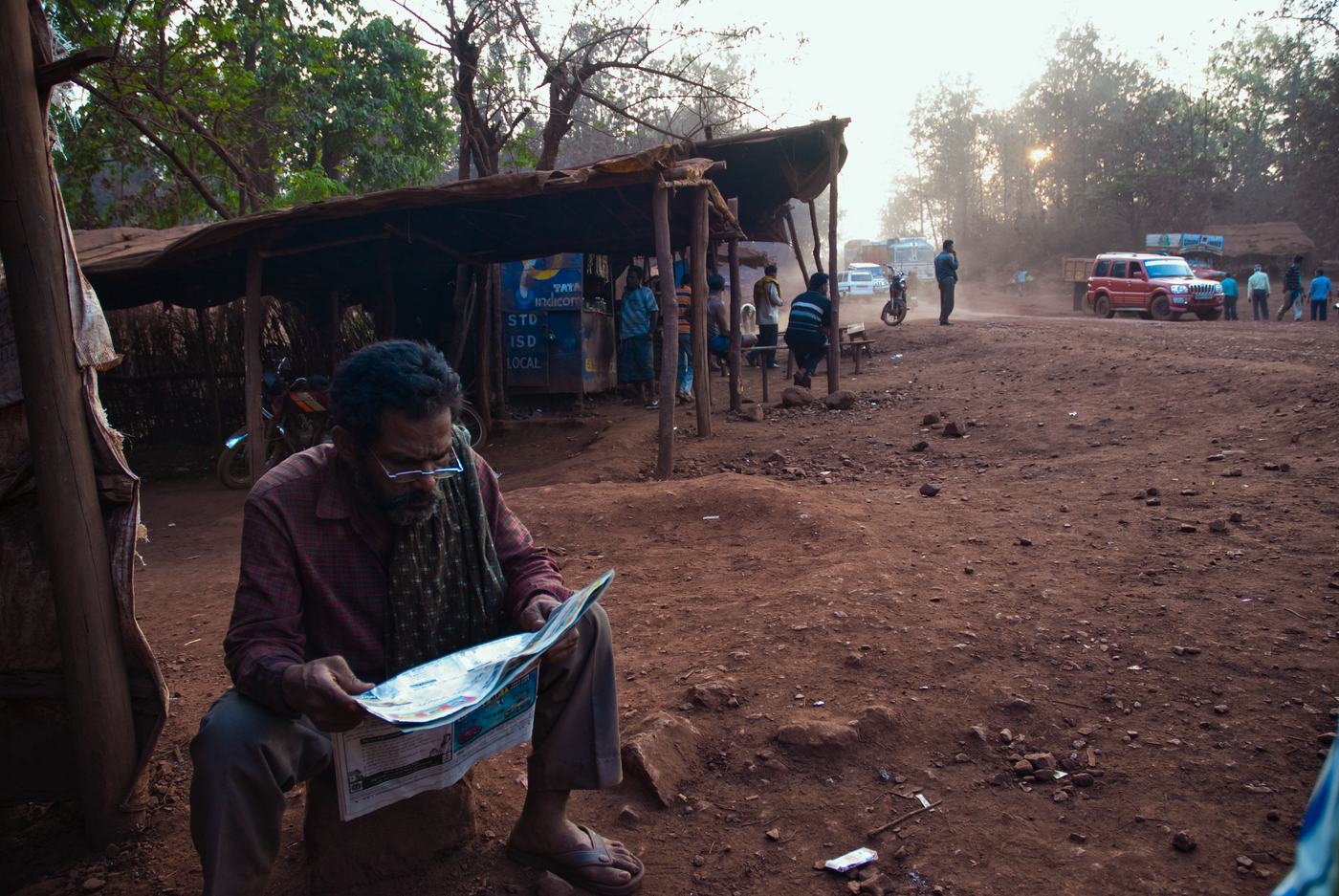
I turned around, headed the opposite direction, and eventually found a main road. Hailed a rickshaw. The driver spoke enough English to understand travel agency, and fifteen minutes later, I was buying a ticket north.
Easy.
I went to an internet café to check emails. Had lunch at a street stall, some kind of curry wrapped in roti, eaten standing up while trucks roared past. Wandered through a market. Took photos.
Two hours later, I reached into my pocket.
My passport was gone.
So was the ticket I'd just bought.
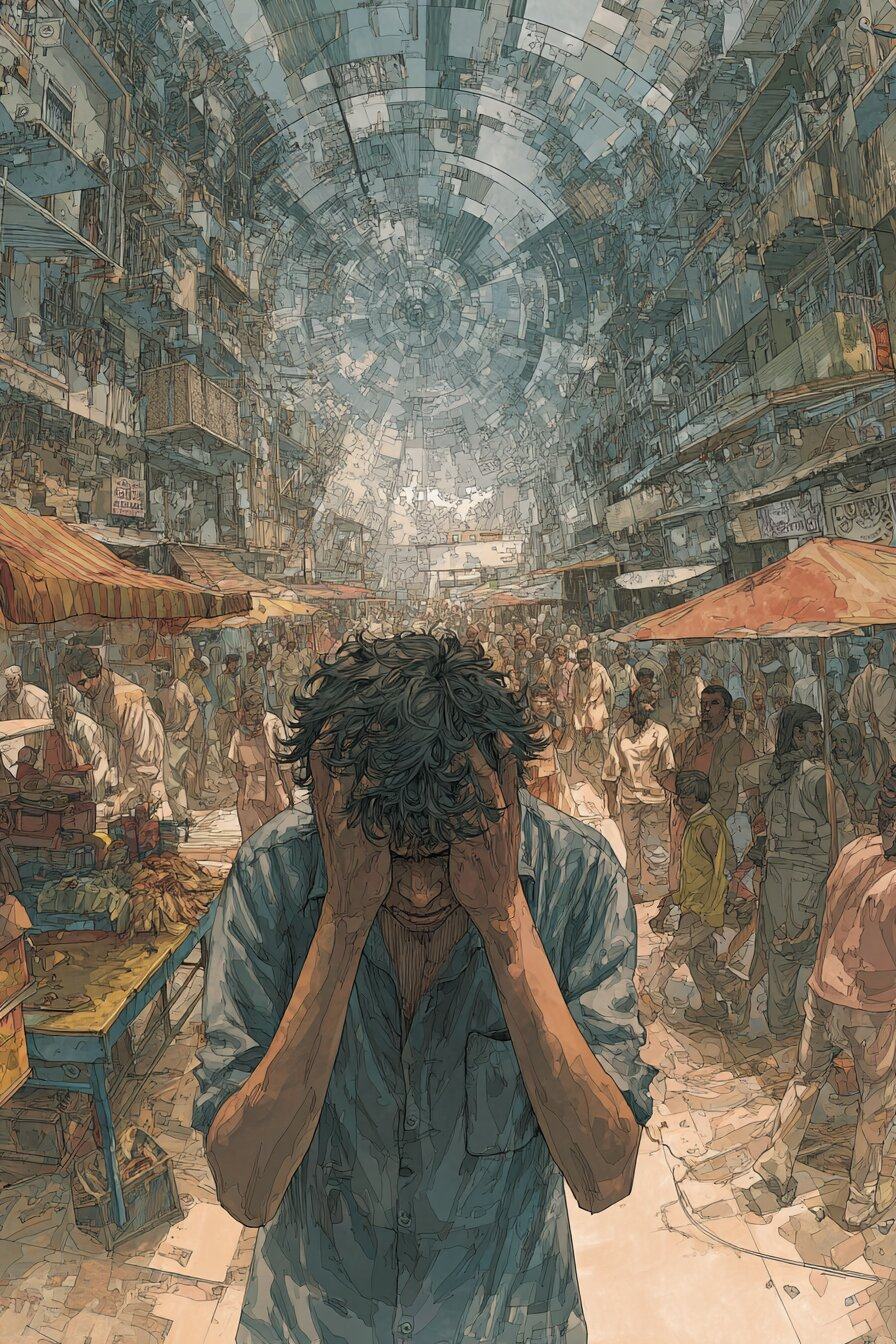
The panic was immediate. Total. The kind that makes your vision tunnel and your hands shake.
I'd had the passport at the internet café. I remembered checking my email, the passport sitting on the desk next to the keyboard. And then lunch. Had I taken it out at lunch? I couldn't remember. The market, had someone pickpocketed me?
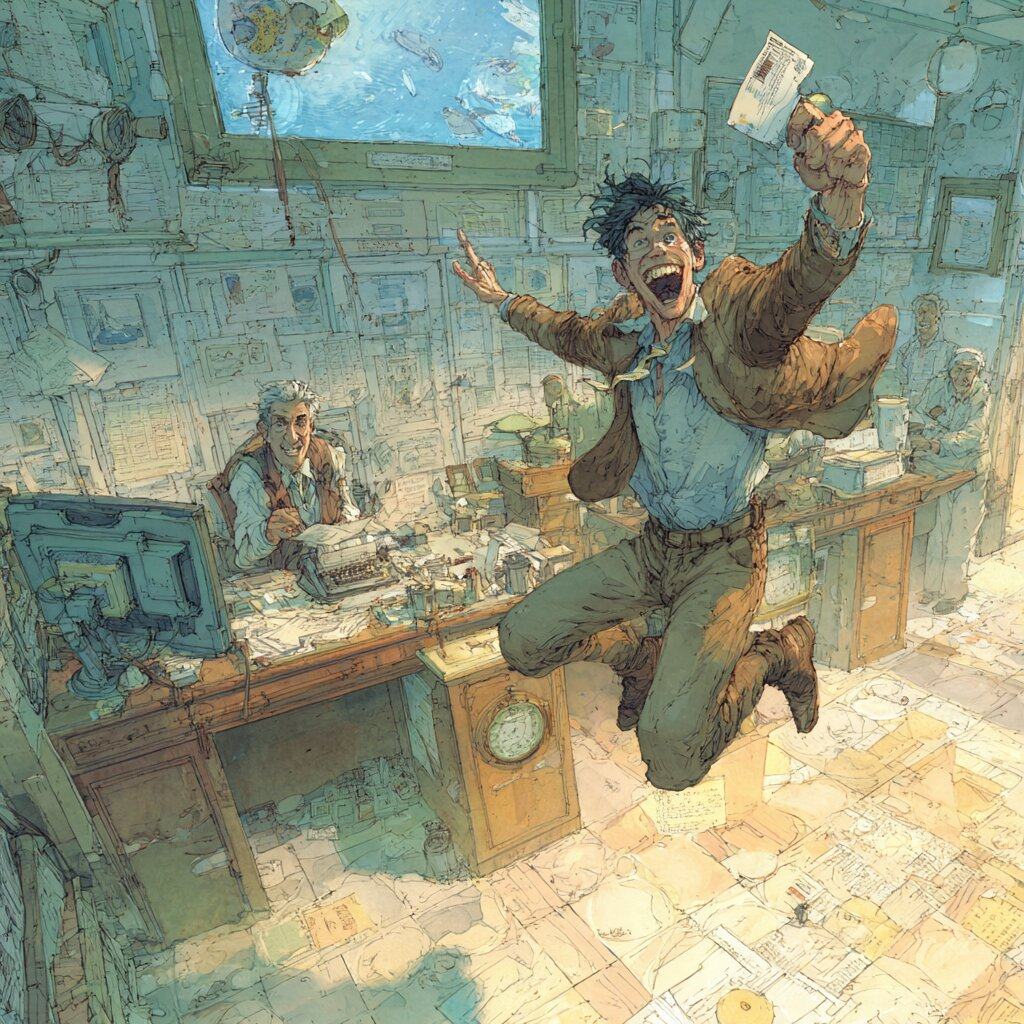
I retraced my steps, walking fast, asking vendors if they'd seen anything. No one had. Of course they hadn't. This was Bombay. Ten million people. My passport was gone.
I stood on a street corner, trying to calculate what this meant. My first day in India, and I'd be stuck in Bombay for the next three weeks, figuring out my passport.
And suddenly, I felt it: the universe telling me I wasn't supposed to be here. That I'd pushed my luck too far. That this whole journey, this whole year of following synchronicities and trusting the path, had been naive magical thinking, and now reality was crashing back down.
I was stranded in India without a passport.
I sat down on the curb and put my head in my hands.
Then I had a thought: The travel agency.
Maybe, maybe, if I'd dropped it somewhere, and if someone had found it, and if the envelope with the ticket had the travel agency's address on it, and if that person was honest enough to return it,
It was a long chain of ifs.
But I didn't have any other options.
I found a rickshaw. Gave him the address. Fifteen minutes later, I walked back into the travel agency.
The man behind the desk saw me and jumped out of his chair.
He was holding my passport.
And my ticket.
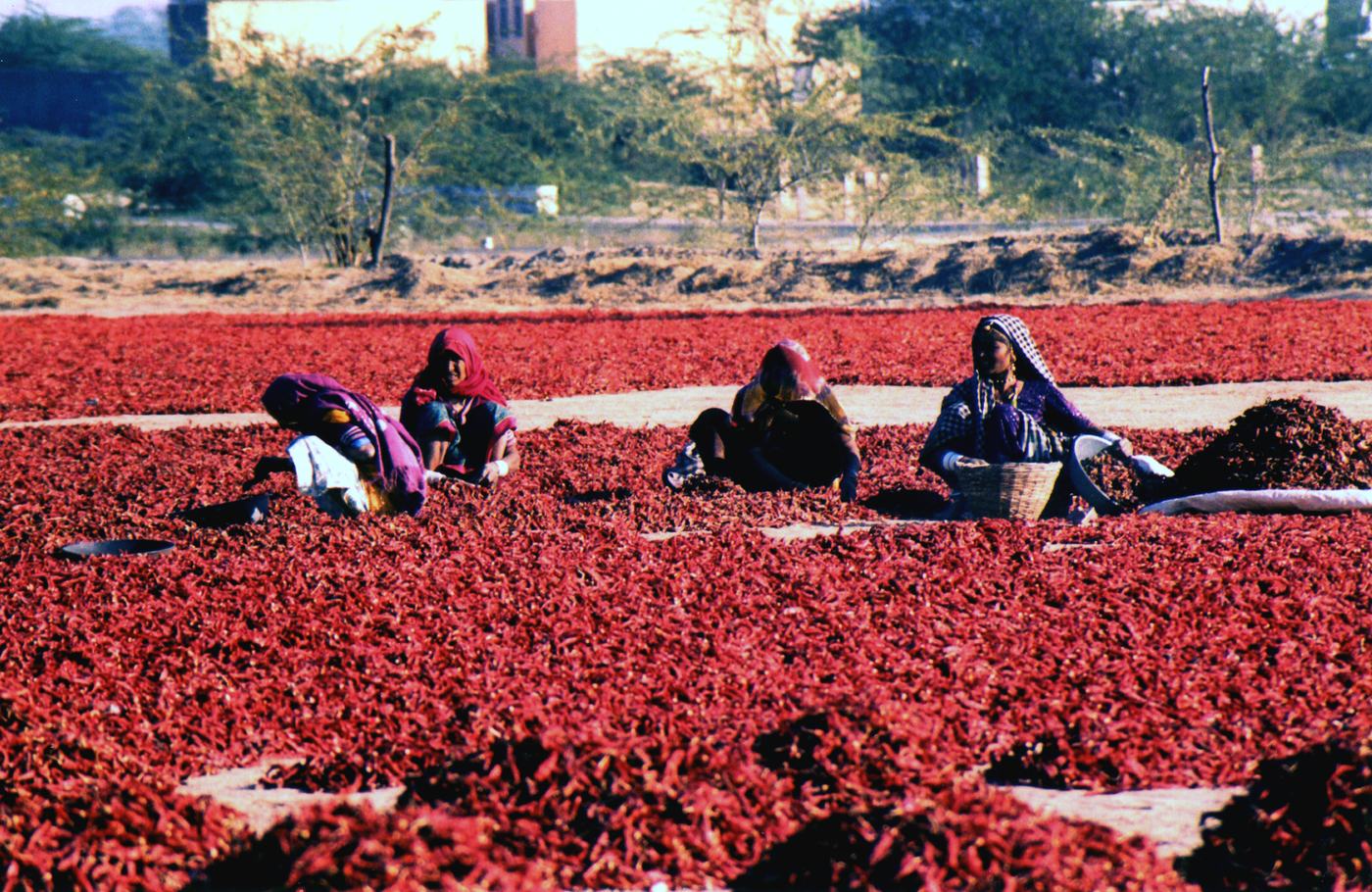
“You are very lucky man!” he said, grinning. “Very, very lucky! Someone found this on the street. They bring it here. I was waiting for you!”
I stared at him. At the passport in his hand. At the ticket.
“Someone just... brought it back?”
“Yes! Good people, you see? Good people everywhere!”
I took the passport, flipped through it to make sure it was real. My photo stared back at me. All my visas intact.
“Thank you,” I said. “Thank you so much.”
He waved me off. “This is India. We take care of travelers.”
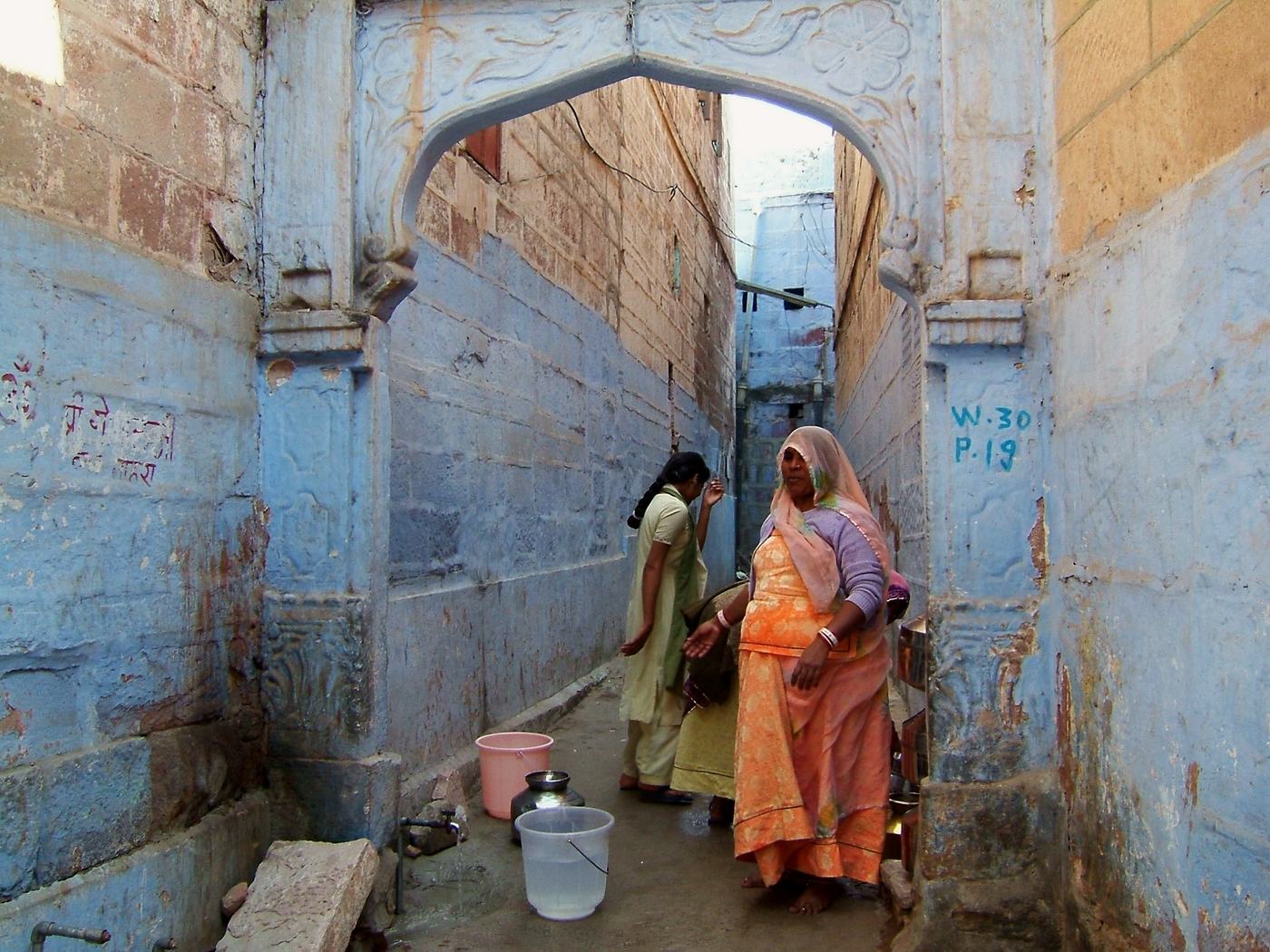
I walked out onto the street in a daze.
All my fears, about India, about theft, about the dangers of traveling alone in the developing world, had evaporated in an instant. Replaced by something I hadn't felt in a long time.
Faith.
Not religious faith. Not faith in any particular god or system. But faith in people. In the fundamental decency that exists even in chaos. In the idea that the universe might actually be looking out for me.
Or at the very least, that there are good people everywhere.
The glamorous party scene of Bombay had left me feeling empty. The privilege, the excess, the disconnection from the India outside those apartment walls, it wasn't what I'd come here for. I needed to get out, to find something real, something that couldn't be bought with American Express.
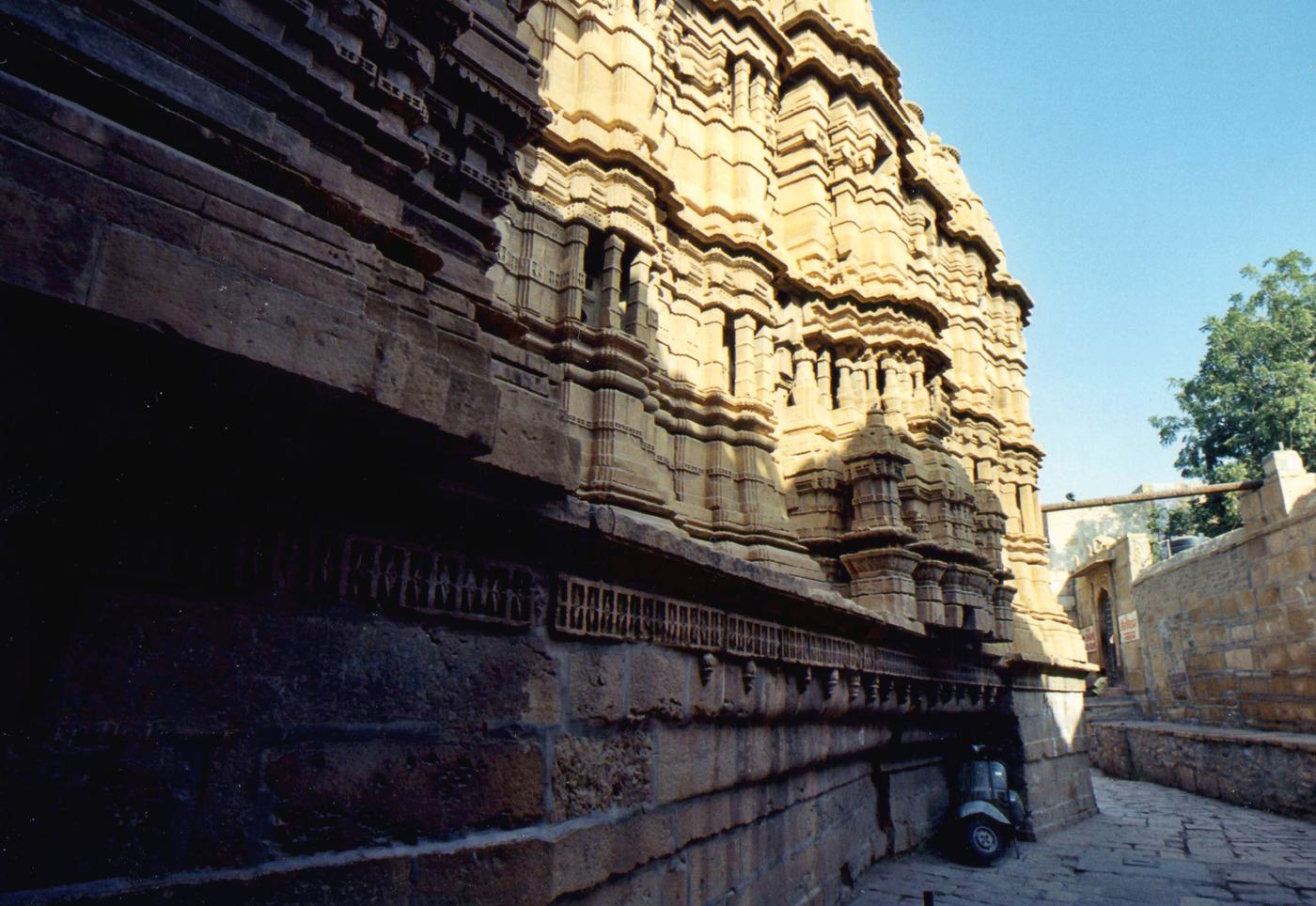
I decided to head north, away from the coast, into the desert.
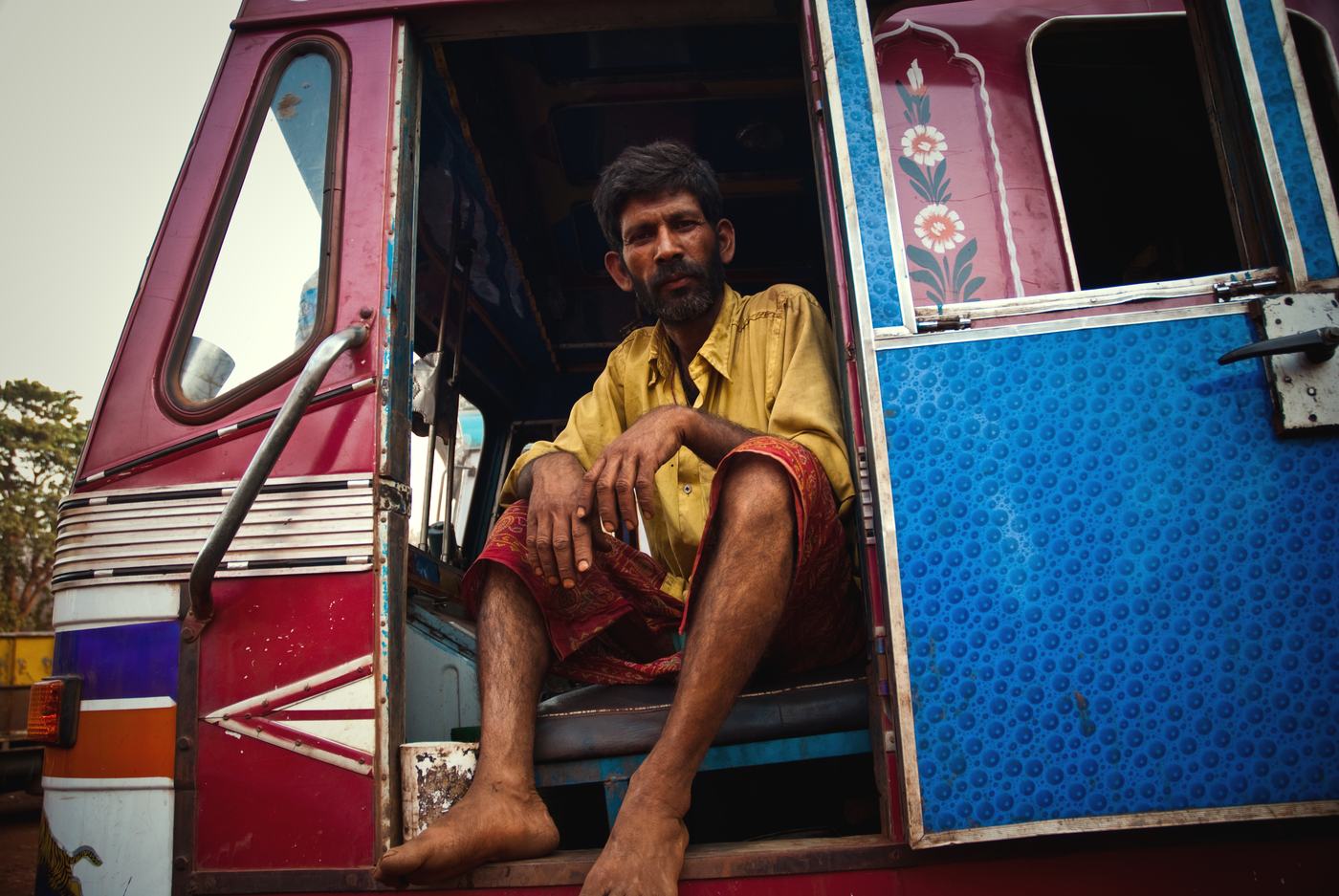
I get on a plane, I go to Rajasthan, I hire this old cab driver, like eighty years old. He drives me across half of the state, like six hour drive, in this old car.
My mother had a friend there, a jewelry maker, hippie type, who was traveling through India with her eighteen-year-old daughter, Amalia. We'd made vague plans to meet up for dinner.
I found my mother's friend at a guesthouse near the Pink City. Amalia was blonde, American, a little wide-eyed at the intensity of India. I'd known her since she was a kid, which made the whole situation slightly awkward. We were sharing rooms to save money, but there was this weird older-brother dynamic that I couldn't quite navigate.
On New Year's Eve, her mother took us out to the desert.
There are camps out there, tents set up in the middle of nowhere, lit by oil lamps, with musicians playing traditional Rajasthani instruments. We sat on carpets under the stars, eating dal and drinking chai, watching dancers spin in the firelight.
At midnight, someone set off fireworks. They exploded against the vastness of the desert sky, and for a moment, everything felt impossibly vast and impossibly small at the same time.
The next day, Amalia decided to travel with me for a few days. We caught a bus to Jodhpur, the Blue City, and found a guesthouse run by a man named Vishnu.
Vishnu was a Brahmin. The highest caste. He was in his mid-forties, well-educated, spoke perfect English. But there was something conflicted about him, like he wanted desperately to be part of our journey but wasn't sure if it was appropriate. He'd hover near us in the common area, offering tea, telling us about Hindu philosophy and meditation techniques.
Part of me felt like it was a performance. A tourist show. But another part sensed something genuine beneath the awkwardness. Like he was searching for something, too.
One evening, Amalia and I were talking about where to go next.

“We want to see Pushkar,” I said.
Vishnu looked up from across the room.
“Pushkar?” he said. “I have never been.”
“Never?”
“No. Every Hindu is supposed to go once in their life. To bathe in the lake. But I have not.”
He said it with a mixture of shame and longing.
Vishnu had a cousin who ran desert safaris in old World War II jeeps, somehow still functional after sixty years. The cousin showed up the next morning: thick glasses, bushy mustache, buttoned-up shirt. He and Vishnu both had this formal, almost nervous energy, like they were about to do something mildly transgressive.
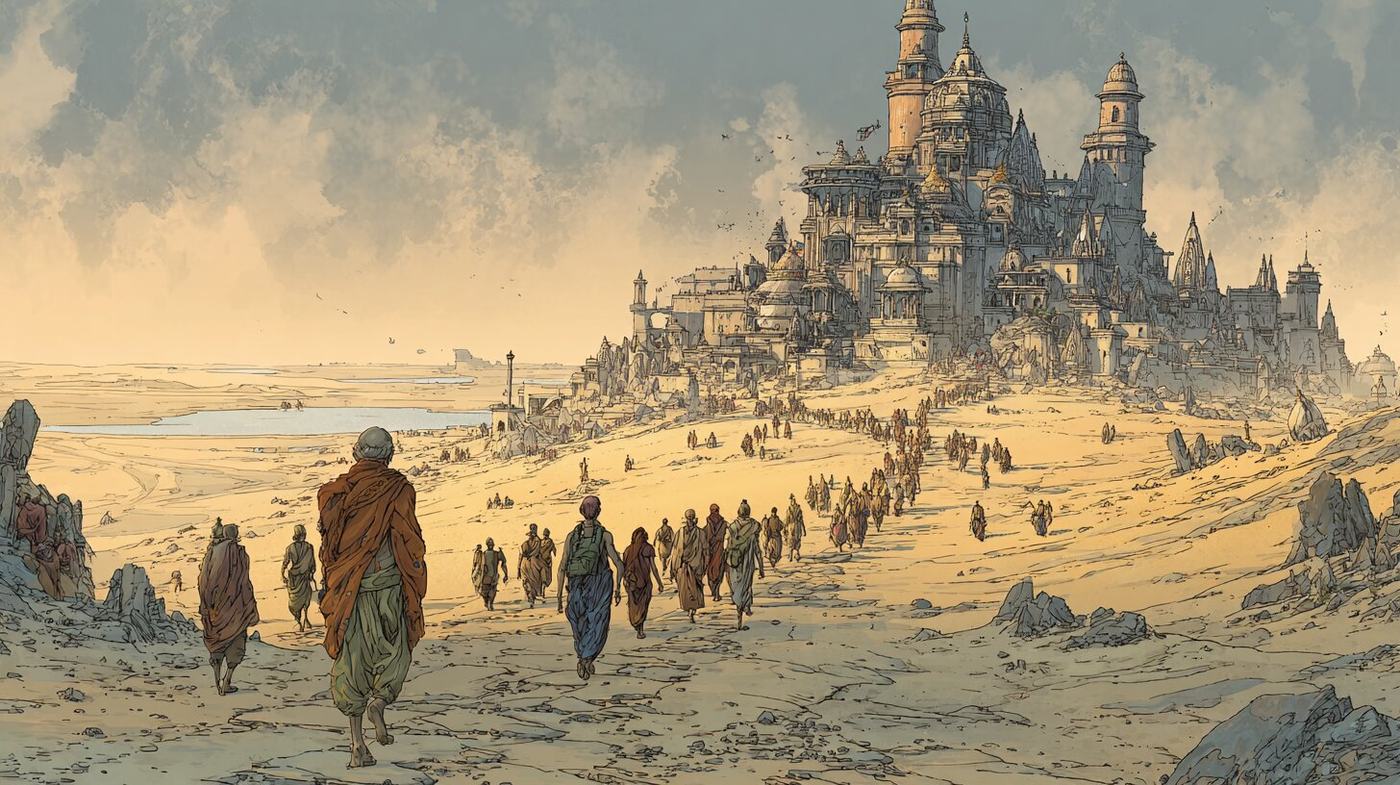
We piled into the jeep. Vishnu sat up front, clutching a small bag with offerings for the puja. Amalia and I sat in the back, bouncing over dirt roads as we headed west toward Pushkar.
“We take the back way,” the cousin said. “Stop in villages. You see real India.”
He wasn't kidding.
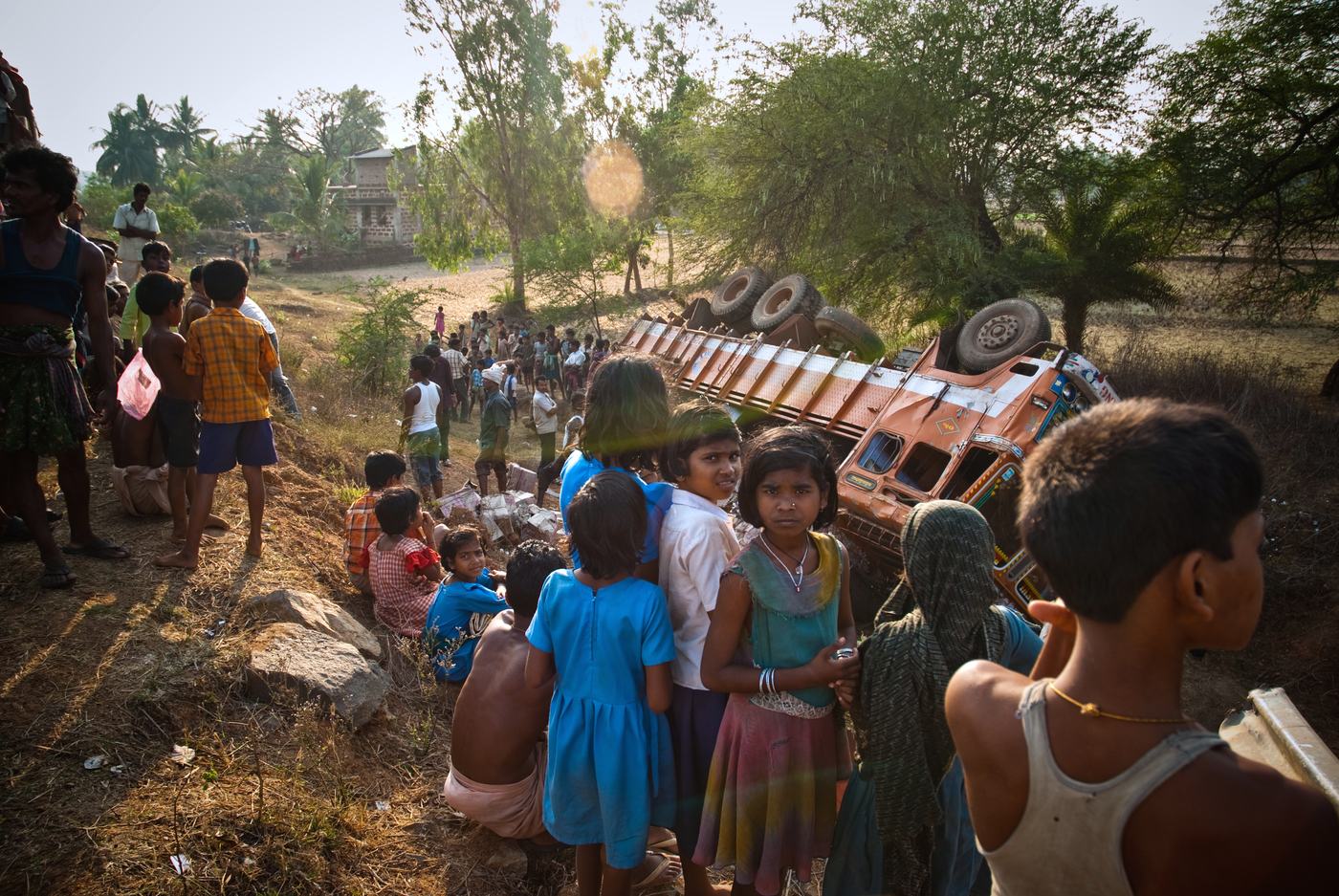
The first village we stopped in was tiny, maybe fifty houses clustered around a well. As soon as the jeep pulled up, people started emerging from doorways. First a few kids. Then more kids. Then adults.
Within minutes, we were surrounded.
Two or three hundred people, standing in concentric circles, just staring.
The children were in the front rows, wide-eyed and giggling. The adults stood further back, arms crossed, watching with a mixture of curiosity and suspicion. None of them had seen white people before. We were a spectacle. A circus.
Vishnu and his cousin pretended like this was totally normal. They bought water from a stand. Drank slowly. Looked at the sunset. Made small talk.
All while two hundred pairs of eyes watched our every move.
Amalia leaned over to me. “This is insane.”
“Yeah.”
“Do we just... stand here?”
“I guess so.”
We stood there. Drinking water. Watching the sunset. Being watched.
Eventually, Vishnu decided we'd had enough cultural exchange. We climbed back into the jeep and drove on.
Pushkar appeared just after dawn.
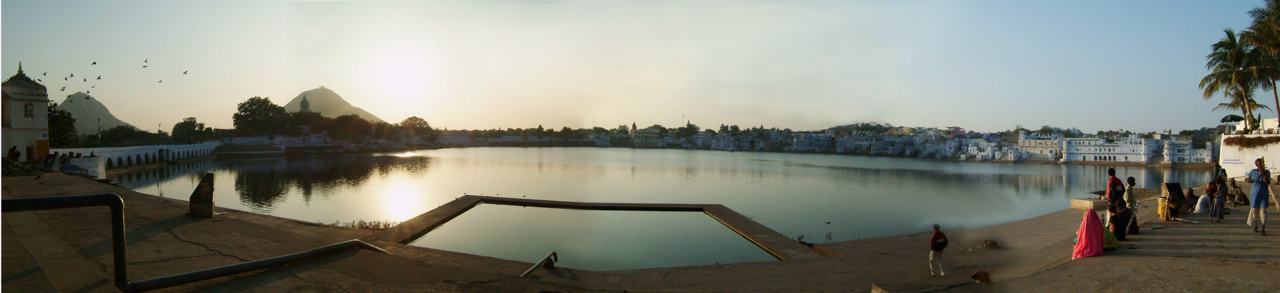
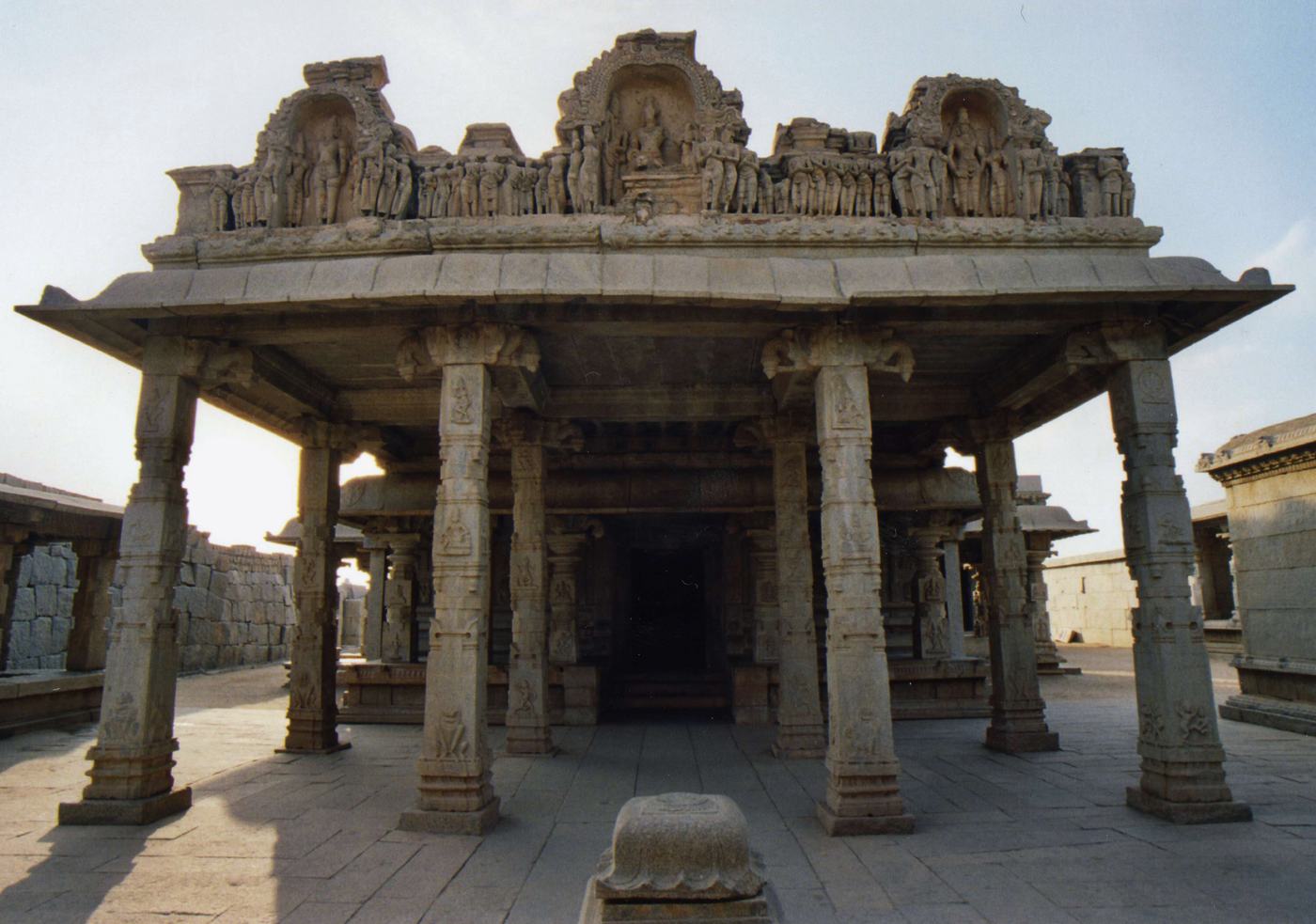
The lake was perfectly round, unnaturally round, like someone had carved a circle into the earth with a compass. Ghats descended to the water's edge on all sides, lined with temples and ashrams. The water itself was still, glassy, reflecting the sky.
According to Hindu mythology, this was where Brahma, the creator god, was born. He rose from the back of a turtle, sitting on a lotus flower, and from that moment, the universe began.
Every Hindu is supposed to visit Pushkar at least once in their lifetime. To bathe in the lake. To perform a puja.

Vishnu stood at the edge of the water, staring out across the lake. He looked like a man standing at the threshold of something profound.
“I am forty-five years old,” he said quietly. “And I have never been here.”
“Well,” I said. “You're here now.”
We sat with a holy man at the water's edge. He chanted in Sanskrit, waving incense over us. We repeated words we didn't understand. He tied red threads around our wrists. We made offerings, flowers, coins, and then we waded into the lake.
The water was cold. Clean. It felt ancient, somehow. Like every person who'd ever bathed here had left some trace of themselves in it.
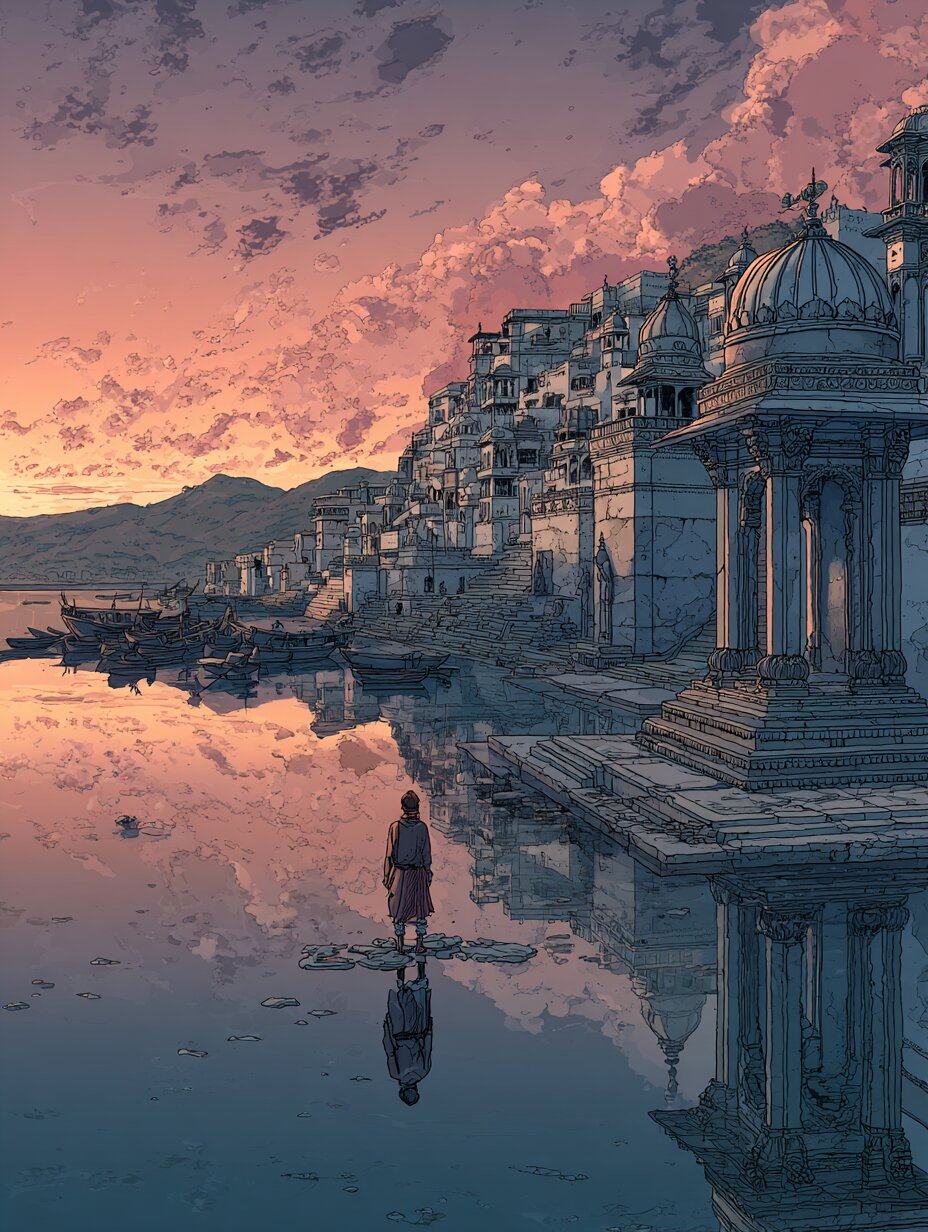
Vishnu dunked his head under, came up sputtering and laughing.
For the first time since I'd met him, he looked free.
Vishnu and I said goodbye at the water, the same red thread on both our wrists.
Amalia's few days were up, and she left me to it.
That afternoon, I met a group of Rajasthani locals sitting by the ghats. They invited me to sit. Offered me water.
There's a few laws of the desert, and some of them are like the laws of the sea. If someone comes you have to give them water, the first thing you give them, before you even say hello. And then you give them a ball of opium to dissolve in the water and drink. It's a gesture of peace and calm, a form of getting to know your host.
We sat there for hours, talking in broken English and Hindi, watching pilgrims bathe in the lake.
I thought about the passport. About the stranger who'd returned it. About Vishnu, finally making his pilgrimage after forty-five years. About the villagers who'd stared at us like we were beings from another planet. About the lake and the mythology of creation.
Akiko looks up. “And Goa,” she says. “You said Goa in Brazil.”
“I did. Everything before it was the road there.”
GOA, INDIA, JANUARY
My first day. A rented hut in a cluster of huts near Anjuna, a bike, the season at its peak.
I bumped into an old friend, someone who last time I'd seen was in New York, the day that he was embarking on a two year journey to do his PhD on the anthropology of psychedelic trance music. My first day in Goa, his last day in Goa.
I was really happy to see him. I asked him if he could show me around. I was looking to buy some acid, as I wanted to go to the parties.
Sure, absolutely. Follow me around, I'm gonna go say goodbye to some friends.
We went through the village, and we settled at this house with a bunch of Danish kids who had come back from a three day party. None of them had slept. They were a little bit cracked out and ready to go to bed.
But one of the guys was there. My friend had mentioned to him that I was interested in purchasing some acid. He looked at me and said, would you like to try some, before you buy a bottle? And I was like, well, fuck it, why not. It's my first day. I knew that these guys were going to be going to bed pretty soon, but I chose to go for it.
We sat down in his room, and he brings out this big glass bottle of LSD, takes off the glass cap. I put my hand out to get a drop. As I put out my hand, I've knocked the bottle, and everything moves in slow motion. A huge bottle of acid, probably worth $30,000, is wobbling, about to tip over. That moment I have to figure out if I should put my hand out and try to stop the bottle, possibly spilling a ton of LSD on me, or let the bottle go, with the possibility of it falling over, and me owing this person thousands of dollars. None of those options were good.
And slowly but surely the bottle settled. We both looked into each other's eyes. I could not tell if that was a good sign or a bad sign. But I extended my hand again and he gave me a drop.
Before I knew it, I was flying in a different dimension. I had lost every sense of time. I didn't even know where I was. We were in some small little hut in the middle of the jungle and I didn't remember how to get there at all. My friend had already left, and there was a young girl who was getting ready for bed and politely kept me around.
I told her sheepishly, let me know when it's time.
She said, “It's time.”
I stepped out into the darkness of the jungle.
I had no idea where I was going. I jumped onto my bike and rode it down the dirt road. By some miracle, I managed to make it back to the little hut that I had rented. It was among a bunch of other huts, and there was a big tree with a bunch of crows in it, crowing in the middle of the night.
I couldn't remember exactly which hut was mine, and I was terrified, because I had been told that that was where junkies came to take a break in the winter. They were used to having their things ripped off, so they slept with knives, and they could get violent in the middle of the night. I was afraid I was going to open the wrong door and get cut to pieces.
I stood there, I didn't know how long, probably at least a half an hour. I finally had the courage to open it and got inside. It was my room. I lay in bed with the lights off, not knowing what to do. I thought I was going to see a miracle, a vision of profound insight.
I took my camera, put it on my chest, turned it on. I tried to stream of consciousness talk, but nothing really came out. I could feel the camera vibrating on my chest. It was one of those analog ones which had tapes, DV tapes. In my mind's eye, in the darkness of the room, I could sense the camera sucking in time, a vortex. I had felt this before, but only with a human being, in some sort of tantric exchange of breath. But this was different. This was a machine.
I could sense the psychic energy being soaked in. And in my mind's eye I could almost put myself in that flow of time that was being recorded. I could now sense the entire machine all over my body. And I could go in it. Inside of it there was this little center that was constantly moving, but I could never touch it. And all of a sudden I realized that maybe I should surrender.
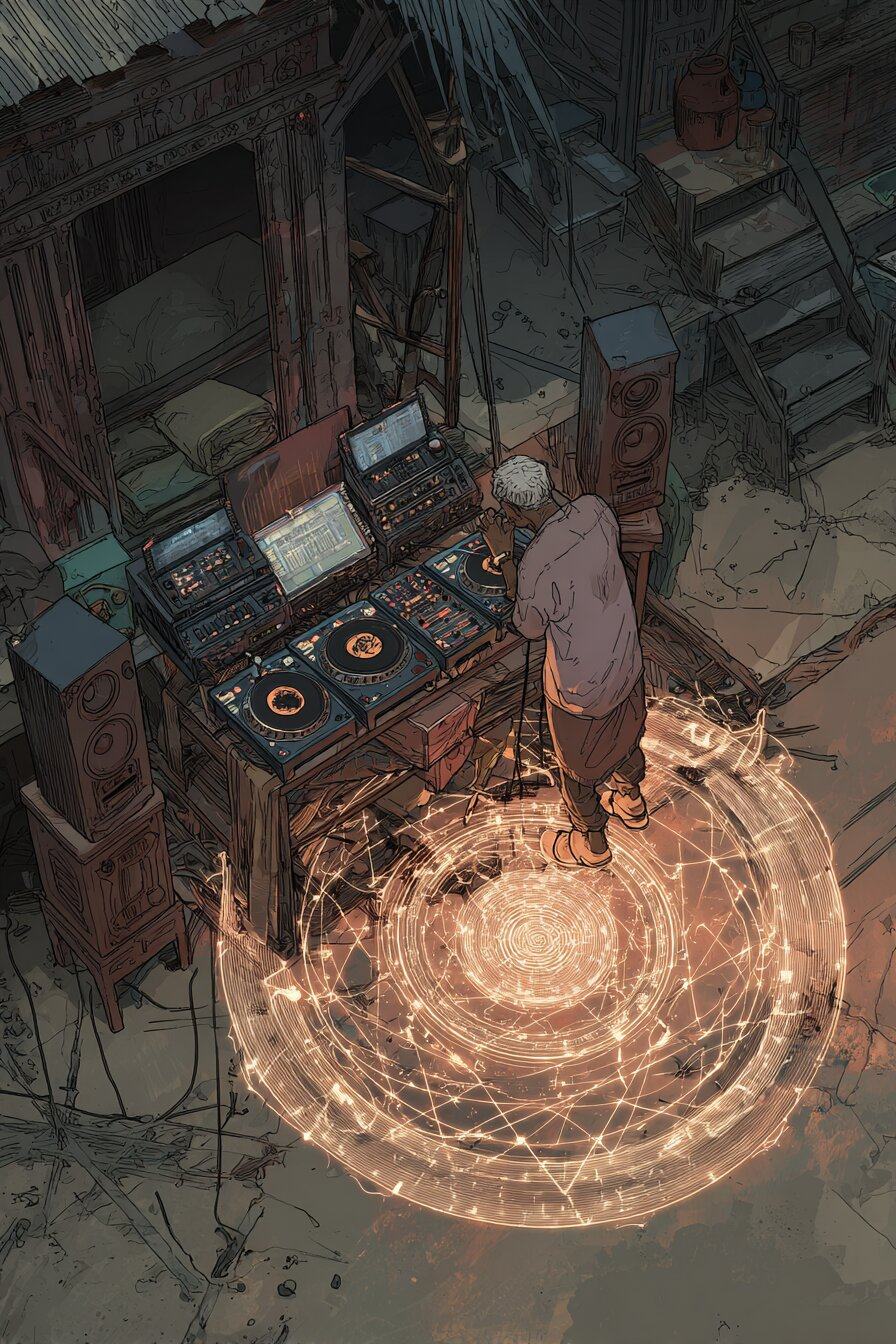
That little wiggly part, almost like that thing that you see in your eye that you could never follow. It jumped inside of me. My voice started to make a sound, and it was like ooh. But it was coded with a digital echo. I then allowed my body to move, and surrendered to that center. My body started to move and wiggle on the bed, almost like I was breakdancing, liquidly. I came into the middle of the floor. And I slowly started to trace the circle of the walls of the room. At each interval I would stop and I would do a pose, and in that pose I would see the shape in my mind's eye. It was almost an archetypal pose.
As I did the circle, I ended up in the middle of the room, in the lotus position, lying over on my stomach, chest down, an energy coming out of my back. I wanted to move and come up. But a force kept me down. I kept on asking, what is this? What is this? What's going on?
And then the answer came out from inside of me. This is prayer.
I don't know how long. I realized that all throughout the time that I had been moving around the room, there were moments where I could not move any further, because there was a piece of furniture blocking me, and I had to reroute myself. Whenever I would get to moments of frustration, you could hear the crows, and they would grow louder. Whenever I would be in a pose of relaxation, the crows would have calmed down. The crows had now gone completely silent. And the sun had slowly risen.
I could smell the early morning fires burning, and there was a mist blended in with that smoke. I could now get up, and I could see this trail. It was almost as if they were the rails of my movements, if I wanted to continue moving. They led to the door. I opened the door, and in the mist I could see these trails continue.
Standing there in my boxer shorts, I knew, I could feel it in the depths of my soul, that if I follow those trails I would have been happy for the rest of my life, and I would have danced through life with no need of anything else. Maybe that's the path of the yogi, the guru, the mystic, the crazy person. But I knew at that moment that it was not for me. So I closed the door and went to bed, and realized that day that I'm no holy man.
That was the first night. A camera on my chest, the crows, a trail across the floor. Somebody had made that music. I went looking for them on the beach.
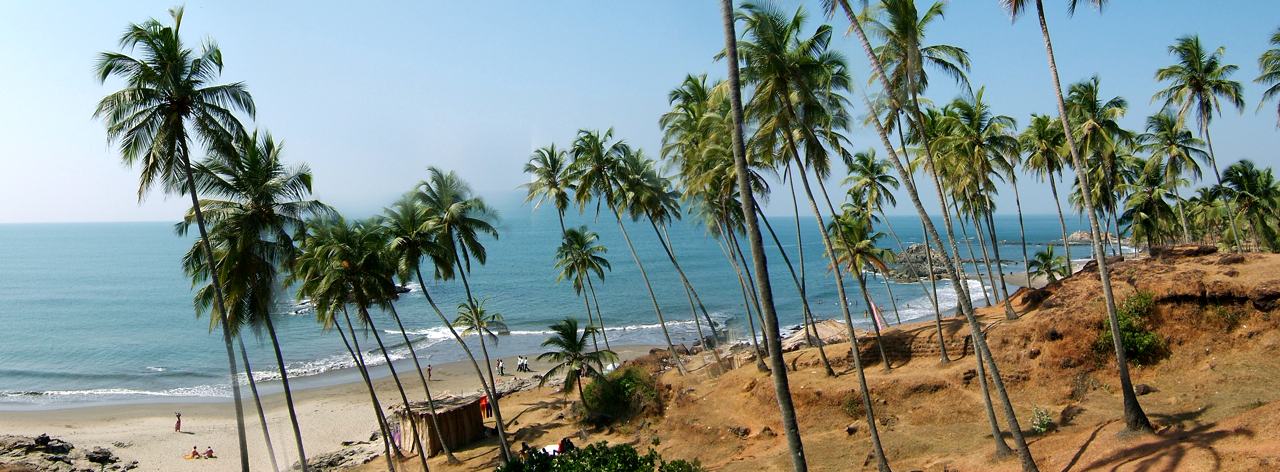
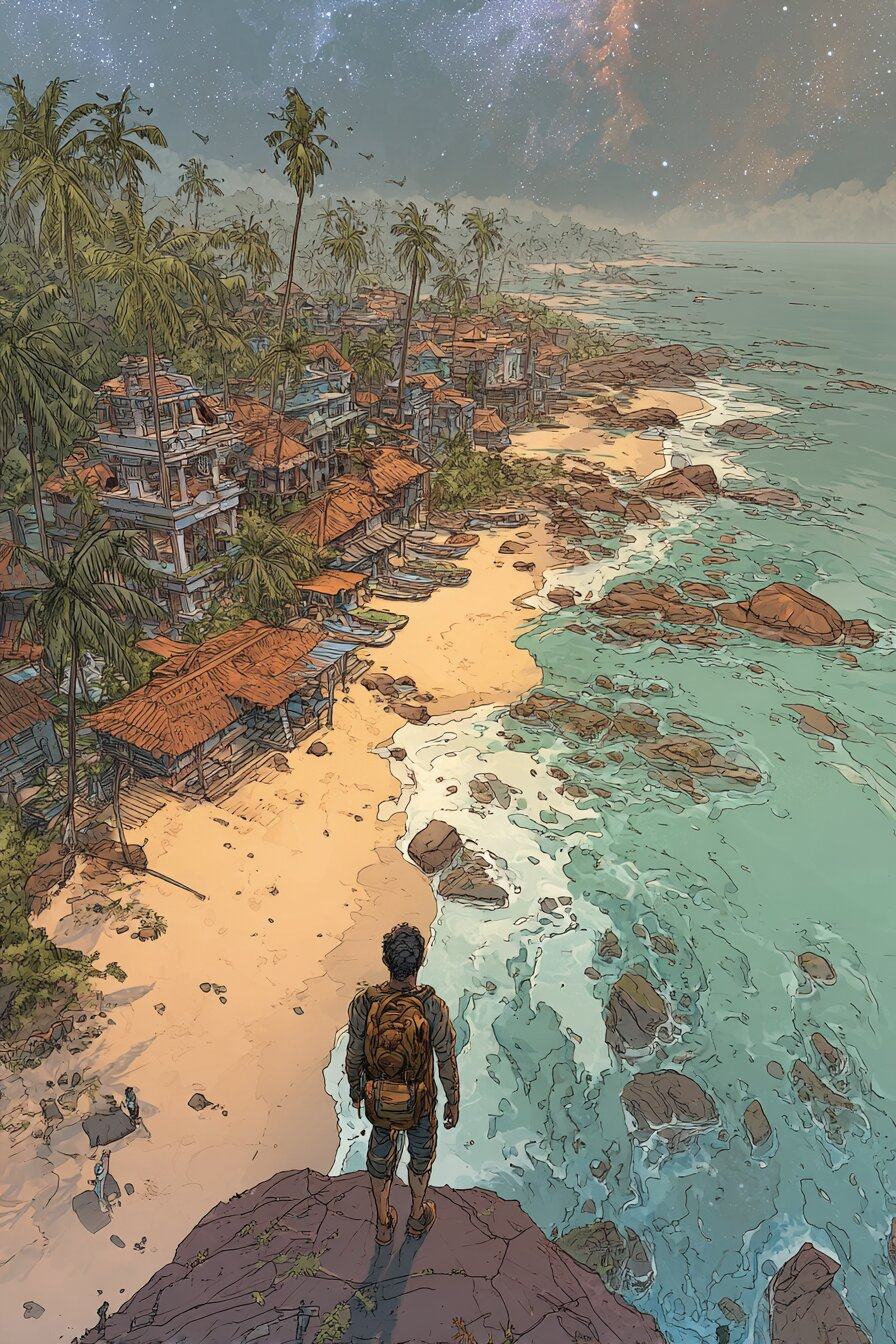
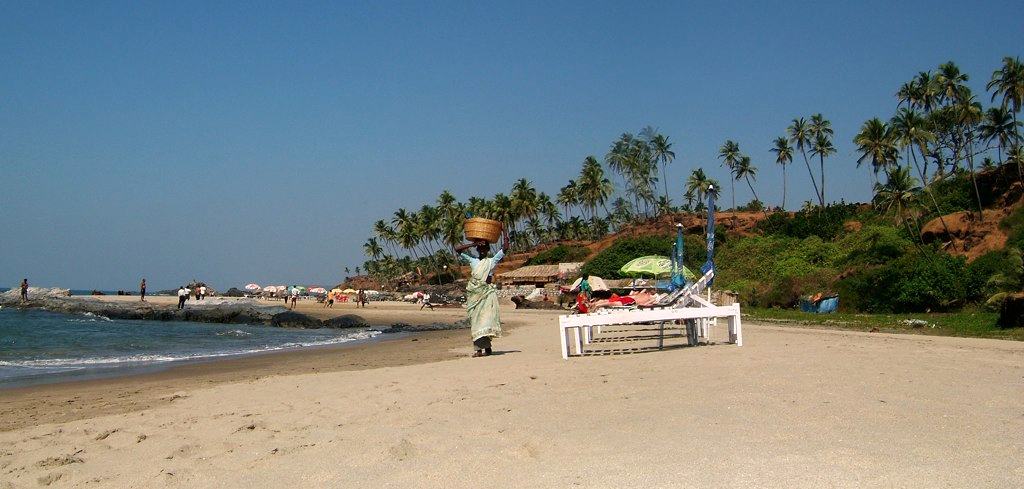
I arrived in Goa in January, just as the season was reaching its peak. The entire west coast of India had transformed into something that felt less like a place and more like a frequency, a particular vibration that existed nowhere else on Earth.
This wasn't my first encounter with trance music. I'd danced at Solstice Grove. I'd experienced the zero-equals-one revelation in Tulum. But Goa was different. Goa was the source. The origin point. The place where it all began.
You have to go back to the 1960s. To a generation of young Americans and Europeans whose minds had been blown open by LSD and whose imaginations had been electrified by Eastern philosophy. They weren't content with the materialistic, utilitarian worldview of the West. They wanted something deeper. Something older. Something true.
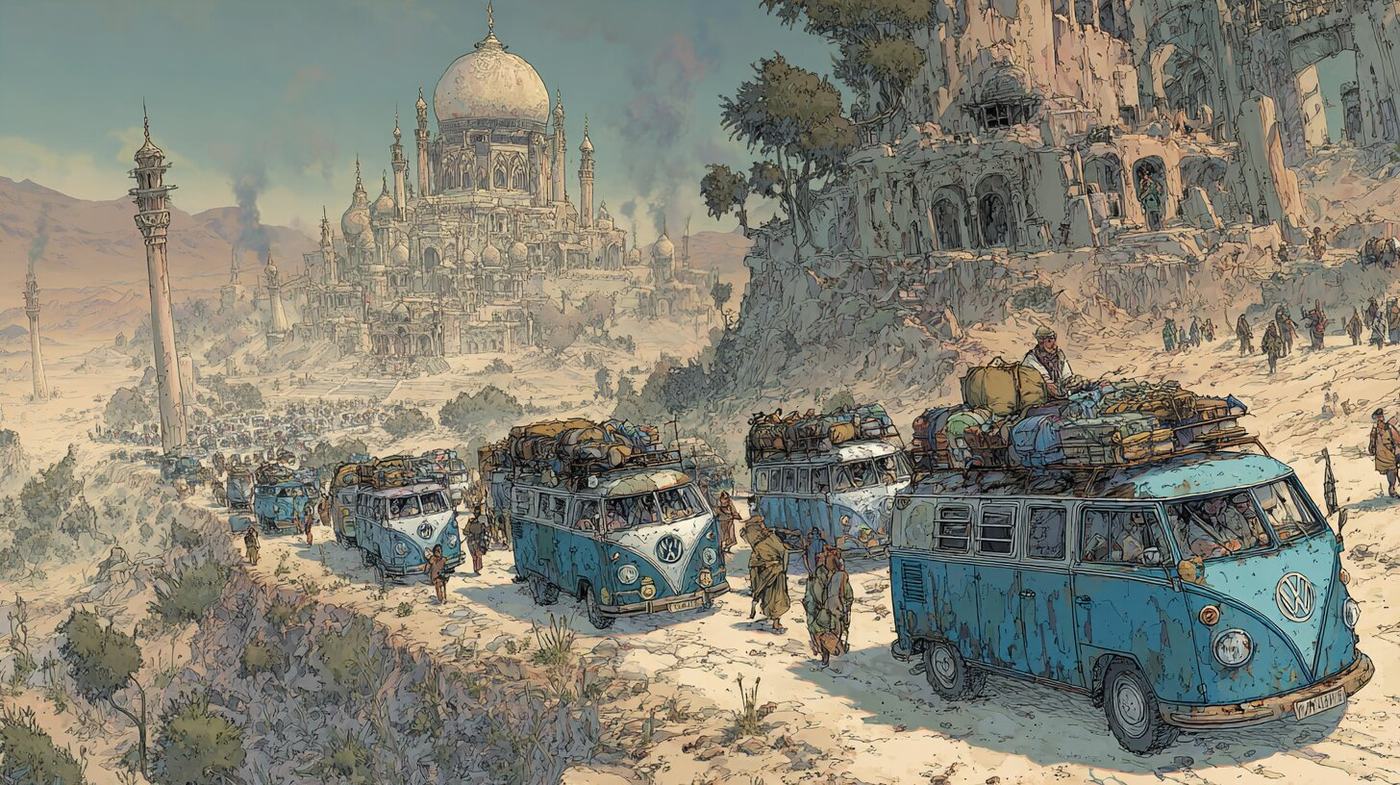
So they created caravans. Hundreds, then thousands of them, reviving the ancient Silk Road passage into the East. They traversed Turkey, Iran, Afghanistan and Pakistan, spending long summers on deserted islands and beaches in the Aegean Sea before pushing deeper into Asia. And when they reached the west coast of India, they found Goa.
Goa was different from the rest of India. It had been colonized by the Portuguese, not the British, and as a result it had a more liberal, Western sensibility. The laws were looser. The culture more permissive. The beaches pristine and mostly empty.
These travelers made Goa their new home. They built communities on the beach. They swam naked. They ate coconuts. They explored Hinduism, yoga, tantra, and psychedelic culture with the fervor of people who'd finally found what they'd been searching for.
And for a decade at least, these communities flourished.
The acid-rock music of the '60s evolved into multi-day, multi-night open-air concerts where people lost their shit completely. But then, in the mid-to-late '70s, something magical happened. Analog synthesizers and primitive sequencers were invented. Some band, legend says it was The Who, though no one knows for sure, played a concert in Goa and left a bunch of equipment behind.
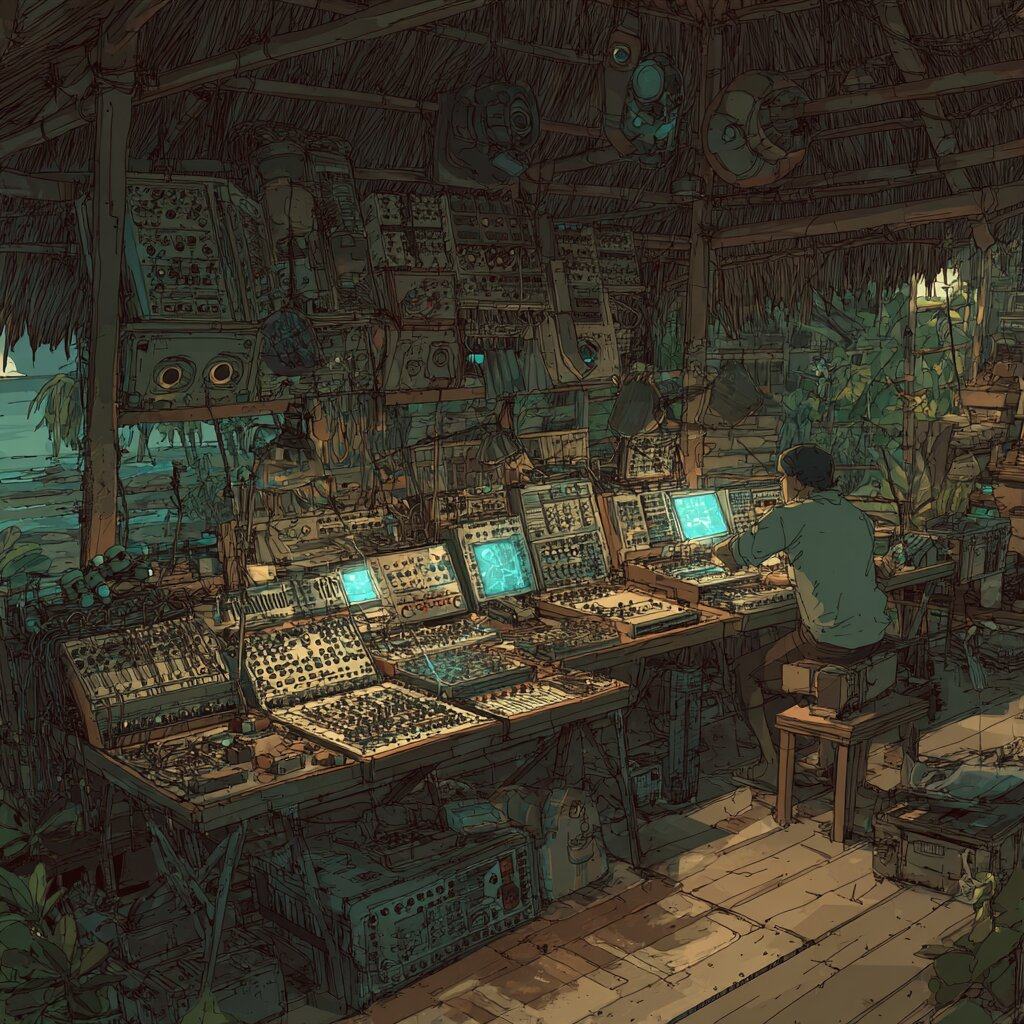
That equipment became the first recording studio in Goa.
And in the hands of a few weirdos who knew how to manipulate electrons and frequencies, something entirely new was born.
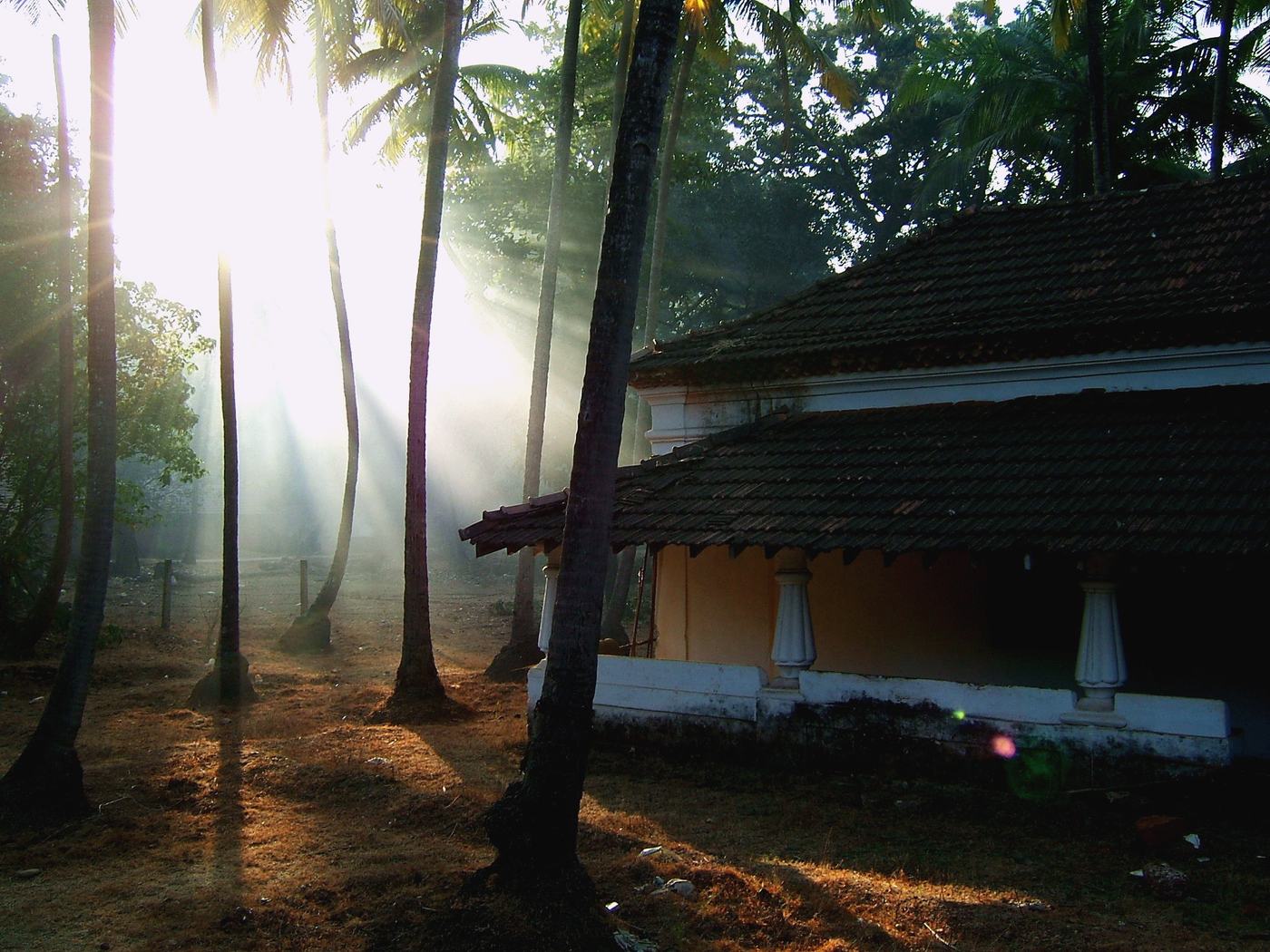
There are certain people in every scene who understand the magic before anyone else does. The wizards. The early adopters. The ones who stay around all year while everyone else goes home.
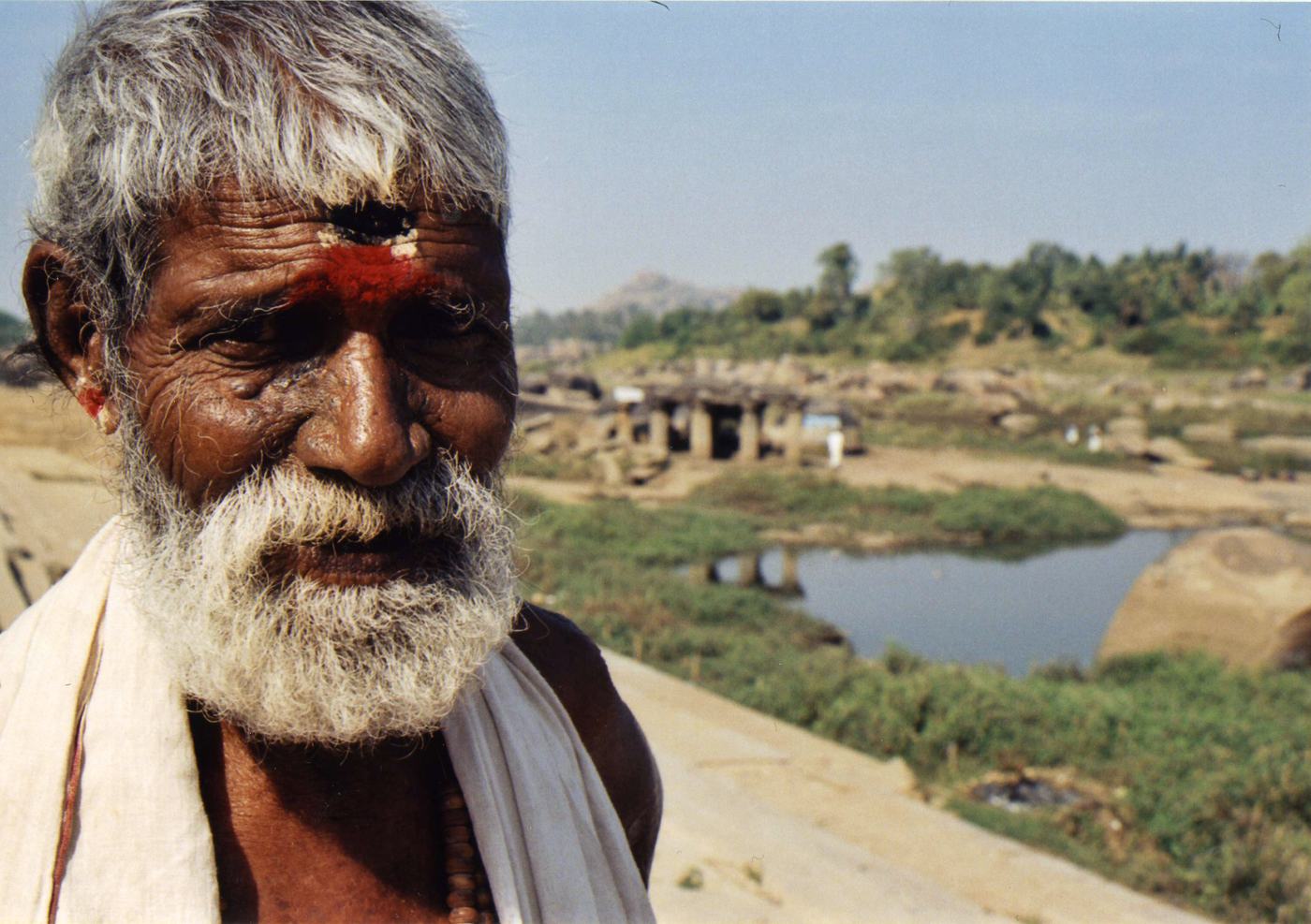
In Goa, by the mid-to-late '80s, there were a handful of producers living in remote huts, making music that no one had ever heard before. They were working with analog Moogs and digital synthesizers, exploring the relationship between mathematics and sound.
So with trance DJs at some point in history they make the first analog Moogs and then the first digital synthesizers. They realized that there were certain sounds that had certain properties that when you listen under the influence of certain drugs they would sound richer or have a certain power, a certain reverb or echo. And that amplified your hallucination or whatever. So they started to collect those sounds and create almost a specific palette of sounds and rhythms and start combining them and mimicking traditional Indian or African rhythm and beats. Kind of focused more on the ceremonial music used cross culturally across the world. So they started coming up with this sound which has a very repetitive rhythm and then kind of explosive openings and breaks. And they have these other hi-hat and high-pitched sounds that are modulating all the time and effect on another level. So you have these two levels.
What they discovered was profound.
Eastern music, especially Indian classical music, operates on a drone concept. Instead of plucking individual notes, you create a drone sound. Then you layer another droning sound on top of it. And another. And another. The accumulation of these layered drones creates echoes, reverberations, and harmonies that cannot be achieved through traditional Western melody.
This is how you create the trance feeling.
It's the difference between Apollonian and Dionysian music. Western music is structured, melodic, compositional. Eastern music is circular, meditative, ecstatic. Once these early producers understood how to emulate the droning structure of Indian music using electronic synthesizers, they unlocked something ancient with futuristic tools.
They were translating spiritual technology into digital circuitry.
I'd heard the stories before I arrived. How DAT players, Digital Audio Tape, had become the sacred vessels of the scene. DAT recorded sound at above-CD quality in real time, and just like Deadheads and Phish fans were recording concerts on DAT in America, the Goa producers were recording their tracks at the highest possible fidelity.
Because these weren't just songs. They were spells.
Sound moves air at specific frequencies. Depending on how you arrange those frequencies, you can make someone want to relax by the beach. Or you can make them want to rip someone's head off. Or you can make them want to dance for three days straight without sleep.
The producers in Goa understood this. They weren't just making music. They were manipulating the vibration of reality itself.
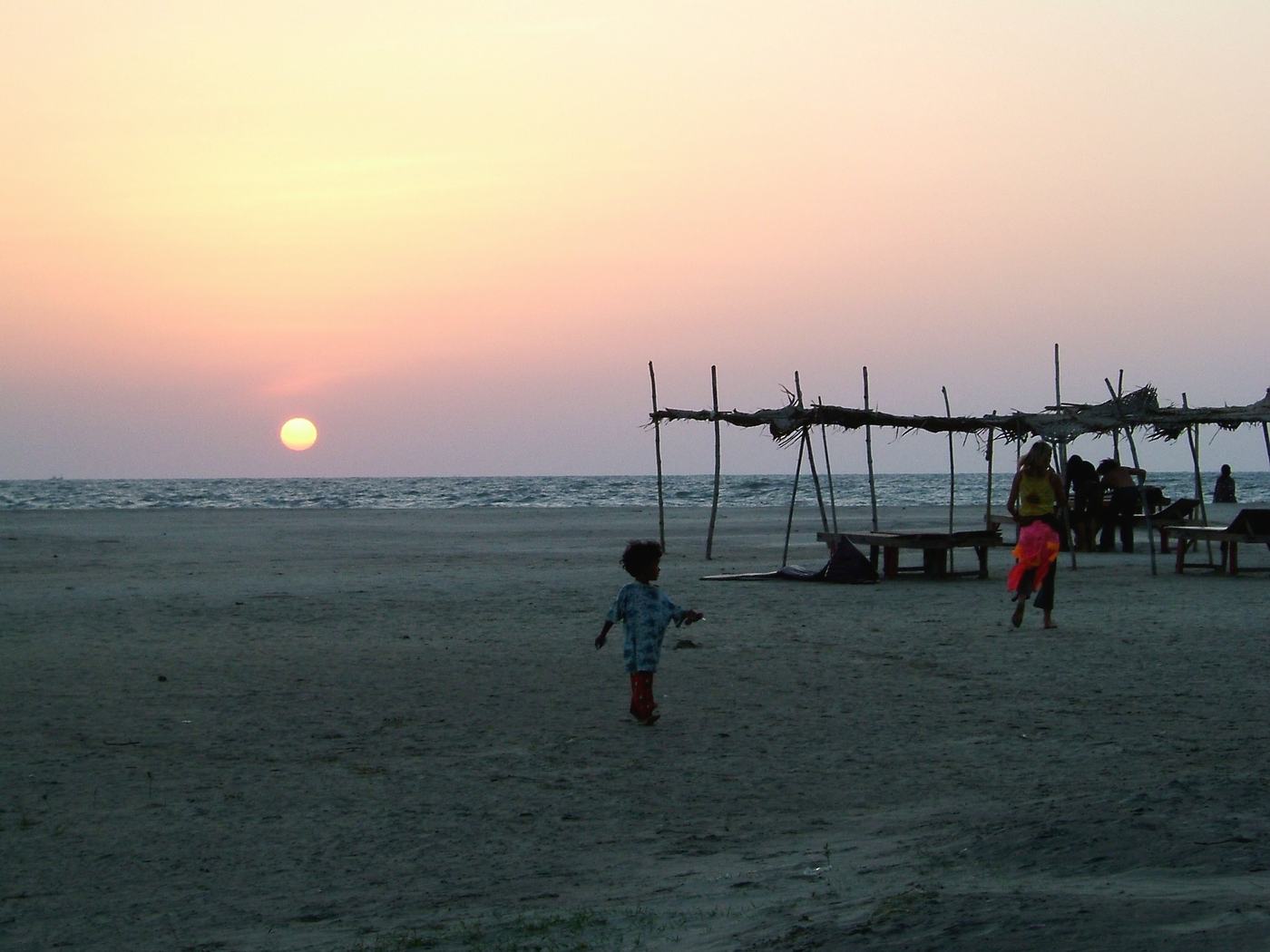
LSD allows you to zoom into the sound wave. It lets you perceive properties and characteristics of sound that are invisible in ordinary consciousness. It's like the sound comes into focus. The fuzziness resolves into a line with infinite detail.
And if you're a producer, if you're sitting in a hut in Goa with a synthesizer and a head full of acid, you start to realize: I can arrange these frequencies like a magician arranging symbols in a spell. I can create sounds that open portals. That shift consciousness. That transform the dancefloor into a temple.
But the music was only half of it. The other half was the culture.
Because in the early '90s, when trance was still underground, there was a protocol. A sacred code.
The producers would travel to festivals and parties with DAT players. You'd sit with them for hours, four, five, six hours, and you'd trade tracks. They'd give you a track. You'd give them a track. You'd listen together. You'd exchange music the way martial artists exchange techniques or skateboarders exchange tricks.
And there were rules. If a track hadn't been released yet, you couldn't share it with anyone else. If it was on a CD, you could play it publicly. But if it was unreleased, you could only play it at specific times. On specific days. In specific contexts.
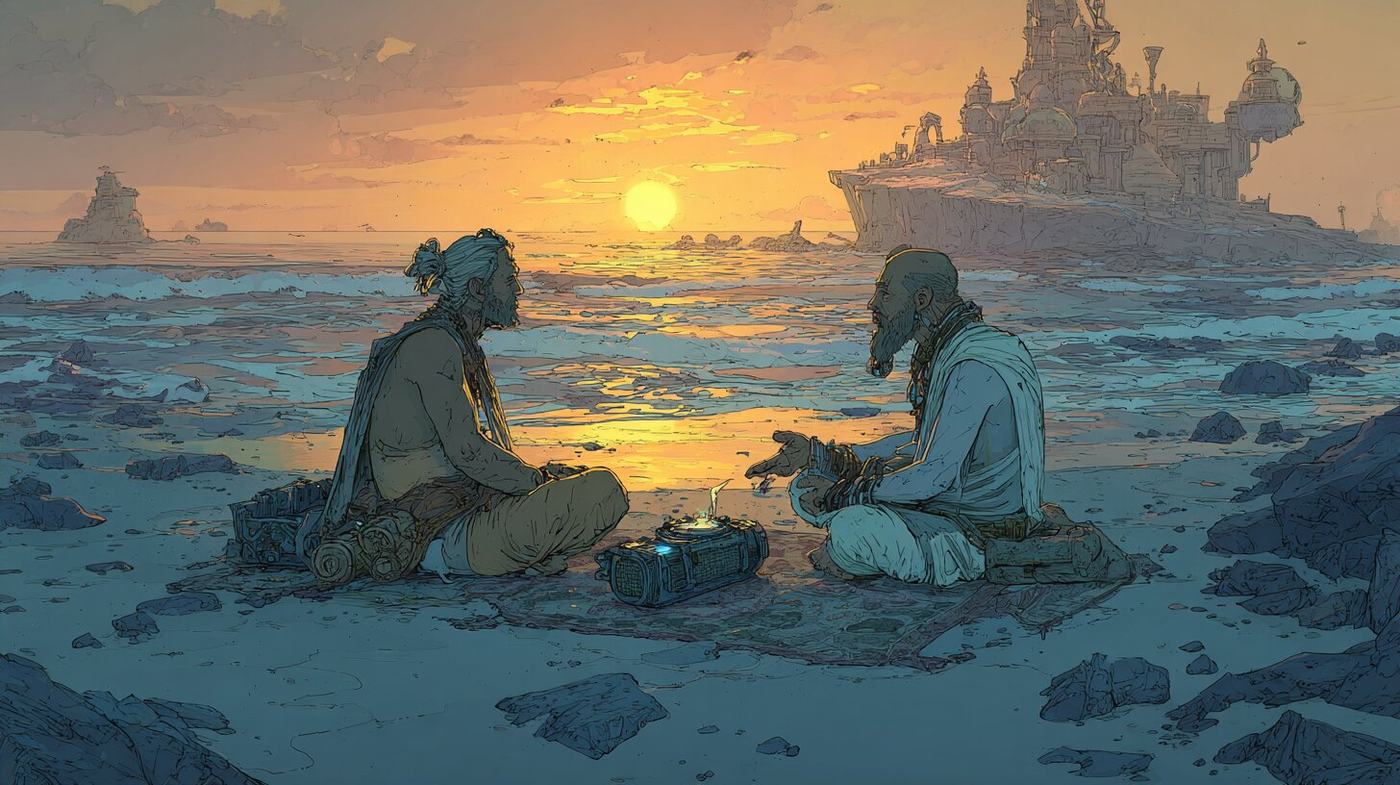
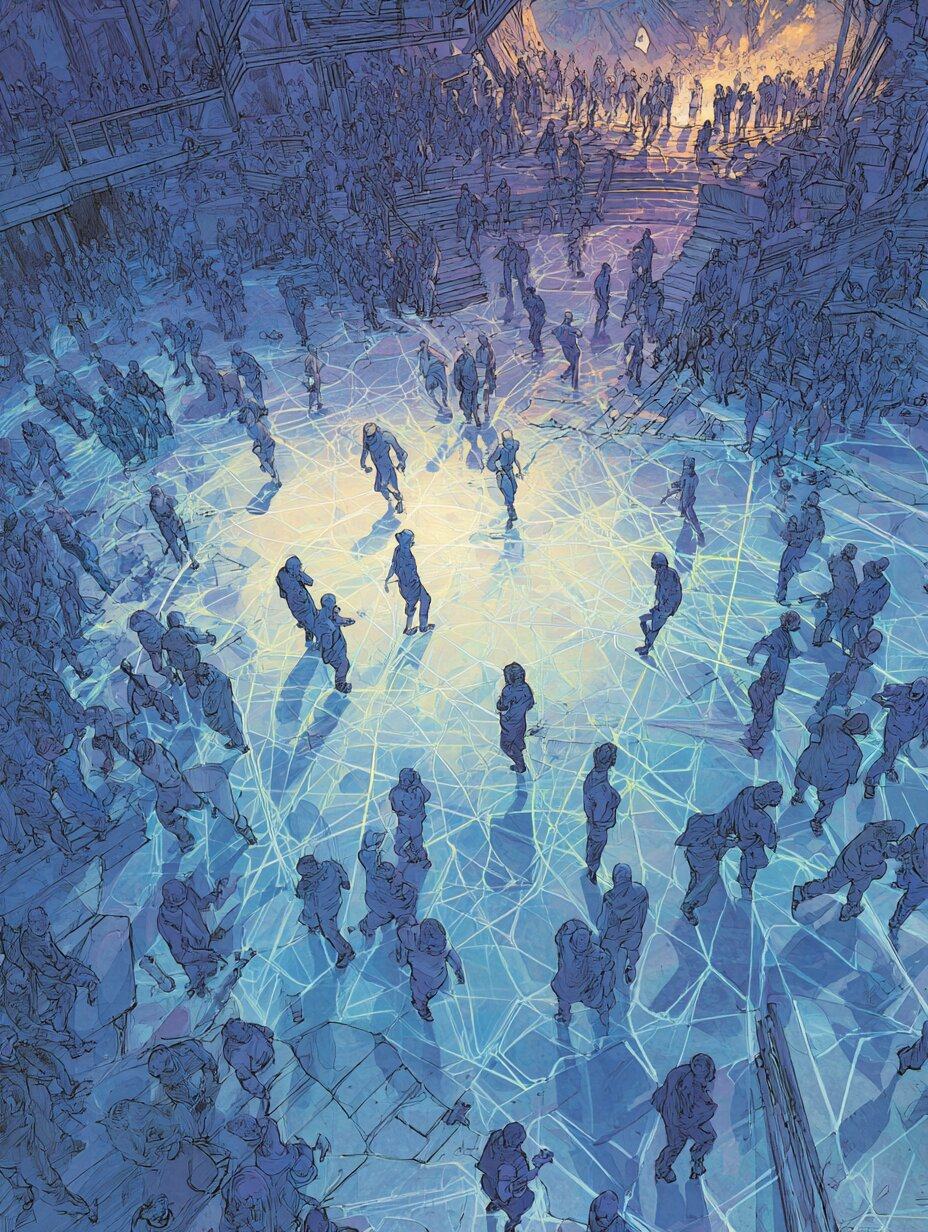
If you broke the rules, you got shunned. Other DJs would stop trading with you. You'd lose access to the spell book.
The people who made this music were the ones on the true frontier, both technologically and spiritually. They understood quantum physics and ancient shamanism simultaneously. They knew how to build circuits and how to cast spells.
And the way I see it, it's really like these little wizards traveling around the global village have found a little glitch in the matrix where if you take these sounds and arrange them in a special order and you give these people a little pill they bounce up and down for three days. This is the coolest thing. At the same time it's like an accident. It generates all this culture and movement. A cross pollination of cultures.
I met one of them on Anjuna Beach. His name was Ravi, though I'm pretty sure that wasn't his real name. He was French. Or maybe Israeli. The lines blurred in Goa.
“You want to understand trance?” he said, sitting cross-legged in the sand, rolling a joint with hashish he'd brought down from the mountains. “It's not about the music, man.”
REFUELING
That's what Goa did for me. It refueled me.
After months of traveling, after the darkness in Costa Rica, after questioning everything, after wondering if the whole journey was bullshit, Goa reminded me why I'd started.
Not for enlightenment. Not to find myself. Not to escape.
But to remember.
To remember that we're not alone. That we're part of something larger. That when we move together in rhythm, we access something our ancestors knew but we'd forgotten.
By the time I arrived, Goa's Golden Age had technically passed. The peak years were 1996 to 1999, the solar eclipses, the massive parties, the sense that something genuinely new was being born.
But the infrastructure was still there. The circuit was still alive.
And the circuit was global.
You could start in Europe during the summer. June through August, hitting underground festivals in Germany, Switzerland, Portugal. Then in September you'd fly to India. You'd buy fresh hash from the plantations in the mountains. You'd make your way down to Goa and stay through December, dancing on the beaches, trading music, living in bamboo huts.
Then, just after New Year's, you'd work your way to Brazil for the massive parties in Florianopolis and Sao Paulo. You'd spend a few months there. February, March, April, before heading to Thailand for the spring season.
And by summer, you'd be back in Europe, starting the cycle again.
It was a global tribe. A nomadic culture. And the thing that connected us wasn't nationality or ethnicity or language. It was the beat. The mathematics. The primitive, universal connection we all have to rhythm.
And because the music was instrumental, no lyrics, no cultural specificity, no language barrier, anyone from anywhere could plug in. A Brazilian could dance next to a Russian next to an Israeli next to a Japanese traveler. And the only thing that mattered was whether you could surrender to the rhythm.
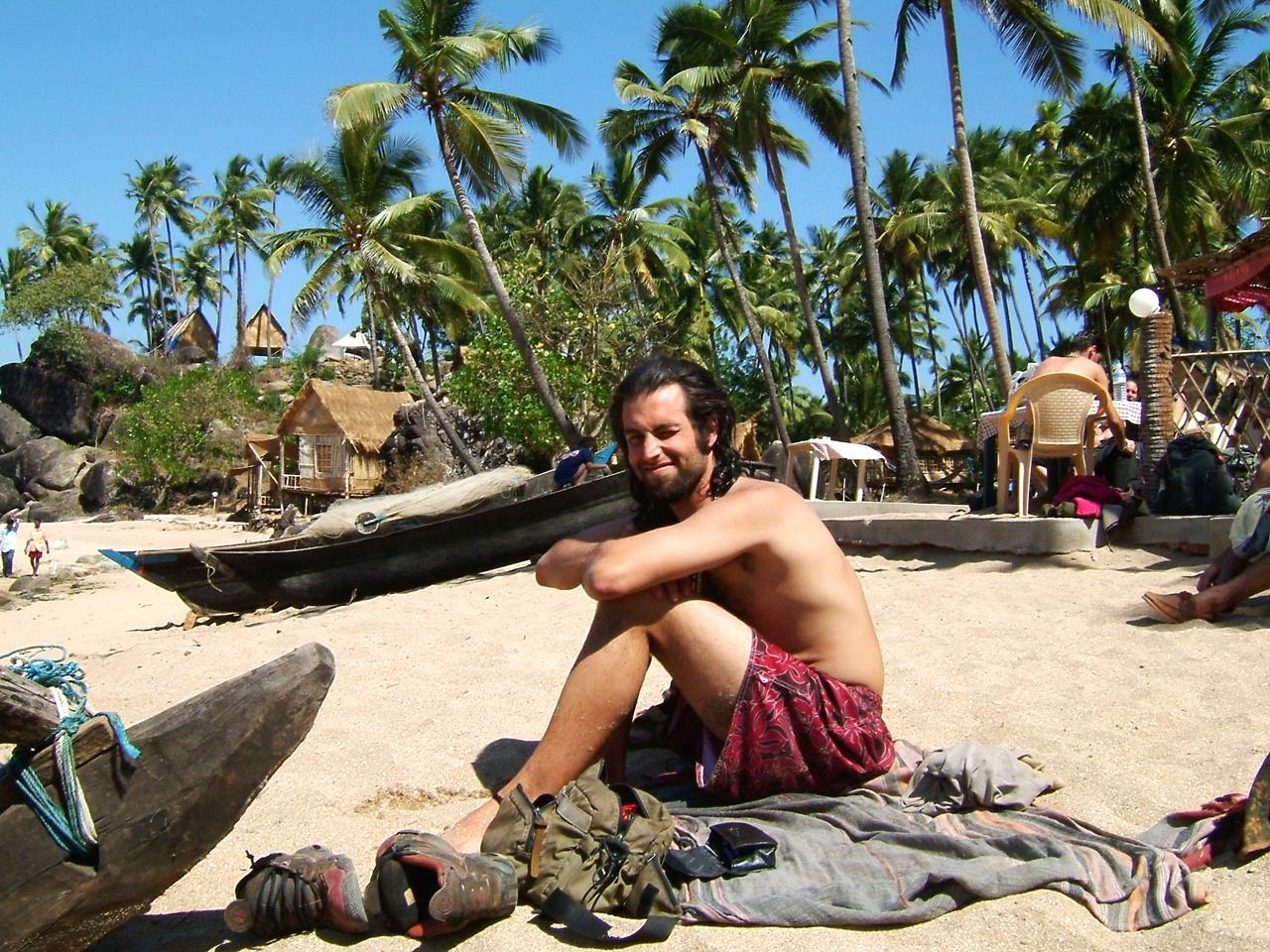
The party was a stage on which the participants could externalize the turbulent vigor of their idealistic generation. Through ecstatic celebration of the paradoxical union of individuality and the infinite, they externalized their emotions through dance. The dance as a result cleansed the participants, inspiring them, comforting them, bonding them in a collective dream they experienced through motion. It was the living paradox that legitimized all the rest of the game; it was the accident that needed to happen in order for the rest of the story to work as it had evolved.
The sacred experience has no guarantee of its success, and the dangers that partly define a paradoxical experience are ever so present and potently powerful. This is precisely why mystical traditions of the past have had sacred rules that governed the practice of their rituals. In ancient Greece, the one rule we know about, at least, is that it was punishable by death if one spoke about the mysteries. These rules served as the axioms of this otherwise uncontrolled experience, and in many ways they determined the overall quality of the experience. If the rules were not honored and the participants indulged in the experience unconsciously, they cheated themselves of the cleansing properties of the ceremony. Trance parties are in danger of degenerating into hedonistic, senseless congregations; due to the marginal role they have in society, there is a lack of authoritative initiative, mythology, and an absence of any official axiomatic principles. The pure, creative, and selfless offering should occur as a sacred phenomenon and not like a disco under the coconut trees.
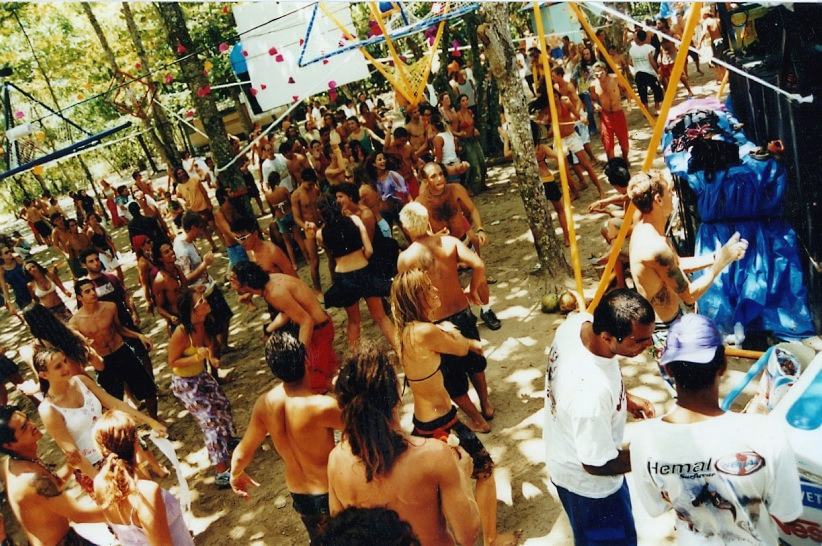
On my third night in Goa, I went to a party in the jungle.
The party started at sunset and didn't stop until two days later.
I took a small dose of LSD around midnight. Not enough to lose myself completely, but enough to open the aperture. To see the mechanics of what was happening.
And what I saw was this:
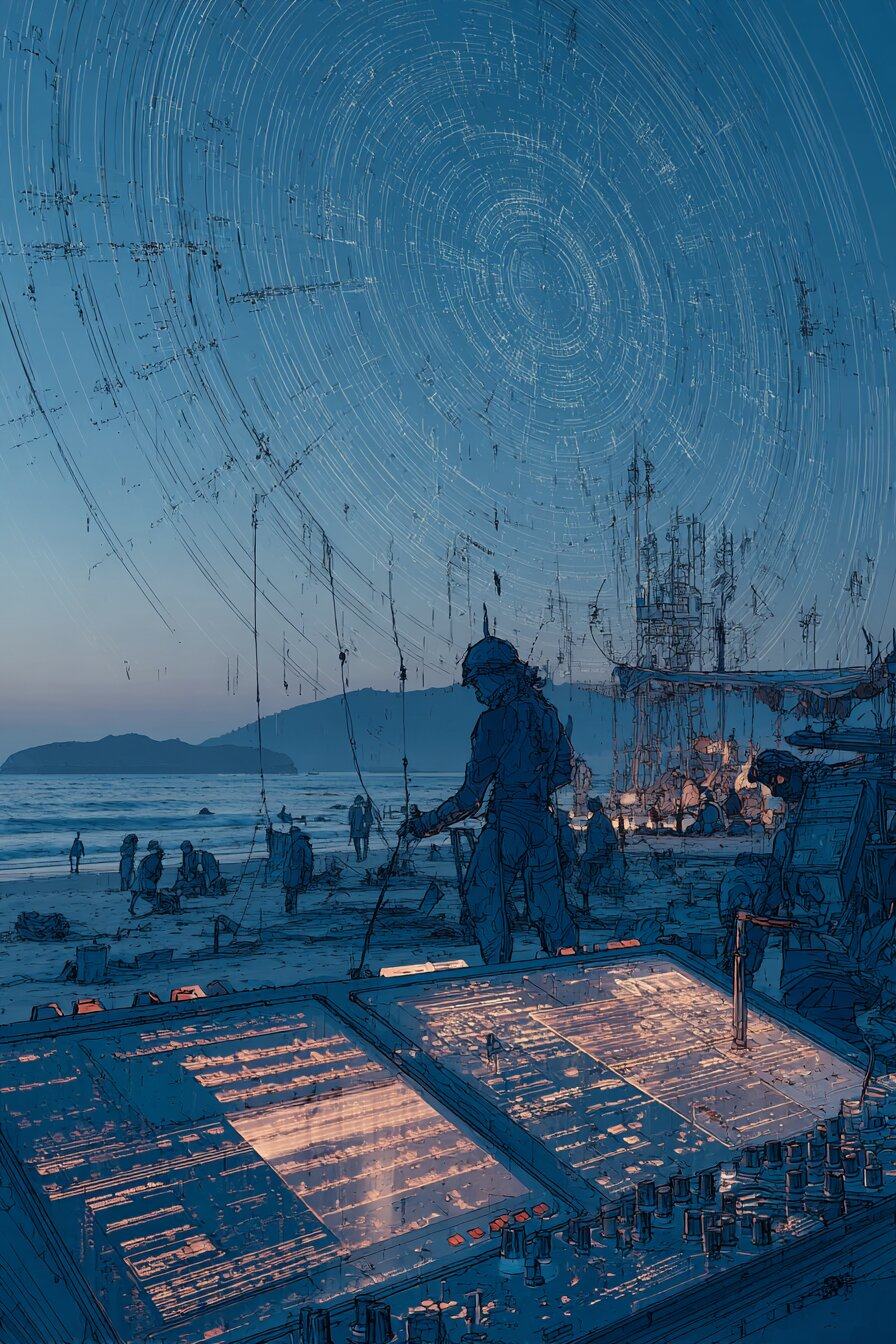
The DJ wasn't just playing music. He was conducting energy. He was reading the crowd, sensing when to build, when to release, when to take us deeper, when to bring us back. He was manipulating our nervous systems in real time, using sound as the interface.
And I could see it happening.
Not metaphorically. Actually see it.
The DJ up there in the booth? He was manipulating those fields with surgical precision.
Every bass hit sent a shock wave through our chest cavities, physically vibrating the water in our bodies. Every high frequency activated neural pathways, releasing cascades of neurotransmitters. The sound wasn't just hitting our eardrums, it was restructuring our electromagnetic fields as we stood there.
And we were responding. Syncing up. Our individual fields merging into one massive, pulsing, collective field.
That's what a dancefloor is. That's what's actually happening beneath the surface.
You're not just hearing the music. You're being played by it. Your nervous system is the strings, and the DJ is conducting which ones vibrate at which frequencies.
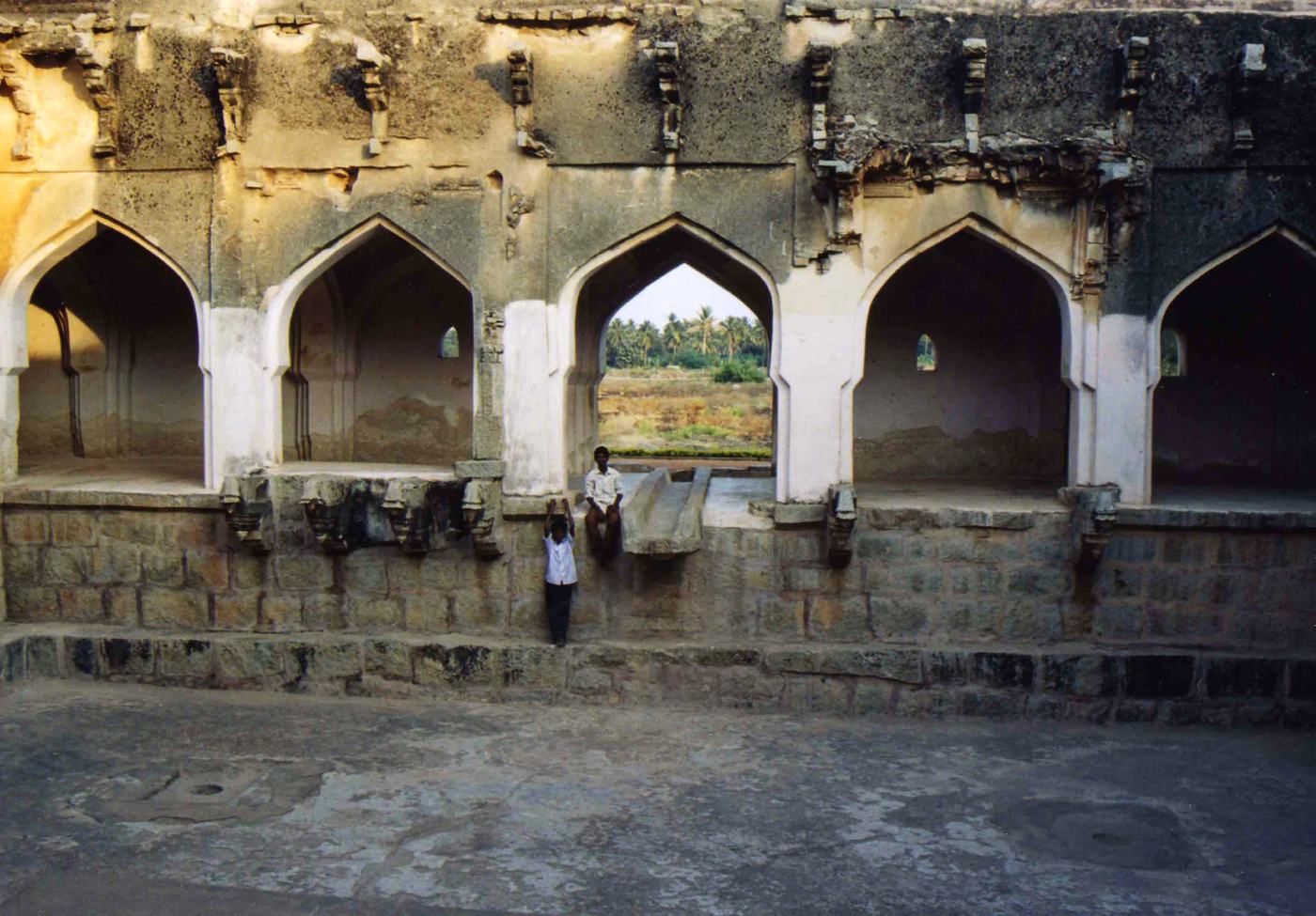
And when everyone on the dancefloor syncs up, when five hundred people all lock into the same rhythm, the same frequency, something emerges. Something bigger than the sum of its parts.
Every dancer on that floor was burning with the fuel of their own aliveness, their own electricity, their own consciousness expressing itself through motion. The DJ was the gravitational force holding it all together, not performing for us, but part of the system.
On the dance floor I learn a lot of things about human behavior, because I can see people's archetypes and I can feel them through their body. I imitate their body language in my body. I can understand who they are when they are dancing, depending on how they are dancing. Not as a consequence of their physical structure or their psychology, but how they are enjoying themselves. Is it a self-indulgent, egoistic celebration of their own fetishes? Or is it an honest celebration of being alive, sort of saying, god, look at me, I am a creature that has the ability to dance and move my body to sound in a harmonious and graceful way. And I'm doing this for you, because I'm happy to be alive, and I can't believe the magic of what it is to be alive.
That's what a star means in modernity. Not fame or being seen. But finding your frequency, your natural vibration, and expressing it so fully that you become visible not to other people's eyes, but to the universe itself.
That's what I saw on that dancefloor.
Not just people dancing. But stars being born. One by one. Each person shedding their inhibitions, their fear, their need to be anything other than what they were. And in that shedding, they started glowing.
Literally glowing.
Their electromagnetic fields became brighter, more coherent, more powerful. You could see it if you looked closely enough, or if you were on enough acid. This subtle radiance emanating from people who'd fully surrendered to the music. To themselves. To the moment.
And when they moved, when they danced, they were tracing patterns in the electromagnetic field. Writing spells with their bodies. Each gesture, each spin, each jump creating ripples that spread outward, affecting everyone around them.
We weren't separate. We were one organism. One massive electrical storm, synchronized by sound, expressing itself through five hundred different bodies.
And we weren't just dancing. We were offering ourselves. We were participating in something ancient, dressed up in futuristic clothing. A ritual that had been passed down through millennia, now mediated by machines.
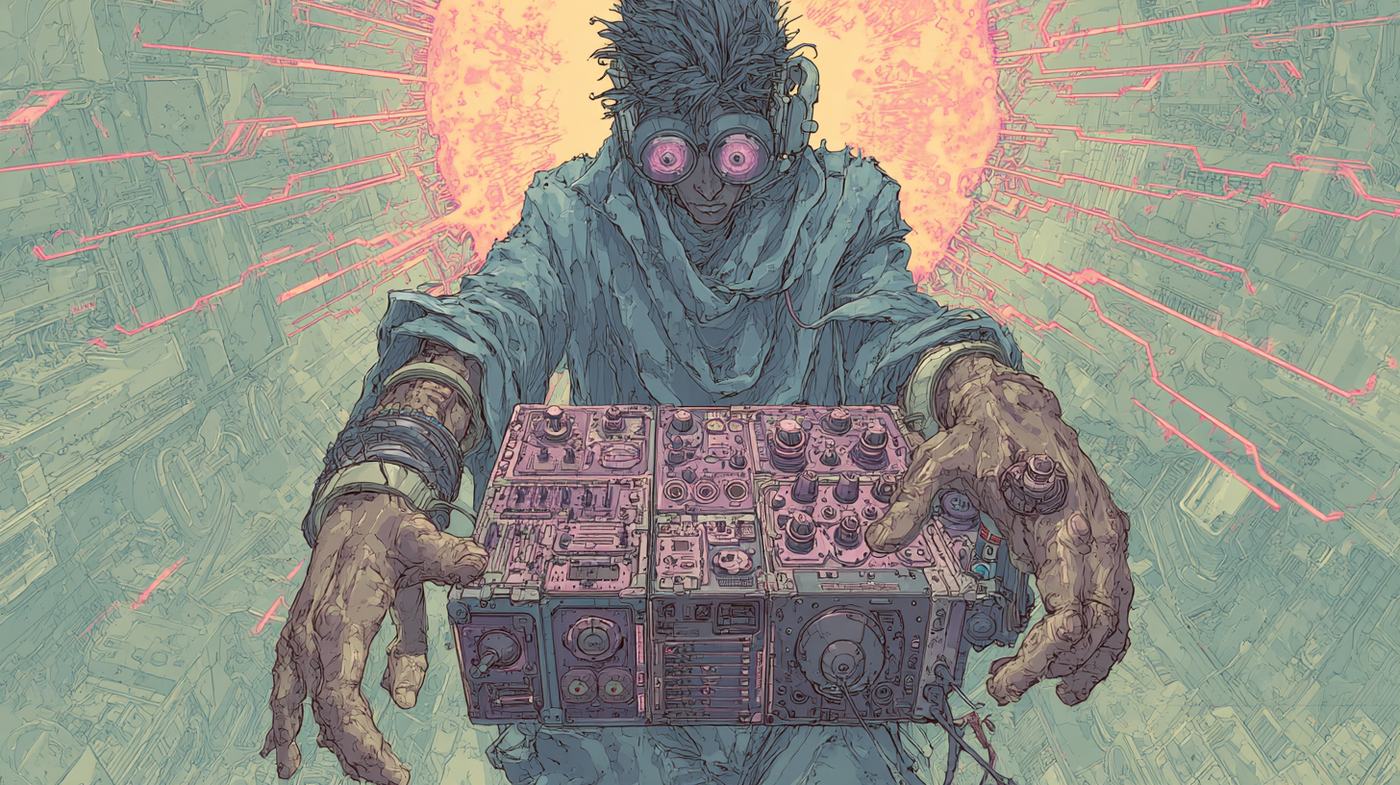
At one point, around 4 a.m., the music dropped into a deep, droning bass. The kind of frequency you don't hear so much as feel in your chest. And layered on top of it were these high-pitched, modulating synth lines, spiraling, echoing, creating harmonics that seemed to fold space.
And I understood.
This was what those early humans must have felt when they first discovered rhythm.
Music was never just entertainment. It was proof of consciousness. Proof of something divine moving through us.
And here, in Goa, at the turn of the millennium, we were doing the same thing our ancestors did. Except instead of rocks and sticks, we had synthesizers and speaker systems. Instead of caves, we had beaches and jungles. Instead of shamans, we had DJs.
But the spell was the same.
The mornings, at sunrise, is the most powerful moment, the conquering of light over darkness. But I also like to see it from outer space. I see that shadow of the earth rotating slowly, half of the earth in the side of the sun. And all these people together, dancing, bopping, and that line appears, the moment where dawn starts and light appears. All those people are standing together on a cosmic rollercoaster. And they are like: one more day! And the cogs of the cosmic clock turn.
WHY WE DANCE
I started thinking about why humans dance. Not just in Goa. Everywhere. Always.
Because dancing isn't optional for our species. It's fundamental.
Every culture that has ever existed has danced. Some have no written language. Some have no permanent settlements. Some have no formal religion. But all of them dance.
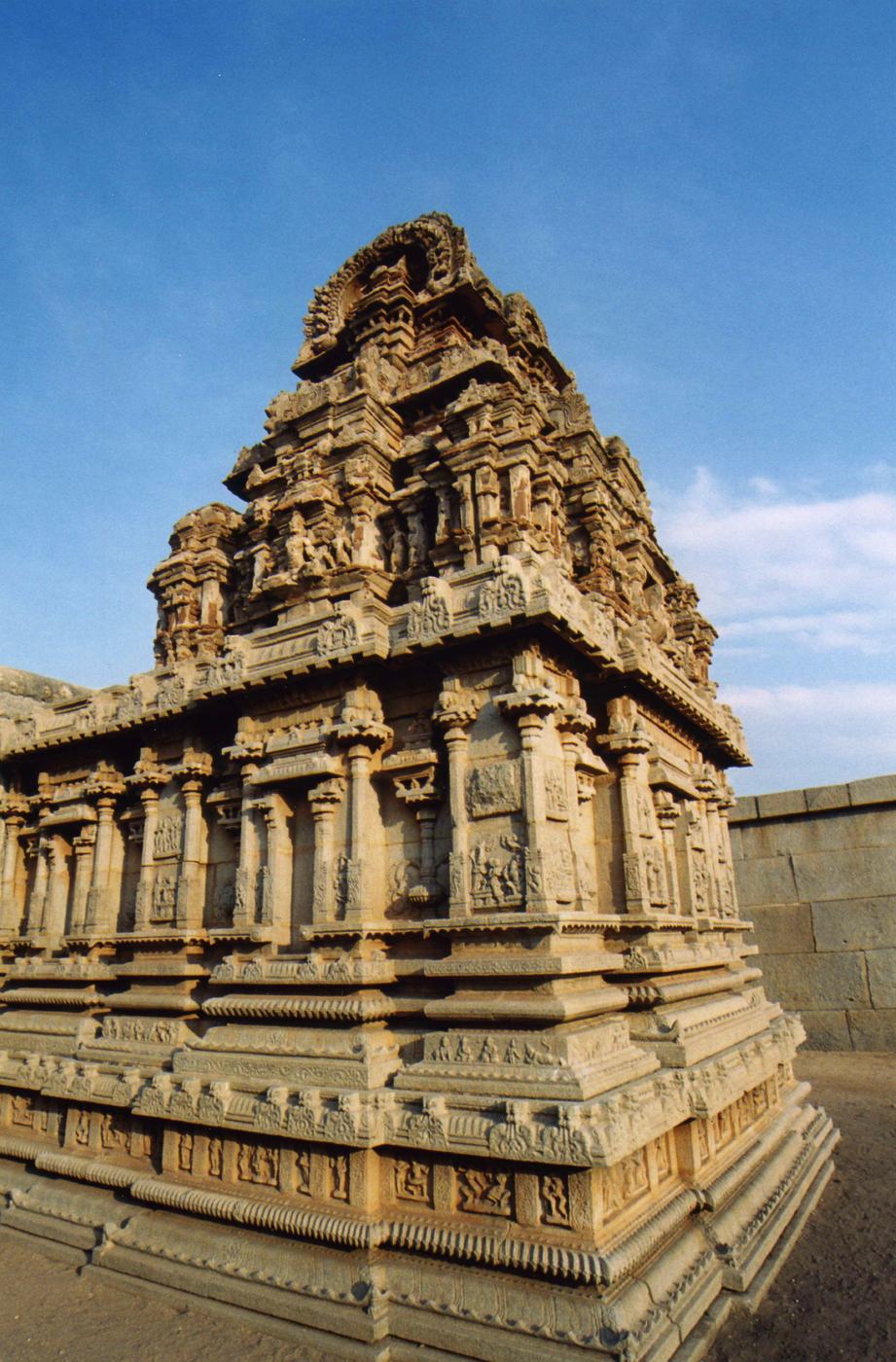
Why?
Two answers. The first is about who is watching.
WITH AUDIENCE VS. WITHOUT AUDIENCE
But here's the thing: traditional ritual dance wasn't a performance. There was no stage. No audience. No separation between dancer and watcher.
Everyone danced. Everyone participated.
The shaman or the priest might lead the ritual, but they weren't performing for you. They were performing with you. You were part of the spell.
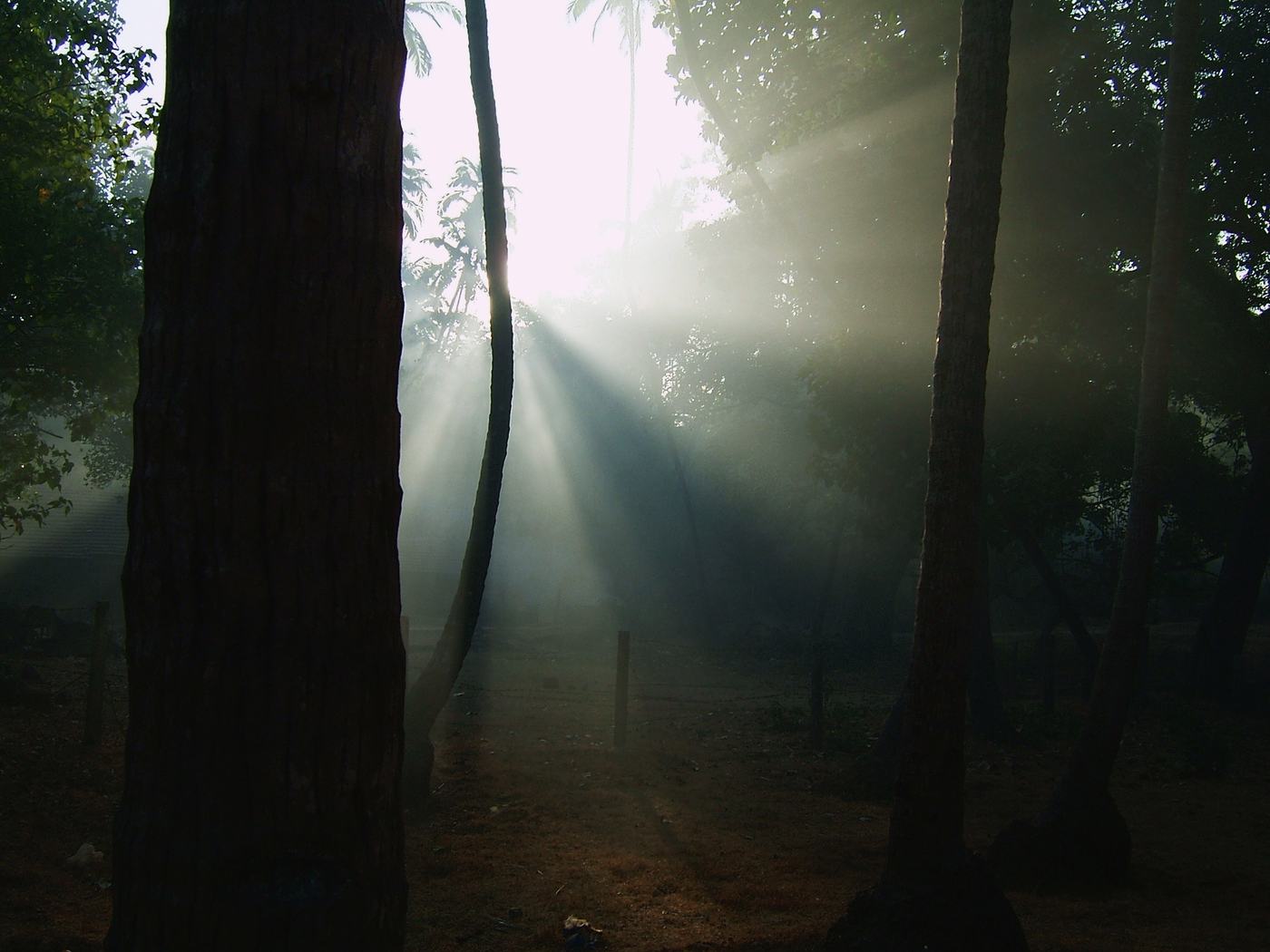
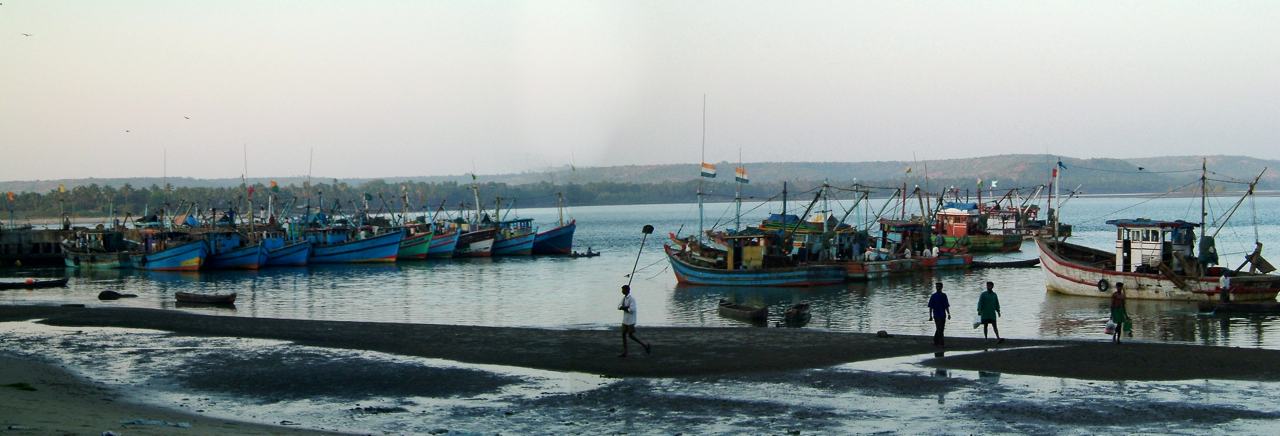
But on the dancefloor at the trance party? No stage. No spotlight. No one watching because everyone was dancing.
You weren't there to be seen. You were there to disappear.
The next morning, walking back to my hut along the beach, I passed a cluster of bars that were just starting to fill up for the day shift.
On a makeshift stage outside one of them, a girl was dancing. Western, maybe nineteen or twenty. Bikini top, sarong hanging low on her hips. She was moving to some generic house music, gyrating in a way that was designed to capture attention. And it worked. A crowd of men had gathered, watching her. Drinking beer. Whistling.
Something about it made me uncomfortable.
Not because of the dancing itself. But because of the energy. The transaction. She was performing for them. Using her body to extract something, attention, money, validation, from the audience. And they were consuming her. Objectifying her. Reducing her to the sum of her movements and her flesh.
It was the opposite of what I'd experienced the night before.
I like the story of the ballerina and the stripper, to illustrate this path and this point. It basically comes down to the fact that you have a stripper and a ballerina. They are both moving their bodies in accordance to music and are capturing people's attention with their eyes. There is something different about how each one is doing it. A stripper is using cheap tricks that is appealing to the most basic, biological, Dionysian part of our brain. And yet if I were to use that same technique of trying to jump into their mindset by feeling them in my mind by how their body posture works, there is something vulgar and cheap about the process because they are enjoying themselves too much. There is not enough effort, anyone can do that. Yet a ballerina or a professional dancer of some sort which is disciplined and developing their own unique style, one can feel the discipline that one has done in order to achieve that level of skill and grace and beauty. There is a very different vibration between the viewer and the subject viewed. The gaze between the two is a different sort of gaze and it is instigated by the performer. Some people like to refer to the chakras. One is appealing to a lower chakra than the other.
It's the same with the dervish.
I'd seen Sufi whirling dervishes in Turkey years before. Men in white robes spinning in circles for hours, arms outstretched, eyes closed. They weren't performing for an audience. They were performing for God. The spinning was a form of prayer. A meditation. A way to dissolve the self and merge with the divine.
And when you watched them, you felt it. That they were somewhere else. That they'd transcended the physical plane through sheer commitment to the practice.
That's what the trance dancers in Goa were tapping into. Not the stripper energy. The dervish energy.
Here's what I realized:
It seems like we've had this urge to fight one another that has led to all wars from the beginning of human civilization. Dance and festivals as a whole were the antidote to war, a way to calibrate the forces of darkness with the light that emanates from inside each one of us when we are in a state of flow, and we connect to that eternal history of dancing. That is what gave us civilization itself, dancing out of the animal kingdom.
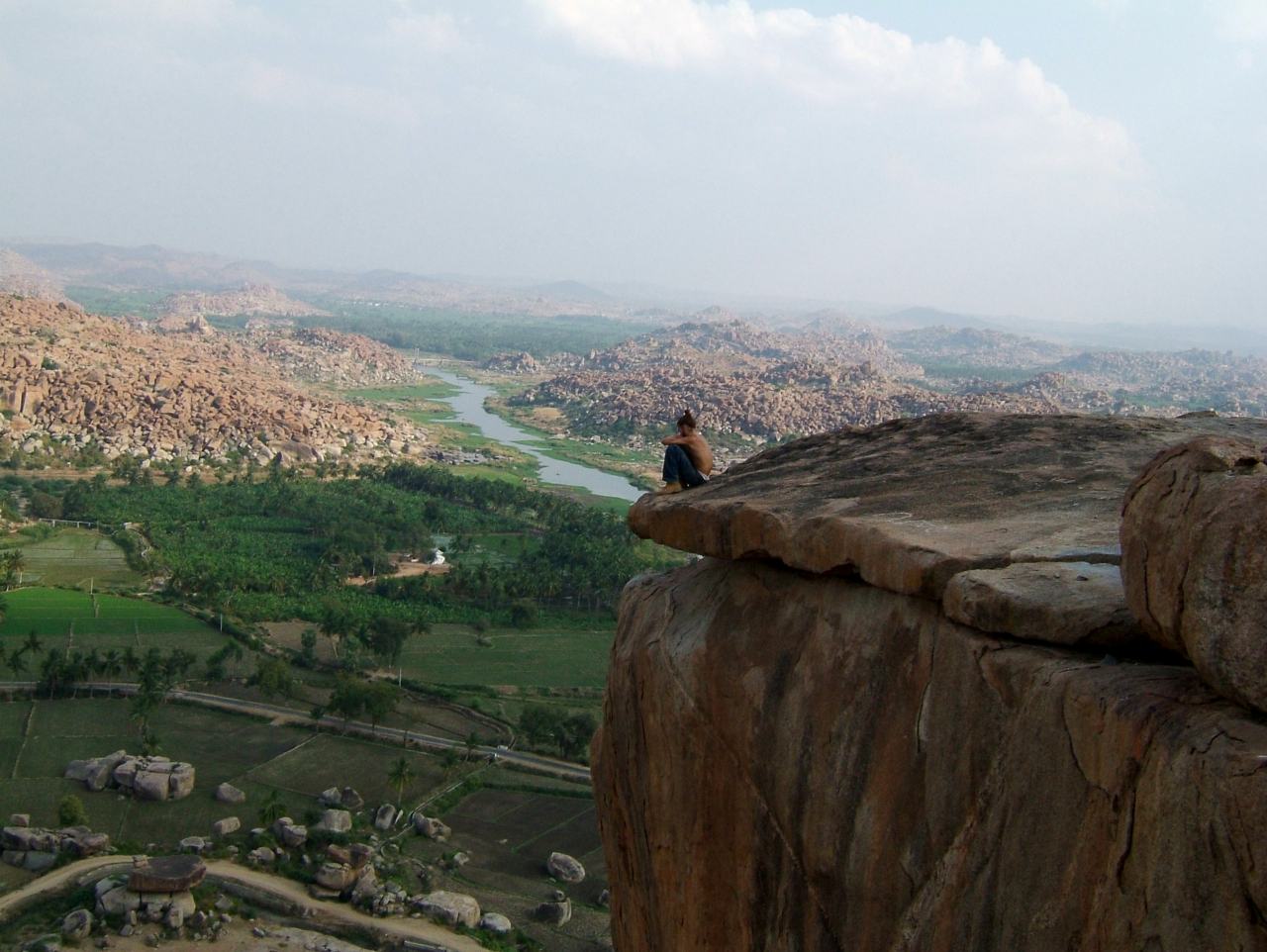
Looking back now, sitting in this apartment in New York with Akiko typing as I dictate, I can see how Goa fits into the larger story.
Because Goa wasn't just a party destination. It was a node in the global network. A pressure point on the body of the Earth where a specific frequency was being generated and amplified.
And that frequency was spreading.
Not music you watch. Music you become.
Not the stripper. The dervish.
Not the gaze of objectification. The gaze of transcendence.
By the time I left Goa, I'd traded away most of my possessions. I gave my backpack to a kid from Germany. I gave my camera to a girl from Brazil who said she wanted to document the scene before it disappeared.
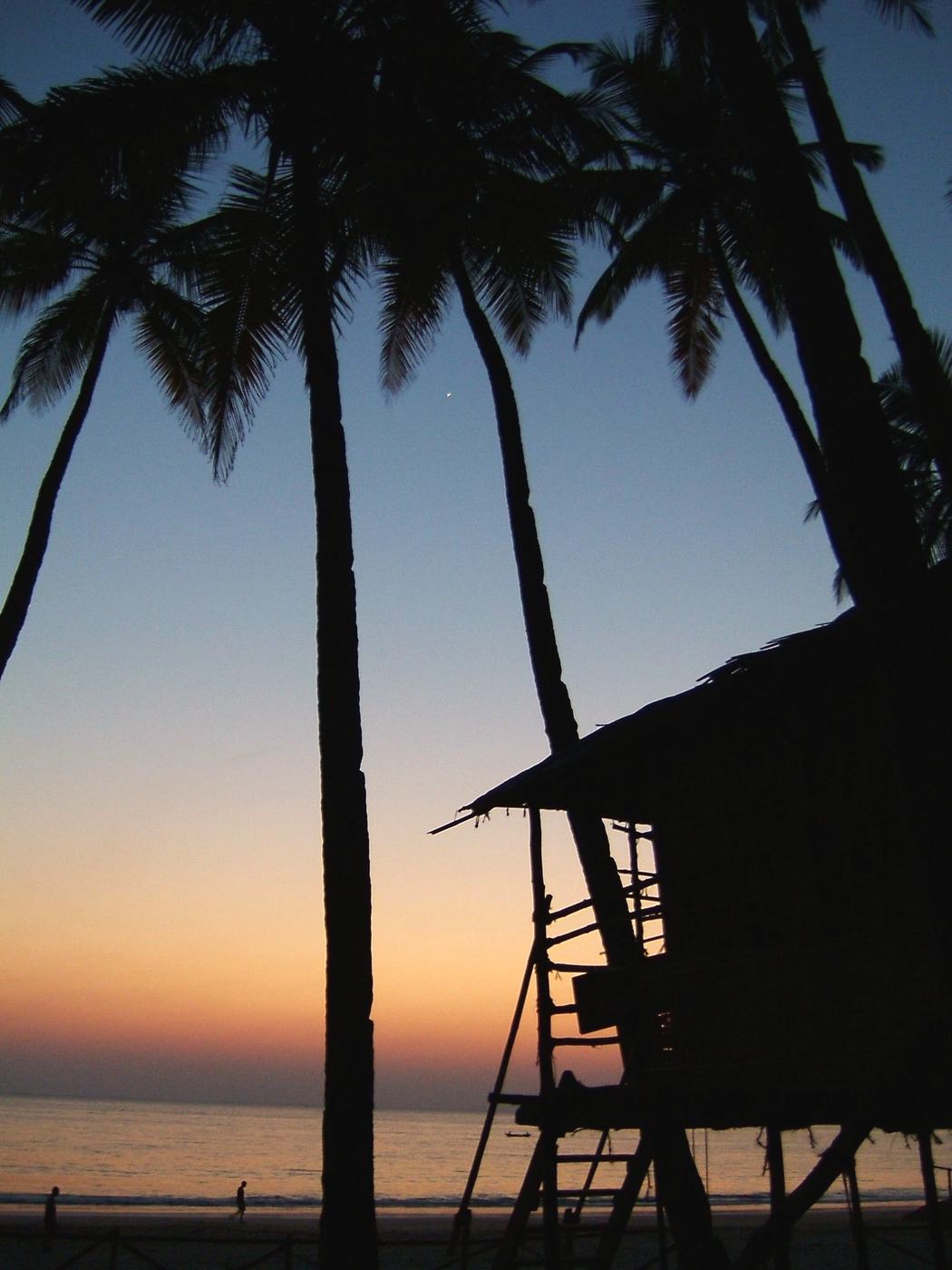
I didn't need them anymore.
Because the thing I'd come to India looking for, proof that there are good people everywhere, proof that faith can be restored, I'd found in abundance. Not just in Pushkar with Vishnu and the miracle of my passport. But here, in Goa, in the global tribe that gathered every year to remember what it means to be human.
I left with nothing but a DAT tape a French DJ had given me. A recording of a six-hour set from a party I'd danced at but couldn't fully remember.
“Play it when you get home,” he said. “When you're back in Babylon. When you forget what this felt like. Play it and remember.”
I still have that tape.
I've never played it.
Because some spells are too powerful to cast alone.
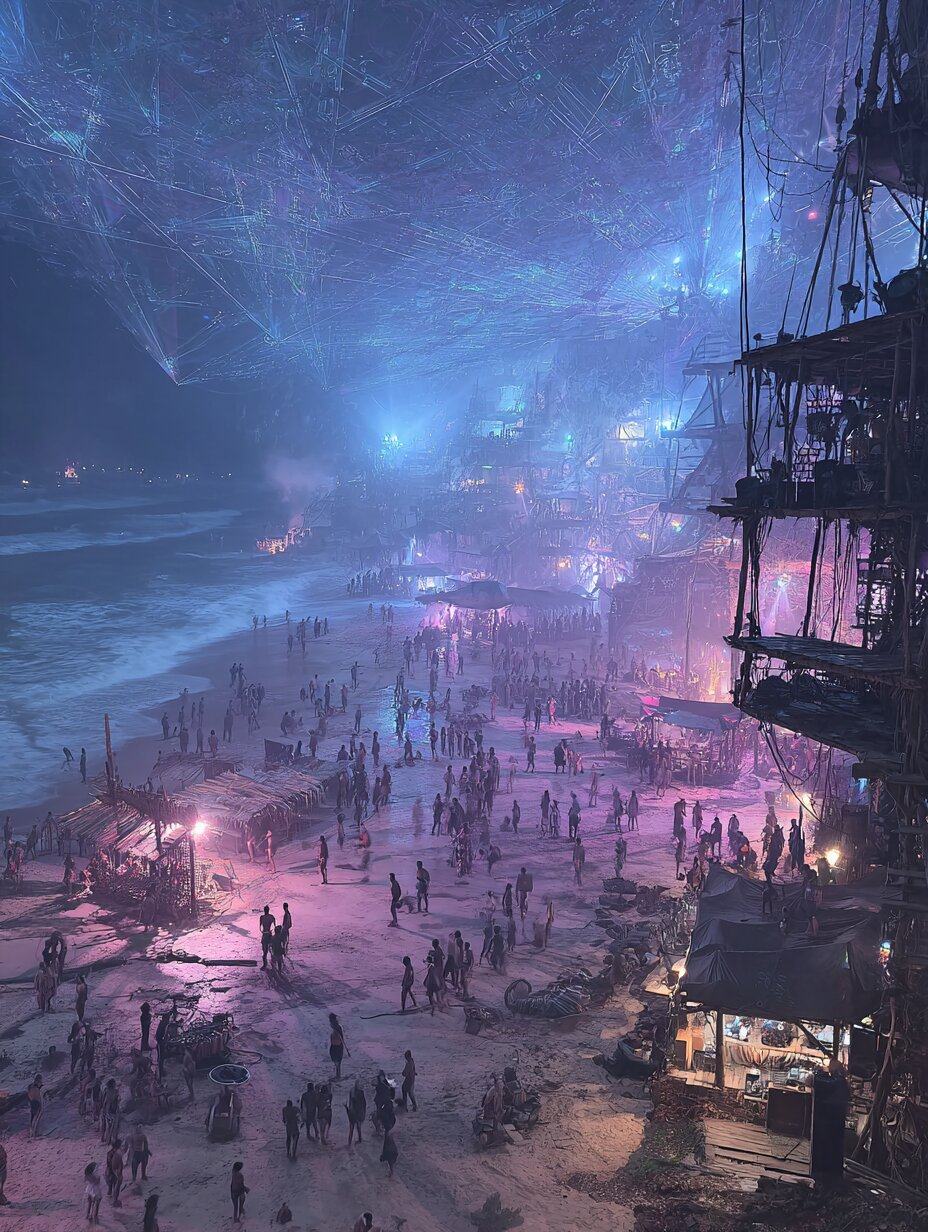
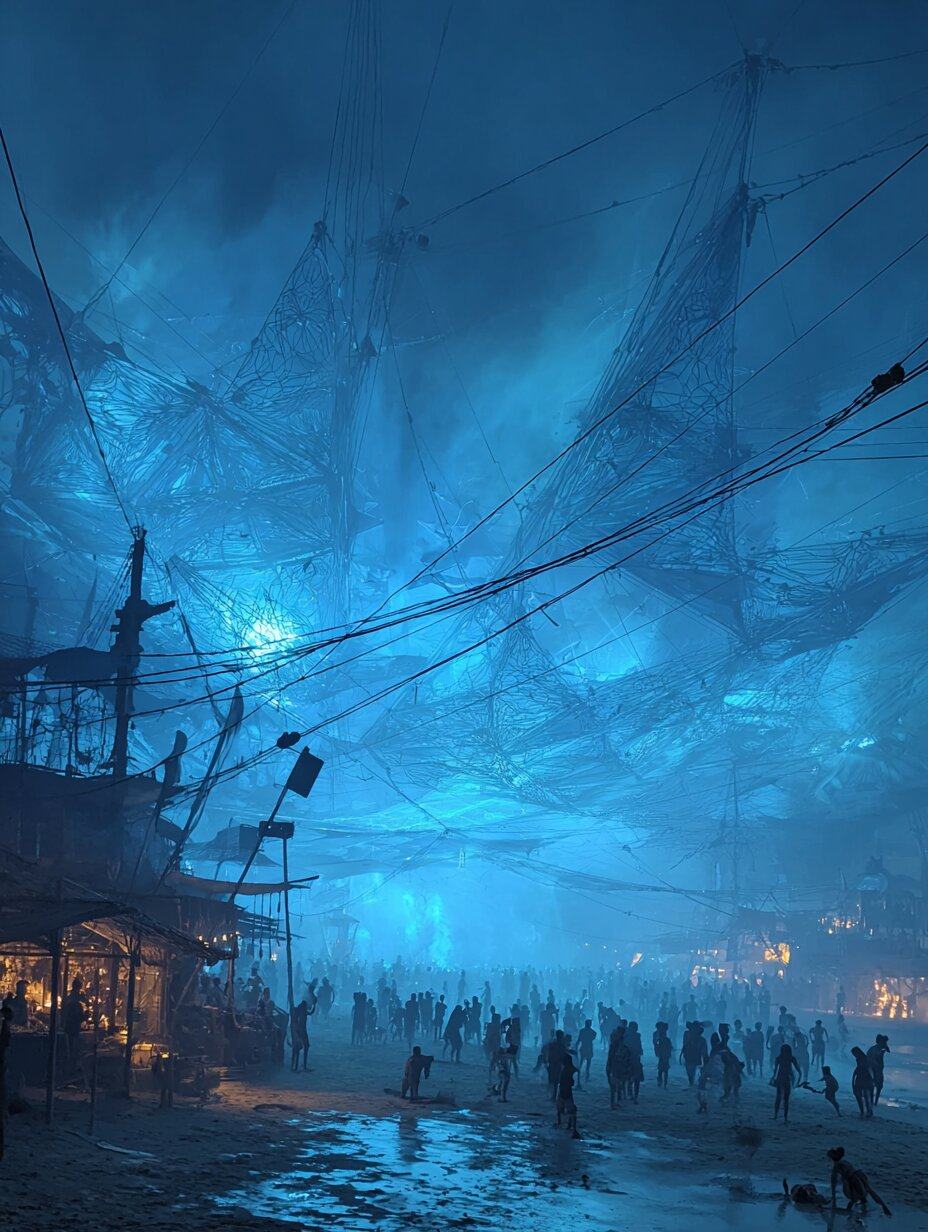
Centered on the axis of gratitude
A unique thread unravels amongst the possibilities of infinitude
Grace honors the one who is brave enough to let go of the mind
Plunging into the dance
Instinctively shedding the bind
To the lines of rational thought
Accept, forgive, embrace, persevere
Transcend
The plain page of An Oddyssey. Behind the book.