Chapter 16
Flying On Mescaline
The Threshold
SIERRA NEVADA, CALIFORNIA, JULY 2002
I was in California editing Entheogen: Awakening the Divine Within when Kevin invited me up to a Fourth of July gathering in the Sierra Nevadas. One of those off-grid festivals where hippies congregate in mountain meadows to dance barefoot and remember what America was supposed to be about before it forgot.
“Bring someone,” Kevin said. “It's a long drive.”
I thought of Konstantine.
We'd gone to school together back in Athens, debated on the same team, occupied adjacent desks and the same argumentative frequency. But then life split us like a river around stone, he went to business school, got his MBA, ended up at Yahoo. We hadn't spoken in eight years, maybe ten.
I, on the other hand, had been backpacking for a year, drifting from one beach town to some alternative intentional community, filming rituals of indigenous people in the Amazon, and trying to make sense of this complicated new world we were living in.
But he was in the Bay Area. And there was something appealing about the experiment: drop an MBA into a hippie festival, see what precipitates.
“I'll come,” he said when I called. “But I need to be back Monday morning. I have a meeting.”
“Deal. You can drive on the way back.”
The drive up took six hours through valleys that gradually remembered they were mountains. We traded life updates like people comparing scars.
The more we talked, the more I realized that we came from opposite sides of the galaxy. Me, in the driver's seat with a long samurai-style ponytail, unshaven for several weeks, dressed in a T-shirt and cargo shorts with a variety of holes in both.
Our conversation had an undercurrent, a need to justify our choices over the past ten years to each other.
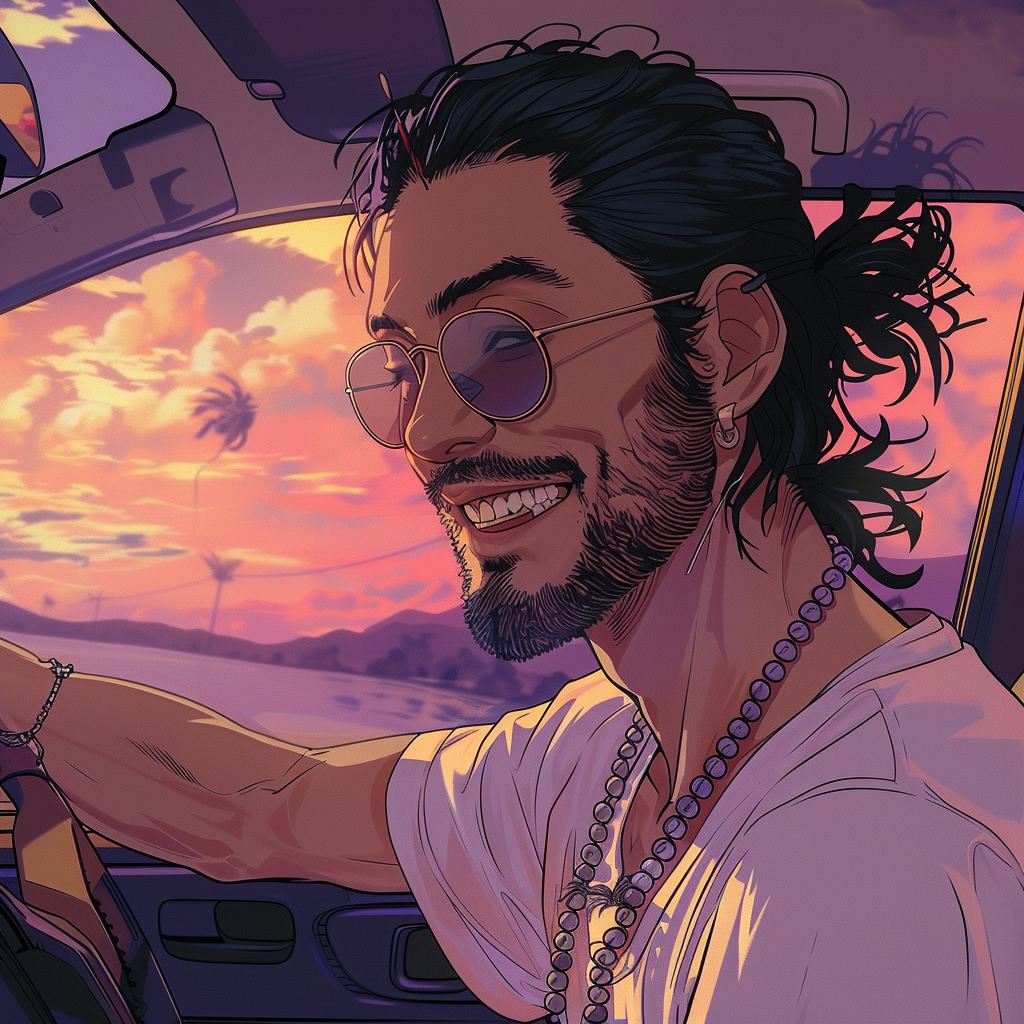
I was trying to explain to him how not having a steady job and being able to explore all of these marginal ideas had given me incredible insight into the world, had made me into a free thinker, and exposed me to cultures and people that I would never have met otherwise.
He presented his life as a series of strategic choices, which was in stark contrast to my chaotic, whimsical life path. His choices built upon each other, each one adding a new layer of sophistication and understanding of the world.
Those ideas didn't really appeal to me then. I felt that they were all some narrative created by consumerism in order to justify exploiting the planet's resources and the poor. I was interested in spirit, in the cultural diversity that was being lost as a result of globalization, in the secrets of the shamans in the Amazon.
I felt like I owed him an explanation I didn't have.
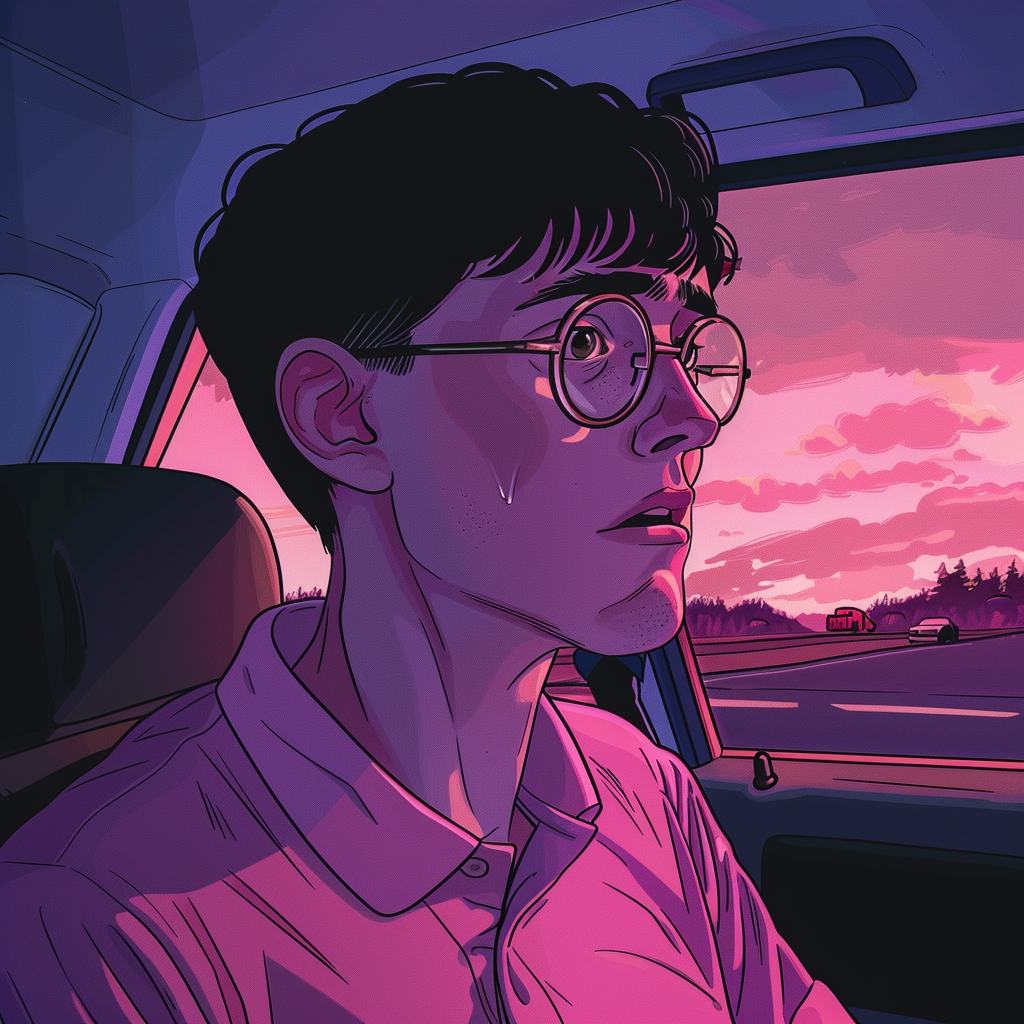
When we arrived at the festival grounds, Konstantine stepped out of the car wearing boat shoes, a pink polo shirt, and shorts so aggressively short they constituted a position statement.
I'm here to meet girls, he announced.
I looked around at the dreadlocks and drum circles and unwashed sincerity.
You might want to lose the pink polo.
Fuck that. They're going to like me for who I am. I'm not changing for them.
Suit yourself.
We grabbed our camping gear and started walking. He made it maybe fifty yards before circling back to the car and changing into a regular T-shirt.
I loved him for trying.
Over the next two days, I watched Konstantine adapt like a chameleon with an MBA. By day two he was attempting a hula hoop, talking to strangers, not judging me for any of it. He didn't touch drugs, didn't intrude on my space, just existed with remarkable grace in a world that wasn't his.
The weekend was fun, but I didn't really let go until the last night, on Sunday. It was during one of the last sets of a Karl Denson's Tiny Universe show that a friend of mine in the audience passed me a big pill of mescaline. I took mescaline around midnight.
I launched into that special zone where your body moves in the most eloquent way, effortlessly, as if your subconscious guides the tips of your limbs with these invisible puppet strings, and you become a passenger in your body, only to be amazed at how perfectly you articulate every sound.
By 4 AM the music had stopped but I was still sailing. I was sitting near the dance floor when I saw Konstantine sleeping on the ground twenty feet away, curled up next to the speakers like a dog who'd found warmth.
And I faced a choice.
I could wake him now, honor my promise, get him back for his Monday meeting. He'd been sleeping all night; he could drive. We could leave immediately.
Or I could pretend I didn't see him. Fall asleep myself. Claim I looked but couldn't find him in the dark. Stay in this state, this frequency, this dissolution.
I still had that hunger inside of me, that need to explode, to burn that metaphysical fuel inside of me.
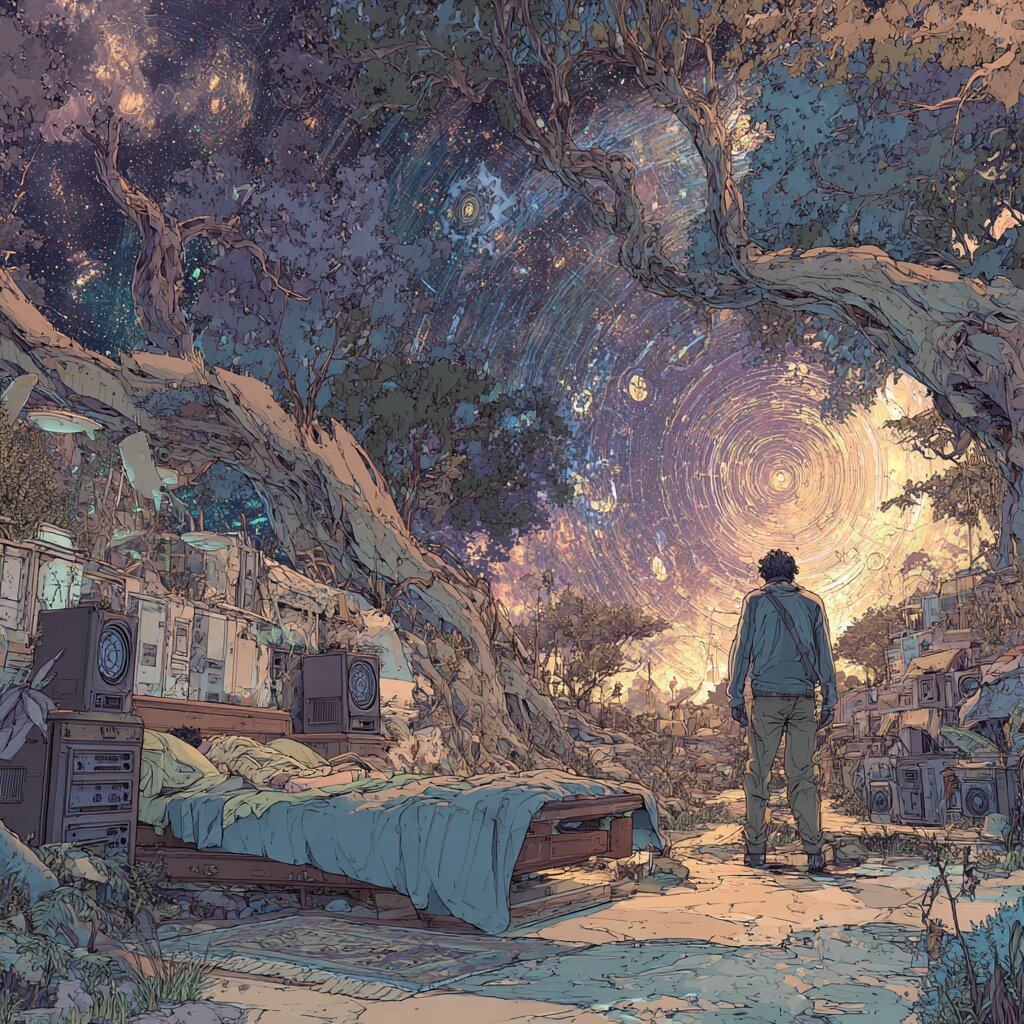
But as the dance floor cleared and I could see him in the fetal position in the corner under the blue light, I pitied him.
Then I walked over and shook his shoulder.
“Hey. You ready?”
He blinked awake, disoriented. “Yeah. Let's go.”
I found Kevin, told him we were leaving. He looked at me like I was insane.
“Wait until morning. We'll all drive down together.”
I promised him noon.
Kevin handed me his keys. “Your funeral.”
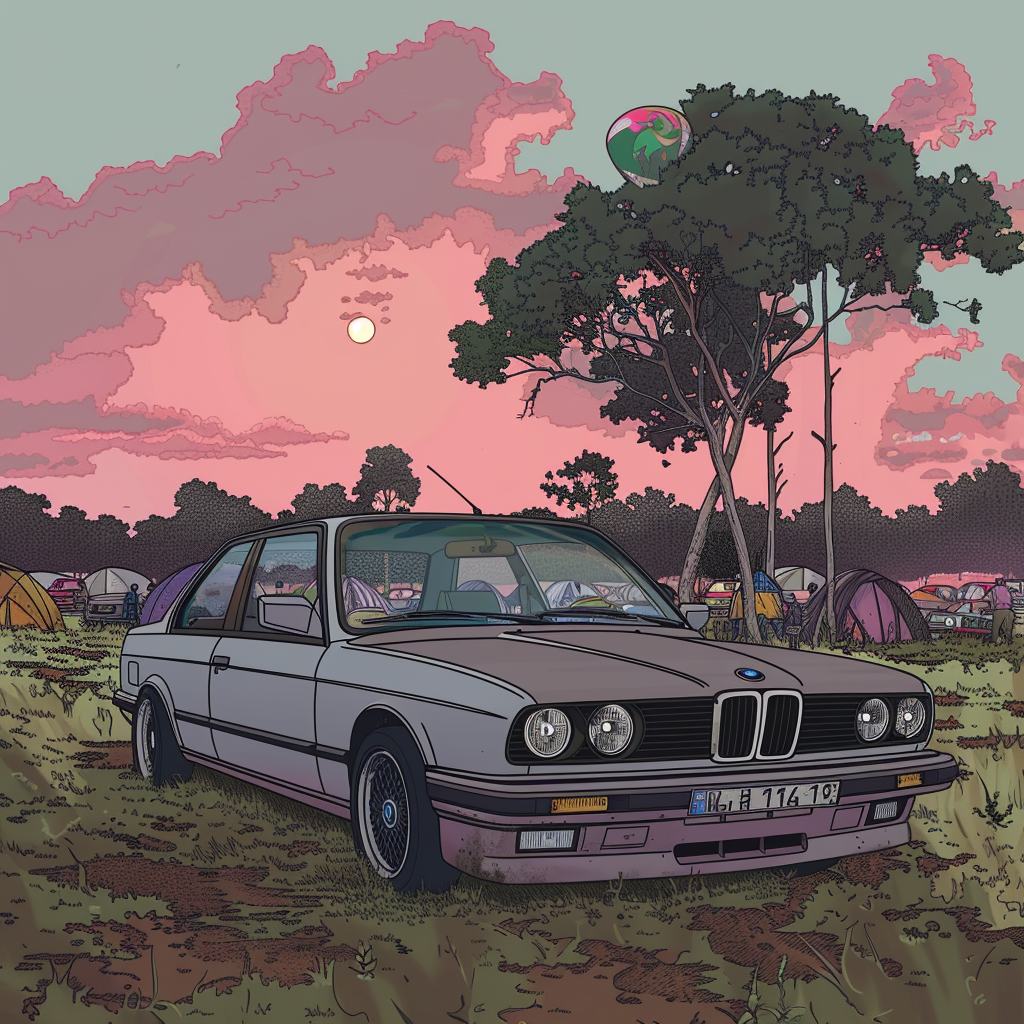
The car wouldn't start. Battery dead from sitting three days in mountain cold.
I almost thought of it as a sign. It validated my desire to stay a few more hours.
“Let's wait until people wake up,” I said. “Someone will have jumper cables.”
“No.” Konstantine was already moving. “I'll find someone.”
And he did, some half-drunk mountain man still awake from his own journey. Together they pushed the car while I steered, engine turning over uselessly. Once. Twice. On the third attempt it caught, sputtered, roared.
He was in the driver's seat. His glasses were foggy, his face swollen, his eyes sleepy.
“You sure about this?” I asked.
Let's go.
We drove down the mountain in dawn light to a general store just opening. One of those rural outposts where the sign out front was older than anyone shopping there.
“You want anything?” I asked.
I just wanted water. I was still very high, that mescaline plateau where everything has weight and meaning and the fluorescent lights in stores feel like interrogation.
“Yeah,” Konstantine said. “I want cereal. And milk. And coffee. And a bottle of water.”
I stared at him.
These were the most complicated items anyone on psychedelics had ever been asked to retrieve. The variables were infinite. What kind of cereal? Individual boxes or one large one? What size milk? Do you need a spoon? A bowl? Are you going to eat it in the car? How does one carry cereal, milk, coffee, AND water out to a vehicle?
The woman behind the counter was smoking menthol cigarettes at 6 AM and radiating a very specific energy: What do you want?
“Konstantine,” I said carefully. “You're going to have to go in yourself.”
“You see, all your drugs,” Konstantine said. “You're burning your brain. You can't even go into a supermarket and buy some breakfast. That's why I don't do drugs. They destroy your brain.”
He looked me over like I was the most useless person he'd ever met, which in that moment I absolutely was, and went inside.
The trees were pulsing. The mountains had auras. And I felt it clearly: I don't want to leave. This state. This frequency. I want to stay here.
I'd been waiting all weekend for this moment, a time where I could surrender to my inner child and go and roll in the dirt like some primitive animal, feel connected for a few hours just to validate my faith in the world and retune, calibrate my soul.
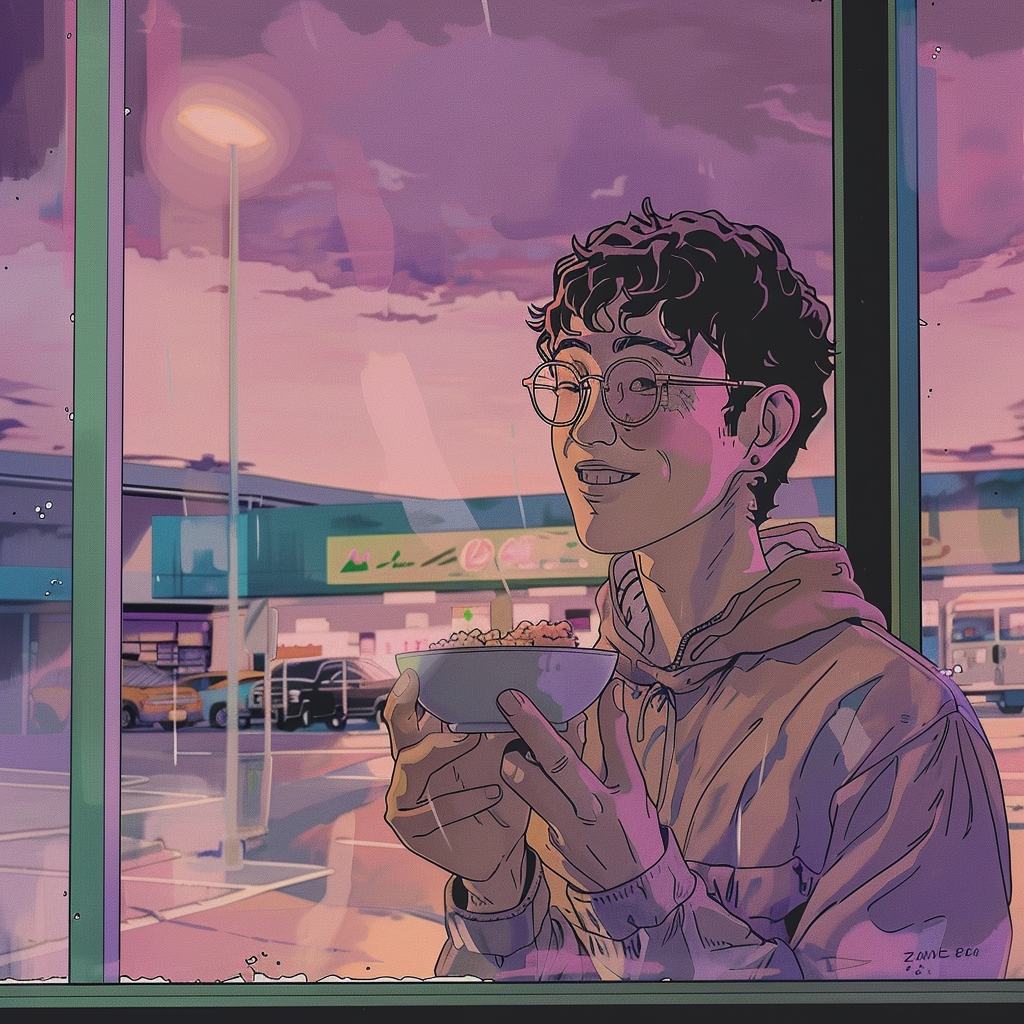
Konstantine came out carrying a bowl, spoon, box of Cheerios, coffee balanced in his other hand. He had a massive smile.
“See, it wasn't that hard,” he said.
I was actually kind of impressed. I didn't understand how he managed it, but I didn't want to ask. It was above my pay grade at that point.
“I can't go,” I said.
He sat down on the curb and started eating Cheerios.
Come on, man. You promised you'd keep me company. I kept my end.
I looked at the forest pulsing with color. Then at Konstantine calmly eating cereal like the world made sense.
Fuck it. You're right. Let's go.
We got back in the car and started driving.
The road was a narrow ribbon carved between two peaks with a river at the bottom of a ravine and train tracks running parallel like something out of a Western. No cell reception for thirty miles. The radio played for a while, then faded to static.
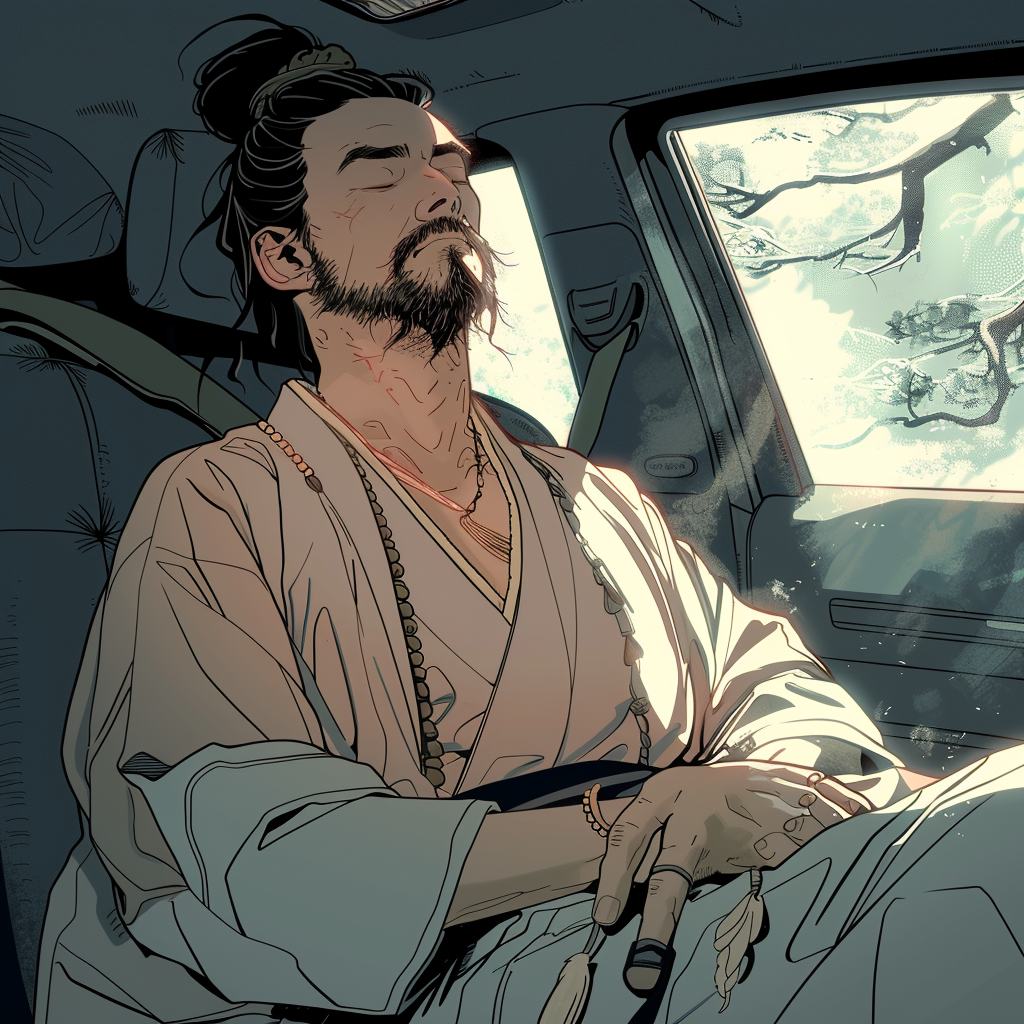
I put my seat back, tried to get comfortable. The mescaline was still there but softer now, integrating. I started to doze.
Then I heard it, the sound of tires hitting the grooved shoulder of the highway. That distinctive rumble: brrrrrrrr.
I opened my eyes. Konstantine was nodding off behind the wheel.
Hey, you alright? Want to pull over?
He jerked awake. Keep talking to me.
He insisted he was fine. He gulped down his coffee and smacked himself in the face.
So I kept talking. About nothing. About everything. Keeping him tethered to consciousness with the sound of my voice.
Ten minutes later I felt myself drifting again.
And the strangest thing: the exact moment I closed my eyes, he closed his.
Like we were psychically linked. Like two circuits that had synchronized and were now influencing each other's rhythm.
I don't know how long it lasted. Probably seconds.
But I opened my eyes and the car was plowing directly into the side of the mountain.
Pure instinct. I grabbed the steering wheel and yanked it left. The car swerved back onto the road, veering toward the cliff on the other side.
Konstantine woke up terrified and jerked the wheel left again.
The whole thing spun.
Time collapsed into a single eternal moment of perfect clarity.
We were spinning toward the cliff. There was no guardrail. Below us was a 150-foot drop to the river.
And I thought, very clearly, very calmly: I'm going to die.
Not in panic. Not in resistance. Just recognition. The circuit completing. This is how it ends.
The left front wheel hit something, a rock, the mountain's edge, and broke. The car spun one more time and stopped.
Three feet from the cliff.
I sat there breathing.
Then I got out and looked.
A tree stump. One single tree stump growing at an angle out of the rock face. The back wheel had caught it. That was the only thing between us and the river below.
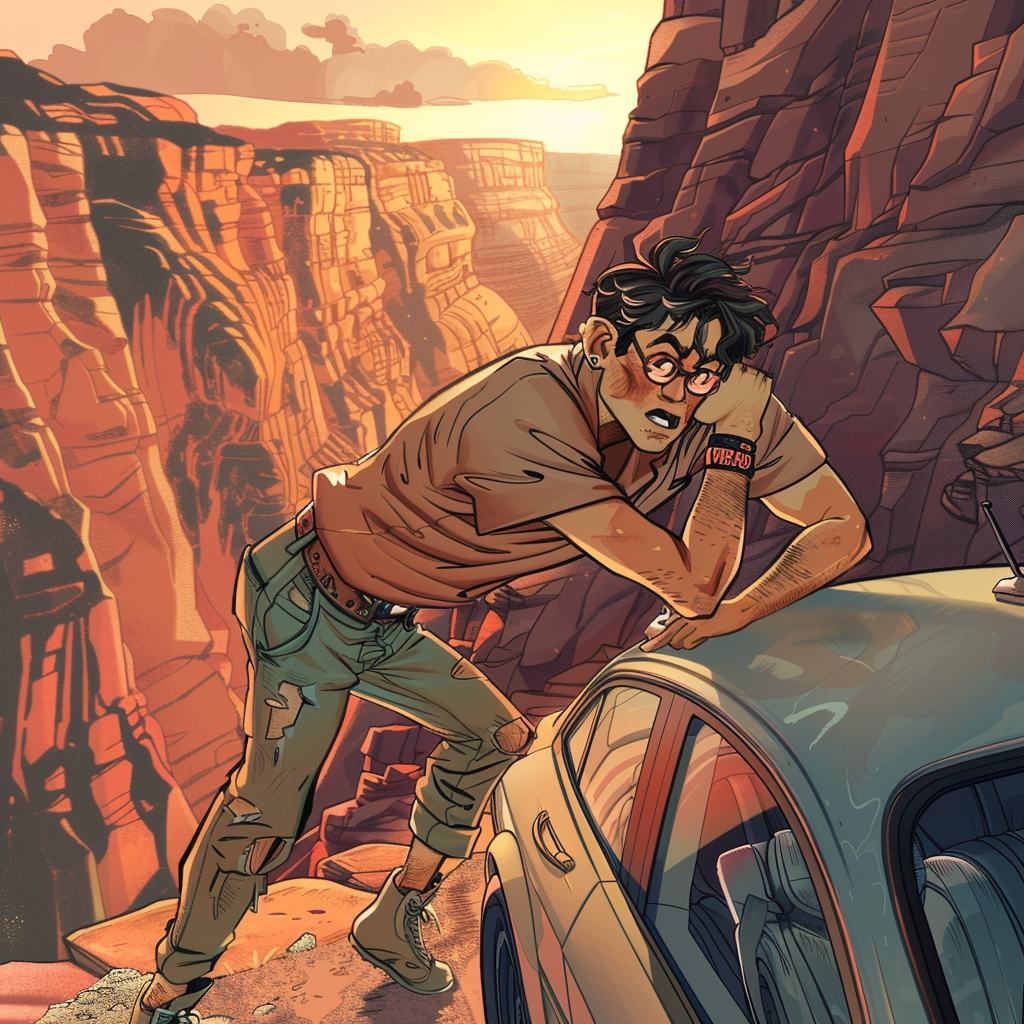
Konstantine climbed out, pale.
For thirty seconds I yelled at him. Adrenaline and terror and rage that we'd almost died because we were both too stupid to pull over.
Then I realized: we were fine. Not a scratch.
And I started laughing.
But now we were stuck. Our cell phones didn't work. It was just after dawn, and we were on a stretch of road with very little traffic. He still needed to get back to San Francisco, and I had just wrecked Kevin's car.
We sat there as the early morning sun began to peek over the mountain ridge on the other side of the ravine.
A car pulled up behind us, a woman in scrubs, a nurse on her way to work. She was screaming before she even got out, certain she'd just witnessed a fatality.
“I'm calling the police when I get to the end of the valley,” she said, still shaking.
We waited. Eventually a cop showed up, rural sheriff, the kind who'd seen everything and was impressed by nothing.
He looked at the car. Looked at us. Looked at the tree stump.
I didn't have a license. The car wasn't in my name.
Didn't ask for my license. Didn't ask for the car's registration. Didn't ask what happened.
“Tow truck's coming,” was all he said.
They towed us back to the festival. It was 9 AM now, people packing up and leaving. I found Kevin.
“Hey man!” he said, grinning. “Glad you waited for us. Let's hit the road.”
“We wrecked your car, and now we just came back; your car is actually in the junkyard, and we don't really have a way to get home.”
“Can we fit in your truck?” I asked.
His face dropped. He said definitely not. “I don't think we should be sharing tight quarters over the next few hours.”
He drove off.
Konstantine and I stood at the festival entrance trying to figure out how to get back to San Francisco. We were 200 miles away in the middle of nowhere.
Then Konstantine disappeared.
I found him ten minutes later, coming back from a small airstrip I hadn't noticed, one of those rural airports for crop dusting and rich people with Cessnas.
“Two hundred each,” he said. “We can fly to San Francisco. Be there in an hour.”
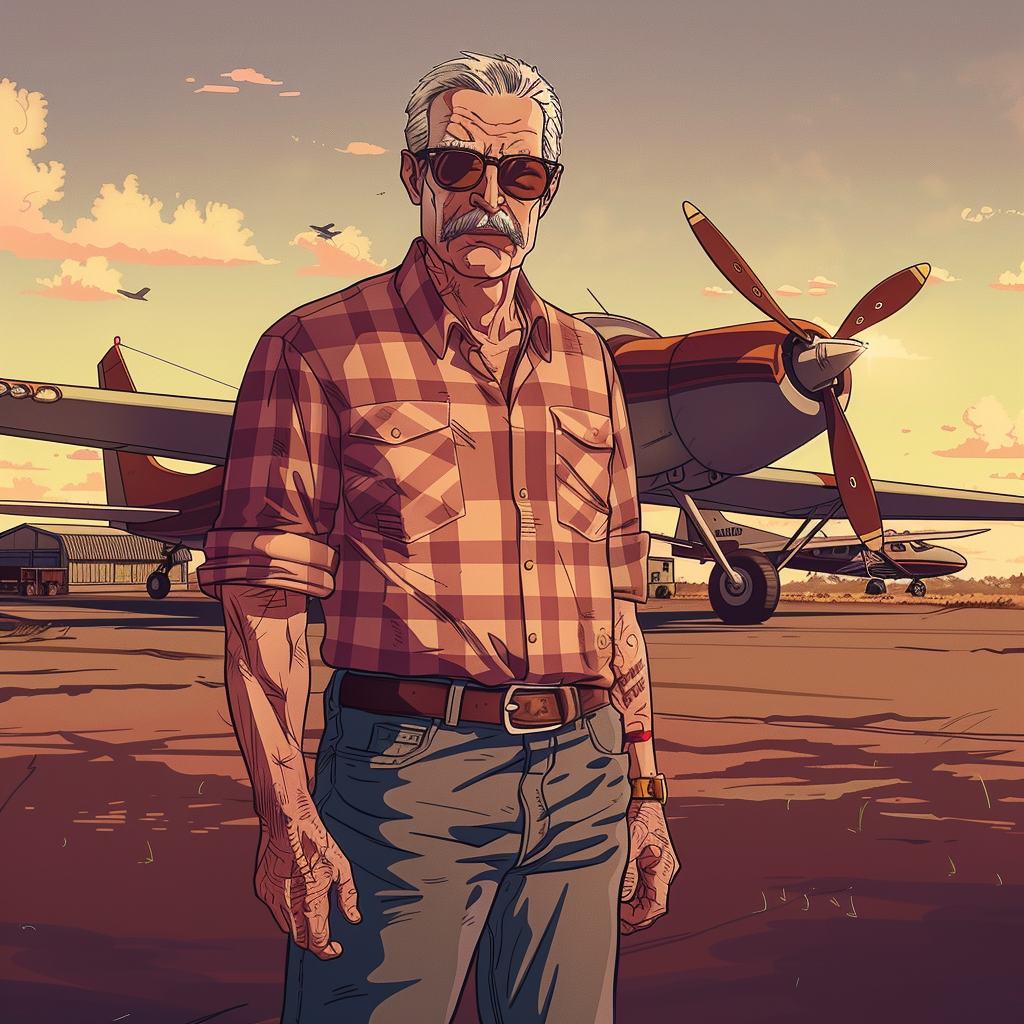
The pilot looked like he'd been sent over from central casting: late 60s, full head of white hair, thick mustache, Marlboro Man sunglasses, checkered shirt tucked into tight jeans. The kind of man who called everyone son and had flown every kind of weather.
He led us to a small two-seater trainer plane. Konstantine climbed in the back. I got in front.
“This is a teaching plane,” the pilot said as he ran through the preflight check. “I use it to train new pilots.”
I never mentioned anything about the mescaline. I was wearing my sunglasses anyway.
We lifted off, the ground falling away, the mountains spreading out below us like a topographic map of my entire journey.
Was I dreaming? It felt like it. We were flying over the ravine that we had crashed in, only a few hours ago. Everything was so beautiful. The landscape stretched all the way to the Pacific, and far, far in the deep, misty horizon, you could see the Golden Gate Bridge protruding from the fog.
We'd been flying for maybe fifteen minutes when the pilot turned to me.
“You want to take it?”
I was still high. Not peak mescaline, but definitely not sober. The trees were still breathing. The mountains still had that luminous quality.
“Sure,” I said.
He showed me the controls. Explained the basics. Then let go.
And I was flying.
I don't remember being afraid. I remember thinking: This is perfect.
I was flying a plane on mescaline, two hours after almost dying. I couldn't believe it.
It was the most liberating feeling I've ever felt. Every molecule in my body was tingling. I could feel this energy rolling up and down my spine.
“Yahoo!” I shouted and looked over my shoulder to make sure that Konstantine saw me flying. Much to my disappointment, his head was rolled back, and he was snoring, passed out again.
The plane responded to the slightest pressure. Like thought translating directly into movement.
The pilot sat there calmly, not worried at all. Like he knew something I didn't, that flying isn't about control, it's about listening.
Surrender as mastery.
We flew across California like that, me at the controls, Konstantine snoring in the back, the cowboy pilot chain-smoking and occasionally pointing out landmarks below.
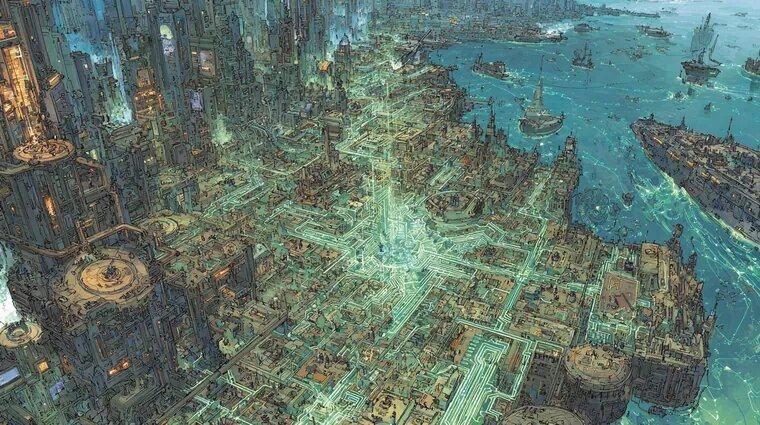
We landed in San Francisco at 11:55 AM.
As the plane screeched to a halt, my buddy awoke. Tell them we're here, we're on time, and I just flew you.
Konstantine made his meeting. We'd arrived at exactly the same time we would have if we'd driven.
Except we'd flown.
Something in our journey had brought us closer together. And at least we were alive, really alive, electrified and alive, and now we were home.
It cost us 200 each and he had to pay my friend for the car but it was an old car, so $2,000.
Writing, not dictating. Akiko did not come today. The chair at the desk is empty and the silver PowerBook is wherever she is. So this one goes into the Compaq by my own hands, and I am no typist. I said so at the start. Nobody stops typing. Nobody looks up to ask what I did to Kevin's car. The screen takes whatever I give it and asks nothing back.
The choice at 4 AM, waking Konstantine instead of staying in bliss, that was the first death. Choosing honor over ecstasy.
The cliff was the second death. The moment of accepting I'm going to die without resistance.
You know you're a fucking junkie when you fuck up.
Konstantine was right about one thing. The proof was a bottle of water, then a cliff. The fuel that carried me through the night nearly put two of us in the river, and it was the same fuel that put me in the pilot's seat. The rockstar who burns out and the rockstar who comes through are the same person on the same substance. Self-destruction or transcendence. Nobody gets to pick in advance which story it is. A tree stump picked for me.
But we didn't fall. And then, impossibly, I was flying.
Not despite the mescaline, but because of it. In that state I couldn't overthink. Could only feel the plane's subtle communication and respond.
I think that's what flying taught me.
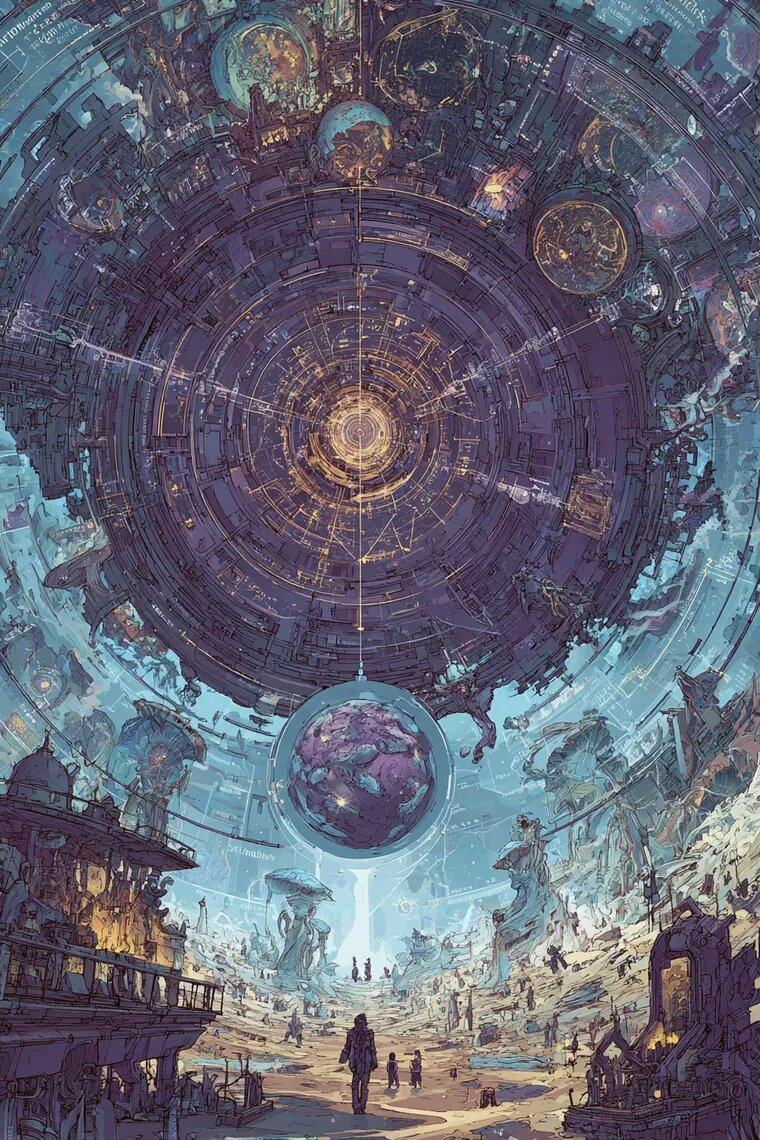
The seeker has to die before the finder can emerge. The student has to let go before the teacher arrives.
You can't white-knuckle your way to grace. You have to accept the cliff, accept the falling. And then, sometimes, the tree stump catches you. Someone offers you a plane.
And you fly. Not because you know how, but because you finally stopped pretending you don't.
The plain page of An Oddyssey. Behind the book.